





Spain top FIFA rankings
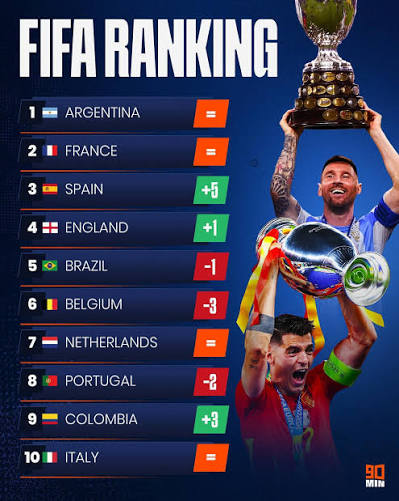
ABUJA — Newly crowned world champions Spain have replaced Argentina at the summit of the FIFA men’s world ranking, while Nigeria’s Super Eagles retained 26th position in the latest table released on Monday, July 20, 2026.
The latest update reflects the impact of the 2026 FIFA World Cup, which ended on Sunday with Spain defeating defending champions Argentina 1-0 after extra time in the final at the New York New Jersey Stadium.
The result ensured that Spain top FIFA rankings once again, completing a remarkable period in which La Roja followed their European Championship success with a second World Cup title.
FIFA confirmed that its men’s ranking was updated on July 20, with the next official publication scheduled for October 7, 2026.
Spain’s return to first place came after an outstanding World Cup campaign in North America. Luis de la Fuente’s side remained unbeaten throughout the tournament and defeated Argentina in the final through Ferran Torres’ decisive extra-time goal.
Torres struck in the 106th minute to hand Spain their second World Cup crown, 16 years after the country’s first triumph in South Africa in 2010. Argentina finished the match with 10 players following Enzo Fernández’s dismissal.
The championship victory provided the points required to ensure that Spain top FIFA rankings, with Argentina dropping to second place after surrendering both the World Cup trophy and the number-one position. Spain top FIFA rankings
France occupy third place, while England and Brazil complete the first five positions in the latest global order. Morocco moved to sixth after another impressive World Cup showing, becoming the highest-ranked African national team.Spain top FIFA rankings
Spain rewarded for World Cup dominance
Spain entered the World Cup as the second-ranked team, narrowly behind Argentina. The June 11 ranking placed the South American champions first, with Spain second, France third and England fourth.
However, Spain’s performances during the expanded 48-team competition transformed the standings.
La Roja advanced through the tournament with a combination of disciplined defending, controlled possession and attacking efficiency. They defeated Austria in the round of 32, overcame Portugal in the round of 16 and edged Belgium in the quarter-finals.
A commanding victory over France in the semi-finals then established Spain as favourites for the title. Reuters reported that Spain controlled the match and restricted a dangerous French attack before winning 2-0.
Victory over Argentina in the final confirmed that Spain top FIFA rankings on sporting merit rather than reputation alone.
Spain’s success also underlines the national team’s return to the summit of international football after years of rebuilding. Their first World Cup title came in 2010, during the era of Xavi Hernández, Andrés Iniesta, Iker Casillas and David Villa.
The current generation have now written their own chapter, combining established stars with emerging talents capable of sustaining Spain’s position among the world’s elite.
Argentina fall to second after losing crown
Argentina began the tournament as defending champions and the world’s top-ranked side. Lionel Scaloni’s team reached another final after navigating the expanded competition and defeating England 2-1 in the semi-finals.
The South Americans, however, struggled to create clear opportunities against Spain’s organised defence in the championship match.
Spain dominated possession and registered considerably more attempts before Torres broke the deadlock during extra time. Argentina’s defeat ended their attempt to become the first country since Brazil in 1962 to retain the men’s World Cup.
Although Spain top FIFA rankings, Argentina’s second-place position confirms that the former champions remain one of international football’s strongest teams.
The loss does not erase Argentina’s consistency over recent years, but it marks a significant shift in the global order. Spain now hold the World Cup, the European title and the leading position in FIFA’s ranking system.
Super Eagles retain 26th position
https://ogelenews.ng/fifa-rankings-spain-dethrone-argentina-as-nigeria-r…
Nigeria, meanwhile, remained 26th in the world with 1,585.2 ranking points.
The Super Eagles stayed ahead of Turkey, Australia, Algeria, Canada and Côte d’Ivoire, who occupy positions 27 to 31 respectively.
Nigeria’s unchanged global position means the team have remained within touching distance of the world’s top 25. However, the Super Eagles slipped to fourth among African countries following Egypt’s strong performance at the World Cup.
The Pharaohs climbed to third in Africa after reaching the round of 16, where they lost 3-2 to Argentina. Morocco remain Africa’s leading side after reaching the World Cup quarter-finals and rising to sixth globally.
Senegal occupy second place in Africa despite dropping three positions in the world table. Nigeria follow Morocco, Senegal and Egypt in the continental hierarchy, while Algeria sit fifth.
The fact that Spain top FIFA rankings will dominate international attention, but Nigeria’s continued stay at 26th presents a more complicated picture for the Super Eagles.
On one hand, remaining within the top 30 indicates that Nigeria still possess considerable international standing. On the other, the country’s fall to fourth in Africa shows that rivals are gaining ground through stronger performances in major competitions.
Nigeria’s inactivity limits movement
The Super Eagles have not played a competitive fixture since June. Their most recent outing was a 2-1 friendly defeat to Portugal.
Before that loss, Nigeria defeated Zimbabwe and Jamaica during the Unity Cup in London, drew 2-2 with Poland and then suffered defeat against Portugal.
Those mixed results were not enough to move the team above 26th place.
Nigeria were also absent from the 2026 World Cup, despite being one of the highest-ranked countries that failed to qualify. Before the tournament, only Denmark were ranked higher among nations missing from the expanded 48-team competition.
That absence deprived Nigeria of opportunities to gain substantial ranking points through high-level World Cup matches.
FIFA’s ranking model rewards teams according to match results, the importance of the fixture and the strength of the opposition. Major tournament matches generally carry greater weight than friendlies.
Consequently, countries that progressed deep into the World Cup enjoyed opportunities to climb, while teams outside the competition largely remained dependent on their previous points.
This explains why Spain top FIFA rankings after winning the tournament and why Egypt and Morocco gained ground through their performances in North America.
Ranking offers warning to Nigerian football
Nigeria’s 26th position should not be interpreted as evidence that all is well with the senior national team.
The Super Eagles remain one of Africa’s most recognisable football brands and possess players competing in leading European leagues. However, rankings ultimately respond to results, consistency and participation in major tournaments.
Missing the World Cup represented a serious setback for a country with Nigeria’s football history and population.
The team have appeared at six editions of the tournament, reaching the round of 16 in 1994, 1998 and 2014. FIFA’s official records also show that Nigeria won Olympic football gold in 1996 and have produced five FIFA Under-17 World Cup-winning teams.
Such history creates high expectations, but previous achievements cannot substitute for present-day planning.
The Nigeria Football Federation and the Super Eagles’ technical crew must use the period before the next international window to address tactical weaknesses, evaluate players and develop a more stable team.
Nigeria’s target should not merely be to protect 26th place. The objective must be to recover a position among Africa’s leading three teams and move steadily toward the global top 20.
Morocco and Egypt underline Africa’s changing order
The latest ranking also illustrates the increasingly competitive nature of African football.
Morocco’s rise has been built on sustained tournament performances. The Atlas Lions reached the quarter-finals of the 2026 World Cup and climbed from seventh to sixth globally.
Egypt’s progression to the round of 16 helped the Pharaohs overtake Nigeria in the continental table, while Senegal maintained second place in Africa.
For the Super Eagles, these movements should serve as a warning. Reputation alone will not guarantee continental superiority when other countries are investing in preparation, coaching, youth development and international competition.
As Spain top FIFA rankings, their success provides a wider lesson about the importance of building a clear football identity and maintaining continuity between generations.
Spain did not return to the summit through one isolated result. Their rise followed a sustained sequence of victories, tactical stability and strong performances in major tournaments.
Nigeria require a similarly coherent long-term approach if the Super Eagles are to translate individual talent into consistent national-team success.
Focus shifts to October ranking
The next official FIFA men’s ranking will be released on October 7, 2026.
The international fixtures played before that date will determine whether Nigeria move upward, remain 26th or lose further ground.
For Spain, the immediate challenge will be maintaining the standards that carried them to the World Cup trophy and the top of the global table. Every opponent will now view a match against La Roja as an opportunity to defeat the world champions.
Argentina must also begin the difficult task of recovering from the loss of their title and preparing for a future that may no longer revolve around Lionel Messi.
For Nigeria, the ranking is both reassuring and sobering. The Super Eagles remain 26th in the world, but their fourth-place continental position demonstrates how quickly the balance of African football is changing.
The headline may be that Spain top FIFA rankings, but Nigeria’s message is equally clear: maintaining a respectable position is not enough. The Super Eagles must return to major tournaments and produce the results required to reclaim their place among Africa’s leading football nations.
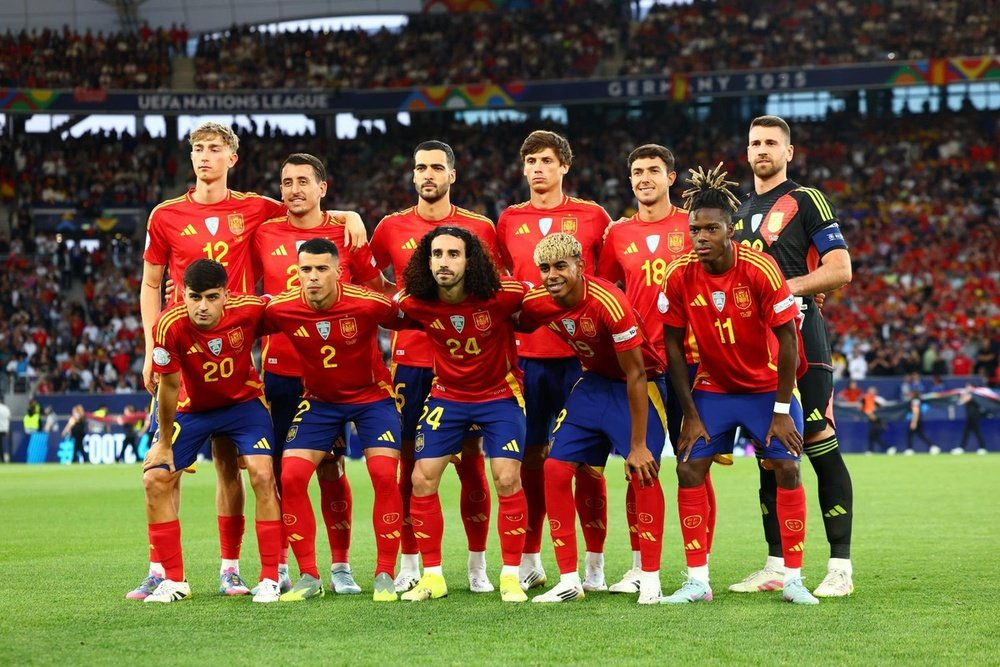
Spain top FIFA rankings