
















State police bill
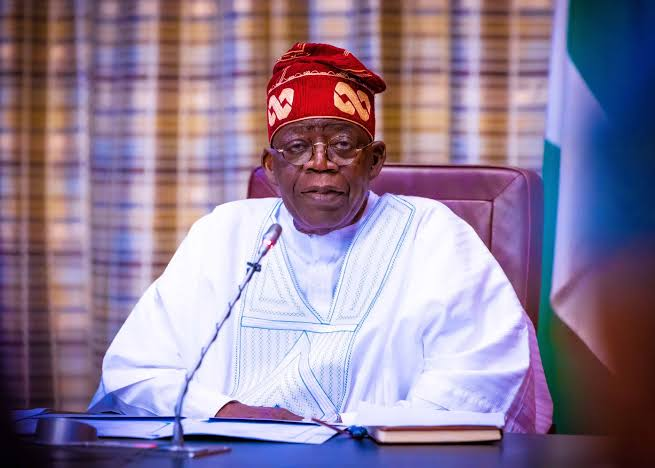
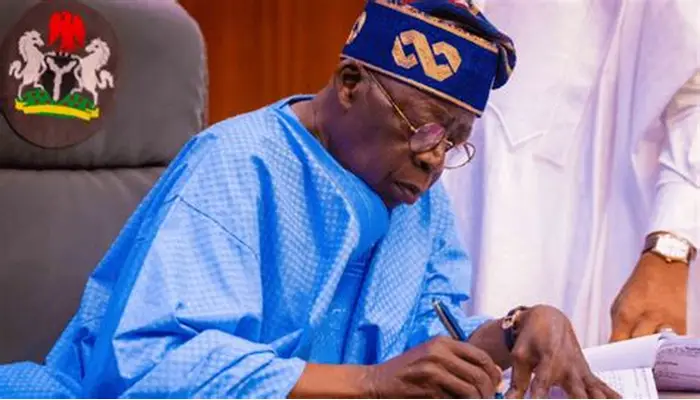
ABUJA — Nigeria’s long-running debate over state police has entered a decisive phase as the Senate is expected to consider a constitutional amendment bill today, following President Bola Ahmed Tinubu’s formal transmission of a proposal seeking the establishment of State Police Services across the federation.
The state police bill, transmitted to the Senate by the President and read during plenary by Senate President Godswill Akpabio, seeks to alter the 1999 Constitution to create a legal framework for a dual policing structure in Nigeria. Under the proposal, states would be allowed to establish and operate their own police services alongside the existing federal Nigeria Police Force.
The development marks one of the most significant security reform moves in Nigeria’s Fourth Republic. For decades, policing in Nigeria has remained centrally controlled from Abuja, even as state governors have repeatedly complained that they are held responsible for security in their states without having direct operational control over the police.
President Tinubu’s transmission of the state police bill comes at a time of rising national concern over kidnapping, banditry, communal clashes, insurgency, armed robbery and other violent crimes across different parts of the country. Supporters of the reform argue that a decentralised policing system would improve intelligence gathering, response time and local security coordination.
According to reports from the Senate, the proposed legislation is titled the Constitution of the Federal Republic of Nigeria (Alteration) State Police Bill, 2026. The bill is intended to amend relevant sections of the Constitution to provide the legal foundation for states to set up police services within their jurisdictions.
Senate President Akpabio has urged senators to be present for today’s sitting, stressing that constitutional alteration requires serious attendance and broad consensus. For the state police bill to pass in the Senate, it must secure the support of at least two-thirds of the 109 senators. In practical terms, that means no fewer than 73 senators must vote in favour.
The constitutional math is important. In the House of Representatives, where membership stands at 360, at least 240 members are required to support the amendment. After passage by both chambers of the National Assembly in identical terms, the bill must still be approved by at least 24 of Nigeria’s 36 State Houses of Assembly before it can be sent to the President for assent.
That means today’s Senate vote, while crucial, is not the final step. The state police bill must still survive the full constitutional amendment process before it becomes part of Nigeria’s legal framework.
https://ogelenews.ng/state-police-senate-set-for-crucial-vote-as-tinubu-…
The House of Representatives had earlier passed a state police proposal, while the Senate had already moved a related executive bill to second reading and referred it to the Committee on Constitution Review. The latest transmission by President Tinubu is expected to strengthen the legislative process by giving the reform direct executive backing.
Akpabio has said the proposal will be handled in phases, with constitutional alteration coming first and supporting legislation expected later. He also stated that safeguards would be necessary to prevent possible abuse of state police by governors or political actors.
That concern has remained one of the strongest arguments against state police in Nigeria. Critics fear that governors may use state-controlled police formations to intimidate opponents, influence elections, target minorities or settle political scores. Others have raised questions about funding, training standards, command structure, inter-state operations and coordination with the federal police.
Supporters, however, insist that Nigeria can no longer rely solely on a centralised policing model. They argue that the country’s security challenges differ from region to region and require local knowledge. The security crisis in the North-East is not the same as banditry in the North-West, farmer-herder conflict in the North-Central, separatist-linked violence in the South-East, kidnapping in parts of the South-West or oil-related crime in the Niger Delta.
For them, the state police bill is not merely a political reform. It is a security necessity.
Retired security officers and policy analysts have also entered the debate, with some warning that while state police may improve local response, it must be carefully designed. A weak framework, they argue, could create confusion between federal and state commands or place too much coercive power in the hands of governors.
Funding is another major issue. Governors are reportedly seeking guaranteed funding arrangements for State Police Services, including proposals linked to Federation Account revenue. But some stakeholders have warned that poorer states may struggle to pay, equip and maintain professional police formations without strong financial safeguards.
The debate also comes against the backdrop of regional security outfits already operating in parts of the country. The South-West has Amotekun, the South-East has had Ebube Agu, while parts of the North operate local security and religious enforcement structures such as Hisbah. These outfits emerged partly because many states felt the federal policing system was too distant to respond quickly to local threats.
If passed, the state police bill could bring such local security initiatives under a clearer constitutional and statutory arrangement. It could also redefine how Nigeria manages internal security after decades of exclusive federal control.
For President Tinubu, the bill represents a major test of his administration’s security reform agenda. His government has repeatedly stated its commitment to reorganising Nigeria’s security architecture and protecting lives and property. The transmission of the state police bill now places that reform before the National Assembly in concrete legislative form.
For the Senate, today’s sitting could become one of the most consequential votes of the current Assembly. The chamber must decide whether Nigeria is ready to move from a single federal police structure to a dual policing model where states can create their own police services.
For citizens, the key question is simple: will state police make communities safer, or will it create new political risks?
The answer will depend on the safeguards built into the law. These may include independent oversight bodies, clear recruitment standards, protection against political interference, judicial review, funding rules, disciplinary procedures, inter-agency cooperation and limits on deployment during elections.
As the Senate prepares to vote, the state police bill has moved from public debate to legislative action. If it succeeds, Nigeria may be on the path to the most far-reaching policing reform since 1999. If it fails, the country will return to the old argument over whether a centralised police structure can adequately secure a federation of 36 states and more than 200 million people.
For now, all eyes are on the National Assembly as the state police bill faces a defining constitutional test.
https://punchng.com/state-police-senate-votes-today-as-tinubu-transmits-bill-to-nassembly