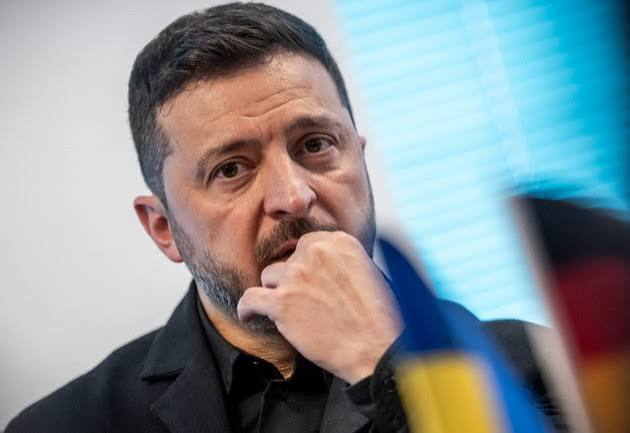















United States Secretary of State Marco Rubio has denied claims that Washington temporarily suspended intelligence sharing with Ukraine, contradicting Ukrainian President Volodymyr Zelenskyy amid growing disagreements over America’s support for Kyiv in its ongoing war with Russia.
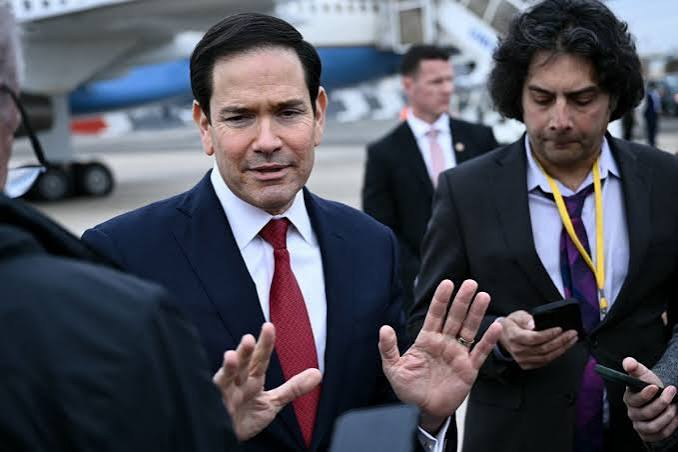
Rubio made the clarification on Monday, October 19, 2026, during a visit to Uzbekistan, where he was holding discussions with Central Asian officials.
The top American diplomat maintained that US intelligence sharing with Ukraine had not been interrupted, rejecting Zelenskyy’s assertion that Washington briefly withheld information used to identify and respond to Russian missile attacks.
His remarks followed an interview in which the Ukrainian president said a three-day interruption in intelligence cooperation had recently been resolved by American authorities.
Rubio challenged that account while emphasising that President Donald Trump’s immediate diplomatic priority was to secure an end to the war between Russia and Ukraine.
The conflicting statements have raised fresh questions about the state of security cooperation between Washington and Kyiv, particularly at a time when Ukraine continues to face Russian missile and drone attacks targeting energy facilities and civilian infrastructure.
Although both governments acknowledge the importance of intelligence cooperation, their public disagreements have highlighted tensions over military assistance, attacks on Russian energy facilities and the direction of US-led peace initiatives.
Rubio Denies Suspension of US Intelligence Sharing With Ukraine
Speaking to journalists in Samarkand, Rubio rejected suggestions that Washington had deliberately stopped providing intelligence to Ukrainian authorities.
“There has been no pause,” he said when questioned about the reported interruption in intelligence cooperation.
His statement directly contradicted Zelenskyy’s earlier account of a temporary suspension affecting information used by Ukraine to detect and respond to Russian attacks.
The Secretary of State did not publicly provide a detailed technical explanation addressing why Ukrainian officials believed some intelligence had been unavailable.
Instead, he shifted attention to the Trump administration’s efforts to bring the war to an end.
Rubio said Washington wanted both Ukraine and Russia to concentrate on negotiations capable of stopping the conflict, now in its fifth year following Russia’s full-scale invasion in February 2022.
He indicated that ending the hostilities remained the central objective of American diplomatic engagements with Kyiv and Moscow.
However, the contrasting accounts from Washington and Kyiv leave unresolved whether there was an interruption affecting a particular category of intelligence, a delay in communication or a broader misunderstanding between the two governments.
Neither side has publicly disclosed sufficient operational information to independently establish exactly what occurred.
Zelensky Claims US Intelligence Sharing Was Interrupted for Three Days
The controversy followed an interview granted by Zelenskyy to American television network NBC, during which he discussed Ukraine’s security relationship with the United States.
The Ukrainian leader claimed that intelligence cooperation had been interrupted for approximately three days before American authorities restored the relevant access.
He expressed appreciation for the resumption of the information flow, while indicating that the interruption had affected Ukraine’s ability to prepare for certain Russian missile attacks.
The issue is particularly important because advance warning information can help Ukrainian forces identify incoming threats and support decisions about the deployment of air-defence systems.
On October 13, Zelenskyy had also complained that some Russian missile attacks occurred without the advance warnings Ukraine would normally expect from its partners.
The Ukrainian government did not publicly disclose the complete details of the intelligence arrangements involved, making it difficult to assess whether all categories of cooperation were affected.
President Trump separately stated that Washington continued sharing intelligence with Kyiv, supporting the American administration’s position that cooperation had not been suspended.
The disagreement illustrates the difference between official assurances that intelligence cooperation remains active and Ukrainian concerns about whether particular warnings were received when needed.
Why US Intelligence Sharing With Ukraine Is Important
US intelligence sharing with Ukraine has been an important element of Western support since Russia launched its full-scale invasion.
Intelligence cooperation can provide information about potential missile launches, military movements, aerial threats and other developments relevant to battlefield operations.
For Ukraine, such information is particularly valuable because Russian forces continue to use ballistic missiles, cruise missiles and drones against military installations, industrial facilities and energy infrastructure.
Early warning information can help authorities issue alerts, prepare air-defence responses and take measures to protect civilians.
However, intelligence sharing does not guarantee that every incoming missile will be detected in advance or successfully intercepted.
The effectiveness of Ukraine’s defensive operations also depends on available radar systems, interceptor missiles, communications networks, training and the characteristics of individual attacks.
The latest disagreement therefore concerns more than a diplomatic exchange between two political leaders.
It touches on the availability, reliability and timing of information that Ukrainian authorities consider important for defending the country.
Despite Rubio’s denial, the operational details remain confidential, and the available public statements do not establish whether a specific intelligence channel was temporarily affected.
Trump Criticises Ukrainian Attacks on Russian Oil Refineries
The dispute over US intelligence sharing with Ukraine comes amid disagreements over Ukrainian attacks against Russian energy facilities.
President Donald Trump has criticised Kyiv’s operations against Russian oil refineries, arguing that the strikes have contributed to disruptions in international diesel markets.
Trump has also defended his administration’s attempts to negotiate energy-related arrangements with Moscow as part of a wider effort to reduce hostilities.
The American president recently announced an arrangement with Russia involving fuel exports and the easing of certain sanctions.
However, Zelenskyy has questioned the effectiveness of the administration’s diplomatic approach, arguing that Russian attacks against Ukrainian infrastructure have continued despite efforts to secure an energy ceasefire.
The Ukrainian leader maintains that Russian energy facilities are legitimate military-related targets when they support the financing and logistics of Moscow’s war effort.
Washington, meanwhile, has expressed concern about the wider economic consequences of attacks on oil infrastructure, particularly their potential effect on international fuel prices.
These differences have complicated relations between the two governments at a time when Ukraine remains dependent on Western military and financial assistance.
Ukraine Faces Renewed Russian Missile Attacks
The disagreement has emerged against the backdrop of continued Russian strikes on Ukrainian cities and infrastructure.
On Monday, October 19, a Russian attack on Kyiv killed at least one woman and injured three other people, according to the city’s mayor, Vitali Klitschko.
The attack reportedly damaged a metro station, residential buildings and other facilities in the Ukrainian capital.
The latest bombardment followed earlier attacks on energy infrastructure that disrupted electricity supplies and raised concerns about Ukraine’s ability to maintain essential services as colder weather approaches.
Ukrainian officials have repeatedly stressed the importance of reliable air-defence equipment and timely intelligence in responding to such attacks.
The renewed violence also demonstrates the difficulties confronting diplomatic initiatives aimed at reducing hostilities.
While Washington continues advocating negotiations, both Russia and Ukraine remain engaged in military operations, with no comprehensive ceasefire in place.
Starlink Dispute Adds to Washington-Kyiv Tensions
Questions surrounding US intelligence sharing with Ukraine have also coincided with disagreements over access to American satellite communications technology.
Zelenskyy has suggested that restrictions affecting SpaceX’s Starshield communications system have disrupted some Ukrainian military operations.
American officials have disputed suggestions that Washington deliberately restricted services to pressure Kyiv.
Satellite communications systems are important to Ukrainian forces because they support battlefield communication, coordination and certain drone operations.
Any disruption to such systems could have operational consequences, although the extent of the reported restrictions and the reasons behind them remain disputed.
The intelligence-sharing controversy and satellite communications concerns are separate issues, but together they have increased scrutiny of Ukraine’s dependence on American technology.
Kyiv has consequently been exploring European alternatives to some US-made defence and communications systems.
The effort reflects Ukraine’s interest in diversifying its military support arrangements while maintaining cooperation with existing partners.
Rubio Urges Russia and Ukraine to Focus on Ending War
Rubio used his appearance in Uzbekistan to reinforce the Trump administration’s position that diplomatic efforts should concentrate on ending the conflict.
His comments came as the United States continued engaging international partners over possible arrangements for a negotiated settlement.
The Secretary of State maintained that both Kyiv and Moscow should direct their attention towards bringing the fighting to an end.
However, major disagreements remain over territorial control, security guarantees and the conditions that would accompany any ceasefire.
Ukraine has repeatedly insisted that a settlement must protect its sovereignty and security, while Russia continues to press demands that Kyiv considers unacceptable.
Rubio’s remarks did not announce a new peace agreement or establish a timetable for ending the war.
Instead, they reinforced Washington’s stated diplomatic priorities at a time of growing public disagreements between the American and Ukrainian leadership.
https://ogelenews.ng/us-intelligence-sharing-with-ukraine
What the Intelligence Dispute Means for Ukraine
The conflicting accounts offered by Rubio and Zelenskyy have created uncertainty about the reliability of some aspects of US intelligence sharing with Ukraine.
Three points remain particularly important.
First, Washington publicly maintains that intelligence cooperation was not suspended.
Second, Zelenskyy has said a three-day interruption occurred and was subsequently resolved.
Third, the classified nature of intelligence cooperation means independent verification of the precise arrangements is difficult.
These differences should not be interpreted as proof that all American intelligence assistance stopped. Equally, Rubio’s denial does not independently establish why Ukrainian officials reported missing advance warnings.
The immediate concern for Kyiv is whether its defence authorities can rely on consistent access to information needed to respond to Russian threats.
For Washington, the dispute adds another complication to diplomatic efforts aimed at securing a negotiated end to the conflict.
As the war continues, US intelligence sharing with Ukraine remains an important security issue, with both governments facing questions about the future of their defence relationship.