














Abuja flooding under Wike
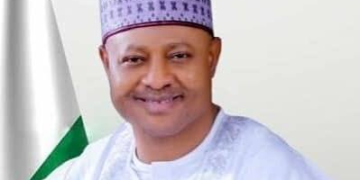
ABUJA, Nigeria — Deputy Spokesman of the House of Representatives, Philip Agbese, has rejected attempts to hold Federal Capital Territory Minister Nyesom Wike solely responsible for the recent flooding in Abuja, arguing that residents who block drainage channels and waterways with refuse must also accept responsibility.
Agbese said the Abuja flooding under Wike should not be reduced to accusations against the minister when human activities, particularly indiscriminate waste disposal and obstruction of drainage infrastructure, contribute to the problem.
Speaking with journalists in Abuja on Tuesday, the Labour Party lawmaker defended Wike’s infrastructure record and urged residents to cooperate with the FCT Administration in addressing environmental and drainage challenges.
His comments come amid growing debate over responsibility for the latest flooding, with Senator Ireti Kingibe, who represents the FCT in the Senate, accusing the administration of failing to adequately respond to warnings about drainage problems and developments affecting flood-prone areas.
The competing positions have turned the latest flooding into a wider debate about urban planning, drainage infrastructure, waste management and accountability in Nigeria’s capital.
Agbese Says Wike Cannot Take All the Blame
Agbese’s central argument is that government cannot solve Abuja’s environmental problems without cooperation from residents.
He specifically identified indiscriminate dumping of refuse as one of the activities contributing to Abuja flooding under Wike, saying waste deposited in drainage channels prevents stormwater from flowing freely.
When intense rainfall occurs, blocked drains can overflow onto roads, residential properties and commercial areas.
Agbese therefore argued that residents cannot contribute to the obstruction of drainage infrastructure and subsequently place all responsibility for the resulting flooding on the FCT Minister.
His argument is consistent with concerns repeatedly raised by environmental authorities about the role of waste disposal in worsening urban flooding.
But blocked drains are only one possible contributor to flooding.
The broader debate also involves drainage capacity, land-use planning, development on waterways and floodplains, infrastructure maintenance and the intensity of rainfall.
https://ogelenews.ng/abuja-flooding-under-wike
Lawmaker Defends Wike’s Infrastructure Record
Agbese also used the controversy to defend Wike’s performance since his appointment as FCT Minister.
He pointed to road, transportation, drainage and other infrastructure projects undertaken across Abuja and the satellite towns.
According to the lawmaker, the FCT Administration has completed 221 kilometres of the 317 kilometres of roads awarded in satellite towns since the beginning of President Bola Tinubu’s administration.
He cited projects including the Gwarinpa-Jahi Interchange, Airport-Kuje Road, Kuje-Gwagwalada Road and sections of the Outer Southern Expressway.
For Agbese, those projects demonstrate that assessing Abuja flooding under Wike solely through the latest flood incidents would ignore the administration’s wider infrastructure programme.
Road construction and flood management, however, are not necessarily interchangeable.
The existence of major road projects does not by itself determine whether drainage infrastructure is adequate in every flood-prone location.
That distinction is important in assessing the controversy fairly.
Agbese Uses Biblical Analogy to Defend Minister
The lawmaker employed a striking biblical analogy while defending Wike.
He likened blaming the FCT Minister for the flooding to the Israelites blaming Moses after being led towards the Promised Land.
Agbese’s point was that Wike’s infrastructure efforts should be acknowledged while residents accept their own responsibilities.
The analogy has attracted attention, but the substantive question remains whether the current administration’s policies have reduced or aggravated Abuja’s flood vulnerability.
That question cannot be answered by political rhetoric alone.
It requires examination of drainage infrastructure, building approvals, flood-risk assessments, blocked waterways and the effectiveness of development control.
Residents Accused of Blocking Drainage Channels
Waste disposal is at the centre of Agbese’s defence.
The Deputy House Spokesman said residents frequently dump refuse into drainage channels, contributing to flooding when heavy rainfall occurs.
The argument has practical merit.
Plastic waste, household refuse, sediment and other materials can significantly reduce the capacity of urban drainage systems.
Once a drain becomes blocked, stormwater can overflow even where drainage infrastructure was originally adequate.
Addressing Abuja flooding under Wike therefore requires public cooperation alongside government intervention.
Residents must stop treating drainage channels as refuse dumps.
But government also carries responsibility for providing effective waste collection, enforcing environmental regulations and routinely clearing drainage infrastructure.
Flood prevention cannot depend entirely on voluntary public behaviour.
Kingibe Offers Opposing Account
Agbese’s defence of the minister comes against a sharply different assessment from FCT Senator Ireti Kingibe.
Kingibe said she had repeatedly raised concerns about flooding and blocked drainage channels before the latest incidents.
She alleged that those concerns were ignored by Wike’s administration.
The senator has gone further, arguing that development around green spaces, flood channels, gullies and floodplains has worsened Abuja’s vulnerability to flooding.
Her allegations introduce another dimension to the debate.
If the problem were entirely caused by residents dumping refuse, improving waste management might substantially address it.
But if development has occurred on natural drainage routes or floodplains, the problem becomes one of urban planning and development control as well.
Determining the causes of Abuja flooding under Wike therefore requires separating political claims from technical evidence.
Wike Moves Against Structures on Waterways
The FCT Minister has meanwhile ordered action against buildings and other structures obstructing designated waterways following inspections of flood-affected areas.
Wike said structures found blocking water channels would be removed regardless of the status or political influence of their owners.
That response suggests the FCT Administration itself recognises that physical obstruction of waterways is an important component of the problem.
Removing structures that interfere with natural drainage may reduce risk in some locations.
But it also raises questions about how those structures were constructed in the first place.
If buildings were erected without planning approval, authorities must explain why enforcement did not occur earlier.
If approvals were granted, officials should establish whether those approvals complied with the Abuja Master Plan and applicable environmental requirements.
Flooding Is Usually a Multi-Factor Problem
The political argument over who should be blamed risks oversimplifying a complicated urban problem.
Abuja flooding under Wike can have multiple contributing factors simultaneously.
Blocked drainage can contribute.
Construction on waterways can contribute.
Insufficient drainage capacity can contribute.
Rapid urbanisation can increase surface runoff.
Poor maintenance can reduce the effectiveness of existing infrastructure.
Extreme rainfall can overwhelm systems that function adequately under normal conditions.
The fact that residents dump refuse into drains therefore does not automatically eliminate government’s responsibility.
Likewise, failures in government planning do not remove residents’ responsibility to properly dispose of waste.
A serious flood-management strategy must address both.
Abuja’s Rapid Growth Increases Pressure
Abuja has expanded considerably since becoming Nigeria’s federal capital.
New estates, roads, commercial centres and residential developments have transformed areas that were previously less densely built.
Urbanisation changes how rainfall behaves.
Natural soil absorbs water.
Concrete, asphalt and rooftops do not absorb rainfall in the same way.
As cities expand, more water flows rapidly into drainage systems.
That makes drainage planning increasingly important.
Managing Abuja flooding under Wike therefore requires infrastructure that keeps pace with the city’s continuing physical expansion.
Drainage channels designed decades ago may require expansion or redesign as surrounding neighbourhoods become more heavily developed.
Development Control Must Be Part of Solution
The FCT Administration’s demolition order highlights the importance of development control.
Building on waterways or floodplains can have consequences beyond the property involved.
A structure that narrows a drainage corridor can redirect water into neighbouring communities.
That is why planning regulations typically establish setbacks around waterways.
But enforcement should happen before construction is completed.
Allowing a building to reach completion before discovering that it obstructs a waterway creates enormous social and economic costs.
Effective management of Abuja flooding under Wike therefore requires planning authorities to detect violations during construction rather than relying primarily on demolition after disasters occur.
Drainage Maintenance Must Be Continuous
Drainage systems also require regular maintenance.
Cleaning drains immediately before or during the rainy season may not be enough.
Waste accumulates continuously.
Sediment builds up.
Vegetation can obstruct water channels.
Damaged infrastructure requires repairs.
The FCT Administration and area councils therefore need clearly defined maintenance schedules.
Residents should also have accessible channels for reporting blocked drains before flooding occurs.
Preventive maintenance is generally less disruptive than emergency response after homes and roads have already been flooded.
Accountability Should Go Beyond Political Blame
The exchange between Agbese and Kingibe demonstrates how quickly infrastructure problems can become political disputes.
One side says residents should stop blaming Wike.
Another says warnings to the administration were ignored.
Both claims deserve scrutiny.
But Abuja flooding under Wike should ultimately be examined through evidence.
Which drainage channels were blocked?
Which waterways have been encroached upon?
Were buildings approved on flood-prone land?
Were drains properly maintained?
Did officials receive earlier warnings?
What rainfall intensity did the affected infrastructure experience?
Those questions are more useful than simply deciding which politician should carry the blame.
Residents Also Have Clear Responsibilities
Agbese is correct on one fundamental point: residents have responsibilities.
Dumping refuse in drainage channels is unacceptable.
It can damage infrastructure and expose entire communities to avoidable flooding.
Residents should use authorised waste-disposal systems and report blocked waterways.
Property developers also have responsibilities.
They should comply with planning approvals, observe drainage setbacks and avoid construction on natural watercourses.
But enforcement remains government’s responsibility.
Authorities possess the legal power to approve developments, stop illegal construction, remove dangerous structures and sanction environmental violations.
That power must be exercised consistently.
Ogele News Analysis: The Question Is Not Wike or Residents, It Is What Caused the Flood
The original headline, “Wike not to blame for FCT floods, says Reps spokesman,” has two problems.
First, Philip Agbese is the Deputy Spokesman of the House of Representatives.
Second, the headline risks presenting his defence of Wike as a factual determination.
It is his position.
Senator Kingibe has publicly presented a substantially different account.
The stronger journalistic question is not whether Wike or residents should receive all the blame.
It is what actually caused or worsened the flooding.
Agbese’s argument about blocked drainage deserves serious consideration.
Residents who dump refuse into water channels contribute to a dangerous environmental problem.
But government cannot stop there.
The FCT Administration should establish whether drainage infrastructure in affected areas was properly maintained, whether developments have encroached on waterways and whether existing systems remain capable of handling current levels of urbanisation and rainfall.
Kingibe’s allegation that earlier warnings were ignored should similarly be tested against records rather than simply accepted because she is an elected representative.
This is where Ogele News should distinguish itself.
The story should not become Agbese versus Kingibe or Wike versus his critics.
The public-interest issue is whether Abuja’s planning, drainage and waste-management systems are capable of protecting residents.
If blocked refuse caused particular incidents, establish that.
If buildings obstructed waterways, identify how they received approval or why illegal construction was not stopped.
If drainage infrastructure is inadequate, determine what upgrades are required.
And where residents violate environmental regulations, enforce them.
The debate over Abuja flooding under Wike will produce plenty of political statements.
What Abuja residents need is a drainage system that works when the rain comes.
That should remain the real measure of accountability.
https://punchng.com/wike-not-to-blame-for-fct-floods-says-reps-spokesman/?utm_source=chatgpt.com