














Peter Obi 2027 presidential bid
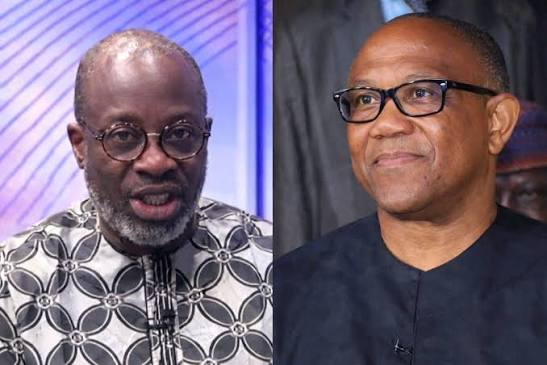
ABUJA, Nigeria — Former Ekiti State Governor Ayodele Fayose has argued that Peter Obi significantly weakened his chances of winning Nigeria’s 2027 presidential election when he left the African Democratic Congress, warning that a fragmented opposition would struggle to defeat the ruling All Progressives Congress.
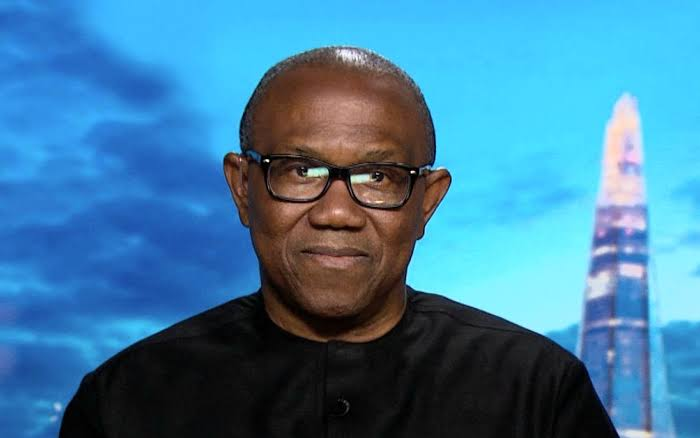
Fayose said the Peter Obi 2027 presidential bid faces a more difficult path following Obi’s departure from the ADC for the Nigeria Democratic Congress, particularly with former Vice President Atiku Abubakar remaining within the ADC political structure.
Speaking during an interview on TVC News’ Politics Tonight, Fayose described Obi as a strong and respected political figure but questioned whether he could overcome the electoral consequences of opposition fragmentation.
His remarks represent a notable shift from his earlier assessment of Obi’s political importance within the ADC.
Months earlier, Fayose had argued that Obi was effectively the political force sustaining the ADC and warned that the party could suffer badly if it failed to field the former Anambra State governor as its presidential candidate.
Now, with Obi outside the ADC, Fayose believes the same division could hurt Obi himself.
Fayose Questions Peter Obi 2027 Presidential Bid
Fayose’s argument centres on electoral mathematics.
The former Ekiti governor believes the Peter Obi 2027 presidential bid would have been considerably stronger within a broad opposition coalition capable of combining Obi’s support base with the political networks of other major opposition figures.
Obi’s decision to move to the Nigeria Democratic Congress changed that calculation.
Atiku remains a major figure within the ADC, while other opposition politicians continue to pursue separate political strategies.
Fayose’s concern is that several opposition candidates competing independently could divide votes that might otherwise be consolidated against President Bola Tinubu and the APC.
That argument has become one of the central issues shaping Nigeria’s emerging 2027 political contest.
The question is no longer simply who has the strongest opposition candidate.
It is whether opposition parties can build a sufficiently broad electoral coalition to compete effectively against the ruling party.
Fayose: Obi Remains a Strong Political Figure
Despite his pessimistic assessment, Fayose did not dismiss Obi as politically irrelevant.
He described the former Anambra governor positively while maintaining that the structure surrounding his presidential ambition had become more difficult.
That distinction matters.
Fayose’s argument is not necessarily that the Peter Obi 2027 presidential bid lacks popular support.
His contention is that popularity alone may not be enough to win a nationwide presidential election.
Nigeria’s presidential system requires candidates to build support across multiple regions, states and demographic groups.
Political parties also provide organisational structures needed to recruit agents, coordinate campaigns, mobilise voters and protect votes across thousands of polling locations.
A candidate can possess enormous personal popularity while still facing difficulties if the political organisation supporting that popularity is weak.
Atiku Factor Complicates Opposition Mathematics
Former Vice President Atiku Abubakar remains central to Fayose’s calculation.
Atiku has contested Nigeria’s presidency several times and retains political networks across different parts of the country.
If Atiku emerges as the ADC candidate while Obi contests under the NDC, opposition votes could potentially be divided between two major candidates.
The Peter Obi 2027 presidential bid would then need to overcome not only Tinubu and the APC but also competition from other opposition candidates.
Fayose believes that scenario benefits the incumbent.
That does not mean the result is predetermined.
Presidential elections are influenced by turnout, candidate popularity, economic conditions, party structures, regional alliances and events occurring during the campaign.
But opposition fragmentation can matter considerably in closely contested elections.
https://ogelenews.ng/peter-obi-2027-presidential-bid
Obi Left ADC Amid Internal Crisis
Obi’s departure from the ADC did not occur in a political vacuum.
The party had become an important platform for opposition politicians seeking to construct an alternative to the APC ahead of 2027.
But internal disagreements, leadership disputes and questions surrounding the presidential ticket complicated that coalition.
Other prominent politicians also reconsidered their positions.
Obi eventually moved to the Nigeria Democratic Congress, establishing a different platform for his presidential ambition.
That decision fundamentally changed the architecture surrounding the Peter Obi 2027 presidential bid.
Rather than fighting for the ADC ticket, Obi now has the task of building the NDC into an effective nationwide electoral vehicle.
That presents both an opportunity and a challenge.
He may enjoy greater control over his political direction, but the NDC must demonstrate that it possesses the organisational strength required for a presidential contest.
Fayose’s Position Has Changed
One of the most interesting elements of the latest comments is Fayose’s own political evolution.
Earlier in 2026, he was among those stressing Obi’s importance to the ADC.
In January, Fayose argued that Obi commanded substantial nationwide attention and warned about the consequences if the ADC failed to give him its presidential ticket.
By March, his warning had become even stronger.
Fayose said the ADC risked political collapse if Obi was absent from its presidential ballot.
At the time, his calculation was straightforward: Obi brought significant electoral energy to the ADC.
Now Fayose is applying essentially the same argument from the opposite direction.
If the ADC needed Obi, he suggests, Obi also needed the coalition.
That makes his latest assessment of the Peter Obi 2027 presidential bid more nuanced than a simple prediction that Obi will lose.
His broader point is that neither personal popularity nor party machinery alone may be sufficient against an incumbent president backed by a national ruling party.
Opposition Unity Becoming Central 2027 Issue
The wider significance of Fayose’s comments lies in the question of opposition unity.
Nigeria’s opposition landscape has undergone substantial realignment since the 2023 general election.
Politicians have moved between parties.
Coalitions have been formed and challenged.
Presidential aspirants have considered alliances while simultaneously protecting their own ambitions.
Those competing interests make unity difficult.
Every major candidate may agree that defeating the ruling party requires cooperation while disagreeing over the most important question: who should lead the coalition?
For supporters of the Peter Obi 2027 presidential bid, Obi’s performance in the 2023 election strengthens his claim.
For supporters of Atiku or other candidates, different calculations apply.
Reconciling those competing ambitions remains one of the opposition’s biggest challenges.
Obi’s 2023 Performance Still Matters
Any assessment of Obi’s chances must take account of his performance in the 2023 presidential election.
Running on the Labour Party platform, Obi emerged as one of the three leading presidential candidates and demonstrated an ability to mobilise significant support outside the traditional two-party structure.
His campaign was particularly energised by younger voters and the Obidient movement.
That performance changed perceptions about what was possible for a candidate operating outside the APC and Peoples Democratic Party establishments.
The Peter Obi 2027 presidential bid therefore cannot simply be dismissed because he changed parties.
Obi has demonstrated personal electoral appeal.
The question is whether that appeal can be expanded into a winning national coalition.
Party Structure Remains Critical
This is where Fayose’s argument deserves serious consideration.
Presidential campaigns require enormous organisation.
Candidates need polling agents.
They require coordinators across states and local governments.
Campaigns need legal teams, communications structures, election-day logistics and systems for monitoring results.
Political enthusiasm on social media cannot perform all those functions.
For the Peter Obi 2027 presidential bid, building the NDC into an effective electoral organisation may therefore be just as important as public rallies or online popularity.
The party must demonstrate strength beyond Obi’s personal following.
It needs credible candidates for other offices, functioning state structures and grassroots organisation.
Without those elements, a presidential candidate can struggle to convert popularity into votes and votes into electoral victory.
Tinubu Benefits From Opposition Fragmentation
President Bola Tinubu and the APC will naturally watch opposition developments closely.
An incumbent president ordinarily possesses significant political advantages.
The governing party already has national structures.
It controls several states and has elected officials across the country.
Opposition division can strengthen that advantage.
If Obi, Atiku and other major figures compete separately, each must build an independent coalition capable of defeating the APC.
That is the logic behind Fayose’s warning.
But the ruling party also faces its own test.
Voters will assess Tinubu’s administration on economic conditions, security, infrastructure, employment and the cost of living.
Opposition fragmentation may help an incumbent politically, but government performance will remain an important factor.
2027 Contest Will Not Be Decided by Party Defections Alone
Political defections attract headlines, but Nigerian elections are ultimately decided by voters.
The Peter Obi 2027 presidential bid will depend on far more than the party abbreviation beside his name.
The condition of the economy when Nigerians vote will matter.
Security will matter.
Candidate alliances will matter.
Regional calculations will matter.
Campaign organisation and voter turnout will matter.
The credibility of the electoral process will also matter.
Fayose is therefore offering a political assessment rather than announcing an inevitable outcome.
His experience as a former governor gives his argument political weight, but it does not make his prediction certain.
That distinction should remain clear in reporting.
Ogele News Analysis: Fayose’s Reversal Is the Bigger Story
The original headline, “Obi lost 2027 chance the day he left ADC — Fayose,” is powerful but overly definitive.
Peter Obi has not mathematically or legally “lost” his chance of becoming president.
Fayose is making a political prediction.
A stronger journalistic headline should therefore clearly attribute the assessment rather than presenting it as fact.
There is also a more interesting dimension.
Only months ago, Fayose was arguing that the ADC could effectively be finished if Obi did not become its presidential candidate.
He regarded Obi as so important to the opposition party that his absence could undermine its electoral prospects.
Today, he argues that Obi’s departure has damaged Obi instead.
Those positions are not necessarily contradictory.
Together, they reveal Fayose’s deeper argument: Obi and the broader opposition coalition were stronger together than apart.
That is the real political issue.
The Peter Obi 2027 presidential bid still possesses a recognisable candidate, an established support movement and the political capital generated by his 2023 campaign.
What remains uncertain is whether the NDC can build the nationwide machinery required to convert that support into victory.
Atiku and the ADC face a similar question.
A party may possess experienced politicians and established networks, but it still needs voters.
Fayose’s warning therefore applies beyond Obi.
If Nigeria’s major opposition figures spend the months before the election competing primarily against one another, the APC could become the biggest beneficiary.
But if political circumstances eventually produce cooperation, the electoral calculation could change again.
That is why it is premature to declare anyone’s 2027 chances dead.
Nigeria’s presidential race will ultimately be decided by voters, not political predictions.
What Fayose has identified, however, is perhaps the opposition’s most important strategic problem: how to unite competing political ambitions behind an electoral structure capable of challenging an incumbent president.
For Peter Obi, leaving the ADC may have provided greater political independence.
Whether that independence becomes an advantage or a costly fragmentation of opposition votes is one of the questions the 2027 election will answer.