

















Kano women empowerment grant
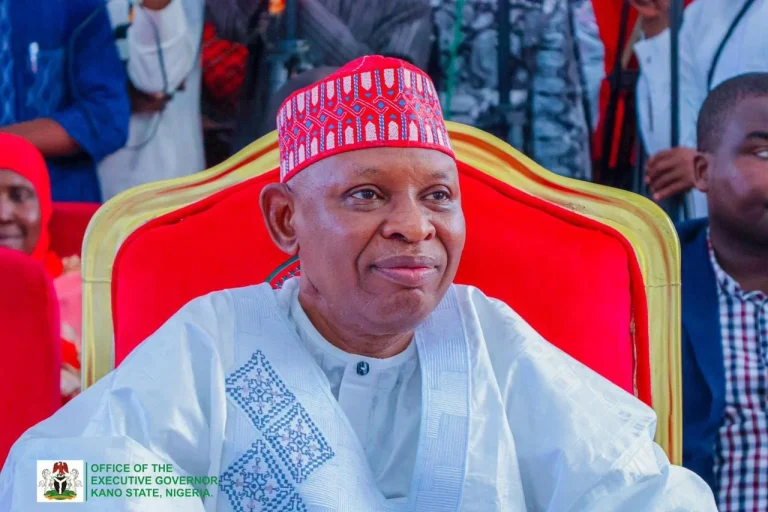
Kano State Governor, Abba Kabir Yusuf, has distributed ₦260 million to 5,200 women across the state’s 44 local government areas under a continuing economic empowerment programme designed to strengthen small businesses, improve household incomes and promote financial independence among women.
Each beneficiary is to receive ₦50,000 under the latest round of the Kano women empowerment grant, with the government urging recipients to invest the money in productive ventures capable of generating income and improving their families’ living conditions.
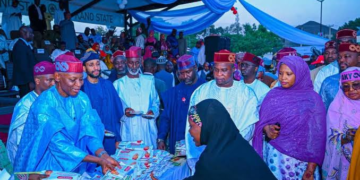
The latest disbursement took place at the Government House in Kano as the Yusuf administration renewed its commitment to grassroots economic support, particularly for women operating small businesses or struggling with the rising cost of maintaining their households.
At ₦50,000 for each of 5,200 beneficiaries, the latest intervention represents a total direct injection of ₦260 million into households and micro-enterprises across Kano.
For the government, the programme is being presented as an economic intervention.
For the beneficiaries, however, its ultimate value will depend on whether the money can be converted into sustainable businesses at a time when the cost of trading, transportation and basic commodities continues to place pressure on small-scale entrepreneurs.
Kano women empowerment grant targets grassroots businesses
Governor Yusuf said the Kano women empowerment grant was designed to give women an opportunity to establish or expand small businesses and become increasingly self-reliant.
He urged beneficiaries to use the funds prudently rather than treating the intervention merely as temporary financial relief.
Women dominate a significant part of Nigeria’s informal economy, particularly petty trading, food processing, tailoring, agricultural processing and other small-scale commercial activities.
In Kano, thousands of households depend partly or entirely on such businesses.
The administration believes direct financial support can provide working capital to women who would ordinarily struggle to obtain conventional bank loans.
For a petty trader, ₦50,000 could provide additional inventory.
For another beneficiary, it could purchase materials required for tailoring, food preparation, farming, processing or another small enterprise.
But the success of the Kano women empowerment grant cannot ultimately be measured only by the number of women handed cash.
Its real impact will depend on how many businesses survive, grow their capital and generate sustainable income after the initial support has been spent.
Programme dates back to 2024
Although the latest intervention has generated renewed attention, the empowerment programme is not entirely new.
Governor Yusuf originally introduced the monthly scheme in May 2024, when 5,200 women were selected to receive ₦50,000 each.
Under the initial structure, 100 women were selected from each of Kano’s 36 local government areas outside the metropolis, while 200 women were drawn from each of the eight metropolitan councils.
That selection formula produced the 5,200 monthly beneficiary figure.
At ₦50,000 each, every round involving 5,200 women costs approximately ₦260 million.
The governor had said at the launch that the intervention was intended to improve the socio-economic condition of low-income women and provide capital for small-scale businesses.
Since then, different batches of the Kano women empowerment grant have been disbursed.
Another ₦260 million was distributed to 5,200 women in July 2024, while another round was announced in January 2025.
In October 2025, the administration again empowered a fresh batch of 5,200 women with ₦260 million.
The programme continued into 2026.
This history is important because it means the latest payment should be viewed as part of a longer-running empowerment strategy rather than a completely new policy.
Beneficiaries expanded to 6,680 in 2026
The programme has also undergone changes.
In April 2026, the state government expanded one round of the intervention from 5,200 beneficiaries to 6,680 women drawn from the 44 local government areas.
Each beneficiary was again entitled to ₦50,000.
The expansion demonstrated that the number of women covered under the initiative is capable of changing depending on the particular round of disbursement.
The latest exercise has returned attention to the 5,200-beneficiary structure.
This makes transparency particularly important.
As the Kano women empowerment grant continues, the public should be able to establish clearly how beneficiaries are selected, how frequently particular individuals can benefit, how much has been spent cumulatively and whether the programme is producing measurable improvements in household incomes.
Government says grants are reducing poverty
Yusuf has repeatedly described the scheme as part of his administration’s poverty-reduction strategy.
In January 2026, the governor said the programme was designed to help beneficiaries participate more actively in the local economy.
He cited reports of women who had expanded businesses after receiving the support.
The administration has also described 2026 as a period of intensified empowerment initiatives targeted at women, young people and other economically vulnerable residents.
The Kano women empowerment grant consequently fits into a broader government strategy of using direct interventions to support households and stimulate grassroots economic activity.
The argument behind such programmes is straightforward.
If small traders receive capital and spend it on inventory, equipment or production, the money does not necessarily end with the initial beneficiary.
It circulates through suppliers, transport operators, markets and other parts of the local economy.
But the durability of that effect depends on what happens after the first investment.
If a beneficiary invests the ₦50,000 and generates a profit, the intervention begins functioning as productive capital.
If it is consumed entirely on immediate household expenses, it provides temporary relief but may not necessarily deliver the long-term business growth envisaged by the programme.
https://ogelenews.ng/kano-disburses-₦260m-to-5200-women-as-yusuf-expands…
Poverty remains major challenge
The economic conditions behind the Kano women empowerment grant are significant.
Kano is Nigeria’s most populous state and has a vast informal economy.
Many households depend on petty trading, agriculture, artisanal work and micro-enterprises for survival.
For low-income women operating at that level, access to formal credit can be extremely difficult.
Commercial lending rates, collateral demands and documentation requirements often put conventional bank credit outside their reach.
This creates a strong argument for carefully structured microfinance and empowerment programmes.
But direct grants also require strong monitoring.
Without transparent beneficiary selection, public empowerment schemes can become vulnerable to political patronage, duplication, ghost beneficiaries and diversion.
The Kano government has previously acknowledged problems in the implementation of the programme.
In October 2025, Yusuf said measures had been introduced after discrepancies were discovered in an earlier disbursement.
The government subsequently established local committees involving traditional authorities, council officials and other stakeholders to improve accountability.
That history makes oversight of subsequent disbursements particularly important.
Women urged to build sustainable ventures
Under the latest round of the Kano women empowerment grant, beneficiaries have again been encouraged to invest in viable income-generating activities.
The goal, according to the administration, is not merely to give women cash but to help them attain greater economic independence.
That distinction matters.
A successful empowerment programme should ideally create businesses that eventually operate without repeated government assistance.
For policymakers, this requires moving beyond disbursement ceremonies and documenting results.
How many beneficiaries started new businesses?
How many expanded existing enterprises?
How many businesses remained active six months later?
How many beneficiaries increased their monthly incomes?
How many additional workers were employed?
Those are the questions that would provide a clearer picture of whether the scheme is reducing poverty rather than simply distributing cash.
Political undertone ahead of 2027
The latest disbursement also comes as political activities intensify ahead of Nigeria’s 2027 general elections.
During another event connected with the programme, Yusuf urged women and young people to collect their Permanent Voter Cards and participate in the election.
The governor, who moved from the New Nigeria People’s Party to the All Progressives Congress in January 2026, has also called for continued support for the ruling party.
Kano is expected to remain one of the most politically important states in the 2027 elections because of its enormous voting population and historic influence in northern politics.
This inevitably gives social intervention programmes additional political significance.
Public officials have a legitimate responsibility to implement empowerment policies.
But government-funded interventions must remain distinguishable from partisan inducement.
The central issue is whether beneficiaries are selected fairly on the basis of economic need and programme criteria rather than party loyalty or expected electoral support.
That distinction becomes especially important as elections approach.
Two women receive electric mobility tricycles
The latest exercise also included assistance for two women living with physical disabilities.
Yusuf identified the beneficiaries, who had been using manual tricycles, and provided them with electric-powered mobility tricycles to improve their movement.
The intervention adds an inclusion dimension to the wider Kano women empowerment grant, although disability advocates would likely expect such support to be incorporated into a broader and more systematic programme rather than limited to individual cases.
Economic empowerment for persons with disabilities often requires more than capital.
Accessible transportation, education, technology, employment opportunities and appropriate infrastructure can determine whether beneficiaries are able to participate fully in economic activity.
₦260m figure puts accountability in focus
The size of the intervention also deserves attention.
One round of 5,200 beneficiaries at ₦50,000 each amounts to ₦260 million.
If that sum is distributed repeatedly, the cumulative expenditure becomes substantial.
That does not make the programme unjustifiable.
A well-managed programme that helps thousands of women build sustainable businesses could generate considerable social and economic benefits.
However, the larger the public expenditure, the stronger the need for measurable outcomes.
Government should therefore be able to provide cumulative information on the number of unique beneficiaries, total amount disbursed, geographical distribution and business survival rates.
Such data would allow residents to determine whether the Kano women empowerment grant represents value for public money.
It would also help distinguish genuine economic empowerment from periodic cash transfers.
From cash assistance to economic independence
The larger policy question is what happens after beneficiaries receive their ₦50,000.
Nigeria has seen numerous empowerment schemes at federal, state and local government levels.
Many begin with ambitious targets and public disbursement ceremonies.
Far fewer are subjected to rigorous long-term evaluation.
Kano has an opportunity to improve on that pattern.
If the Kano women empowerment grant is followed by basic business training, access to cooperatives, financial literacy, savings programmes and pathways to additional credit, beneficiaries may have a better chance of turning modest start-up capital into durable enterprises.
The programme could also identify successful beneficiaries and provide a second level of financing based on performance rather than simply repeating grants indefinitely.
That would allow the government to demonstrate progression from poverty relief to genuine entrepreneurship.
A useful intervention, but results must be measured
There is little doubt that ₦50,000 can make a meaningful difference to a low-income trader who lacks working capital.
It can restock a stall, purchase raw materials, finance a small production cycle or help establish a modest home-based business.
For 5,200 women, the cumulative effect could be significant.
But cash distribution alone is not proof of economic empowerment.
The test of the Kano women empowerment grant will be found in what happens months after the cameras leave the disbursement venue.
If beneficiaries build viable enterprises, increase their incomes and become less dependent on government support, the programme will have achieved something important.
If recipients repeatedly return for another grant without measurable economic progress, the programme risks becoming an expensive welfare cycle.
Governor Yusuf’s administration has committed hundreds of millions of naira to each major round of the initiative.
With that level of public investment comes an obligation to demonstrate results.
For Kano’s 5,200 latest beneficiaries, ₦50,000 represents an opportunity.
For the government, the real challenge is ensuring that an empowerment cheque becomes something more enduring: a business, an income and, ultimately, greater economic independence.