















Adamawa NNPC pipeline vandalism
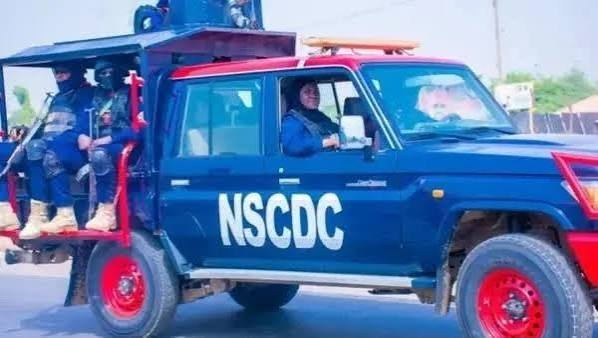
YOLA, Nigeria — The Nigeria Security and Civil Defence Corps has arrested three suspects in Adamawa State over the alleged transportation of 250 pieces of vandalised pipeline materials belonging to the Nigerian National Petroleum Company Limited.
The suspects were intercepted by personnel of the NSCDC Commandant’s Special Squad at Jereng in Mayo-Belwa Local Government Area following intelligence about the movement of suspected stolen pipeline materials.
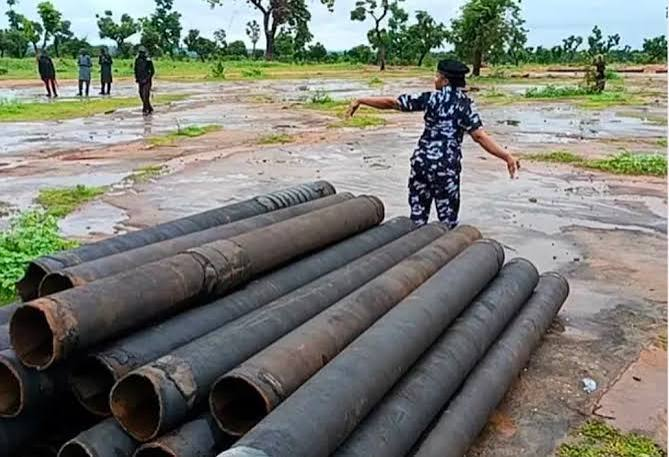
According to the command, the Adamawa NNPC pipeline vandalism case involved approximately 250 pieces of metal pipes, each measuring between eight and 10 feet, which were allegedly concealed beneath bags of cassava in an apparent attempt to disguise the consignment.
Preliminary investigations indicate that the materials were loaded at Namnai in Gassol Local Government Area of neighbouring Taraba State and were being transported to Kano when security operatives intercepted them.
The command identified Adamu Lawan as the alleged principal suspect behind the consignment, saying efforts were underway to apprehend him.
The three arrested suspects remain in custody while investigators work to establish their individual roles, trace the origin of the pipes and determine whether a wider network was involved.
Intelligence Leads NSCDC to Suspects
The operation followed what NSCDC described as credible intelligence concerning the movement of suspected vandalised pipeline materials.
Rather than discovering the materials at the location where they were allegedly removed, operatives intercepted them while they were being transported.
This distinction is important.
At this stage, the three men are suspects. Their individual involvement in the actual removal of the pipelines has not been judicially established.
The investigation into the Adamawa NNPC pipeline vandalism case will therefore need to determine who removed the materials, who arranged transportation, who financed the operation and who was supposed to receive the pipes in Kano.
The Guardian reports that investigators are also seeking to determine the intended destination of the materials and whether additional members of the alleged network were involved.
250 Pipeline Sections Hidden Under Cassava
One of the most striking elements of the operation is the alleged concealment method.
According to the NSCDC account, the truck contained 250 metal pipes measuring approximately eight to 10 feet each.
The materials were allegedly hidden under bags of cassava.
If investigators establish that the concealment was deliberate, it could provide an important clue about the sophistication of the operation.
Moving hundreds of metal pipeline sections is not a minor undertaking.
It requires transportation, loading arrangements and a destination where the materials can be received, stored, processed or resold.
The Adamawa NNPC pipeline vandalism investigation should consequently extend beyond the people physically present when the truck was intercepted.
Suspected Mastermind Remains at Large
Security authorities have identified Adamu Lawan as the principal suspect allegedly connected to the consignment.
He had not been arrested at the time of the latest reports.
The NSCDC says efforts are underway to locate him.
Finding the alleged organiser could prove important to understanding the wider operation.
Pipeline vandalism frequently involves more than those caught transporting stolen materials.
There may be people responsible for identifying vulnerable infrastructure, dismantling pipes, arranging trucks, financing operations and purchasing stolen materials.
If the Adamawa NNPC pipeline vandalism case involves such a network, arresting transporters without identifying the organisers and buyers would leave significant parts of that network intact.
Pipes Allegedly Came From Taraba
Preliminary findings add an interstate dimension to the investigation.
Although the suspects were arrested in Adamawa, investigators say the pipeline materials were loaded at Namnai in Gassol LGA of Taraba State.
Their reported destination was Kano.
That creates a potential chain running through multiple states.
Investigators will need to establish where the materials were originally removed and whether the loading point in Taraba was simply a temporary collection location.
They must also determine who was expecting the shipment in Kano.
Following that trail could prove more valuable than treating the interception as an isolated Adamawa arrest.
Adamawa Has Seen Similar Pipeline Interceptions
The latest Adamawa NNPC pipeline vandalism case is particularly significant because it is not the first large recovery of suspected vandalised NNPC materials in the area.
In November 2025, the NSCDC intercepted a truck carrying more than 200 pieces of suspected vandalised NNPC pipelines in Adamawa.
Officials said at the time that another truck containing more than 300 pipeline pieces had been intercepted only weeks earlier.
The repeated recovery of large quantities of pipeline materials raises an important question.
Is Adamawa merely an interception point, or has the area become part of an established transportation corridor for stolen petroleum infrastructure?
That is something investigators should examine.
Repeated seizures along similar routes can provide intelligence about criminal logistics, collection points and potential buyers.
https://ogelenews.ng/nscdc-arrests-three-over-alleged-theft-of-250-nnpc-…
Pipeline Theft Goes Beyond Oil Theft
Public discussions about pipeline vandalism in Nigeria often focus on crude oil theft.
But criminals can also target the physical infrastructure itself.
NNPC Ltd has warned that organised groups are digging up and removing pipeline sections for illegal sale.
In June, the company said criminals sometimes disguise themselves as government or NNPC task forces supposedly recovering abandoned pipelines and then collaborate with local actors to excavate the infrastructure.
That makes the Adamawa NNPC pipeline vandalism investigation potentially more complicated than a conventional theft case.
Security agencies need to determine whether those involved claimed to have authorisation to remove the materials and whether false documentation or impersonation was used.
NNPC Records 24 Pipeline Theft Cases
The national figures provide important context.
NNPC Ltd disclosed in June that its pipeline network recorded 24 cases of pipeline theft between 2025 and the first part of 2026.
Nineteen cases were reported in 2025, while another five had been recorded in 2026 at the time of the disclosure.
NNPC’s Nigerian Pipelines and Storage Company operates more than 5,000 kilometres of crude oil and petroleum-product pipelines.
The company specifically identified theft along the Enugu-Makurdi-Yola corridor, as well as sections of the Warri-Kaduna and Jos-Gombe networks.
This gives the Adamawa interception national significance.
It is part of an ongoing struggle to protect infrastructure that supports Nigeria’s energy system.
Pipeline Vandalism Is Economic Sabotage
The theft of pipeline infrastructure carries costs beyond the market value of the metal involved.
Removing pipeline sections can disrupt petroleum transportation.
Replacement and repair require money.
Damaged infrastructure can create safety risks.
Where petroleum products remain inside compromised systems, vandalism can also result in fires, explosions, contamination and environmental damage.
NNPC has described attacks on energy infrastructure as threats to national development, energy security and investor confidence.
This is why the Adamawa NNPC pipeline vandalism case deserves treatment as more than an ordinary theft story.
Critical national infrastructure ultimately belongs to an economic system on which millions of Nigerians depend.
Buyers of Stolen Pipes Must Also Be Traced
The alleged Kano destination may prove particularly important.
If stolen pipeline materials have a commercial destination, somebody must be prepared to purchase them.
That makes receivers and buyers central to any serious investigation.
Security agencies can arrest individuals removing or transporting pipes, but the economic incentive remains if a profitable market continues to exist for stolen infrastructure.
The Adamawa NNPC pipeline vandalism investigation should therefore follow the money and the materials.
Who ordered the consignment?
Who was paying for it?
What would happen to the pipes after reaching Kano?
Were they destined for scrap-metal processing, resale or another use?
Answers to those questions could expose the commercial structure supporting pipeline theft.
Prosecution Will Be the Real Test
The three arrested individuals are currently being investigated for possible prosecution.
That wording matters.
An arrest is not a conviction.
Security agencies must gather admissible evidence capable of establishing the alleged offences before a court.
The suspects should be treated according to Nigerian law and afforded the appropriate legal process.
At the same time, successful prosecution where evidence supports charges is an important part of deterrence.
Publicising arrests without eventually prosecuting well-investigated cases does little to dismantle organised networks.
The real test of the Adamawa NNPC pipeline vandalism operation will therefore come after the television cameras and headlines disappear.
NSCDC’s Critical Infrastructure Mandate
The operation falls squarely within the NSCDC’s statutory security responsibilities.
The Corps identifies the protection of critical national assets and infrastructure, including oil pipelines, power installations and telecommunications infrastructure, as one of its core mandates.
The agency said in February that it had arrested more than 2,677 suspects for offences including vandalism, illegal mining, kidnapping and other forms of economic sabotage over the previous five years.
Those figures demonstrate the scale of the wider enforcement challenge.
Nigeria has thousands of kilometres of strategic infrastructure spread across areas that cannot all be continuously guarded by security personnel.
Intelligence therefore becomes critical.
Communities Can Help Protect Infrastructure
Local communities are often the first to notice unusual activity around pipelines.
Removing large metal sections generally requires equipment, manpower and transportation.
Those activities can create opportunities for residents to alert security agencies.
But community cooperation depends on trust.
People need secure channels for reporting suspicious activities without exposing themselves to retaliation.
NNPC and security agencies have repeatedly encouraged citizens to provide timely information on attacks against critical infrastructure.
The apparent intelligence behind the latest operation demonstrates why such information can matter.
Preventing the next Adamawa NNPC pipeline vandalism incident is preferable to recovering materials after infrastructure has already been destroyed.
Technology Should Complement Security Patrols
Nigeria cannot realistically station officers along every kilometre of pipeline.
Technology must therefore play a greater role.
Surveillance systems, intrusion detection, geospatial monitoring and rapid-response mechanisms can help authorities identify unusual activity around strategic pipeline corridors.
But technology alone will not solve the problem.
Criminal networks adapt.
Effective protection requires combining surveillance with intelligence, community cooperation, law enforcement and prosecution.
Recovered materials should also be properly documented and traced wherever possible.
A pipeline section is evidence.
Its location, markings and physical characteristics can potentially help investigators establish where it came from and how it entered an illegal supply chain.