
















Kano women empowerment grant
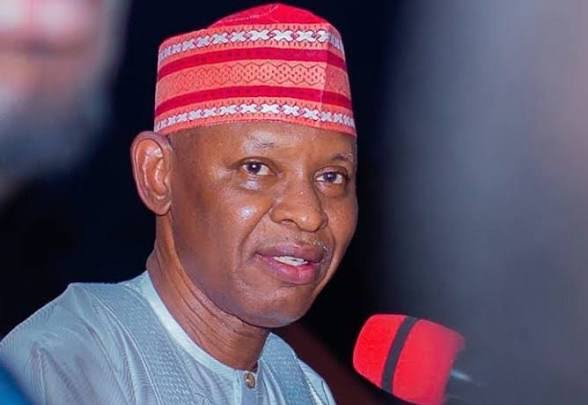
Kano State Governor, Abba Kabir Yusuf, has announced a ₦50,000 monthly financial support package for 5,200 women, bringing the value of each full round of payments to ₦260 million as the government seeks to strengthen small businesses and improve household livelihoods.
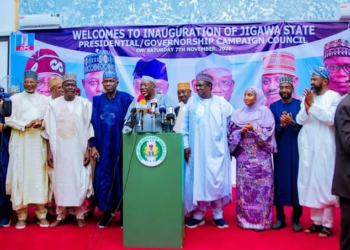
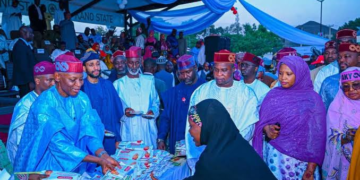
The latest announcement of the Kano women empowerment grant came during a ceremony at the Open Theatre, Government House, Kano, on Monday, November 9, 2026.
According to a statement issued on Tuesday by the governor’s Chief Press Secretary, Mustapha Muhammad, the intervention is designed to help women establish businesses, expand existing enterprises and become financially independent.
The programme also raises questions about its long-term funding, the selection of beneficiaries and the effectiveness of previous empowerment initiatives introduced by the state government.
Kano Women Empowerment Grant Targets Small Businesses
Under the Kano women empowerment grant, each of the 5,200 selected women is expected to receive ₦50,000 monthly to support income-generating activities.
At that rate, a complete monthly payment cycle would cost the state government ₦260 million.
If payments continued at the same rate for an entire year, the financial commitment would reach ₦3.12 billion, assuming the number of beneficiaries and the value of each payment remained unchanged.
The annual figure is a mathematical projection rather than a confirmed budgetary allocation.
Governor Yusuf said the financial assistance was intended to improve women’s economic circumstances by giving them resources to establish or strengthen businesses capable of generating sustainable income.
He encouraged beneficiaries to invest the money in productive ventures rather than activities that would offer little lasting economic benefit.
For women engaged in petty trading, food processing, tailoring and other small-scale businesses, additional working capital could provide opportunities to purchase goods, acquire basic equipment or increase business turnover.
However, the extent of those benefits would depend on how recipients invest the funds and whether their businesses generate sufficient returns.
Yusuf Promises Transparency in Kano Women Empowerment Grant
The governor assured residents that his administration had established measures to ensure the Kano women empowerment grant reaches the intended beneficiaries.
He maintained that transparency, fairness and accountability would guide implementation.
The assurance is significant because public empowerment programmes require clear procedures for identifying beneficiaries, verifying payments and preventing irregularities.
Although the government outlined its commitment to accountability, the November announcement did not provide a detailed public breakdown of the beneficiaries, their selection criteria or the mechanism through which payments would be independently verified.
Making such information available, while protecting beneficiaries’ personal financial details, would help residents assess the programme’s implementation.
It would also provide an opportunity to establish whether assistance is reaching low-income women most in need of financial support.
Kano’s ₦50,000 Women Empowerment Programme Began in 2024
The latest announcement comes against the background of an earlier intervention launched by the Yusuf administration.
In May 2024, the Kano State Government introduced a monthly empowerment programme covering 5,200 women across the state’s 44 local government areas.
At the time, the government explained that the beneficiaries included 3,600 women from 36 rural local government areas and 1,600 women from eight metropolitan councils.
The arrangement provided for 100 beneficiaries from each rural council and 200 from each metropolitan council.
Each participant was allocated ₦50,000 under the initiative.
https://ogelenews.ng/kano-women-empowerment-grant-₦260m-for-5200-women
The earlier programme was intended to support small-scale enterprises and improve the financial circumstances of women and their families.
The state government subsequently reported further empowerment payments.
In April 2026, Governor Yusuf’s administration announced the disbursement of ₦50,000 each to 6,680 women, with the government describing the exercise as part of its continuing empowerment efforts.
That development makes it important to clarify whether the November Kano women empowerment grant announcement represents another payment cycle, a fresh selection of beneficiaries or a separate phase of the existing scheme.
The government has not clearly established that distinction in the latest reports.
How the Kano Women Empowerment Grant Could Support Families
The economic importance of the Kano women empowerment grant extends beyond the immediate value of each payment.
For households that depend on informal trading and small businesses, access to working capital can influence income stability and the ability to meet everyday expenses.
A woman operating a small food business, for example, could use additional capital to purchase ingredients in larger quantities, while a trader might expand her stock.
Such investments could potentially improve earnings if supported by consistent customer demand and sound financial management.
However, a ₦50,000 grant does not automatically guarantee business growth or financial independence.
Rising operating costs, transport expenses, unstable demand and other commercial difficulties can reduce the value of small-business capital.
For this reason, access to basic business training, record-keeping skills and market opportunities could help beneficiaries make more productive use of the assistance.
The long-term success of the scheme will ultimately depend on measurable improvements in beneficiaries’ livelihoods rather than the amount announced at a public ceremony.
Emir of Gaya Commends Government’s Intervention
Speaking at the event, the Emir of Gaya, Aliyu Ibrahim Abdulkadir, welcomed the financial assistance and described it as an intervention capable of improving women’s economic circumstances.
The traditional ruler praised the state government for its development projects and empowerment initiatives, expressing the view that such programmes could benefit communities at the grassroots.
His remarks reflected support for measures intended to strengthen household welfare and expand economic opportunities.
Nevertheless, the effectiveness of the Kano women empowerment grant will require evidence of how recipients have used the funds and whether the intervention has improved their financial position.
Independent assessments, beneficiary interviews and regular public reports could provide valuable information about the programme’s achievements and limitations.
APC Support Appeal Raises Questions About Public Empowerment Programmes
The November event also featured a political appeal ahead of Nigeria’s 2027 general elections.
The Commissioner for Women Affairs, Children and People with Special Needs, Hajiya Amina Abdullahi, urged beneficiaries to support the All Progressives Congress at different levels in the forthcoming elections.
She argued that retaining the party in power would create opportunities to continue and expand programmes aimed at improving women’s welfare.
The appeal introduces an important distinction between government-funded social interventions and political party activities.
Public empowerment programmes are expected to operate according to established eligibility requirements and administrative procedures.
The commissioner’s remarks, as reported, do not by themselves establish that beneficiaries were required to support a political party to receive assistance.
However, clear separation between public benefits and partisan activities is important for maintaining confidence in the fairness of government interventions.
What Residents Need to Know About the Kano Women Empowerment Grant
Despite the government’s stated objectives, several operational details remain important to understanding the latest Kano women empowerment grant announcement.
These include whether the 5,200 beneficiaries are new recipients, how women are selected, whether payments will continue for a specified number of months and which government agency is responsible for monitoring the programme.
Another important issue is whether the state has assessed the commercial performance of businesses supported through earlier rounds of the scheme.
Such information could help determine whether the financial assistance is achieving its intended purpose.
The government could also strengthen public confidence by releasing periodic summaries of the number of beneficiaries paid, the total amounts disbursed and the results of its monitoring activities.
Beyond Cash Payments: Measuring the Programme’s Impact
For Governor Yusuf’s administration, the central challenge is ensuring that the Kano women empowerment grant delivers benefits that extend beyond immediate financial relief.
Cash assistance can provide a useful starting point for women who lack sufficient capital to establish or expand small businesses.
Its lasting value, however, depends on whether beneficiaries can translate that support into reliable income and stronger household finances.
With ₦260 million required for each full monthly payment cycle covering 5,200 women, the programme represents a substantial potential recurring public expenditure.
That makes transparent implementation, financial sustainability and measurable outcomes especially important.
As the Kano State Government continues its empowerment agenda, attention will increasingly turn from the size of its financial commitments to the results achieved by women who receive the assistance.
For the beneficiaries, the defining question is whether the Kano women empowerment grant can become a foundation for lasting economic independence rather than temporary financial support.
Ogele News