











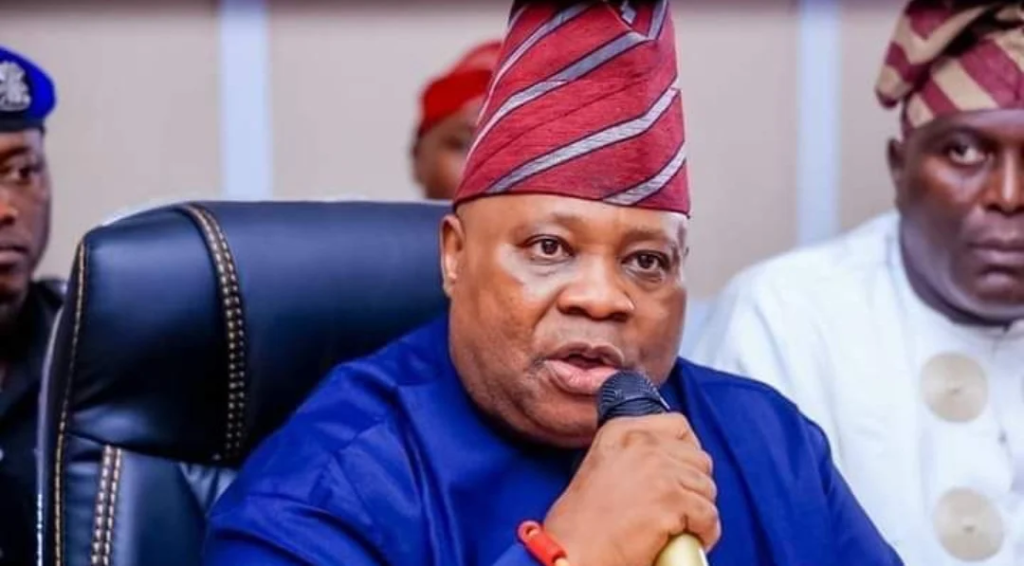
Adeleke’s dancing does not affect governance
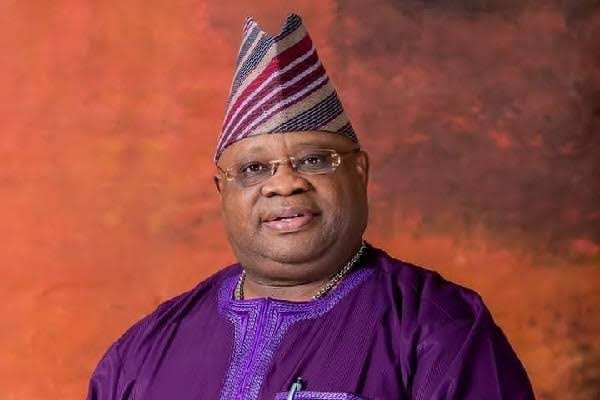
Osun State Governor Ademola Adeleke has defended his trademark public dancing, dismissing suggestions that his energetic appearances at political and social events undermine his seriousness or ability to govern the state.
Adeleke said he would continue dancing because it is something he enjoys and also represents, for him, an expression of gratitude to God.
The governor maintained that Adeleke’s dancing does not affect governance, arguing that his public personality should be separated from the responsibility of running the affairs of Osun State, Adeleke’s dancing does not affect governance.
Speaking during an appearance on Channels Television’s Politics Today, Adeleke rejected the suggestion that his dancing could become a political liability.
“I will keep dancing because I love to dance, I love to praise my God,” the governor said, adding that he would continue to combine that part of his personality with his official responsibilities.
The remarks reopened a debate that has followed Adeleke throughout his political career: should a governor’s public style matter if he can demonstrate results in office?
Adeleke refuses to abandon dancing
Adeleke has never attempted to distance himself from the dancing image that has become closely associated with his political identity.
Long before becoming governor, videos of him dancing at public functions regularly attracted attention online.
That visibility eventually contributed to the popular description of Adeleke as the “Dancing Governor”.
Political opponents have sometimes attempted to turn the nickname against him, portraying his dancing as evidence that he lacks the seriousness expected of a state chief executive.
Adeleke rejects that characterisation.
His argument that Adeleke’s dancing does not affect governance rests on a straightforward distinction: dancing is part of his personality, while governing is measured through policies, projects and the administration of the state.
For the governor, one does not prevent the other, Adeleke’s dancing does not affect governance.
‘I will keep dancing’
Adeleke was emphatic when asked about the subject.
Rather than promise to reduce his dancing because of political criticism, he said he intended to continue.
He explained that dancing is connected not only to enjoyment but also to his religious expression and gratitude.
The governor has made similar comments before.
In September 2023, former President Olusegun Obasanjo publicly described Adeleke as a governor who could dance and still work.
Speaking during a thanksgiving service in Lagos, Obasanjo acknowledged the criticism surrounding Adeleke’s public image but said he had also heard reports that the governor was working hard for Osun residents.
Adeleke responded at the time by saying he was not ashamed to praise God through songs and dancing.
He also argued that his responsibility was to ensure that his administration delivered democratic dividends to the people.
The governor’s latest defence that Adeleke’s dancing does not affect governance therefore represents a continuation of a position he has maintained since taking office.
https://ogelenews.ng/adeleke-defends-public-dancing-says-it-does-not-aff…
Critics question seriousness
The controversy is ultimately about political image.
Governors in Nigeria are traditionally expected to project an image of authority and formality.
Adeleke’s personality is noticeably different.
His appearances at public events can include music, dancing and enthusiastic interaction with supporters.
For his supporters, that style makes him approachable and distinguishes him from politicians who appear distant from ordinary citizens.
For his critics, however, the frequent dancing can appear inconsistent with the gravity of governing a state facing economic, infrastructure and social challenges.
That disagreement explains why Adeleke’s dancing does not affect governance has become more than a statement about entertainment.
It has become an argument about how political leadership should be judged.
Adeleke points to his record
Adeleke has repeatedly responded to criticism of his personality by pointing to what his administration describes as achievements in infrastructure, workers’ welfare, healthcare and other sectors.
His government has highlighted road projects across the state, payment of workers’ salaries, interventions for pensioners and infrastructure projects in major towns.
In February 2026, the governor ordered officials supervising projects in Osogbo, Ile-Ife, Iwo, Ikirun, Ila Orangun and other locations to accelerate construction work.
Adeleke said his administration should respond to political distractions by delivering more projects.
His government has also made workers’ welfare a central part of its political message.
At the 2026 Workers’ Day celebration, Adeleke highlighted his administration’s approach to salaries, pensions and other outstanding obligations to public servants.
These claims form the political foundation of his argument that Adeleke’s dancing does not affect governance.
But government statements about achievements should not be treated as independent assessments of performance.
Voters ultimately have to judge whether the projects, welfare programmes and policies highlighted by the administration have produced sufficient improvements in their communities.
Dancing becomes part of Adeleke’s political brand
Political communication is often about more than manifestos and speeches.
Personality can become part of a politician’s identity.
For Adeleke, dancing has arguably become one of his most recognisable characteristics.
Attempts by opponents to use it against him may even strengthen that identity among supporters who view the criticism as unnecessary.
The governor appears to have reached the conclusion that abandoning his dancing would amount to allowing political opponents to redefine his personality.
His position is therefore clear: Adeleke’s dancing does not affect governance, and he sees no reason to stop simply because critics disapprove.
The question for voters is whether they agree.
Obasanjo previously defended Adeleke
Adeleke received an important public defence from former President Olusegun Obasanjo in 2023.
Obasanjo said Adeleke had demonstrated that a political leader could be known for dancing while still working for the people.
The former President’s comments came during the 16th Harvest Anniversary and Thanksgiving Service at the Love of Christ Generation Church in Lagos.
Adeleke used the occasion to argue that dancing was part of his praise to God while listing what his administration regarded as achievements during its early months.
He pointed to public-service reforms, workers’ welfare, road construction, medical interventions, education and agriculture.
That episode established an argument that Adeleke has continued to make: the public should examine his record rather than use his dancing as the principal measure of his performance.
Governance must ultimately be measured by results
There is merit in separating personality from performance.
A governor who rarely smiles or dances is not automatically competent.
Likewise, an energetic and charismatic governor is not automatically effective.
The claim that Adeleke’s dancing does not affect governance can therefore only be properly assessed by examining measurable outcomes.
Residents should be able to evaluate the condition of roads, schools and hospitals.
Workers should be able to judge whether salaries and pensions are paid reliably.
Businesses should be able to assess the investment environment, taxation and infrastructure.
Citizens should also be able to scrutinise government expenditure and demand transparency in the management of public resources.
These indicators provide a more meaningful assessment of leadership than whether a governor dances at a public event.
Political implications
Adeleke’s public personality also matters because Osun politics remains intensely competitive.
Ahead of the August 15, 2026 governorship election, Adeleke has framed his re-election campaign around an upgraded five-point agenda.
His stated priorities include youth, women and workers’ welfare; infrastructure; agro-industrial expansion; healthcare and education; and improving the business environment for job creation.
That means the political debate should increasingly move from Adeleke’s personality to whether his administration has delivered sufficiently on these issues.
Opposition parties are entitled to scrutinise his record and question whether public resources have been effectively managed.
But criticism based solely on dancing risks avoiding the more important questions surrounding budgets, infrastructure, education, healthcare and employment.
Similarly, Adeleke cannot use his personality as a substitute for answering legitimate questions about government performance.
Ogele News perspective
The debate surrounding Governor Ademola Adeleke’s dancing illustrates one of the recurring weaknesses of Nigerian political discourse: personality can sometimes overshadow policy.
Whether a governor dances should be considerably less important than whether that governor performs.
Adeleke is therefore entitled to argue that Adeleke’s dancing does not affect governance.
But that argument must ultimately be supported by evidence.
Roads can be inspected. Government accounts can be scrutinised. Education outcomes can be measured. Healthcare facilities can be assessed. Workers and pensioners can confirm whether promised benefits reach them.
These are the standards by which a governor should be judged.
Adeleke’s critics should therefore challenge him on his policies, spending decisions and measurable record rather than treating dancing itself as proof of incompetence.
The governor, equally, should accept rigorous scrutiny of the achievements he cites as evidence of performance.
If Adeleke’s dancing does not affect governance, as he insists, the strongest proof will not come from another television interview.
It will come from the condition of Osun State and the verdict of the people governed by him.
https://www.channelstv.com/2025/12/10/video-ill-keep-dancing-it-doesnt-affect-my-work-gov-adeleke