














Oyo APC governorship campaign
President Bola Tinubu has met with former Senate Leader and 2023 Oyo State governorship candidate, Senator Teslim Folarin, as the All Progressives Congress intensifies efforts to unite its major stakeholders behind Senator Sharafadeen Alli ahead of the 2027 governorship election.
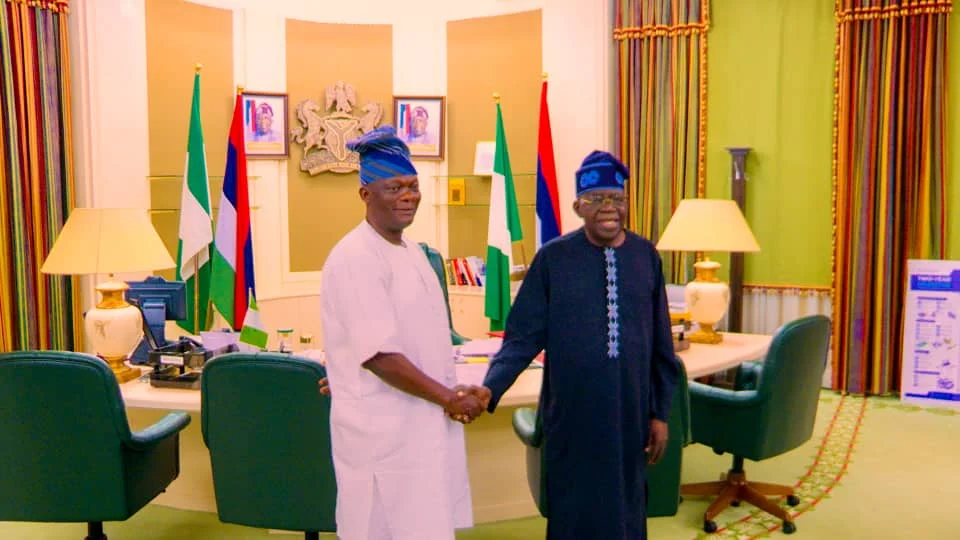
The closed-door meeting took place at the Presidential Villa in Abuja on Tuesday, amid growing consultations within the ruling party over its preparations for the contest to succeed Governor Seyi Makinde.
Although neither the Presidency nor Folarin publicly disclosed the full details of the discussion, a source close to the former senator said the engagement was believed to be connected to efforts to secure his support for Alli and resolve outstanding differences within the Oyo State chapter of the APC.
The latest development has placed the Oyo APC governorship campaign at the centre of fresh political attention, particularly because Folarin remains one of the party’s most experienced and influential figures in the state.
Tinubu steps into Oyo APC reconciliation
The reported intervention by the President suggests that the APC leadership considers unity among its leading figures essential to the party’s chances in Oyo State.
Folarin represented Oyo Central Senatorial District and served as Senate Leader during his earlier years in the National Assembly. He was also the APC governorship candidate in the 2023 election, finishing behind Makinde.
His political structure, supporters and experience across Oyo State could therefore become important assets to the Oyo APC governorship campaign.
A source quoted in the report described Tinubu’s attempt to bring Folarin fully into Alli’s campaign as an important stage in the party’s reconciliation efforts.
That interpretation remains attributable to the source because no formal statement from the Presidency has confirmed that Tinubu directed Folarin to support Alli. The meeting itself is established, but the details of the private conversation should not be reported as official fact without public confirmation.
Alli emerges as APC candidate
Senator Sharafadeen Alli, who represents Oyo South Senatorial District, emerged as the APC governorship candidate after the party’s primary held in May 2026.
His emergence followed months of intense consultations involving leading party figures, governorship aspirants and stakeholders seeking to determine the APC’s direction ahead of the 2027 election.
Before the primary, Alli and Folarin had separately met Tinubu amid speculation over who would receive the backing of the national leadership.
Alli also visited the President’s private residence in Ikoyi, Lagos, in April, although details of that meeting were not publicly disclosed at the time.
The consolidation of support behind Alli has now become the immediate challenge facing the Oyo APC governorship campaign.
Winning a primary election is only the first stage of a difficult political journey. A candidate must also persuade disappointed aspirants, their supporters and other power blocs to remain within the party and work for the collective ticket.
Folarin’s support could prove decisive
Folarin’s role is particularly significant because of his previous governorship campaigns and his long involvement in Oyo politics.
He contested the 2023 governorship election on the APC platform against Makinde of the Peoples Democratic Party and Adebayo Adelabu, who ran on the Accord Party.
Makinde won re-election, while Folarin placed second. The result demonstrated that the APC retained a substantial electoral base, but it also exposed divisions that weakened the opposition’s ability to challenge the incumbent effectively.
For the Oyo APC governorship campaign to succeed in 2027, Alli will need more than the formal endorsement of the party leadership.
He must bring together Folarin’s supporters, Adelabu’s political network, the structures associated with former Governor Abiola Ajimobi and other established APC blocs across the state.
A campaign that appears to exclude influential leaders could deepen resentment and encourage passive resistance, defections or protest voting.
In Nigerian politics, reconciliation is not measured merely by photographs of leaders shaking hands. It is measured by whether their supporters work together at ward, local government and state levels.
Recent meeting of APC leaders
The Tinubu-Folarin meeting came shortly after leading Oyo APC figures held a closed-door meeting on the future of the party.
Those present reportedly included Folarin, former Minister of Power Adebayo Adelabu, Senator Abdulfatai Buhari and former Oyo State Deputy Governor Raufu Olaniyan.
The discussions were presented as part of efforts to strengthen cooperation and prepare the party for the 2027 elections.
The sequence of meetings shows that the Oyo APC governorship campaign is moving from candidate selection to coalition building.
The party must now determine how responsibilities will be shared, how aggrieved interests will be accommodated and how it will present a coherent alternative to the ruling political establishment in Oyo State.
Tinubu’s involvement may help persuade rival groups to accept a negotiated settlement, but presidential intervention alone cannot resolve every local disagreement.
Political disputes often arise from competing expectations over campaign leadership, appointments, legislative tickets and control of party structures. Those matters require sustained engagement rather than one meeting at the Villa.
APC targets return to Agodi Government House
The APC governed Oyo State between 2011 and 2019 under the late Governor Abiola Ajimobi.
The party lost the state to Makinde and the PDP in 2019. Makinde secured a second term in 2023, defeating Folarin and other challengers.
Alli has since expressed confidence that the APC can return to power in 2027, citing reconciliation efforts and support from the party’s national leadership.
The Oyo APC governorship campaign will take place in a political environment different from that of 2023.
Makinde is serving his second and final constitutional term and will not be eligible to seek another term as governor. The contest will therefore feature candidates attempting to inherit his political coalition while also convincing voters that they can offer competent leadership.
The PDP’s eventual candidate, Makinde’s succession strategy and the ability of other political parties to attract prominent defectors will shape the race.
The APC cannot assume that the absence of an incumbent candidate will automatically deliver victory. The ruling party in the state will still benefit from established structures, government visibility and Makinde’s political influence.
https://ogelenews.ng/folarin-meets-tinubu-as-oyo-apc-intensifies-support…
Tinubu’s interest has national implications
Oyo is one of the most politically significant states in the South-West.
Its large population, strategic location and influence within regional politics make control of the state important to every major party.
Tinubu’s interest in the Oyo APC governorship campaign may therefore extend beyond the governorship contest.
The President is expected to seek another term in 2027, and a united APC structure in Oyo could strengthen his support in the state during the presidential election.
Oyo APC stakeholders had already organised mobilisation activities in support of Tinubu’s re-election, with Folarin playing a prominent role in an earlier unity drive.
However, combining presidential mobilisation with the state governorship campaign presents both an opportunity and a challenge.
Tinubu’s influence may help rally party loyalists, but the governorship candidate must also develop an identity and programme rooted in the concerns of Oyo residents.
Voters will expect the candidate to address issues such as infrastructure, agriculture, education, healthcare, security, local-government administration and employment.
A campaign based entirely on presidential endorsement may struggle if it does not explain what Alli intends to do differently as governor.
Alli must reach beyond party leaders
Reconciliation among senior politicians is necessary, but it is not sufficient to win an election.
The Oyo APC governorship campaign must reach party members who felt marginalised during the primary and voters who do not belong to any political party.
Alli’s campaign will need to engage communities across Ibadan, Ogbomoso, Oke-Ogun, Oyo and Ibarapa.
Each zone has distinct political expectations and development priorities. The candidate must demonstrate that his campaign is not controlled by one senatorial district or a small circle of national leaders.
The APC must also avoid allowing the reconciliation process to become a negotiation conducted entirely among elite politicians.
Ward leaders, women, young people, professional groups, traders, farmers and civil-society organisations should have opportunities to question the candidate and examine his proposed policies.
A credible campaign should publish a programme that allows voters to judge Alli on ideas rather than endorsements.
February 2027 election approaches
The Independent National Electoral Commission has scheduled the governorship and state House of Assembly elections for February 6, 2027.
The presidential and National Assembly elections are scheduled for January 16, 2027.
The timetable gives the Oyo APC governorship campaign limited time to resolve its internal disagreements, establish campaign structures and communicate a clear message to voters.
Reconciliation conducted too close to the election may produce public appearances without genuine cooperation.
The party’s leaders must therefore establish a framework for managing disputes before the campaign enters its most competitive stage.
The process should include a clear role for Folarin and other senior figures without creating the impression that Alli’s authority as the candidate is being undermined.
Meeting should not be exaggerated
Political meetings involving the President naturally attract attention, but the significance of Tuesday’s engagement should not be overstated.
Folarin has not publicly announced a withdrawal from the APC, nor has he publicly declared opposition to Alli’s candidacy in the reports reviewed.
The meeting should therefore not be portrayed as Tinubu rescuing the party from an established rebellion unless evidence of such a rebellion becomes available.
What is clear is that the APC is attempting to ensure that prominent figures remain involved in the Oyo APC governorship campaign.
A formal statement from Folarin would help clarify his position, the role he intends to play and whether outstanding disagreements have been resolved.
Until then, reports about the meeting’s purpose should continue to be attributed to sources rather than presented as an official account.
Unity will face its real test on the ground
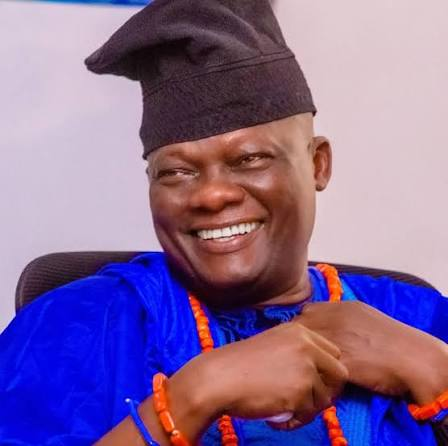
The photograph of Folarin meeting Tinubu may project unity, but the real test will come when campaigning begins across Oyo State.
Will Folarin appear at Alli’s rallies?
Will his supporters accept positions in the campaign organisation?
Will other former aspirants publicly campaign for the candidate?
Will the party present one message, or will competing factions continue to operate separate structures?
The answers to these questions will determine whether the Oyo APC governorship campaign has achieved genuine reconciliation.
The APC lost valuable political ground in previous elections when internal disputes led prominent members to leave the party or support competing candidates.
It must avoid repeating that mistake in 2027.
From Villa consultations to voter persuasion
Tinubu’s meeting with Folarin is politically significant because it demonstrates the national leadership’s desire to bring influential Oyo APC figures together.
It may also provide a pathway for Folarin to take a formal role in Alli’s campaign.
But the meeting is only one step.
The Oyo APC governorship campaign must move beyond consultations in Abuja and address the everyday concerns of the people who will cast their votes in February 2027.
Alli will need the support of Folarin and other party leaders, but he will also need to earn the confidence of residents who may judge the APC by national economic conditions, local political performance and the quality of its proposals.
Party unity can create the foundation for an effective campaign. It cannot replace policies, organisation and voter trust.
For the APC, the task is now clear: reconcile its leaders, harmonise its structures and present Alli as more than the beneficiary of presidential support.
For Folarin, the coming weeks may reveal whether his meeting with Tinubu marks the beginning of full participation in Alli’s bid.
And for Alli, the challenge is to transform elite endorsements into a broad political movement capable of returning the APC to the Oyo State Government House.
https://www.inecnigeria.org/upcoming-elections