














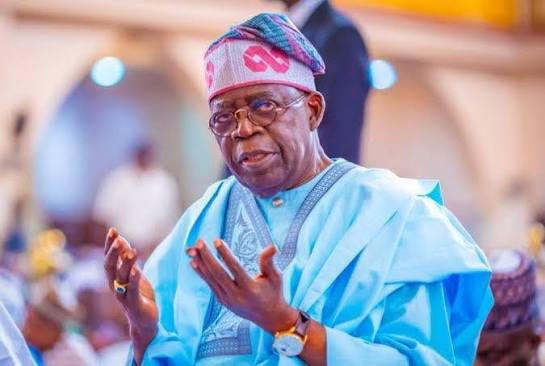
APC Muslim-Muslim ticket
President Bola Tinubu’s decision to retain Vice President Kashim Shettima as his running mate for the 2027 presidential election has reopened one of the most sensitive political debates in Nigeria, with religious leaders, political groups and civil society figures divided over the All Progressives Congress’ same-faith presidential ticket.
The confirmation ended months of speculation that Tinubu might replace Shettima with a Northern Christian to address complaints about religious balance within the ruling party. Instead, the President chose continuity, preserving the APC Muslim-Muslim ticket that carried the party to victory in the 2023 election.
The APC has now submitted the names of Tinubu and Shettima as its presidential and vice-presidential candidates. Their nomination means the ruling party will enter the 2027 contest with the same leadership combination it presented to Nigerians four years earlier.
But the renewed APC Muslim-Muslim ticket has again divided opinion.
The National President of the Middle Belt Forum, Dr Pogu Bitrus, criticised the decision, arguing that retaining a same-faith ticket sends the wrong message in a country divided almost evenly between Christianity and Islam. According to him, the ruling party should have considered a Northern Christian running mate as a demonstration of inclusion and sensitivity to Nigeria’s religious diversity.
That argument reflects the concern expressed by several Christian organisations since 2022. Their objection has never been simply about the personal faith of Tinubu or Shettima. It is about representation at the highest level of government and the fear that one of Nigeria’s two dominant religious communities is being excluded from the presidential ticket of the ruling party.
The APC Muslim-Muslim ticket is not unconstitutional. Nigeria’s Constitution does not require a presidential candidate and running mate to practise different religions. It requires only that a presidential candidate nominate an associate from the same political party who meets the constitutional qualifications for the office of Vice President.
Yet politics is not determined by legality alone.
In a diverse federation such as Nigeria, symbolism matters. Religion, ethnicity, geography and regional identity have long influenced the distribution of political offices. Parties often balance their presidential tickets to assure different sections of the country that they will have a voice in government.
That tradition explains why the APC Muslim-Muslim ticket remains controversial even after the Tinubu-Shettima partnership survived its first election.
Supporters of the ticket argue that the fears raised before the 2023 election have not been proved. Debo Adeniran, Chairman of the Centre for Accountability and Open Leadership, said the religious domination predicted by critics did not materialise. He argued that Tinubu and Shettima have maintained a stable working relationship and that loyalty may have shaped the President’s choice.
The Middlebelt Pentecostal Association has also backed the decision. The group described Shettima’s retention as a demonstration of stability and continuity, urging Nigerians to assess the administration based on security, infrastructure, economic management and national development rather than the religious identities of the candidates.
This defence represents the APC’s strongest argument: competence should matter more than religious arithmetic.
Tinubu’s supporters say the President should not be forced to abandon a deputy with whom he has worked successfully merely to satisfy political convention. They argue that changing the ticket could create new divisions, weaken trust within the government and suggest that religious pressure is more important than performance.
https://ogelenews.ng/2027-presidency-apc-muslim-muslim-ticket-reopens-ni…
There is also a strategic calculation behind the APC Muslim-Muslim ticket.
Shettima is a former governor of Borno State and a prominent Northern Muslim politician. His supporters believe he gives the APC access to an important voting bloc in the North-East and strengthens Tinubu’s connection to Northern political networks. Earlier in 2026, the Minister of Art, Culture, Tourism and Creative Economy, Hannatu Musawa, warned that dropping a Northern Muslim from the ticket could damage the party’s electoral prospects.
The APC must, however, consider the other side of that calculation. The same ticket may strengthen its appeal among some Northern Muslim voters while creating resentment among Northern Christians and other Nigerians who see religious balance as essential to national cohesion.
The 2027 contest will reveal whether voters still consider the APC Muslim-Muslim ticket a decisive issue or whether economic hardship, insecurity, unemployment and the government’s overall record will carry greater weight.
Tinubu enters the race with the advantage of incumbency, a large governing party and an opposition that has struggled to maintain unity. The APC endorsed him for another term in 2025, praising his economic reforms and presenting him as the party’s sole presidential candidate.
But the President also faces difficult questions. The removal of petrol subsidies, exchange-rate reforms and other economic policies have imposed severe pressure on many households. Food, transportation and energy costs remain major concerns. Insecurity also continues to affect communities in different parts of the country.
For millions of voters, these issues may matter more than the religious composition of the ticket.
Still, the APC Muslim-Muslim ticket cannot be separated completely from the debate over governance. Critics argue that a government demanding national trust must also demonstrate visible inclusion. They want Christian Nigerians, especially those from the North, to feel adequately represented in major appointments and policy decisions.
The administration can respond to that concern only through its conduct. It must show that public institutions serve Nigerians of every faith and that appointments are based on fairness, competence and federal character. It must also prevent religious discrimination and respond firmly to violence affecting both Christian and Muslim communities.
A same-faith ticket becomes more politically dangerous when citizens already feel excluded. It becomes less powerful as an opposition argument when government institutions visibly protect and represent everyone.
This is why the APC Muslim-Muslim ticket debate should not descend into religious hostility. Political leaders must avoid language that portrays either Christianity or Islam as a threat to the country. Nigeria’s challenge is not the existence of religious diversity. It is the failure of political institutions to manage that diversity with fairness and wisdom.
The opposition will almost certainly use the controversy against Tinubu. Rival parties may present religiously balanced tickets and argue that the APC has ignored Nigeria’s plural character. But they will also need stronger policy programmes. Religious balance alone will not solve inflation, insecurity, unemployment or failing public services.
The APC, for its part, cannot simply dismiss every objection as religious politics. The concerns of Christians who feel excluded deserve a serious response. Winning an election does not remove the obligation to build trust across communities.
As campaigns gather momentum, the APC Muslim-Muslim ticket will remain an important symbol in the 2027 race. For supporters, it represents loyalty, stability and a refusal to sacrifice competence to political pressure. For critics, it reflects exclusion and a troubling departure from the unwritten tradition of religious balance.
The final judgment will belong to Nigerian voters.
They will decide whether Tinubu and Shettima deserve another term based on their record, their promises and their ability to govern a deeply diverse nation. They will also decide whether the religious composition of the ticket is a secondary issue or a defining test of inclusion.
What is already clear is that the debate has returned. The APC Muslim-Muslim ticket may be legally valid and electorally tested, but it remains politically explosive. How the ruling party manages that tension could shape its fortunes when Nigerians return to the polls in 2027.

APC Muslim-Muslim ticket