













NDC deregistration
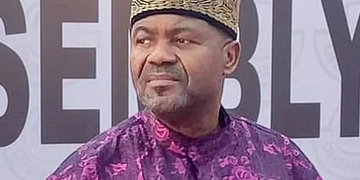
Peter Obi and Rabiu Musa Kwankwaso have moved to the centre of a fresh political storm as the Nigeria Democratic Congress begins a legal and political fight against the court ruling threatening its registration ahead of the 2027 general elections.
The NDC deregistration battle followed a ruling of the Federal High Court sitting in Lokoja, Kogi State, which set aside an earlier judgment that had compelled the Independent National Electoral Commission to register the party. The decision has thrown the party’s future into uncertainty and raised fresh questions about the political platform on which Obi and Kwankwaso intend to challenge the ruling All Progressives Congress in 2027.
For the NDC, this is more than a legal dispute. It is a test of survival. For Obi and Kwankwaso, it is a direct challenge to the political alliance they have been building as part of a wider opposition realignment.
Party leaders, according to reports, have held marathon strategy meetings involving Obi, Kwankwaso, former Bayelsa State governor Seriake Dickson, members of the National Working Committee and other key stakeholders. The meetings were aimed at preparing the party’s response to the judgment and shaping its appeal strategy.
The NDC has rejected the ruling, insisting that it remains a legally recognised political party until all legal processes are exhausted. Its leaders have also maintained that Obi and Kwankwaso will be on the ballot in 2027.
But the NDC deregistration issue has already opened a new front in Nigeria’s opposition politics. The party was seen by its supporters as a possible third-force platform capable of bringing together voters dissatisfied with the APC and the Peoples Democratic Party. With Obi carrying strong support among young voters and urban reform-minded Nigerians, and Kwankwaso retaining influence in Kano and parts of the North, the NDC ticket was being watched closely by political observers.
That calculation is now under pressure.
https://ogelenews.ng/obi-kwankwaso-lead-ndcs-battle-against-deregistration
The legal question is simple but politically explosive: if the judgment setting aside NDC’s registration stands, what happens to its candidates, structures and electoral plans? The answer may depend on how quickly the appellate courts act and how INEC responds to the ruling.
As of the latest available public information, INEC’s website still lists the Nigeria Democratic Congress among political parties, with its status tied to a court order. That detail is important because it suggests that the matter is not merely political propaganda, but a live legal process with administrative consequences.
The NDC deregistration controversy also exposes the fragile nature of Nigeria’s opposition coalition politics. Since the 2023 election, opposition parties have struggled to build a united front strong enough to challenge President Bola Tinubu’s APC. Obi, who ran under the Labour Party in 2023, came third with more than six million votes. Kwankwaso, who ran under the New Nigeria Peoples Party, came fourth and won Kano State. Together, their support bases could become significant if properly managed.
But Nigerian politics is rarely that straightforward. Alliances are often weakened by internal suspicion, regional calculations, ego, legal disputes and questions of party ownership. The NDC deregistration case gives rivals an opening to portray the Obi-Kwankwaso project as unstable before it fully takes shape.
For the ruling party, the court ruling may be viewed as a political gift. For the PDP, it could be a reminder that the opposition vote may again be split if parties fail to agree on a single direction. For Obi and Kwankwaso, the immediate task is to calm supporters, keep party structures intact and avoid the impression that their 2027 ambition is already in danger.
The party’s response so far has been defiant. NDC leaders have described the ruling as a temporary setback and have promised to challenge it at the Court of Appeal. They argue that the party followed due process and that the court’s earlier order compelling INEC to register it should not be casually reversed in a way that disrupts democratic participation.
Still, the NDC deregistration battle will not be won by press statements alone. The party must present a clear legal argument, reassure its members across the states and keep its political messaging disciplined. Any confusion could weaken confidence among defectors, supporters and potential candidates.
There is also a wider democratic issue. Nigeria’s constitution and electoral laws give citizens the right to form and belong to political parties, but INEC also has a duty to ensure that parties meet legal requirements. When the courts intervene in party registration, the consequences can reshape national politics. That is why the NDC deregistration case is not only about Obi, Kwankwaso or one political party. It is about the legal boundaries of political competition ahead of 2027.
The coming days will be critical. If the appeal succeeds, NDC will likely claim vindication and use the dispute to rally supporters around the idea that powerful interests tried to stop it. If the appeal fails, Obi, Kwankwaso and their allies may be forced to rethink their platform, timelines and electoral strategy.
For now, the message from the NDC camp is clear: the party is not backing down. Obi and Kwankwaso remain the faces of the resistance, while the party’s legal team prepares for what could become one of the most consequential pre-election battles before 2027.
The NDC deregistration crisis has turned a young political platform into a national talking point. Whether it becomes a temporary storm or a fatal blow will depend on the courts, INEC and the party’s ability to hold its coalition together under pressure.
https://punchng.com/obi-kwankwaso-lead-ndcs-battle-against-deregistration