














Atiku 2027 presidential bid
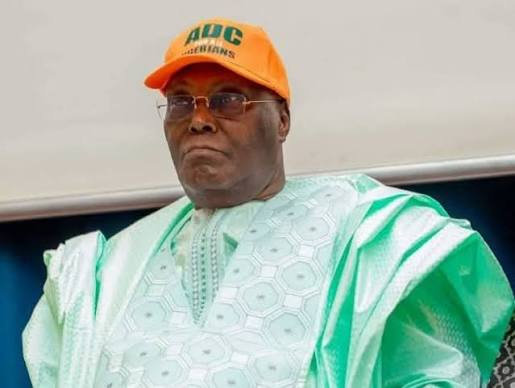
ABUJA, Nigeria — Former Vice President Atiku Abubakar has declared that the 2027 presidential election will mark his final attempt to become Nigeria’s president, ruling out another run in 2031 if he fails to win the forthcoming contest.
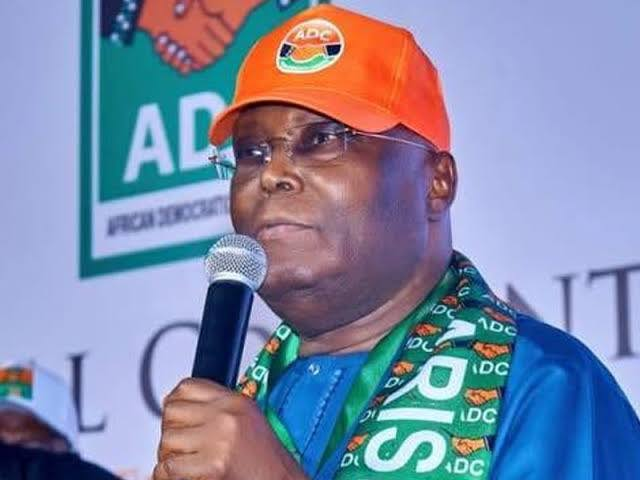
Atiku, the presidential candidate of the African Democratic Congress, made the declaration as Nigeria moves closer to what could become one of the most consequential elections of the Fourth Republic.
The announcement puts a definitive timeline on the Atiku 2027 presidential bid, ending speculation that the former vice president could make another attempt four years later if his latest campaign fails.
Atiku has spent decades pursuing Nigeria’s highest political office and has participated in presidential contests under different political platforms.
His latest declaration means the 2027 election could represent the closing chapter of one of the longest-running presidential ambitions in contemporary Nigerian politics.
Atiku 2027 Presidential Bid Will Be His Last
Atiku’s message is straightforward.
If he wins the 2027 presidential election, he will finally achieve an ambition he has pursued for decades.
If he loses, he says he will not return in 2031.
That makes the Atiku 2027 presidential bid fundamentally different from his previous attempts.
Earlier campaigns always left open the possibility of another contest.
This time, the former vice president has publicly placed an endpoint on the journey.
Atiku had already indicated earlier this year that 2027 would likely be his final attempt. The latest statement removes much of the remaining ambiguity by explicitly ruling out a 2031 campaign.
Atiku’s Presidential Ambition Spans Decades
Few politicians in Nigeria’s current democratic era have pursued the presidency for as long as Atiku.
His national political profile stretches back to the aborted Third Republic.
He sought the presidential ticket of the Social Democratic Party in 1993 before eventually stepping down for Moshood Kashimawo Olawale Abiola during the party’s primary process.
Atiku later became governor-elect of Adamawa State in 1999 before being selected as Olusegun Obasanjo’s running mate.
He served as Nigeria’s vice president from 1999 to 2007.
Since leaving office, the presidency has remained central to his political career.
He has pursued the office through different parties and political coalitions, making the Atiku 2027 presidential bid the culmination of more than three decades of presidential politics.
https://ogelenews.ng/atiku-2027-presidential-bid
From Vice President to Perennial Presidential Contender
Atiku’s political journey has crossed several party lines.
He has been associated at different times with the Peoples Democratic Party, Action Congress, All Progressives Congress and now the African Democratic Congress.
His presidential contests have also unfolded under dramatically different political circumstances.
In 2007, he contested against Umaru Musa Yar’Adua.
In 2019, he became the principal opposition candidate against then-President Muhammadu Buhari.
In 2023, he again carried the PDP presidential ticket, competing against Bola Tinubu, Peter Obi and other candidates.
The Atiku 2027 presidential bid places him in another major national contest, this time under the ADC banner.
His persistence has made him one of the most recognisable figures in Nigerian electoral politics.
But it has also provided opponents with an argument that the country needs a generational change in political leadership.
Age Will Inevitably Become Part of 2027 Debate
Atiku was born on November 25, 1946, meaning he will turn 80 before the 2027 presidential election.
That reality will inevitably become part of political discussion.
Age alone does not determine a person’s capacity to govern, and Nigerian law does not impose an upper age limit on presidential candidates.
Nevertheless, voters are likely to consider health, stamina, succession planning and generational representation when evaluating candidates.
Atiku’s decision to rule out 2031 also reflects the practical realities of time.
He would be 84 by late 2030.
Commentators had already described 2027 as his likely final opportunity even before he made the declaration explicit.
ADC Gives Atiku Another Platform
The Atiku 2027 presidential bid is also significant because he is no longer running under the PDP banner.
The African Democratic Congress emerged as a major opposition coalition platform ahead of the election.
Atiku became one of the central figures in that political realignment.
The coalition initially brought together several prominent opposition politicians seeking to create a stronger challenge to the ruling All Progressives Congress.
But competing presidential ambitions eventually complicated the coalition.
Peter Obi, who had also been associated with the ADC opposition project, subsequently emerged on a different political platform.
That fragmentation means the opposition enters the election with the familiar challenge of balancing individual presidential ambitions against the strategic argument for unity.
Atiku Previously Vowed Not to Step Down
Atiku has consistently rejected suggestions that he should abandon his presidential ambition for another opposition candidate.
Earlier in January, he insisted that presidential aspirants within the ADC should be allowed to test their popularity rather than being pressured to withdraw.
He said no aspirant should be compelled to step down and maintained that candidates should present themselves freely for the party’s nomination process.
That position demonstrated the seriousness of the Atiku 2027 presidential bid long before his emergence as the party’s candidate.
It also reflected one of the central tensions within Nigeria’s opposition.
Many opposition politicians agree on the objective of defeating the ruling APC but disagree over who should lead the challenge.
Tinubu Remains Central Opponent
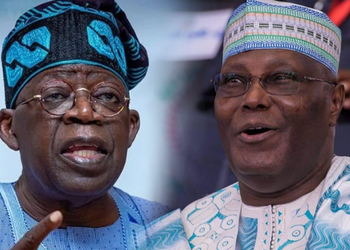
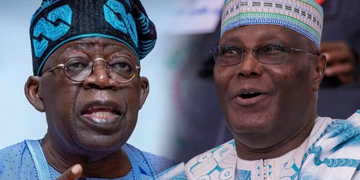
Atiku’s declaration inevitably turns attention towards President Bola Tinubu.
The two politicians have known each other for decades and have operated across overlapping periods of Nigeria’s democratic history.
Their rivalry became particularly important during the 2023 presidential election.
Tinubu won that contest under the APC platform, while Atiku finished behind him.
The political circumstances surrounding 2027, however, are different.
Tinubu will be defending the record of his administration.
Economic reforms, inflation, employment, insecurity, infrastructure and the cost of living are likely to become major campaign issues.
Atiku will attempt to persuade voters that the Atiku 2027 presidential bid represents a credible alternative.
The government, meanwhile, will defend its record and argue for continuity.
Peter Obi Adds Another Dimension
The presidential contest is unlikely to be simply a rematch between Tinubu and Atiku.
Peter Obi remains another significant political force.
His 2023 campaign demonstrated that Nigeria’s presidential competition could move beyond the traditional APC-PDP rivalry.
The former Anambra governor built substantial support, particularly among younger and urban voters.
His continued presence in presidential politics creates a difficult strategic question for the opposition.
If Atiku and Obi contest separately, they will both attempt to build coalitions capable of defeating the incumbent.
That could divide opposition votes.
But electoral politics cannot simply assume that supporters of one candidate would automatically transfer their votes to another if an alliance were created.
Each candidate has a distinct political constituency.Atiku 2027 presidential bid
Atiku Faces the Zoning Question
Another major issue surrounding the Atiku 2027 presidential bid is power rotation.
Some political figures have argued that the presidency should remain in southern Nigeria for eight years before returning to the North.
Former Vice President Atiku comes from Adamawa State in the North-East.
President Tinubu is from Lagos State in the South-West.
Critics of Atiku’s candidacy therefore argue that another northern presidency in 2027 would disrupt the informal North-South power rotation principle.
APC chieftain Osita Okechukwu recently urged Atiku to withdraw from the race on precisely that basis, arguing that the South should complete its turn in the presidency.
Atiku and his supporters have disputed attempts to treat such rotational arrangements as overriding the right of Nigerians to choose their president.
The debate is likely to intensify during the campaign.Atiku 2027 presidential bid
2027 Becomes Legacy Election for Atiku
There is another dimension that makes this election different.
Atiku is no longer campaigning only for political office.
He is also campaigning over how his political career will ultimately be remembered.
A victory would transform his story.
After decades of unsuccessful presidential attempts, he would become an example of political persistence eventually rewarded.
A defeat would close the presidential chapter of a career that has shaped Nigerian politics since the 1990s.
That gives the Atiku 2027 presidential bid an unusually personal dimension.
Few candidates enter presidential elections knowing publicly that there will be no next attempt.
For Atiku, that is now the stated position.Atiku 2027 presidential bid
Experience Will Be Central to His Campaign
Atiku’s supporters are likely to present his long political experience as an advantage.
He served eight years as vice president.
He has been involved in business and politics for decades.
He has participated in national policy debates on economic reform, federalism, restructuring and privatisation.
Supporters will argue that such experience gives him the institutional knowledge required to address Nigeria’s economic and governance problems.
His opponents will frame the same record differently.
They will question whether decades within Nigeria’s political establishment represent the change many voters want.
The Atiku 2027 presidential bid will therefore involve a contest over the meaning of experience itself.
Is experience evidence of preparedness?
Or does longevity in politics strengthen arguments for generational change?
Voters will decide.Atiku 2027 presidential bid
Economy Could Determine More Than Political History
Despite the fascination surrounding Atiku’s final attempt, most Nigerians are unlikely to vote primarily because of how many times he has contested.
Everyday conditions will matter more.
Food prices matter.
Employment matters.
Electricity matters.
Fuel prices matter.
Security matters.
Household income matters.
Businesses will evaluate whether economic conditions have improved.
Farmers will assess security and agricultural policy.
Young Nigerians will consider employment opportunities and education.
Atiku’s campaign therefore cannot rely simply on the emotional argument that this is his final chance.
He must convince voters that his policies offer something they prefer to the incumbent government’s programme.Atiku 2027 presidential bid
Final Attempt Does Not Mean Final Political Role
Atiku’s decision to rule out another presidential campaign does not necessarily mean he would disappear from Nigerian politics if defeated.
Former presidential candidates can continue influencing party structures, policy debates and coalition building.
Atiku possesses extensive political networks across Nigeria.
He could therefore remain influential within the ADC or broader opposition politics even after ending his presidential ambition.
But his declaration means that the Atiku 2027 presidential bid is expected to be the last time voters see his name presented as a candidate for Nigeria’s highest office.
That alone gives the contest historical significance.
Ogele News Analysis: Atiku’s Final Roll of the Political Dice
The original headline, “Atiku rules out 2031 run, calls 2027 his final race,” is accurate and already strong.
Its weakness is the phrase “final race,” which can sound broader than Atiku’s actual statement.
He is specifically talking about his pursuit of the presidency, not necessarily retirement from politics altogether.
A more precise headline should say “final presidential bid” or “final presidential race.”
That distinction matters.
The announcement also deserves more context than a straightforward political statement.
Atiku’s presidential ambition spans more than three decades.
He served as vice president for eight years.
He has contested presidential elections through different political platforms.
He has won major party nominations, lost general elections and repeatedly returned to the political arena.
Now, at nearly 80, he says there will be no 2031 attempt.
That transforms 2027 into something more consequential than another election for Atiku.
It becomes a judgement on his political legacy.
But the “last chance” narrative should not obscure the central democratic question.
Nigerians do not owe any politician the presidency because he has tried repeatedly.
Neither should a candidate be dismissed simply because he has previously lost.
The relevant questions are whether voters trust his programme, leadership, coalition and capacity to govern.
The Atiku 2027 presidential bid must therefore succeed or fail on what it offers Nigerians now, not on sympathy for previous defeats.
His opponents face the same test.
President Tinubu must defend his record.
Other challengers must explain what they would do differently.
And Atiku must persuade voters that decades of political experience are an asset rather than evidence that Nigeria should look elsewhere.
After more than three decades of presidential ambition, he has now drawn the line himself.
2027, Atiku says, will be the last time.Atiku 2027 presidential bid
https://punchng.com/atiku-rules-out-2031-run-calls-2027-his-final-race/?amp&utm_source=chatgpt.com