














Chika Ibe killing in South Africa
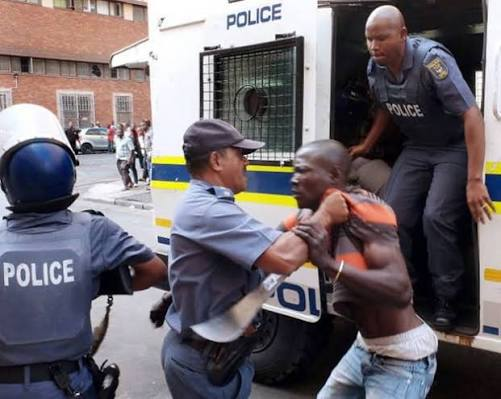
The Abia State Government has condemned the death of one of its indigenes, Ibeh Chika Simon, also identified in reports as Chika Ibe, during an operation involving members of the South African Police Service in Bellville, Cape Town.
The government described the circumstances surrounding the incident as deeply disturbing and called for an independent, transparent and comprehensive investigation capable of establishing exactly what happened and identifying anyone responsible.
Ibe was an indigene of Lokpaukwu in Umunneochi Local Government Area of Abia State. He reportedly died following a police operation on July 23, 2026, amid allegations that excessive force was used against him.
The Chika Ibe killing in South Africa has generated anger among Nigerians at home and abroad, particularly after footage said to be connected to the incident circulated online.
Although several reports have described the incident as a police killing, the exact sequence of events has not been conclusively established by an independent investigative body or court. Ogele News therefore treats the claims against the officers as allegations pending the outcome of an official investigation.
Nigeria’s Consulate General in Johannesburg has also condemned the death and demanded answers from the South African authorities, describing the circumstances in which Ibe died as questionable.
Abia government demands accountability
The Abia State Government said the reported treatment of its citizen was unacceptable and inconsistent with the protection that every Nigerian should receive while living lawfully abroad.
It called on the South African authorities to conduct an impartial investigation and ensure that any officer found to have acted unlawfully is prosecuted.
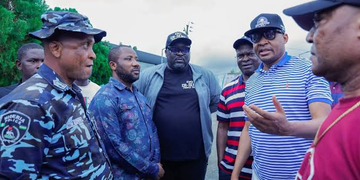
The government also expressed sympathy with Ibe’s family and community, assuring them that the state would continue working with the Federal Government and relevant diplomatic institutions in the search for justice.
The Chika Ibe killing in South Africa is not merely a private tragedy for one family. It has become a test of whether Nigerian citizens can expect effective diplomatic protection when they suffer alleged abuse in another country.
Abia authorities must therefore go beyond issuing a statement of condemnation. The government should maintain direct communication with the victim’s relatives, help them obtain legal representation where necessary and support efforts to secure complete medical, police and autopsy records.
Those records will be critical in determining the immediate cause of death, the conduct of the officers involved and whether proper police procedures were followed.
Nigerian consulate demands thorough investigation
Nigeria’s Consulate General said Ibe died under questionable circumstances during a South African Police Service operation in Bellville.
The mission demanded a thorough investigation into the incident and called for full accountability.
The consulate’s intervention is significant because diplomatic missions have a responsibility to protect the interests of citizens abroad, provide consular support and engage host governments where Nigerians face alleged injustice.
The Chika Ibe killing in South Africa requires sustained diplomatic engagement rather than a single protest statement.
Nigeria should request the official police incident report, the identities and operational units of the officers involved, body-camera or surveillance footage where available, witness statements, medical records and the result of an independent post-mortem examination.
The authorities should also establish whether another Nigerian was injured during the operation, as some accounts have suggested, and ensure that every surviving witness is protected from intimidation.
The investigation must be allowed to follow the evidence. It should not begin with a predetermined assumption that the officers were guilty, but it must equally not be designed to protect law-enforcement personnel from scrutiny.
NICASA condemns incident
The Nigerian Citizens Association South Africa also condemned Ibe’s death and called for an independent investigation.
Its president, Reverend Frank Onyekwelu, reportedly said the Nigerian community was deeply troubled by the circumstances and wanted those responsible to be held accountable.
Community organisations often become the first point of contact for Nigerians facing emergencies abroad. They can help identify witnesses, communicate with families and draw public attention to cases that might otherwise receive limited scrutiny.
However, their claims should still be verified through formal investigative channels.
The Chika Ibe killing in South Africa must ultimately be resolved by credible evidence rather than social-media outrage alone.
Videos can provide valuable evidence, but they may not capture everything that occurred before, during or after an incident. Investigators must authenticate the recordings, establish when and where they were made, identify those shown and determine whether any part of the footage has been edited or removed.
Witnesses should also be interviewed separately to reduce the risk that their accounts are influenced by public commentary.
Wider tensions over treatment of Nigerians
Ibe’s death occurred against the background of renewed tensions over attacks on Nigerians and other African migrants in South Africa.
Nigeria has repeatedly complained about violence against its citizens, including attacks by criminal groups, anti-migrant protesters and, in some cases, alleged misconduct by security personnel.
Earlier in July, the Nigerian government said two citizens had been killed in separate incidents in South Africa. One reportedly died during a police interrogation in Pretoria, prompting an investigation by South Africa’s Independent Police Investigative Directorate.
The Nigerian government subsequently completed the voluntary evacuation of approximately 1,490 citizens following heightened anti-migrant violence and insecurity.
The Chika Ibe killing in South Africa has therefore deepened concerns that existing diplomatic assurances have not provided sufficient protection.
Nigeria’s Minister of State for Foreign Affairs, Sola Enikanolaiye, raised the broader problem during talks with a South African delegation led by International Relations and Cooperation Minister Ronald Lamola.
Nigeria said repeated attacks were damaging relations between the two countries and questioned why security agencies had not always acted decisively against vigilante violence.
South Africa reiterated its opposition to xenophobia and promised that offenders would be prosecuted. Both countries also agreed to reduce inflammatory rhetoric and strengthen measures protecting foreign nationals.
Those commitments will be judged by concrete action in cases such as Ibe’s.
Investigation must be independent
Where police officers are accused of causing a death, an investigation conducted solely by the same police structure may not command public confidence.
South Africa has an Independent Police Investigative Directorate responsible for investigating specified offences allegedly committed by members of the South African Police Service and municipal police services.
The directorate should clarify whether it has formally taken responsibility for the Chika Ibe killing in South Africa, identify the category under which the case is being investigated and provide regular factual updates.
An independent investigation should determine:
- why the officers went to the location;
- whether they possessed a lawful warrant or operational authority;
- whether Ibe was suspected of any offence;
- whether he resisted arrest or posed a threat;
- what level of force was used;
- whether medical assistance was requested promptly;
- and whether officers complied with South African law and policing standards.
The investigation should also identify every officer present and preserve all documentary and electronic evidence.
Justice requires more than announcing that a case file has been opened. Investigators must work without interference, submit their findings to the appropriate prosecuting authority and explain any decision not to prosecute.
https://ogelenews.ng/abia-demands-justice-over-indigenes-death-during-so…
Avoiding premature conclusions
Public anger over the death is understandable, particularly because images and reports surrounding the incident are disturbing.
However, responsible journalism must avoid convicting individuals through headlines before an investigation or trial has taken place.
The phrase “alleged police killing” accurately communicates the seriousness of the accusation while preserving the legal principle that guilt must be established through evidence.
Similarly, South African authorities should not dismiss the case by making unverified claims against the deceased.
Even where a person is suspected of committing an offence, police officers are expected to use only lawful and proportionate force. Suspicion does not eliminate the right to life, due process or humane treatment.
The Chika Ibe killing in South Africa should therefore be investigated independently of any allegation that may have led to the operation.
If Ibe was suspected of wrongdoing, the proper response was arrest, investigation and prosecution before a competent court. It was not punishment outside the law.
Nigeria must protect citizens without encouraging retaliation
The Nigerian government has a responsibility to speak firmly when citizens are attacked abroad.
At the same time, officials must avoid rhetoric capable of encouraging retaliation against South African citizens or businesses in Nigeria.
Collective punishment would be unjust and counterproductive.
The Chika Ibe killing in South Africa concerns the actions of specific individuals and institutions. Accountability must therefore be directed at those shown by evidence to have acted unlawfully.
Nigeria and South Africa are major African economies with longstanding diplomatic, commercial and cultural relationships.
Disagreements over migration, crime and policing should be resolved through law, diplomacy and accountable institutions rather than hostility between ordinary citizens.
South African businesses operating in Nigeria should not be attacked because of an incident involving police officers in Cape Town. Likewise, Nigerian migrants should not be blamed collectively for criminal conduct allegedly committed by individuals in South Africa.
Both governments must reject stereotyping and insist that every allegation is handled through lawful procedures.
Family deserves answers and support
At the centre of the controversy is a family that has lost a relative in deeply troubling circumstances.
The public discussion should not reduce Ibe to a symbol in a diplomatic dispute while ignoring the practical needs of his family.
The Abia State Government should help the family obtain reliable information about the location and condition of his remains, the conduct of the post-mortem examination and arrangements for repatriation where requested.
It should also facilitate contact with the Nigerian mission and reputable legal representatives in South Africa.
The family should receive copies of relevant reports once legally available and be informed of every important development.
The Chika Ibe killing in South Africa will not be resolved by condolences alone.
Justice requires truth, accountability and appropriate remedies. If officers are found criminally responsible, they should face prosecution. If institutional failures contributed to the death, corrective measures and compensation should be considered.
A test of Nigeria-South Africa relations
Nigeria and South Africa often describe their relationship as strategically important to Africa.
Both countries have influential economies, large populations and major diplomatic roles on the continent.
That relationship must be capable of protecting ordinary Africans, not merely supporting trade and high-level political meetings.
Repeated attacks on migrants weaken public confidence in bilateral cooperation.
The Chika Ibe killing in South Africa gives the South African government another opportunity to show that its stated opposition to xenophobia and police misconduct is supported by action.
Nigeria must also demonstrate that its citizens’ diplomacy policy has practical meaning.
Consular officials should follow the investigation closely, attend relevant proceedings, communicate with the family and challenge unjustified delays.
Public statements are useful, but they cannot replace patient legal and diplomatic work.
Abia’s condemnation must lead to action
Governor Alex Otti’s administration is right to condemn the death and demand justice.
The next stage is to ensure that the case does not disappear from public attention after the initial outrage fades.
The Abia State Government should designate an official liaison for the family and publish verified updates when appropriate.
It should work through the Ministry of Foreign Affairs rather than create conflicting diplomatic channels.
It should also avoid presenting unverified claims as final findings.
The Chika Ibe killing in South Africa requires a coordinated response involving Abia State, the Nigerian Consulate, the Ministry of Foreign Affairs, Nigerian community leaders and South African investigative institutions.
Each body has a different role, but all should work towards the same objective: establishing the truth and ensuring lawful accountability.
Justice must be visible
An investigation will command public confidence only if it is transparent, timely and independent.
South African authorities should publicly confirm the investigating body, disclose whether the officers concerned remain on operational duty and explain the process for referring the matter to prosecutors.
The Nigerian government should provide factual updates without releasing information capable of compromising the investigation.
The Chika Ibe killing in South Africa has already become part of a wider debate about the safety of African migrants, the conduct of police officers and the strength of Nigeria’s diplomatic protection.
It should not become another unresolved death followed by promises that produce no consequence.
Abia State has spoken for its deceased indigene. Nigeria’s diplomatic authorities have demanded answers. South Africa has the responsibility to ensure that the investigation is credible.
The final outcome must be determined by evidence.
But if that evidence establishes that officers used unlawful or excessive force, prosecution should follow without delay.
That is the minimum standard required by justice, the rule of law and the relationship between two nations that claim leadership roles in Africa.
https://punchng.com/fg-demands-probe-into-nigerians-killing-in-safrican-police-operation/