


















Ijaw language preservation
Bayelsa State Governor, Senator Douye Diri, has thrown his administration’s weight behind an online platform developed to promote the Ijaw language, as the state steps up efforts to prevent the indigenous language from gradually disappearing among younger generations.
Diri also directed the state’s education authorities to strengthen the teaching of Ijaw in schools, placing Ijaw language preservation at the centre of cultural activities marking the 30th anniversary of Bayelsa State.
The governor spoke at the Ijaw Language Awareness Campaign held at the DSP Alamieyeseigha Memorial Banquet Hall in Yenagoa on September 28, 2026, as part of activities commemorating Bayelsa’s three decades of statehood.
The event brought together government officials, traditional rulers, students, cultural advocates, entertainers and other stakeholders concerned about the future of the language.
For Diri, the challenge goes beyond ceremonies and anniversary celebrations. He argued that the survival of Ijaw depends heavily on whether families, schools and communities deliberately pass the language to younger people.
Diri Pushes Ijaw Language Preservation Beyond Government
The governor said responsibility for Ijaw language preservation should not be left solely to government officials or teachers.
Parents, he said, have an equally important role to play by speaking the language with their children at home.
Diri warned that the gradual abandonment of indigenous languages could weaken cultural identity, particularly when younger generations grow up unable to communicate in the language of their parents and grandparents.
According to reports from the event, he stressed that language remains closely connected to identity and urged Ijaw people to speak and promote their mother tongue wherever they live.
That message has become increasingly significant as many Nigerian indigenous languages compete with English, Nigerian Pidgin and global digital culture for the attention of younger speakers.
For Bayelsa, where the Ijaw identity remains central to the history and character of the state, Ijaw language preservation is therefore being presented as a cultural responsibility rather than merely another school subject.
Government Backs Online Ijaw Language Platform
One of the notable announcements at the programme was Diri’s support for an online Ijaw language platform developed by young people.
AIT reported that the governor announced government backing for the digital initiative as part of efforts to expand access to the language beyond conventional classrooms.
The move introduces a technological dimension to Ijaw language preservation.
Digital platforms can provide younger users with easier access to vocabulary, pronunciation, expressions and other language-learning materials through mobile phones and internet-enabled devices.
That could be particularly useful to Ijaw families living outside Bayelsa State or outside Nigeria, where children may have fewer opportunities to hear or speak the language regularly.
However, the success of such a platform will depend on the quality of its content, accessibility, continued technical support and the willingness of speakers and language experts to contribute to its development.
The governor’s backing nevertheless signals an attempt to connect cultural preservation with the digital habits of younger generations.
Diri Directs Stronger Teaching in Bayelsa Schools
Diri also directed the Commissioner for Education to intensify the teaching of the Ijaw language in schools.
The directive adds an institutional dimension to the administration’s Ijaw language preservation campaign.
The governor’s position is not entirely new.
Earlier in June 2026, Diri’s administration said it had introduced measures including the training of Ijaw-language teachers and compulsory learning of the language in public primary schools as part of efforts to protect Izon culture from decline.
The latest directive suggests the government wants those efforts strengthened.
Schools are considered particularly important because they provide an opportunity to expose children to indigenous language instruction at an age when language skills are still developing.
But classroom teaching alone may not be sufficient.
Language experts generally recognise that a language remains strongest when it is used naturally in homes, communities, entertainment, traditional institutions and everyday conversation.
That is why Diri’s call to parents is significant.
If children study Ijaw during school hours but rarely hear or speak it at home, the language may remain an academic exercise instead of becoming part of daily life.
Students Display Ijaw Skills in Speaking Contest
The Bayelsa @30 programme also provided a practical demonstration of what language education can achieve.
Secondary-school students participated in an Izon-speaking contest during the event, showcasing their knowledge and ability to communicate in the indigenous language.
Such competitions could become useful tools for Ijaw language preservation if expanded across schools.
Debates, spelling competitions, storytelling, drama, poetry, music and public-speaking contests conducted in Ijaw could give students reasons to use the language beyond examination purposes.
They could also make learning more competitive and attractive to young people.
The presence of students at the awareness event was therefore important because the long-term survival of the language ultimately depends on younger generations choosing to speak it.
https://ogelenews.ng/bayelsa-30-diri-backs-ijaw-language-platform-orders…
Awareness Campaign to Become Annual Event
Another significant directive was the governor’s decision that the Ijaw Language Awareness Campaign should become an annual event.
AIT reported that Diri asked that the initiative be institutionalised rather than treated as a one-off programme tied only to Bayelsa’s 30th anniversary.
The decision could provide a regular platform for evaluating progress in Ijaw language preservation, showcasing new learning materials and bringing together teachers, traditional rulers, academics, entertainers and young speakers.
The first Bayelsa State Ijaw Language Summit had been scheduled for September 28 as part of a wider effort to promote and celebrate the language and culture.
Making such activities annual could help maintain public attention after the anniversary celebrations have ended.
Still, the bigger test will be what happens between one annual campaign and the next.
Sustainable Ijaw language preservation will require teaching materials, trained instructors, digital resources, community participation and consistent use of the language throughout the year.
Culture Takes Centre Stage at Bayelsa @30
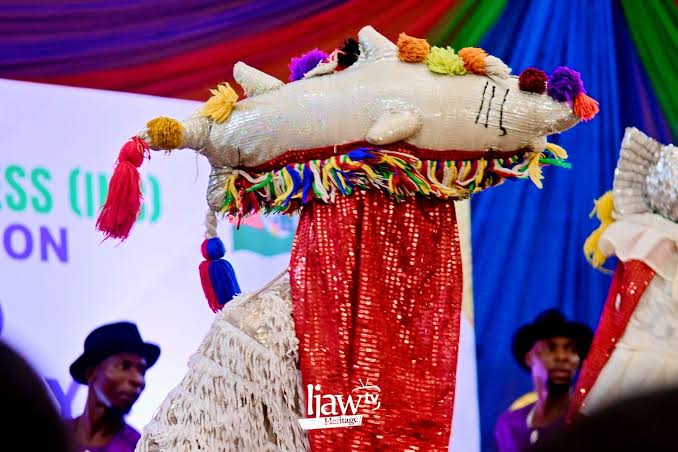
The Ijaw language programme formed part of the wider Bayelsa @30 celebrations, which run through activities including sports, cultural displays, a float, boat regatta, entertainment and anniversary events.
The state was created on October 1, 1996, and its 30th anniversary is being celebrated under the theme “Bayelsa@30: Celebrating Legacies.”
The decision to open the anniversary programme with an Ijaw language awareness event gave cultural identity a prominent place in the celebrations.
Performances by cultural groups and entertainers also reinforced the connection between language, music and heritage.
Organisers and cultural advocates at the programme argued that preserving Ijaw requires urgent collective action extending beyond Bayelsa and even beyond Nigeria.
From Celebration to Long-Term Policy
The larger question is whether the momentum generated during Bayelsa @30 will translate into lasting results.
Government support for technology, stronger school instruction and annual awareness programmes provides a framework.
But Ijaw language preservation will ultimately be measured by whether more children can understand, speak, read and confidently use the language.
That requires families to participate.
It requires schools to teach it effectively.
It requires writers, musicians, broadcasters and filmmakers to produce content in the language.
And it requires technology developers to make Ijaw accessible on the platforms young people already use.
The digital initiative backed by Diri could therefore become significant if it grows beyond a symbolic anniversary project into an accessible learning resource for Ijaw people across the world.
At 30, Bayelsa is celebrating its political and developmental journey as a state.
But the message emerging from the language campaign is equally straightforward: development and cultural identity do not have to move in opposite directions.
For the administration and cultural stakeholders, the next phase of Ijaw language preservation will depend on turning public declarations into sustained teaching, daily use, digital access and stronger participation by the younger generation.