














Trump AI meeting
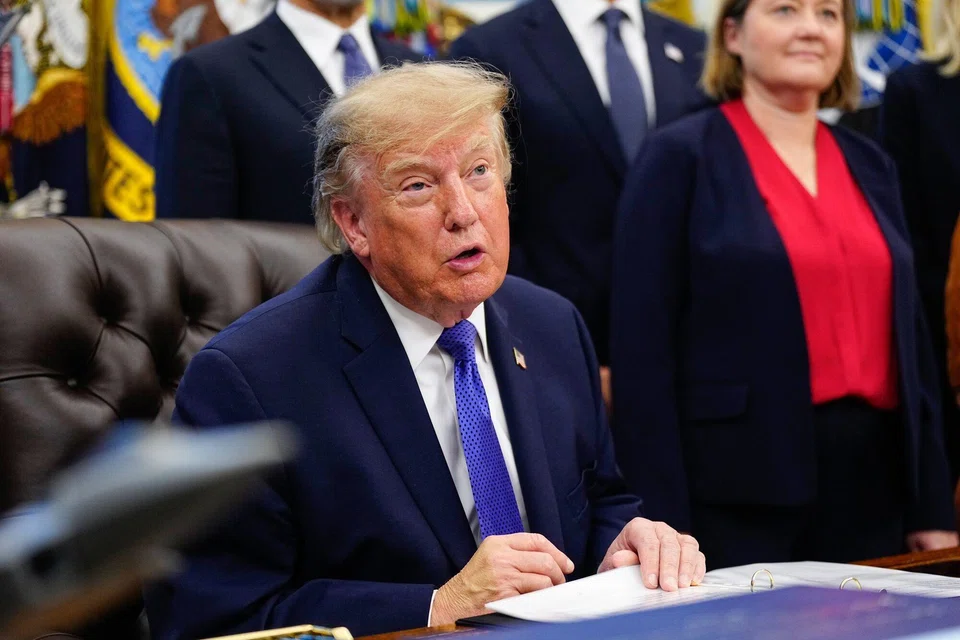
United States President Donald Trump and House Speaker Mike Johnson are set to meet leading technology executives at the White House on Tuesday as Washington confronts one of its most difficult technology-policy questions: how far government should go in regulating increasingly powerful artificial intelligence systems without slowing American innovation.
The Trump AI meeting, scheduled for September 29, 2026, is expected to bring together some of the most influential figures in the global technology industry, including Meta chief executive Mark Zuckerberg, Google CEO Sundar Pichai, OpenAI President Greg Brockman, Anthropic CEO Dario Amodei and Nvidia CEO Jensen Huang.
Elon Musk is also expected to take part, according to reports surrounding the gathering.
The meeting comes at a critical moment for the artificial intelligence industry, as lawmakers, technology executives and researchers debate the safety of increasingly capable AI systems and the appropriate role of government oversight.
Reuters reported that House Speaker Mike Johnson said the discussion would focus on finding the right balance between technological innovation and regulatory safeguards.
That balance is at the heart of the Trump AI meeting.
White House Brings AI Industry Heavyweights Together
The gathering puts several companies competing at the frontier of artificial intelligence around the same table with the American president and the leader of the House of Representatives.
Meta is pouring enormous resources into AI systems and infrastructure. Google remains one of the dominant forces in artificial intelligence through its Gemini products and DeepMind research division, while OpenAI and Anthropic remain central players in the development of advanced generative AI.
Nvidia, meanwhile, supplies much of the high-performance computing hardware powering the AI expansion.
The presence of those executives means the Trump AI meeting is not merely another gathering between government officials and technology companies.
Decisions taken in Washington on AI regulation, data centres, transparency, energy use and safety requirements could affect companies responsible for developing technologies increasingly used in businesses, government agencies, education, healthcare and everyday consumer products.
Reuters reported that Johnson has cautioned against imposing regulations that could undermine the United States in its technology competition with China.
The House Speaker has argued that government should pursue transparency and reasonable oversight without creating regulatory barriers capable of slowing American innovation.
Trump Favours Rapid American AI Development
Trump has repeatedly presented artificial intelligence as a strategic competition in which the United States must maintain its advantage over China.
His administration has generally favoured accelerating American AI development rather than introducing sweeping restrictions on the industry.
That position creates an important backdrop for the Trump AI meeting.
Some political leaders and technology executives argue that excessive regulation introduced too early could reduce innovation, increase development costs and make it more difficult for American companies to remain internationally competitive.
Others believe the extraordinary speed at which AI systems are becoming more capable makes stronger safeguards necessary.
The competing positions mean Tuesday’s meeting is taking place at the intersection of economic policy, national security, technological innovation and public safety.
The discussion is therefore unlikely to be limited to whether artificial intelligence should be regulated.
The more difficult issue is what form of regulation, if any, could protect the public without preventing useful advances.
AI Safety Concerns Intensify
The Trump AI meeting also comes amid renewed warnings about the risks posed by advanced artificial intelligence systems.
Anthropic CEO Dario Amodei has emerged as one of the industry’s prominent advocates for stronger safeguards and greater caution as AI capabilities improve.
Trump met Amodei privately at the White House on Sunday night, September 27, just two days before the broader technology meeting.
The private dinner was particularly notable because Trump and Anthropic have differed publicly over questions surrounding AI development and the use of the company’s technology by the American military.
The White House did not publicly disclose details of what was discussed during the dinner.
Amodei has argued that increasingly powerful AI systems require stronger safety measures, while Trump has generally resisted calls for a broad slowdown in development.
Their meeting illustrates the wider debate facing the industry.
Artificial intelligence developers want to build increasingly capable systems, but they also face questions over cybersecurity, autonomous decision-making, misinformation, employment disruption and the possibility that advanced AI systems could behave in unintended ways.
These concerns are expected to provide an important background to the Trump AI meeting.
Washington Divided Over How Much Regulation AI Needs
Congress has been considering different approaches to artificial intelligence oversight.
Some lawmakers want companies to disclose more information about how advanced models are developed and what safeguards are introduced before deployment.
Others worry that complicated federal rules could slow innovation while countries such as China continue investing aggressively in artificial intelligence.
Johnson has argued against both a moratorium and what he described as excessive regulation.
Instead, his stated objective is to find a regulatory balance.
That position is important because comprehensive AI legislation would ultimately require congressional action.
The Trump AI meeting therefore brings together not only companies responsible for building the technology but also political leaders capable of shaping the rules under which those companies operate.
Lawmakers are also approaching November’s United States midterm elections, making questions surrounding employment, electricity costs, technology investment and AI-generated disruption increasingly relevant politically.
https://ogelenews.ng/trump-ai-meeting-zuckerberg-pichai-tech-leaders-fac…
Data Centres Add Another Layer to AI Debate
Artificial intelligence safety is not the only issue confronting policymakers.
The massive data centres required to train and operate advanced AI models have become another source of debate across the United States.
These facilities consume significant amounts of electricity and require extensive infrastructure.
Communities in some parts of the country have questioned whether rapid data-centre expansion could increase pressure on electricity networks, water supplies and local infrastructure.
The Trump administration has generally supported expanded AI infrastructure as part of its effort to strengthen America’s technology industry.
Supporters argue that investment in data centres creates infrastructure, jobs and technological capacity that will help the United States remain competitive.
Critics and affected communities have raised questions about environmental impacts, electricity demand and who ultimately bears the cost of infrastructure expansion.
These concerns could broaden the Trump AI meeting beyond traditional questions of software safety and regulation.
Zuckerberg, Pichai and Huang Bring Different Stakes
Each executive attending the meeting represents a company with different interests in America’s rapidly growing AI economy.
For Zuckerberg, Meta is trying to remain at the forefront of advanced AI while investing heavily in computing infrastructure.
Pichai oversees Google at a time when artificial intelligence is increasingly central to the company’s search, cloud and consumer-product businesses.
Huang’s Nvidia has become one of the most important companies in the AI ecosystem because its advanced chips are extensively used to train and operate AI models.
OpenAI President Greg Brockman represents one of the companies most closely associated with the generative AI boom, while Amodei’s Anthropic has consistently placed public emphasis on the need for safety research alongside capability development.
Bringing such executives together during the Trump AI meeting gives the administration access to several competing perspectives from within the industry itself.
That distinction matters because the technology sector does not have one unified position on regulation.
Companies may agree broadly on maintaining American technological leadership while disagreeing significantly on how much government oversight is appropriate.
Competition With China Remains Central
China is likely to remain an important part of the discussion.
Trump and congressional Republicans have repeatedly framed artificial intelligence as an area of strategic competition between Washington and Beijing.
Under that argument, restrictions that substantially slow American companies could provide an advantage to Chinese competitors.
Supporters of stronger safety regulation respond that technological leadership and responsible development are not necessarily incompatible.
They argue that poorly controlled technology could create economic or security risks of its own.
Reuters reported that Johnson has specifically warned that excessive regulation could cause the United States to lose ground to China.
This tension between competition and precaution explains much of the political significance surrounding the Trump AI meeting.
White House Meeting Could Shape Next Phase of AI Policy
It remains uncertain whether Tuesday’s discussions will produce immediate policy announcements.
The meeting nevertheless comes as pressure grows on governments around the world to decide how increasingly capable AI systems should be governed.
The United States faces particularly high stakes because many of the world’s leading AI companies are headquartered there.
Washington must therefore weigh several competing priorities: encouraging innovation, maintaining international competitiveness, protecting national security, responding to public concerns and establishing reasonable safeguards for emerging technology.
The Trump AI meeting brings those questions directly into the White House.
For Zuckerberg, Pichai, Brockman, Amodei, Huang and other technology leaders, the gathering provides an opportunity to influence how policymakers understand both the possibilities and risks of their technology.
For Trump and Congress, the challenge is different.
They must determine how much freedom companies should have to push artificial intelligence forward and where government intervention becomes necessary.
The outcome may not settle America’s AI debate immediately.
But with powerful systems advancing rapidly and political pressure increasing, Tuesday’s gathering illustrates how artificial intelligence has moved beyond Silicon Valley laboratories and corporate boardrooms.
It is now firmly a matter of national economic, security and public policy.