
















Indonesia market fire
At least 11 people, including six children, have been killed after a devastating fire swept through a market and adjoining buildings in Indonesia’s Central Papua province, leaving dozens of structures destroyed and authorities searching for the cause of the disaster.
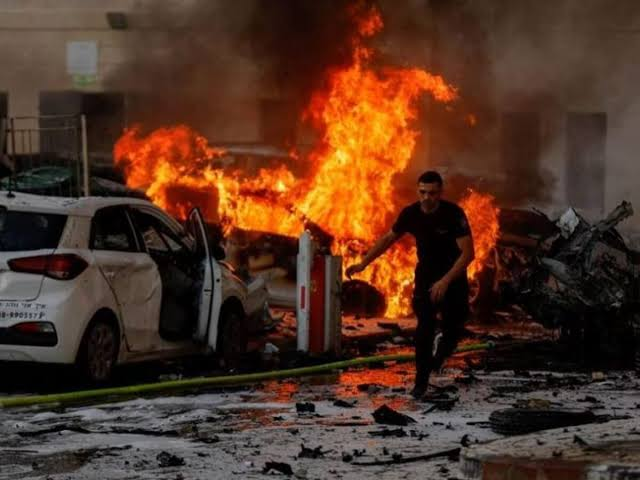
The Indonesia market fire broke out shortly after midnight on Monday in Paniai and rapidly spread through closely packed market stalls, shops and residential buildings before firefighters could bring the flames under control.
Police said five adults and six children died in the inferno. The children were between two and nine years old, making the tragedy particularly devastating for families in the affected community.
Local police spokesman Henry J. Manurung confirmed the death toll after emergency personnel inspected the burned area.
According to police, all 11 victims were found with fatal burn injuries following the blaze.
Six Children Killed in Indonesia Market Fire
The deaths of the six children have emerged as one of the most distressing aspects of the Indonesia market fire, which struck when many residents would ordinarily have been asleep.
Police said the youngest victims were just two years old, while the oldest among the children were nine.
The identities of those killed had not been publicly detailed in the initial police account.
The fire reportedly began shortly after midnight and spread quickly into nearby shophouses, transforming what started as a market blaze into a wider emergency affecting both commercial and residential structures.
Firefighters were deployed as the flames intensified, with fire trucks and water cannons used in efforts to contain the inferno.
Despite the response, the Indonesia market fire continued for more than three hours.
By the time the flames were brought under control, at least 40 kiosks and houses had been destroyed.
The scale of the destruction left emergency personnel facing the grim task of searching the burned structures after the fire had subsided.
Tightly Packed Buildings Complicate Firefighting
Police said the physical arrangement of the affected area contributed significantly to the difficulties faced by firefighters.
Market stalls, houses and shops were built close to one another, allowing the flames to spread rapidly while making firefighting operations more difficult.
Manurung said both the intensity of the blaze and the close proximity of the structures prolonged efforts to extinguish the fire.
That detail is central to understanding how the Indonesia market fire became so destructive within a relatively short period.
When buildings are positioned close together, flames can move rapidly from one structure to another, particularly before firefighters can establish effective containment.
https://ogelenews.ng/indonesia-market-fire
In Paniai, the consequences were severe. What remained after more than three hours of firefighting was a scene involving extensive structural destruction and the deaths of 11 people.
The casualty figure could have been considerably different had the fire been contained before reaching the adjoining buildings, but authorities have not offered speculation on whether the deaths could have been prevented.
Cause of Deadly Blaze Under Investigation
One question remains unanswered: what started the fire?
Authorities said an investigation into the Indonesia market fire was continuing, and no official cause had been announced in the immediate aftermath of the disaster.
That means reports attempting to attribute the blaze to an electrical fault, cooking equipment, deliberate action or any other source would be premature until investigators release their findings.
Determining where and how the fire started will be important not only for establishing the circumstances surrounding the deaths but also for identifying possible measures that could prevent a similar tragedy.
Investigators are expected to examine the point where the fire was first detected and the conditions that enabled it to spread into surrounding structures.
For now, however, police have confined their public account to the known facts surrounding the outbreak, casualties and emergency response.
Around 40 Kiosks and Houses Destroyed
Beyond the loss of life, the Indonesia market fire caused extensive property damage.
At least 40 kiosks and houses were destroyed, according to authorities.
For a market community, destruction on that scale represents more than damaged buildings. Markets often serve simultaneously as workplaces, sources of household income and centres of everyday community life.
Some of the structures affected in Paniai were also residential, meaning the disaster struck both people’s businesses and homes.
The full economic cost of the destruction had not been disclosed as of Monday.
There was also no immediate official estimate of the number of people displaced or the value of goods and property lost.
Those details are likely to become clearer as authorities complete assessments of the affected area.
Indonesia Has Recorded Other Deadly Fires
The Paniai disaster follows other fatal fire incidents recorded in Indonesia in recent years.
In December, a fire at a seven-storey office building in Central Jakarta killed 22 people. Police subsequently identified an exploding drone battery on the ground floor as the likely cause of that incident.
Indonesia also suffered a major industrial disaster in 2023 when an explosion at a nickel-processing plant in the eastern part of the country killed at least 12 people.
The circumstances of those incidents differ from the Indonesia market fire, and authorities have not established any connection between them.
They nevertheless illustrate the potentially catastrophic consequences when fires or explosions occur in occupied buildings or densely arranged facilities.
Investigation Becomes Next Focus in Paniai
Attention in Central Papua will now turn to the investigation and the families affected by Monday’s tragedy.
For investigators, the immediate challenge is establishing precisely where the blaze started and what triggered it.
For the affected community, the consequences are already painfully clear: 11 lives have been lost, six of them children, while scores of commercial and residential structures have been destroyed.
The tragedy also underlines how quickly an overnight fire can become catastrophic when flames reach closely packed buildings.
Firefighters responded with trucks and water cannons, but the intensity of the flames and arrangement of the structures meant the operation lasted for hours.
As investigators work through the remains of the affected buildings, officials will be under pressure to provide answers about the origin of the Indonesia market fire and whether any identifiable factors contributed to its rapid spread.
Until those findings are released, speculation about the cause should be treated cautiously.
What is already established is grim enough.
Eleven people went into Sunday night and did not survive until Monday morning. Six were children no older than nine.
Behind the statistics are families facing bereavement and a community confronting the destruction of homes and livelihoods.
The Indonesia market fire will therefore be remembered not merely for the number of structures destroyed, but for the human cost of a blaze that swept through Paniai in the middle of the night.
Indonesia market fire