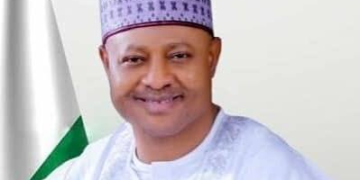
















INEC financial autonomy
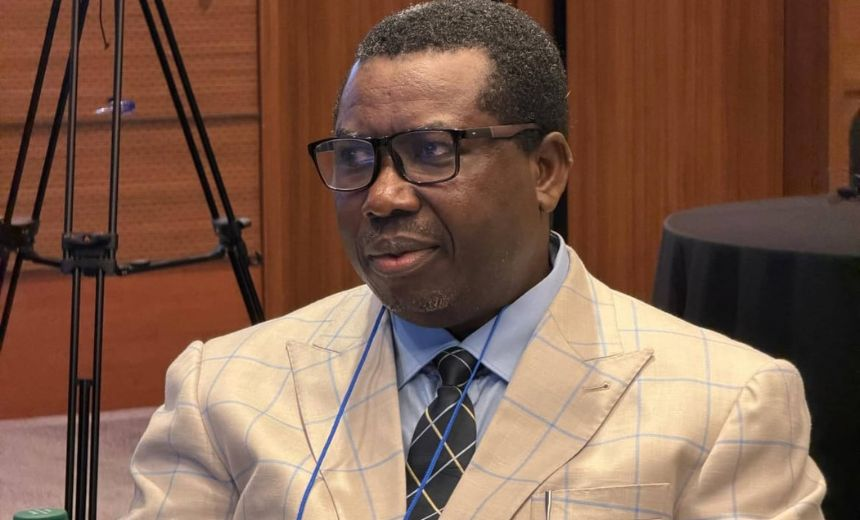
Chairman of the Independent National Electoral Commission, Professor Joash Amupitan, SAN, has called for direct and predictable funding of the electoral body from Nigeria’s Federation Account, warning that INEC cannot achieve genuine institutional independence while remaining dependent on the conventional federal budgeting process.
Amupitan said the present arrangement, under which the commission submits its financial requirements through the annual appropriation and envelope-budgeting system, weakens its operational freedom and makes long-term electoral planning difficult.
He spoke in Abuja on Thursday while delivering a keynote address at the public presentation of “Shadows: Protest Essays on Africa’s Most Consequential Country (1999–2023),” a two-volume book written by THISDAY Managing Director Eniola Bello.
The INEC chairman argued that INEC financial autonomy was indispensable to the conduct of free, fair and credible elections, particularly as preparations intensify for the 2027 general election.
Amupitan acknowledged that the Constitution places INEC’s expenditure on first-line charge. He maintained, however, that this protection had not completely freed the commission from delays, restrictions and uncertainties associated with the appropriation process.
He therefore proposed that INEC’s funding should be embedded directly in the Federation Account to guarantee more predictable resources, seamless operations and greater institutional efficiency.
Amupitan questions effectiveness of current arrangement
The INEC chairman asked whether an election management body could be described as truly independent when it lacked full control over the timely availability of the resources needed to discharge its constitutional responsibilities.
According to him, INEC remains subjected to the federal envelope system and must approach the National Assembly during the appropriation process, despite its status as a constitutionally independent institution.
He said this arrangement could leave the commission with a budget determined partly by what another government agency considers appropriate rather than by INEC’s comprehensive assessment of its electoral obligations.
Amupitan’s case for INEC financial autonomy is therefore not simply a demand for more money. It is a call for a funding mechanism that protects the commission from uncertainty and allows it to plan elections without waiting for discretionary releases.
The distinction is important. An institution may receive substantial funding and still lack financial autonomy if it cannot predict when the money will be released or whether its approved operational requirements will be fully met.
For an electoral commission, delayed funding can disrupt voter registration, procurement, staff training, technology deployment, transportation and election-security planning.
Amupitan said the country must reconsider whether the existing constitutional arrangement is strong enough to secure the independence expected of the electoral umpire.
First-line charge has not solved all funding problems
Section 81(3) of the Nigerian Constitution provides first-line funding protection for certain institutions, including INEC.
In principle, first-line charge is intended to ensure that the commission’s approved expenditure is treated as a priority rather than left entirely to the discretion of government ministries.
Amupitan argued that practical experience had shown that the protection was not sufficient.
The commission still operates within the broader federal appropriation framework, which requires the preparation, presentation, scrutiny and approval of annual budget proposals.
The INEC chairman said INEC financial autonomy should extend beyond having its allocation listed as a first-line charge. It should include direct access to a constitutionally defined share or allocation from the Federation Account.
Such an arrangement, he argued, would improve operational efficiency and reduce the amount of time officials spend navigating the conventional budgeting process.
However, direct funding must not mean an absence of accountability.
INEC should remain answerable to the National Assembly, the Auditor-General, anti-corruption agencies and the Nigerian public for how every naira is spent.
Financial autonomy should protect the commission from political control, not exempt it from transparent procurement, auditing and legislative oversight.
INEC’s responsibilities extend beyond general elections
Amupitan reminded his audience that INEC’s responsibilities go far beyond conducting presidential and National Assembly elections every four years.
The commission also conducts governorship and state Houses of Assembly elections, organises bye-elections and rerun elections, registers voters, maintains the national voters’ register and regulates political parties.
INEC additionally supplies voter-register information used for elections conducted by State Independent Electoral Commissions.
The organisation maintains offices across Nigeria’s 36 states, the Federal Capital Territory and all 774 local government areas.
These extensive responsibilities strengthen the argument that INEC financial autonomy should be based on a predictable, sustainable funding model rather than occasional emergency releases close to major elections.
Electoral preparation is a continuous process.
Voting machines and other technologies must be maintained, registration systems updated, staff trained, offices secured and political-party activities monitored long before polling day.
A funding arrangement that becomes active mainly during election years risks encouraging hurried procurement and weak preparation.
Amupitan recently told the Revenue Mobilisation Allocation and Fiscal Commission that INEC also needs funding for infrastructure, technology, personnel training and staff welfare. He warned that the commission was losing experienced officials to migration and retirement.
Governorship elections impose significant costs
The INEC chairman also argued that governorship and state Assembly elections can cost the commission more than the combined presidential and National Assembly elections.
The reason is that presidential and National Assembly elections are conducted together, while governorship and state legislative contests involve separate ballot papers, candidates, collation arrangements and operational requirements across the states.
INEC also bears expenses arising from pre-election and post-election litigation, including disputes originating from political-party primaries.
These financial pressures help explain Amupitan’s renewed campaign for INEC financial autonomy.
Nevertheless, the commission must provide detailed and accessible evidence supporting its cost claims.
Nigerians should be told how much is spent on ballot production, logistics, technology, temporary personnel, transportation, security coordination and election-result management.
Public confidence in electoral funding will improve when citizens can see that expenditure is necessary, competitive and properly audited.
The argument for direct funding will be stronger if it is accompanied by reforms that reduce waste, strengthen procurement and publish election expenditure promptly.
Financial autonomy does not automatically guarantee independence
Amupitan’s proposal addresses an important institutional weakness, but direct funding alone cannot guarantee credible elections.
INEC’s independence also depends on the integrity of its leadership, the professionalism of its staff, the transparency of its procedures and its willingness to enforce electoral laws without favour.
An electoral body may enjoy generous and predictable funding but still lose public trust if election guidelines are applied inconsistently or technology fails without convincing explanations.
For INEC financial autonomy to produce meaningful democratic improvement, it must be accompanied by operational transparency.
The commission should publish election timetables early, communicate clearly with political parties, test technology publicly and provide prompt explanations when procedures change.
It should also ensure that result-management systems are reliable, accessible and protected against manipulation.
Financial independence removes one potential source of institutional pressure. It does not automatically eliminate political interference, administrative failure, misconduct by officials or violence at polling units.
The reform should therefore be treated as one part of a wider effort to strengthen Nigeria’s electoral system.
Amupitan seeks stronger control over political parties
The INEC chairman also called for reforms that would strengthen the commission’s ability to regulate political parties.
He said many election-related court cases begin with disputes arising from poorly conducted party primaries, candidate imposition and failure to obey party constitutions.
Amupitan argued that political parties strengthen democracy when they conduct transparent primaries and allow members to participate genuinely in selecting candidates.
He proposed that disputes relating to political parties should be resolved at least one year before a general election.
The commission is also considering a mediation system through which internal party disagreements could be resolved within three months instead of developing into prolonged court battles.
These proposals are connected to the debate over INEC financial autonomy because regulating dozens of political parties, monitoring primaries and defending election-related cases require personnel and resources.
However, stronger regulatory powers must be carefully defined.
INEC should not become an institution that determines the political choices of party members. Its role should be to ensure compliance with the Constitution, electoral legislation and the parties’ own rules.
The commission must act as an impartial regulator rather than an alternative leadership structure for political parties.
https://ogelenews.ng/inec-financial-autonomy
Direct Federation Account funding requires legal reform
Amupitan’s proposal cannot be implemented merely through an administrative announcement.
Placing INEC’s funding directly within the Federation Account framework would likely require constitutional, legislative and fiscal reforms.
The National Assembly would have to determine the legal structure of the allocation, how the amount would be calculated and the institutions responsible for monitoring expenditure.
Lawmakers must also decide whether INEC should receive a fixed percentage, a needs-based allocation or a combination of regular operational funding and separate election-specific funds.
A poorly designed INEC financial autonomy framework could create a blank cheque without guaranteeing improved electoral performance.
A rigid percentage may produce more money than required in some years and insufficient funds in others.
A needs-based structure, meanwhile, could recreate the same uncertainty and institutional dependence that Amupitan wants to eliminate.
The best arrangement may involve predictable annual operational funding, a clearly defined election-cycle fund and emergency provisions for court-ordered reruns, bye-elections and unforeseen logistical demands.
Whatever model is adopted should be open to public scrutiny.
National Assembly oversight must remain intact
INEC’s request to escape dependence on annual budget negotiations should not be confused with a demand to operate without legislative oversight.
The National Assembly has a constitutional responsibility to examine public expenditure.
It should continue questioning INEC officials about procurement, staffing, election technology and project execution.
The objective of INEC financial autonomy should be to prevent funding from being delayed or manipulated for political purposes, while maintaining strong accountability for expenditure.
This balance is achievable.
The judiciary enjoys financial protections intended to preserve its independence, yet public funds allocated to courts remain subject to auditing and legal controls.
Similarly, INEC can receive predictable funding without becoming financially unaccountable.
The commission should publish annual audited accounts, election-by-election expenditure reports and procurement information.
It should also explain significant budget variations and disclose the cost of cancelled, postponed or rerun elections.
An electoral body asking Nigerians to trust its independence must demonstrate equal commitment to financial openness.
2027 elections increase urgency of reform
The debate is taking place as INEC prepares for the 2027 general election.
The commission has announced that presidential and National Assembly elections are scheduled for January 16, 2027, while governorship and state Houses of Assembly elections are expected to hold on February 6, 2027.
It is also preparing for the Osun governorship election scheduled for August 15, 2026.
The short period before the general election means that major constitutional reforms may be difficult to complete and implement without disrupting existing preparations.
Nigeria should avoid introducing a complicated new funding system so close to a national election unless the legal and operational details are carefully resolved.
At the same time, the urgency of preparations demonstrates why INEC financial autonomy deserves serious attention.
Delayed releases close to polling day could affect procurement timelines and weaken the commission’s ability to respond to operational challenges.
The National Assembly and executive should ensure that INEC receives the resources already required for 2027 while broader reforms proceed through a transparent process.
Public trust remains the final test
Nigeria’s electoral history has produced persistent public suspicion about the neutrality and effectiveness of INEC.
Political parties often praise the commission when they win and accuse it of bias when they lose.
The commission cannot eliminate every partisan allegation, but it can strengthen public confidence through consistency, transparency and timely communication.
Predictable INEC financial autonomy could reduce suspicions that the government of the day controls the electoral body by controlling its funds.
But public trust will ultimately depend on what happens at polling units, collation centres and result portals.
Voters will judge INEC by whether electoral materials arrive on time, officials follow the rules, technology functions and results reflect votes cast.
Financial reform should therefore be linked to measurable service standards.
Additional autonomy must produce better planning, faster deployment, stronger staff training and transparent results management.
Without those improvements, direct funding may change INEC’s accounting structure without changing the public’s experience of elections.
Nigeria must protect both autonomy and accountability
Amupitan has raised a legitimate question at the heart of Nigeria’s democracy: can an institution responsible for determining political power be truly independent when its operations depend on budgetary decisions made within the same political system?
His proposal deserves informed debate rather than immediate acceptance or rejection.
INEC should present a detailed funding model showing how direct Federation Account financing would work, what legal changes are required and what safeguards would prevent waste.
The National Assembly should organise public hearings involving political parties, civil society, financial experts, election observers and ordinary citizens.
The executive must also demonstrate that it supports genuine institutional independence rather than autonomy only when convenient.
Ultimately, INEC financial autonomy should serve one purpose: enabling the commission to conduct elections professionally, impartially and without financial pressure from political authorities.
The reform will succeed only if it combines predictable funding with transparent spending, competent administration and strict obedience to electoral law.
Amupitan is correct that financial dependence can weaken institutional independence.
But financial autonomy must become a foundation for credible elections—not a substitute for accountability.