















Russell Brand rape trial
London, United Kingdom | October 14, 2026
British comedian and actor Russell Brand has appeared before a London court to face serious allegations of sexual misconduct, with prosecutors describing him as a calculating and manipulative sexual predator who allegedly exploited women during his rise to entertainment prominence.
The Russell Brand rape trial, taking place at Southwark Crown Court, involves seven criminal charges brought in connection with allegations made by six women over a ten-year period between 1999 and 2009.
Brand, 51, has pleaded not guilty to every charge. The court has not determined whether the allegations are true.
The prosecution’s opening address on Wednesday, October 14, marked a significant stage in proceedings that have attracted widespread attention across Britain and beyond.
Prosecutor Outlines Allegations Against Russell Brand
Opening the prosecution’s case, senior British barrister Riel Karmy-Jones KC told jurors that Brand allegedly pursued sexual encounters with little regard for the consent or wishes of the women involved.
The prosecutor described his alleged conduct as ruthless, calculated and manipulative, arguing that he used his personality, humour and growing celebrity status to approach women before allegedly disregarding their boundaries.
According to the prosecution, the allegations involve women who encountered Brand in different circumstances during a period when his career in television, radio and comedy was expanding.
Karmy-Jones alleged that his attitude towards sexual relationships demonstrated a sense of entitlement and an expectation that his desires should be satisfied.
However, these statements represent the prosecution’s interpretation of the allegations and evidence it intends to present. Brand continues to deny criminal wrongdoing.
Seven Criminal Charges Before London Court
The Russell Brand rape trial centres on seven separate charges involving six women.
The charges comprise three counts of rape, three counts of sexual assault and one count of indecent assault.
The alleged incidents occurred between 1999 and 2009, a period covering the early development of Brand’s entertainment career and his emergence as a prominent British media personality.
Prosecutors have outlined allegations involving encounters in hotel accommodation, entertainment workplaces and other locations.
Some complainants allege that they resisted unwanted sexual advances, while others say they were unable to respond before the alleged conduct occurred.
The court will examine the individual allegations, relevant evidence and testimony before the jury considers whether the prosecution has proved the charges.
The women involved are entitled to legal anonymity under British law, meaning their identities cannot be published without lawful justification.
Russell Brand Denies Allegations as Trial Continues
Despite the seriousness of the accusations, Brand maintains his innocence.
The comedian has entered not-guilty pleas to all seven charges and is contesting the prosecution’s case.
His appearance at Southwark Crown Court has attracted significant media attention, reflecting his status as an internationally recognised entertainer and online commentator.
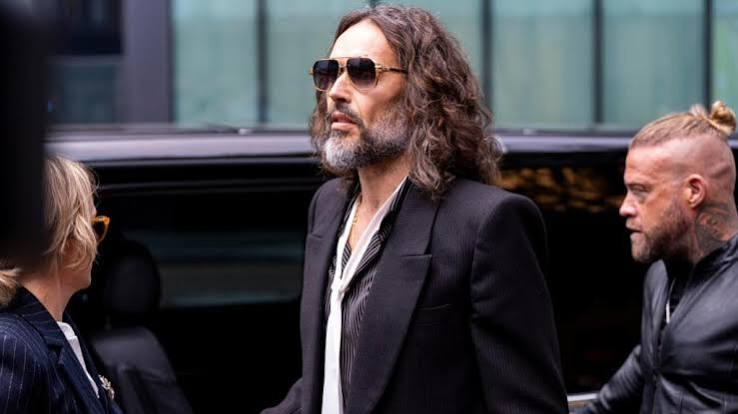
Brand attended court accompanied by his wife, Laura Gallacher, during the opening stages of the proceedings.
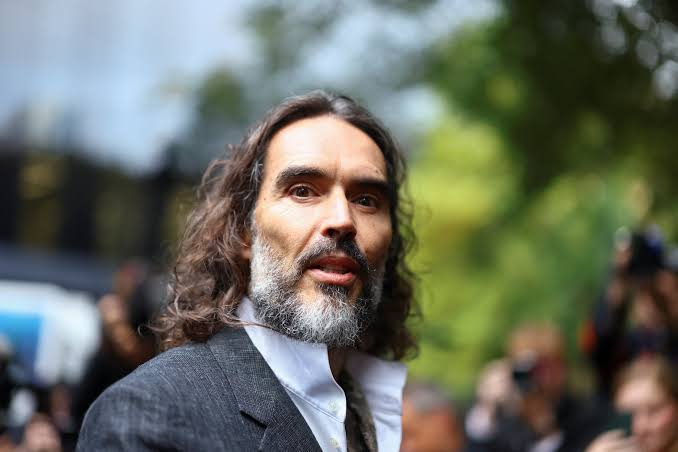
Speaking to journalists outside the courthouse on Wednesday, he acknowledged concerns about the trial while expressing hope about the eventual outcome.
The Russell Brand rape trial is being heard by a jury consisting of eight men and four women.
The jurors must assess the evidence presented in court rather than rely on allegations circulated through newspapers, documentaries or social media.
Under the criminal justice system in England and Wales, the prosecution bears the burden of proving guilt beyond reasonable doubt.
Brand is presumed innocent unless and until a court determines otherwise.
https://ogelenews.ng/russell-brand-rape-trial-uk-prosecutor-accuses-come…
How the Russell Brand Investigation Developed
The criminal proceedings follow years of public scrutiny surrounding allegations of sexual misconduct involving the comedian.
In September 2023, a joint media investigation by The Sunday Times, The Times and Channel 4’s Dispatches programme brought allegations involving Brand into wider public discussion.
The reporting prompted intense debate about celebrity influence, accountability, consent and the treatment of women in the entertainment industry.
Subsequent police investigations resulted in criminal charges, which Brand has consistently denied.
Before the current proceedings began, his legal representatives also challenged whether earlier media coverage could affect the fairness of the trial.
A judge rejected an application to halt the proceedings, allowing the case to move forward with safeguards intended to ensure that jurors reach their decision on admissible courtroom evidence.
The Russell Brand rape trial is therefore not an examination of whether his public reputation has suffered. Its central purpose is to determine whether the specific criminal allegations can be established through evidence.
From British Television Personality to Hollywood Actor
Russell Brand first became widely recognised through his work as a stand-up comedian, television presenter and radio broadcaster.
His unconventional presentation style and outspoken commentary helped establish him as one of Britain’s prominent entertainment personalities during the 2000s.
He worked with major broadcasters, including MTV, Channel 4 and the BBC, before expanding his career into Hollywood.
His film appearances include Forgetting Sarah Marshall, Get Him to the Greek and Rock of Ages.
Brand also attracted international attention through his marriage to American singer Katy Perry, which lasted from 2010 until 2012.
In subsequent years, he increasingly focused on digital broadcasting, political commentary, spirituality and discussions about mainstream institutions.
His online platforms attracted substantial audiences, giving him a prominent public presence outside traditional television and radio.
The Russell Brand rape trial now places allegations concerning events from his earlier career before a criminal jury.
Court Proceedings Raise Questions About Evidence and Accountability
The proceedings have renewed public interest in the challenges associated with investigating allegations of sexual offences many years after the events are said to have occurred.
Cases involving historic allegations can require courts to examine witness recollections, supporting testimony, documentary records and other relevant material.
Such cases also highlight the importance of protecting complainants while safeguarding defendants’ rights to a fair hearing.
Although prosecutors have outlined serious allegations, the credibility and legal significance of the evidence must be assessed through the judicial process.
The Russell Brand rape trial is expected to continue for several weeks, with the prosecution presenting its case before the defence has an opportunity to challenge the allegations and advance its response.
Throughout the proceedings, reporting must distinguish between statements made by prosecutors, evidence accepted by the court and findings ultimately reached by the jury.
What Happens Next in the Russell Brand Rape Trial?
Following the prosecution’s opening statements, the court is expected to hear evidence concerning the individual allegations.
Witness testimony and questioning by counsel will form important parts of the proceedings.
The defence will have opportunities to challenge prosecution evidence and present its case in accordance with the applicable rules.
The trial is expected to last approximately six weeks, although the timetable could change depending on the progress of the hearing.
Ultimately, the jury will determine whether the charges have been proved to the required criminal standard.
For now, the Russell Brand rape trial remains ongoing, and no verdict has been delivered.
Ogele News will continue to follow developments in the proceedings, focusing on verified courtroom evidence, the legal process and any subsequent judicial findings.