















Kaduna police extortion investigation
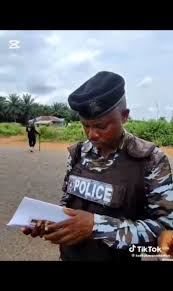
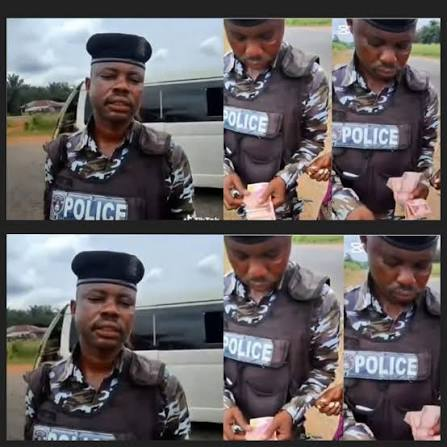
KADUNA, Nigeria — The Kaduna State Police Command has ordered a full-scale investigation into police officers captured in a viral video allegedly collecting money from motorists and motorcycle riders during a stop-and-search operation in the state.
Commissioner of Police Rabiu Muhammad directed that the personnel involved be identified and invited for questioning as public criticism mounted over the footage circulating on social media.
The Kaduna police extortion investigation follows allegations that officers deployed around a suburb of Millennium City demanded and collected money from road users while conducting security checks.
Police authorities have not declared the officers guilty. The command said an investigation would establish what happened and determine whether disciplinary or legal action should follow.
Kaduna Police Public Relations Officer, DSP Mansir Hassan, said any personnel found culpable would face appropriate sanctions.
The case has again brought police conduct at checkpoints and stop-and-search operations under scrutiny, particularly at a time when smartphones and social media increasingly allow citizens to document encounters with law-enforcement personnel.
Kaduna Police Extortion Investigation Follows Viral Footage
The video at the centre of the Kaduna police extortion investigation circulated widely on social media and appeared to show officers stopping motorists and motorcycle riders.
The personnel were accused of demanding and collecting money from road users.
Following the public reaction, Muhammad ordered the command to identify the officers involved and commence a full investigation.
The decision is important because the video itself, while sufficient to trigger an investigation, does not replace the disciplinary process required to establish individual responsibility.
Investigators will need to identify the personnel, establish what money was allegedly collected, determine the circumstances surrounding the transactions and examine whether police regulations or criminal laws were violated.
The command said officers found responsible would face disciplinary and legal consequences.Kaduna police extortion investigation
https://ogelenews.ng/kaduna-police-extortion-investigation
Police Explain Stop-and-Search Operation
One of the most significant aspects of the story is the police explanation for why officers were operating along the route.
According to the command, routine roadblocks and stop-and-search operations have been curtailed in Kaduna except where credible intelligence indicates the movement of criminals, weapons or other prohibited items.
Police said the location shown in the video is a suburb of Millennium City and has previously been associated with criminal activity.
More significantly, the command disclosed that police operatives had earlier recovered 20 AK-47 rifles along the same route.
That provides an important security context.
Police presence along a crime-prone route may be justified by intelligence and previous weapons seizures.
But that does not resolve the allegations behind the Kaduna police extortion investigation.
The legitimacy of a security operation and the conduct of individual officers during that operation are separate questions.
Security Duty Cannot Become Avenue for Extortion
The Kaduna Police Command itself made that distinction.
It stressed that no police officer is permitted to exploit legitimate security duties for extortion, harassment or other misconduct.
That principle should be central to the story.
Kaduna faces genuine security challenges, and police officers sometimes have legitimate reasons to stop vehicles, search suspicious persons or establish temporary security checks based on intelligence.
Citizens also have an obligation to cooperate with lawful police operations.
But a legitimate security operation does not authorise an officer to demand unauthorised payments.Kaduna police extortion investigation
The Kaduna police extortion investigation must therefore determine whether the personnel captured in the video remained within their lawful responsibilities or abused the authority attached to their deployment.
CP Rabiu Muhammad Orders Officers Identified
Muhammad’s directive goes beyond a general promise to “look into” the video.
The Commissioner ordered that the officers involved be identified and invited for investigation.
That should make it possible for investigators to examine the actions of individual personnel rather than treating the incident as an anonymous allegation against the police generally.
According to the command, anyone found culpable will face disciplinary and legal action.
The credibility of the Kaduna police extortion investigation, however, will ultimately depend on its conclusion.
Announcing an investigation is only the first stage.
If the allegations are substantiated, the command should disclose what disciplinary action has been taken, subject to applicable rules.
If the officers are cleared, police should similarly explain the basis of that conclusion.
Transparency after an investigation is essential to public confidence.
The Kaduna incident demonstrates how smartphones have changed relations between citizens and law-enforcement agencies.
Years ago, an allegation that an officer collected money from a motorist might have depended almost entirely on conflicting testimony.
Today, citizens can record encounters and distribute footage to millions of viewers within hours.
That can expose misconduct that might otherwise remain hidden.
It can also protect police officers where allegations against them are false or misleading.
But video evidence must still be examined carefully.
A short clip may not show what happened before recording started or after it ended.
That is another reason the Kaduna police extortion investigation should examine the complete footage and surrounding circumstances rather than relying exclusively on social-media reactions.
Extortion Allegations Damage Public Confidence
Few allegations damage relations between citizens and police as quickly as roadside extortion.
For many Nigerians, traffic stops and checkpoints are among their most frequent direct interactions with police officers.
When those encounters are professional, they can strengthen confidence in law enforcement.
When motorists believe officers are using checkpoints to collect money, trust suffers.Kaduna police extortion investigation
The consequences go beyond inconvenience.
Police depend on citizens for intelligence.
Residents report suspicious movements.
Communities provide information about kidnappers, armed groups and other criminals.
Witnesses assist investigations.
That cooperation becomes harder to obtain where communities distrust officers.
The Kaduna police extortion investigation therefore concerns more than the individuals appearing in one video. It raises the broader question of police accountability and community trust.
The 20 AK-47 Recovery Cannot Be Ignored
At the same time, the security situation along the route should not be minimised.
Police say 20 AK-47 rifles had previously been recovered there.
A recovery of that magnitude indicates why security authorities may consider the area sensitive.
Weapons trafficking remains a serious threat because illegal firearms can feed kidnapping, armed robbery, banditry and other violent crimes.
Police officers therefore require sufficient authority to intercept suspicious movements.
The challenge is exercising that authority without abusing it.
A checkpoint can simultaneously be necessary for public safety and vulnerable to abuse if personnel are not properly supervised.
That is why effective policing requires both operational capacity and accountability.Kaduna police extortion investigation
Stop-and-Search Must Have Clear Purpose
Stop-and-search operations can be valuable when driven by intelligence.
They become problematic when motorists encounter checkpoints without understanding their purpose or when officers behave unprofessionally.
The Kaduna command says routine roadblocks have been curtailed except where intelligence justifies intervention.
That policy should be enforced consistently.
Commanders should know where officers are deployed.
Officers should understand the reason for the deployment.
Supervisors should monitor their conduct.
And citizens should have effective mechanisms for reporting misconduct.
The Kaduna police extortion investigation provides an opportunity to examine whether those safeguards were functioning when the viral footage was recorded.
Police Welcome Public Vigilance
Another significant element of the police response is that the command did not condemn citizens for circulating the footage.
Instead, Muhammad commended members of the public for their vigilance and encouraged residents to continue reporting unprofessional conduct by officers.
That approach should be encouraged.
Citizens should be able to report alleged police misconduct without fear.
But allegations should also be investigated fairly.
Police officers have rights too, and social-media accusations should not automatically become findings of guilt.
A credible accountability system must protect citizens against misconduct while protecting officers against false allegations.
Investigation Should Establish Whether Money Changed Hands
Several questions now require clear answers.
Did the officers collect money from motorists or motorcycle riders?
If money changed hands, why was it collected?
How many officers were involved?
Were supervisors aware of what was happening?
Was the operation officially authorised?
Were similar complaints previously made about the location?
These are questions the Kaduna police extortion investigation should answer.
The viral nature of the incident should not cause investigators to rush to a predetermined conclusion.
But public attention should also not be allowed to disappear without an outcome.
The objective should be evidence-based accountability.
Police Supervision Is Critical
The incident also raises a larger question about supervision.
Police reform cannot focus only on recruitment, weapons, vehicles and salaries.
Supervision matters.
Officers deployed to roads and communities exercise significant authority over citizens.
Their commanders should know how that authority is being exercised.
Regular supervisory visits, clear operational instructions and effective complaint mechanisms can reduce opportunities for misconduct.
Technology could also increasingly assist police accountability.
Body-worn cameras, where properly deployed with appropriate privacy and evidence rules, can provide an independent record of encounters between officers and citizens.
They can help prove misconduct.
They can also protect officers from fabricated accusations.Kaduna police extortion investigation
Discipline Must Follow Proven Misconduct
The command’s promise of disciplinary and legal action is important.
But punishment should follow evidence.
The officers involved remain the subjects of allegations until the investigation establishes otherwise.
That distinction matters in responsible journalism.
Ogele News should therefore avoid describing them simply as “extortionist police officers” before culpability has been established.
The appropriate descriptions are “officers accused of extortion,” “officers allegedly collecting money,” or “personnel under investigation.”
The Kaduna police extortion investigation should proceed quickly enough to maintain public confidence but thoroughly enough to protect due process.
Ogele News Analysis: Investigation Is Only the First Test
The original headline, “Kaduna CP orders investigation following viral extortion video,” is essentially correct.
But “extortion video” is slightly too definitive because it suggests that the footage has already established the offence.
The safer and stronger formulation is “viral video alleging police extortion.”
There is also a more compelling angle missing from the original headline.
Police acknowledge that the route is security-sensitive and say 20 AK-47 rifles had previously been recovered there. Yet the same command insists that legitimate security operations cannot become an excuse for extortion.
That tension makes the story more important.
Nigeria needs police officers who can stop vehicles where intelligence suggests criminals or weapons are moving.
But Nigerians also need confidence that stopping at a security checkpoint will not become an unofficial demand for payment.
The two objectives are not contradictory.
Professional policing requires both.
CP Rabiu Muhammad has taken the appropriate initial step by ordering the Kaduna police extortion investigation and directing that the officers be identified.
The real test comes next.
If evidence establishes misconduct, sanctions should follow.
If evidence clears the personnel, that should also be communicated.
What should not happen is the familiar cycle in which a viral incident produces an immediate announcement of an investigation, public attention moves elsewhere, and Nigerians never learn what the investigation established.
Accountability requires an outcome.
The command has said it remains committed to professional policing and protecting residents’ rights.