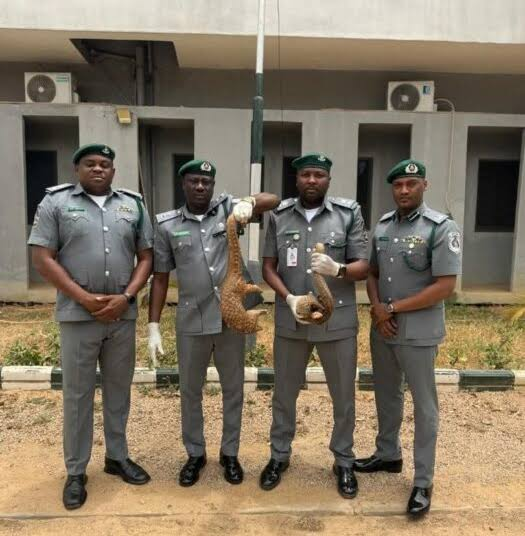















Kano wildlife trafficking
The Nigeria Customs Service has intensified its campaign against Kano wildlife trafficking after officers intercepted 48 animals and birds along the Kano-Daura Road and arrested three male suspects.
The operation was carried out by the Kano/Jigawa Area Command at about 8:30 p.m. on August 25, 2026, following intelligence concerning the movement of endangered wildlife through the route.
The seizure represents another significant intervention against Kano wildlife trafficking and raises fresh concerns about the movement of protected animals through northern Nigeria.
According to the Customs authorities, the intercepted wildlife included four caracal wild cats, four chimpanzees, two baby gorillas, seven red patas monkeys, two galagos, one honey badger, two albino alligators, six rock fowls, one civet cat and 19 greater bustard birds.
Customs Acts on Intelligence Along Kano-Daura Road
The Acting Deputy Comptroller in charge of Enforcement, Assistant Comptroller of Customs Muhammad Zanna, disclosed details of the operation during the formal handover of the animals.
Zanna, who represented the Acting Customs Area Controller of the Kano/Jigawa Area Command, Deputy Comptroller Usman Adamu, said officers acted after receiving credible intelligence.
The interception is particularly significant because the Kano-Daura axis provides an important road connection towards Nigeria’s northern frontier. The latest Kano wildlife trafficking case therefore highlights the importance of intelligence gathering and surveillance along routes that could potentially be exploited for illegal cross-border trade.
Customs said the operation was conducted pursuant to Section 55(1)(i) of the Nigeria Customs Service Act, 2023, as well as Nigeria’s obligations under the Convention on International Trade in Endangered Species of Wild Fauna and Flora, commonly known as CITES.
Suspects Allegedly Attempted to Bribe Officers
Beyond the wildlife seizure itself, Customs authorities disclosed another troubling dimension to the operation.
According to Zanna, the suspects allegedly made repeated attempts to bribe the officers involved in the interception in an effort to secure the release and continued movement of the animals.
The officers reportedly rejected the inducements and proceeded with the enforcement action.
For the fight against Kano wildlife trafficking, the allegation is significant. Illegal wildlife trade can involve more than the physical movement of animals. Effective enforcement also depends on the ability of officers and institutions to withstand attempts to compromise investigations and border controls.
Zanna commended the patrol officers for their vigilance, courage and professionalism, saying their actions had helped disrupt an illegal wildlife supply chain.
https://ogelenews.ng/kano-wildlife-trafficking
Baby Gorillas, Chimpanzees Among 48 Wildlife Recovered
A physical examination of the intercepted consignment revealed a striking variety of animals and birds.
Among them were four chimpanzees and two baby gorillas, alongside caracals, patas monkeys, galagos, a honey badger, albino alligators, rock fowls, a civet cat and greater bustards.
The discovery demonstrates why Kano wildlife trafficking should not be treated simply as another case of prohibited goods being transported on Nigerian roads.
Wildlife trafficking threatens biodiversity and can contribute to the depletion of vulnerable species. It is also increasingly treated internationally as a serious transnational crime requiring cooperation among Customs agencies, police, environmental authorities and international organisations.
The global scale of the problem is considerable. International enforcement operations have exposed organised networks dealing in live animals, wildlife products and protected plant species across borders.
Nigeria’s Legal Obligations Against Wildlife Trafficking
Nigeria has longstanding international obligations concerning the protection of endangered species.
The country ratified CITES in 1974, with the convention entering into force for Nigeria in July 1975. The agreement regulates international trade in protected species to ensure that such trade does not threaten their survival.
Nigeria’s domestic Customs legislation also gives enforcement authorities powers relating to controlled imports and exports governed by international conventions, including CITES.
This legal framework makes the latest Kano wildlife trafficking interception more than an isolated enforcement operation. It forms part of Nigeria’s responsibility to prevent its territory and transport networks from being exploited for illegal wildlife trade.
Suspects, Animals Handed Over for Investigation
Following the interception, Customs handed the three suspects and the recovered wildlife to a representative of the Special Wildlife Office at the Nigeria Customs Service headquarters for further investigation and possible prosecution.
That next stage will be important.
An interception can disrupt an individual shipment, but effective action against Kano wildlife trafficking requires investigators to establish where the animals originated, their intended destination and whether other individuals or networks were involved.
Authorities will also need to determine the circumstances surrounding the movement of the animals and whether the suspects acted independently or formed part of a wider supply chain.
Such investigations can help enforcement agencies move beyond individual arrests towards identifying those financing, organising or benefiting from wildlife trafficking.
Customs Warns Wildlife Trafficking Networks
The Kano/Jigawa Area Command has warned individuals and networks involved in illegal wildlife trade that enforcement operations will continue.
Customs officials said the command would work with relevant government agencies and stakeholders to prevent wildlife trafficking and protect Nigeria’s biodiversity.
The Comptroller-General of Customs, Bashir Adewale Adeniyi, and the management of the Service were also commended for supporting enforcement efforts aimed at strengthening border security.
The latest Kano wildlife trafficking operation demonstrates how intelligence-led enforcement can expose activities that might otherwise remain hidden.
But the seizure also raises questions that investigators must now answer.
Where did the 48 animals come from? Where were they being taken? Who was expecting to receive them? And was this one shipment in a much larger trafficking network?
Those questions matter because arresting couriers or individuals transporting wildlife is only one part of dismantling an illegal supply chain.
For residents of Kano and the wider northern region, the case is also a reminder that wildlife crime is not a distant conservation problem confined to forests and national parks. Major roads and commercial corridors can become links in networks through which protected species are moved.
The interception of the 48 animals therefore represents an important enforcement success. The bigger test will be whether the investigation into Kano wildlife trafficking identifies the people and networks behind the consignment and leads to effective prosecution.
For now, three suspects are in custody, 48 animals and birds have been intercepted, and another suspected wildlife trafficking operation has been stopped on the Kano-Daura Road.
https://environment.gov.ng/?utm_source=chatgpt.com