


















Nigeria 2026 oil licensing round
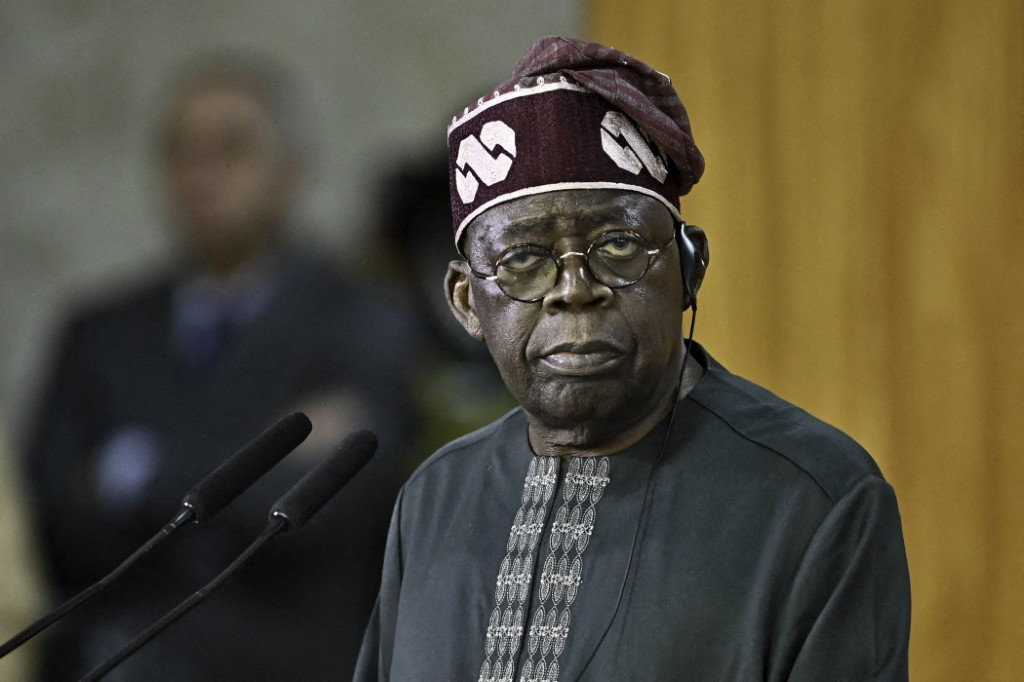
President Bola Tinubu has approved the commencement of a new oil and gas licensing round in 2026 as the Federal Government moves to sustain investment in Nigeria’s upstream petroleum industry.
The Nigerian Upstream Petroleum Regulatory Commission announced that the exercise would begin no later than the third quarter of 2026, following approval by the Minister of Petroleum Resources in accordance with the Petroleum Industry Act.
Tinubu serves as Nigeria’s substantive Minister of Petroleum Resources, while the commission is responsible for administering the competitive allocation of upstream petroleum acreage.
The announcement of the Nigeria 2026 oil licensing round was made by the Chief Executive of the NUPRC, Oritsemeyiwa Eyesan, during a meeting with representatives of Meren Energy in Abuja.
Eyesan said the regulator intended to maintain the momentum generated by recent reforms and licensing exercises, while creating further opportunities for investors seeking access to Nigeria’s oil and gas resources.
NUPRC targets third-quarter launch
The NUPRC said the Nigeria 2026 oil licensing round would commence by the third quarter, which covers the period between July and September 2026.
The regulator had earlier indicated that it planned to conduct licensing rounds regularly rather than allow long intervals between acreage-allocation exercises.
Regular licensing rounds can provide investors with a clearer investment calendar, enable the government to release available acreage more efficiently and reduce the temptation to allocate strategic petroleum assets through opaque discretionary arrangements.
However, the commission has not yet published the number, location or classification of the oil and gas blocks that will be offered in the new exercise.
It has also not released the complete timetable, qualification requirements, bid parameters or financial terms for the Nigeria 2026 oil licensing round.
Those details are expected to become clearer when the commission formally launches the exercise and opens the official licensing portal.
New round follows 2025 licensing exercise
The approval comes as the regulator concludes Nigeria’s 2025 Licensing Round, which offered 50 oil and gas blocks to investors.
The 2025 acreage basket included onshore, shallow-water, deep-offshore and frontier assets. The exercise was designed to attract new capital, expand Nigeria’s petroleum reserves and move undeveloped acreage towards exploration and production.
Almost 300 companies reportedly expressed initial interest in that round. Following the prequalification process, 196 applicants qualified to proceed, while 143 companies submitted technical and commercial bids covering 37 of the available assets.
The remaining 13 blocks did not attract bids and were returned to the government’s licensing basket for possible consideration in a future exercise.
It is not yet clear whether those unclaimed assets will be included in the Nigeria 2026 oil licensing round, offered under revised terms or subjected to further geological and commercial evaluation.
The government must avoid assuming that assets rejected during one licensing exercise will automatically attract investors when offered again.
Before returning any unclaimed blocks to the market, the NUPRC should determine whether the absence of bids resulted from inadequate geological data, difficult terrain, security exposure, environmental liabilities, limited infrastructure or unattractive fiscal conditions.
Government seeks sustained upstream investment
Nigeria has experienced years of inadequate investment in oil and gas exploration, contributing to declining production capacity and limited replacement of reserves.
The government hopes that regular licensing exercises will bring new operators into the industry, accelerate exploration and support the development of discoveries that have remained commercially inactive.
The Nigeria 2026 oil licensing round is also expected to support the country’s ambition to increase crude oil production and strengthen natural-gas development.
Nigeria remains heavily dependent on petroleum exports for foreign-exchange earnings and public revenue. Consequently, delays in exploration, project approvals and field development have implications for government finances and the wider economy.
However, a licensing round does not produce immediate barrels.
Successful bidders must first complete contractual requirements, pay prescribed fees, acquire or interpret geological data, conduct seismic surveys, drill exploration and appraisal wells and prepare commercially viable field-development plans.
Depending on the location and complexity of an asset, the period between licence award and first production may extend for several years.
The government should therefore avoid presenting the Nigeria 2026 oil licensing round as an immediate solution to production or revenue challenges.
https://ogelenews.ng/nigeria-2026-oil-licensing-round
Eyesan promises predictable regulatory environment
Eyesan said the regulator was committed to creating a predictable and competitive investment environment in the upstream sector.
She reportedly assured investors that the commission would continue implementing the Petroleum Industry Act and promoting transparency in acreage allocation.
The Act separates upstream regulation from the commercial activities of the national oil company and provides the legal framework for the award of Petroleum Prospecting Licences and Petroleum Mining Leases.
The Nigeria 2026 oil licensing round will test whether the regulatory system can combine transparency, speed and commercial discipline.
Investors generally require stable fiscal terms, reliable approvals, security, access to infrastructure and confidence that contracts will be respected.
Nigeria must compete for petroleum investment with other producing countries at a time when global companies are increasingly selective about long-term exploration expenditure.
Although oil and gas remain central to the global energy system, international pressure for lower-carbon development has altered how companies evaluate new projects. Assets with high production costs, significant emissions or lengthy development periods may struggle to attract capital.
Nigeria must therefore offer commercially credible opportunities without surrendering the long-term value of its petroleum resources.
Technical capacity should outweigh political influence
The award of oil blocks has historically attracted concerns about political patronage, hidden ownership and companies obtaining licences without possessing the resources to develop them.
The NUPRC must ensure that winners in the Nigeria 2026 oil licensing round are selected through transparent technical and commercial evaluation.
The highest financial offer should not automatically determine the successful bidder.
A company may promise a substantial signature bonus while lacking the technical team, financing structure or operational experience required to drill and develop an asset.
Evaluation should consider the bidder’s financial strength, technical competence, safety record, environmental performance, proposed work programme and ability to meet clearly defined timelines.
Beneficial ownership information should also be publicly available so Nigerians can identify the individuals and companies controlling successful bidding entities.
This would help prevent politically exposed interests from hiding behind newly registered corporate vehicles.
Dormant licences must not return
Nigeria has previously awarded petroleum acreage that remained undeveloped for long periods.
Some companies secured licences but failed to conduct meaningful exploration, raise capital or move the assets towards production.
The result was the accumulation of dormant acreage while the country struggled to increase reserves and output.
The NUPRC has warned that successful investors will be expected to work their assets and comply with the Petroleum Industry Act’s performance requirements.
The commission has repeatedly promoted a “drill or drop” principle under which operators must meet their work obligations or risk losing undeveloped acreage.
That principle must be enforced in the Nigeria 2026 oil licensing round.
An oil block should not be treated as a speculative asset to be held indefinitely, resold at a profit or used merely to attract financing.
Licence terms should contain measurable milestones covering seismic acquisition, exploration drilling, appraisal and development.
Where an operator fails to meet its obligations without reasonable justification, the government should recover the acreage and offer it to a capable investor.
Local content must produce genuine value
The new licensing round should also create opportunities for Nigerian companies, engineers and service providers.
Indigenous participation should extend beyond the registration of locally incorporated bidding companies.
Successful operators should demonstrate how their projects will support Nigerian employment, technical training, fabrication, research and the procurement of locally produced goods and services.
The Nigerian Content Development and Monitoring Board has a central role in ensuring that new upstream investments contribute to domestic industrial development.
The Nigeria 2026 oil licensing round should therefore be connected to measurable local-content plans.
Those plans should identify the skills to be transferred, the services to be procured locally and the opportunities available to communities near the licensed assets.
At the same time, local ownership should not become an excuse for lowering technical, financial or environmental standards.
An indigenous company that cannot safely and responsibly develop an asset should not receive preferential treatment simply because it is Nigerian-owned.
Host communities require meaningful participation
Petroleum development has profound consequences for host communities, particularly in the Niger Delta.
New exploration and production activities can create employment and public revenue, but they may also expose communities to pollution, land disruption, gas flaring and conflict when consultation is inadequate.
The government should require bidders in the Nigeria 2026 oil licensing round to demonstrate credible environmental and community-engagement plans.
Companies should disclose how they will prevent spills, manage waste, decommission facilities and respond to environmental incidents.
Where assets are located near established communities, consultation should begin before major operations commence.
The host-community development provisions of the Petroleum Industry Act must not be treated merely as administrative requirements. They should produce visible improvements in infrastructure, livelihoods and relations between operators and residents.
Nigeria’s experience shows that petroleum security cannot be sustained through military protection alone. Communities that feel excluded from the wealth extracted around them are unlikely to develop lasting confidence in government and operators.
Transparency must extend beyond bid opening
A digital licensing portal and public bid conference can strengthen transparency, but accountability should not end when preferred bidders are announced.
The NUPRC should publish the list of offered blocks, successful bidders, reserve bidders, beneficial owners, signature bonuses and principal work obligations attached to each award.
It should also issue periodic updates showing whether operators have met their milestones.
The Nigeria 2026 oil licensing round will be more credible if citizens can track the journey from licence award to exploration, discovery and production.
The Nigeria Extractive Industries Transparency Initiative should be involved in observing the process and assessing whether the awards comply with transparency and beneficial-ownership standards.
Without public disclosure, even a technically sound exercise may attract suspicion.
Approval is only the first step
Tinubu’s approval gives the regulator authority to proceed, but it does not guarantee that the round will attract serious investors or produce new oil and gas output.
The quality of the assets, available geological data, fiscal terms, regulatory stability and credibility of the award process will determine investor response.
Nigeria must also complete the ongoing 2025 exercise professionally before opening another round.
Running annual licensing exercises can create consistency, but overlapping processes may stretch regulatory capacity or create confusion if previous awards remain unresolved.
The NUPRC should publish a clear schedule showing how the 2025 round will transition into the Nigeria 2026 oil licensing round.
It must also explain whether the new exercise will contain entirely fresh acreage, the 13 unclaimed blocks from the previous round or a combination of both.
Nigeria needs production, not announcements
The ultimate success of the licensing exercise will not be measured by the number of advertisements, registered bidders or promised signature bonuses.
It will be measured by wells drilled, discoveries confirmed, gas commercialised, jobs created and additional production delivered.
Nigeria has announced numerous petroleum reforms over the years. What the industry now requires is disciplined implementation.
The Nigeria 2026 oil licensing round provides another opportunity to demonstrate that the country can allocate valuable resources transparently and place them in the hands of companies capable of development.
Tinubu’s approval may open the door, but the NUPRC must ensure that only credible investors walk through it.
The regulator must combine commercial competitiveness with environmental protection, community participation, local-content development and strict performance enforcement.
Anything less would produce another cycle of licences awarded, bonuses announced and assets left dormant.
Nigeria does not merely need more oil-block holders. It needs responsible operators prepared to invest, drill and convert petroleum resources into measurable economic value.