















Katsina women and youths peacebuilding training
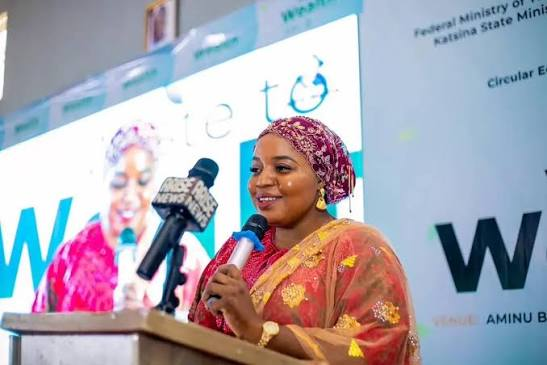
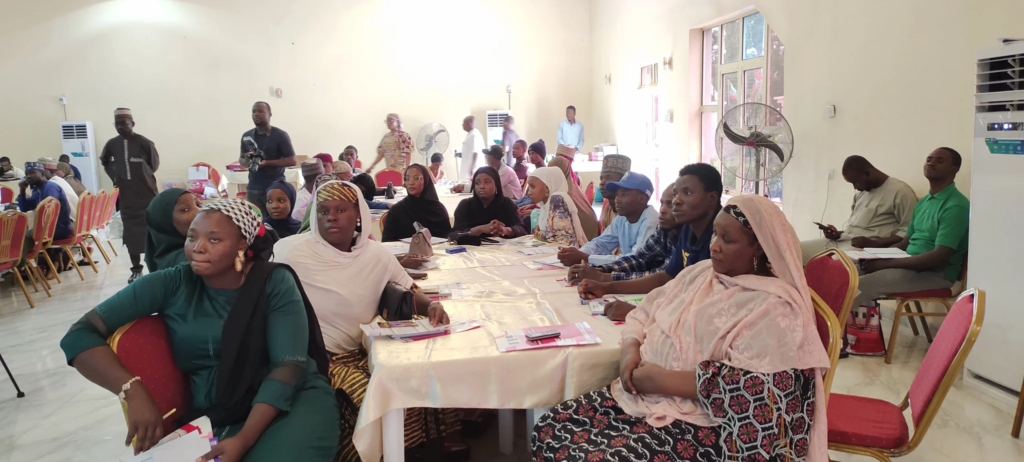
Women and young people from four local government areas of Katsina State have begun a four-day capacity-building programme designed to strengthen their role in conflict prevention, dispute resolution and the peaceful management of shared natural resources.
The Katsina women and youths peacebuilding training brings together participants from Safana, Faskari, Sabuwa and Dandume local government areas at a time when competition over land, water and other resources continues to place pressure on communities across parts of northwestern Nigeria.
The programme, which began on Monday in Katsina, is being conducted under the European Union-funded Conflict Prevention, Crisis Response and Resilience Programme.
The initiative is implemented by the International Organization for Migration, Mercy Corps and the Centre for Democracy and Development.
Participants include women, youths, farmers, herders and persons with disabilities, as well as representatives of the Katsina State Ministries of Youth and Sports Development and Women Affairs.
The training is intended to give community representatives practical skills to identify tensions before they escalate, negotiate competing interests and help resolve disputes without violence.
Building local capacity for peace
Senior Programme Manager at Mercy Corps, Philip Ikita, said the Katsina women and youths peacebuilding training was designed to encourage communities to move away from confrontational approaches to disputes and instead identify shared interests that could form the basis for peaceful settlements.
Ikita said communities are more likely to arrive at durable agreements when parties focus on common needs rather than take rigid and opposing positions.
For example, farmers and herders may disagree over access to land or water, but both groups have an interest in security, predictable access to resources and the continued survival of their livelihoods.
Peacebuilding efforts that identify such common ground can help communities move from accusation to negotiation.
The training therefore focuses on communication, negotiation, trust building and cooperation among different groups.
Women placed at centre of conflict resolution
One of the strongest elements of the programme is its emphasis on women.
Women frequently experience the consequences of violent conflict directly. Families may lose livelihoods, children can be forced out of school and entire communities may be displaced.
Yet women are often underrepresented when formal decisions are made about peace, security and community resources.
The Katsina women and youths peacebuilding training is intended to reduce that gap by giving women practical skills they can use when disagreements arise within their communities.
Ikita said the objective is to strengthen the ability of community women to manage and resolve local disputes through negotiation strategies that emphasise common interests.
This approach recognises that women are not merely victims of conflict. They can also serve as mediators, community organisers, early-warning actors and advocates for peaceful coexistence.
The International Organization for Migration has similarly highlighted the importance of women’s participation in the broader Conflict Prevention, Crisis Response and Resilience Programme operating in Katsina and Zamfara.
Youth participation equally important
Young people are another major focus of the intervention.
In communities affected by insecurity, unemployment and weak economic opportunities, youths can become particularly vulnerable to manipulation by violent groups, criminal networks or political actors.
But young people can also become powerful agents of peace when they are given the knowledge, skills and opportunity to participate positively in their communities.
The Katsina women and youths peacebuilding training therefore seeks to equip young participants to recognise conflict triggers, communicate across social divisions and participate constructively in community decision-making.
Young people who understand mediation and conflict prevention can help challenge rumours, discourage retaliatory violence and promote dialogue when tensions emerge.
Their involvement is particularly important because young people often form a large proportion of the population in affected communities.
Any peace strategy that excludes them risks leaving one of the most important sections of society outside the process.
Land and water disputes receive attention
The programme goes beyond conventional mediation.
A second major component focuses on Community and Social Development Resource Management.
Participants are being trained on how communities can sustainably and peacefully manage land, water, forests and other resources used by different groups.
This aspect of the Katsina women and youths peacebuilding training is important because competition over natural resources can contribute to local disputes.
As populations grow and environmental pressures increase, farmers, livestock owners and other users may compete for access to water, grazing routes, farmland and forests.
Poorly managed competition can turn minor disagreements into long-running communal conflicts.
The training therefore introduces participants to resource mapping, sustainable management and conflict-sensitive approaches to development.
The objective is not simply to resolve disputes after violence has occurred. It is to create systems capable of preventing disagreements from becoming violent in the first place.
https://ogelenews.ng/eu-backed-programme-trains-katsina-women-youths-in-…
Climate pressures can worsen tensions
Climate-related pressures increasingly complicate resource management.
Changes in rainfall patterns, pressure on available farmland, reduced access to water and environmental degradation can increase competition among communities whose livelihoods depend heavily on natural resources.
The Katsina women and youths peacebuilding training seeks to strengthen participants’ understanding of the connection between environmental pressures and conflict.
This is significant because peacebuilding in rural communities cannot be separated from economic survival.
A farmer worried about losing farmland and a herder concerned about access to grazing and water are dealing with livelihood questions as well as security concerns.
Where local systems exist for negotiation and resource sharing, such pressures can sometimes be managed peacefully.
Where trust has broken down, however, even relatively small disputes can escalate quickly.
The training is therefore attempting to strengthen the institutions and relationships required to manage disagreements before they become security emergencies.
Programme extends beyond four LGAs
Although participants in the current exercise came from four Katsina local government areas, the wider programme operates on a considerably larger scale.
Under the Conflict Prevention, Crisis Response and Resilience Programme, interventions cover 48 communities across 10 local government areas in Katsina and Zamfara states.
The broader objective is to address some of the underlying causes of conflict, strengthen community resilience and support social and economic recovery.
The Katsina women and youths peacebuilding training is therefore one element of a wider strategy aimed at building stronger local mechanisms for preventing violence.
Mercy Corps is responsible for activities aimed at strengthening community conflict-prevention structures, supporting inclusive dialogue and improving resilience to climate-related shocks.
The organisation is also supporting Quick Impact Projects in targeted communities.
In Katsina, eight local government areas have been identified for such interventions: Batsari, Danmusa, Jibia, Kankara, Dandume, Faskari, Sabuwa and Safana.
Beyond military responses
Perhaps the most important lesson from the programme is its recognition that security cannot depend exclusively on armed responses.
Nigeria has deployed military, police and other security formations across the North-West in response to banditry, kidnapping and other forms of violence.
Such operations remain necessary where armed groups threaten communities.
But security forces usually intervene when violence has already emerged.
Peacebuilding programmes take a different approach by examining the conditions that allow conflicts to grow.
The Katsina women and youths peacebuilding training seeks to strengthen communities so that they can identify grievances, negotiate disputes and build relationships before disagreements develop into violence.
Ikita stressed that sustainable peace cannot be achieved solely through security measures.
Communities themselves must be able to identify the issues driving tension and participate in resolving them.
That does not replace the responsibility of government to provide security. Rather, it complements formal security efforts by improving local resilience.
Farmers and herders need workable agreements
Farmer-herder relations remain particularly important in discussions about resource conflicts.
Both groups depend heavily on access to natural resources.
Farmers need secure farmland, while pastoral communities require access to water and grazing resources for livestock.
When either side believes its livelihood is threatened, tension can rise.
The Katsina women and youths peacebuilding training attempts to help participants approach these disputes through negotiation rather than confrontation.
Successful local agreements require clear rules, communication and mechanisms for resolving violations.
Traditional rulers, community leaders, women, youths, security officials and local government authorities all have roles to play.
Peace agreements imposed without local participation may survive only briefly.
Arrangements developed and understood by communities themselves have a better chance of being respected.
Inclusion of persons with disabilities
The inclusion of persons with disabilities is another important feature of the intervention.
Conflict affects people differently, and individuals with disabilities can face additional challenges during displacement, insecurity or disruptions to essential services.
Their participation in the training broadens the range of voices involved in deciding how communities should prevent and respond to conflict.
Inclusive peacebuilding is not simply about increasing the number of people attending meetings.
It requires ensuring that groups traditionally excluded from decision-making can meaningfully contribute.
The Katsina women and youths peacebuilding training will therefore be more valuable if participants are able to take the knowledge acquired back to their communities and participate directly in local peace structures.
Training must translate into action
Workshops alone cannot create peace.
The real test comes after participants return home.
Communities need structures through which trained women and youths can apply what they have learned.
Local governments, traditional institutions and security agencies should engage trained participants rather than allowing their newly acquired skills to disappear after the programme ends.
The Katsina women and youths peacebuilding training should lead to stronger local mediation teams, resource-management committees and early-warning networks capable of identifying emerging disputes.
Participants should also have channels through which they can report escalating tensions before violence occurs.
Follow-up is therefore as important as the four-day training itself.
Without sustained engagement, even well-designed capacity-building programmes risk becoming another series of workshops with limited long-term impact.
Ogele News perspective
The decision to place women and youths at the centre of local peacebuilding is sensible.
Communities cannot rely indefinitely on soldiers and police officers to resolve every dispute involving farmland, water, grazing routes or other shared resources.
Formal security agencies have an essential responsibility to protect lives and confront armed criminal groups, but many local disputes can be addressed earlier through dialogue, mediation and credible community institutions.
The Katsina women and youths peacebuilding training is therefore valuable because it focuses on prevention rather than waiting until disagreements become violent.
However, training must produce measurable results.
Organisers should track whether participants later mediate disputes, whether targeted communities experience stronger cooperation and whether resource-related conflicts decline.
State and local governments should also support locally developed peace agreements and ensure that land and resource policies are transparent and fair.
Women and young people must remain involved beyond the duration of donor-funded programmes.
If peacebuilding structures disappear once project financing ends, the impact will be temporary.
The Katsina women and youths peacebuilding training should instead contribute to permanent community systems that can identify grievances, resolve disputes and respond quickly when tensions appear.
The lesson is straightforward.
Lasting security cannot come from force alone. It also requires communities capable of talking, negotiating and managing shared resources fairly.
When women, youths, farmers, herders and vulnerable groups are included in that process, peace becomes something communities help to build rather than something imposed on them from outside.
https://punchng.com/group-trains-katsina-women-youths-on-peace-building/