















Mohammed Ma’aji coup plot
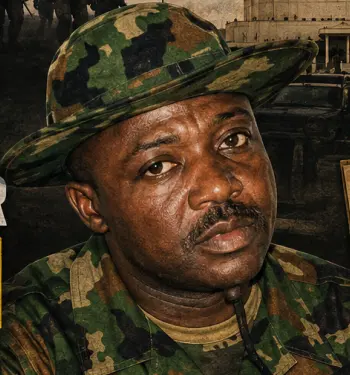
Colonel Mohammed Alhassan Ma’aji, a Nigerian Army officer accused of involvement in an alleged plot to overthrow President Bola Tinubu’s administration, has offered his most detailed explanation yet for his actions, saying frustration over Nigeria’s economic and security situation contributed to the decisions now at the centre of military proceedings against him, Mohammed Ma’aji coup plot.
Ma’aji claimed that worsening living conditions, insecurity, alleged corruption and concerns over the welfare of military personnel had left him convinced that Nigeria was moving in a dangerous direction. Mohammed Ma’aji coup plot.
The Mohammed Ma’aji coup plot controversy resurfaced after details of statements attributed to the colonel during military interrogation became public.
Ma’aji maintained that personal ambition was not the principal motivation behind the alleged conspiracy, describing his actions instead as driven by what he regarded as patriotism and concern for the country.
He claimed Nigeria had moved through a period of gradual decline and was approaching what he described as a point of collapse.
That assessment, however, remains Ma’aji’s personal opinion and should not be confused with an independent finding about the condition of the Nigerian state.
Ma’aji cites economic hardship
In his account, Ma’aji pointed to the rising cost of living and the difficulty of supporting his family on his military salary.
The colonel said his personal experience raising five children had made him increasingly concerned about the ability of ordinary Nigerians to afford education and other basic necessities.
He also criticised governance conditions and argued that citizens were increasingly struggling to cope economically.
These grievances form part of his explanation of the Mohammed Ma’aji coup plot, but hardship or dissatisfaction with government policy does not provide legal justification for attempting to remove a democratically elected administration outside constitutional procedures.
Nigeria’s Constitution provides mechanisms for changing governments through elections, impeachment and other lawful processes.
Ma’aji has himself now acknowledged that alternative and lawful channels should have been considered.
Concerns over soldiers’ welfare
The colonel also raised concerns about the treatment of military personnel, particularly soldiers wounded during security operations.
He alleged that some injured personnel receiving treatment at the 44 Nigerian Army Reference Hospital in Kaduna were not receiving the level of care he believed they deserved.
Ma’aji argued that poor casualty management, inadequate welfare, housing problems, pension concerns and difficulties faced by military families could damage morale.
He subsequently recommended improved salaries, healthcare, pensions, educational opportunities and welfare packages for members of the Armed Forces.
The broader welfare questions are legitimate matters for public policy.
However, they are separate from the allegations surrounding the Mohammed Ma’aji coup plot, which authorities say involved an attempt to undermine Nigeria’s constitutional order Mohammed Ma’aji coup plot.
Alleged plan was still at mobilisation stage
Ma’aji said the alleged movement had not reached the stage where a date had been selected for any operation before security authorities intervened.
According to his account, discussions centred on identifying officers who supposedly shared similar concerns and bringing more personnel into the group.
He maintained that no operational date had been fixed.
Premium Times reported that Ma’aji was arrested on September 29, 2025, and was questioned over several months by military investigators.
Documents reviewed by the newspaper reportedly included statements, financial records and communication records forming part of the wider investigation.
The Mohammed Ma’aji coup plot investigation ultimately expanded beyond serving military officers to retired personnel, civilians and a serving police officer alleged to have had different levels of involvement.
These allegations remain subject to judicial and military proceedings.
Promotion frustrations also emerge
One of the most politically sensitive aspects of Ma’aji’s account concerns his military career.
The colonel acknowledged that he had twice failed to secure promotion to the rank of brigadier general.
He said the setbacks contributed to his frustration, although he insisted they were not the main reason for his alleged involvement.
According to reports based on his statements to investigators, some colleagues allegedly encouraged him to revive discussions after his second unsuccessful promotion attempt.
This complicates Ma’aji’s argument that the Mohammed Ma’aji coup plot was motivated entirely by patriotism.
Investigators and the military tribunal will ultimately have to determine what evidence is admissible and what weight should be attached to statements attributed to the accused officer.
A confession or explanation reported in the media is not a substitute for a legally tested finding.
Military officers face court-martial
Serving military personnel linked to the alleged conspiracy, including Ma’aji, are facing proceedings before a General Court Martial.
In May, Ma’aji challenged the jurisdiction of the Defence Headquarters Garrison General Court Martial sitting in Asokoro, Abuja.
He asked the tribunal to dismiss charges against him, arguing that the allegations related to offences against Nigeria’s constitutional order rather than military discipline and that the charges were legally defective.
The military prosecution disputes that position.
The court-martial proceedings involve Ma’aji and other officers accused of conduct connected with the alleged attempt to overthrow the government.
The Mohammed Ma’aji coup plot case therefore remains unresolved, and the accused officer must be treated as innocent unless guilt is established through the appropriate legal process.
Separate Federal High Court trial
A separate case involving alleged civilian and retired military participants is proceeding before the Federal High Court in Abuja.
The Federal Government filed a 13-count charge against six defendants in April 2026. Mohammed Ma’aji coup plot.
They include retired Major General Mohammed Ibrahim Gana, retired Navy Captain Erasmus Victor, police Inspector Ahmed Ibrahim, Zekeri Umoru, Bukar Goni and Islamic cleric Abdulkadir Sani.
The allegations include conspiracy, attempted treason, terrorism-related offences, failure to disclose intelligence and money laundering connected to alleged terrorism financing.
The defendants pleaded not guilty when arraigned before Justice Joyce Abdulmalik.
Former Minister of State for Petroleum Resources Timipre Sylva was also named in the prosecution’s allegations and was reported by authorities as being at large at the time the charges were filed. Sylva has denied wrongdoing.
These defendants should not be confused with Ma’aji’s military proceedings, although prosecutors allege that the cases are connected to the wider Mohammed Ma’aji coup plot investigation.
https://ogelenews.ng/colonel-in-alleged-tinubu-coup-plot-claims-nigeria-…
Defence Headquarters confirmed alleged attempt
The controversy first emerged publicly around Nigeria’s October 1, 2025 Independence anniversary.
At the time, reports linked the cancellation of the ceremonial Independence Day parade with an alleged coup investigation.
The Defence Headquarters initially said the parade cancellation was unrelated to any coup attempt.
Military authorities later confirmed in January 2026 that investigations had uncovered an alleged attempt by some personnel to overthrow President Tinubu’s government.
Defence Headquarters said officers implicated by the investigation would face military judicial proceedings.
Reports subsequently indicated that dozens of military officers and civilians were questioned as the investigation widened.
The Mohammed Ma’aji coup plot became one of the most serious national security investigations involving serving military officers since Nigeria returned to democratic government in 1999.
Ma’aji appeals for leniency
Significantly, Ma’aji has now appealed for pardon and leniency.
He said his detention had changed his thinking and that, if released, he would pursue different methods of raising concerns about governance and military welfare.
The colonel described himself and other accused officers as first offenders and asked the authorities to consider their previous service to Nigeria.
He also called for an institutional mechanism through which military officers could raise complaints directly with senior commanders without fear of retaliation.
Those proposals concerning internal grievance procedures can be considered on their own merits.
But they do not determine the legal questions before the military tribunal.
The central issue remains whether prosecutors can prove the allegations connected with the Mohammed Ma’aji coup plot beyond the standard required under applicable military law.
Coup cannot be justified by economic grievances
Nigeria is facing genuine debates over inflation, insecurity, corruption, public-sector welfare and the economic impact of major reforms.
Citizens and serving public officials are entitled to express concerns about those issues through lawful means.
Military intervention, however, carries fundamentally different implications.
Nigeria experienced several coups and long periods of military government before the restoration of democratic rule in 1999.
Constitutional democracy rests on the principle that governments must be changed through elections and other constitutional processes, not through force.
Ma’aji’s argument that Nigeria was approaching collapse therefore deserves reporting as part of his defence and explanation, but it should not be presented as a justification for unconstitutional intervention.
The allegations surrounding the Mohammed Ma’aji coup plot are particularly serious precisely because they concern the constitutional order.
Fair hearing remains essential
The seriousness of the allegations does not eliminate the rights of those accused.
Human rights organisations have called on authorities to guarantee fair proceedings and avoid prejudging the detained officers.
The Human Rights Writers Association of Nigeria earlier argued that suspects in the alleged plot were entitled to a fair hearing and raised concerns about confidential investigation materials appearing in the media.
Section 36 of Nigeria’s Constitution protects the presumption of innocence and the right of accused persons to have allegations determined fairly.
That principle applies even where the allegations involve national security.
Authorities must therefore establish the Mohammed Ma’aji coup plot case with admissible evidence rather than public statements or media narratives.
Ogele News perspective
Colonel Mohammed Ma’aji’s explanation presents Nigerians with two separate questions that must not be confused.
The first concerns whether Nigerians and members of the Armed Forces have legitimate grievances regarding economic hardship, insecurity, welfare and governance.
Those concerns deserve open discussion, policy responses and democratic accountability.
The second question is whether any group of officers or civilians attempted to overthrow an elected government.
That is a legal issue requiring evidence and due process.
Economic hardship cannot by itself legitimise unconstitutional seizure of power, just as allegations of a coup cannot be used to deny accused persons their constitutional rights.
The Mohammed Ma’aji coup plot must therefore be examined soberly.
Ma’aji’s claim that Nigeria was “near collapse” should be attributed directly to him, not elevated into a factual description of the country.
His assertion that patriotism motivated his actions must also be weighed against evidence presented by prosecutors and tested through the military justice process.
Likewise, government authorities must ensure transparent and credible proceedings that allow the accused officers to challenge evidence and present their defence.
Nigeria has spent more than two decades building democratic institutions after repeated interruptions by military rule.
Disagreement with elected leaders, however intense, must be resolved through constitutional institutions.
Ultimately, the Mohammed Ma’aji coup plot case will be judged not by political rhetoric or dramatic headlines, but by the evidence before the appropriate courts and tribunals.
That is where questions of guilt, motive and responsibility properly belong.
https://punchng.com/nigeria-was-near-collapse-says-colonel-accused-of-coup-plot-against-tinubu/