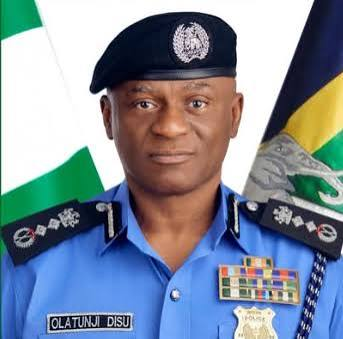


















The Nigeria Police Force has rolled out one of its largest security operations in Osun State ahead of Saturday’s governorship election, deploying thousands of officers, helicopters, drones, Mobile Police units and covert intelligence personnel across the state.
The Osun election police deployment is designed to secure polling units, Independent National Electoral Commission facilities, electoral officials, sensitive materials and other strategic locations during the August 15 governorship election.
Force Public Relations Officer Okokon Iniedu said on Friday that aerial surveillance had already commenced, while police helicopters and drone units were on the ground and conducting patrols across Osun State.
The Police Force says its primary objective is to provide a safe environment for voters while ensuring that political parties and candidates comply with electoral laws.
15,000 police officers deployed
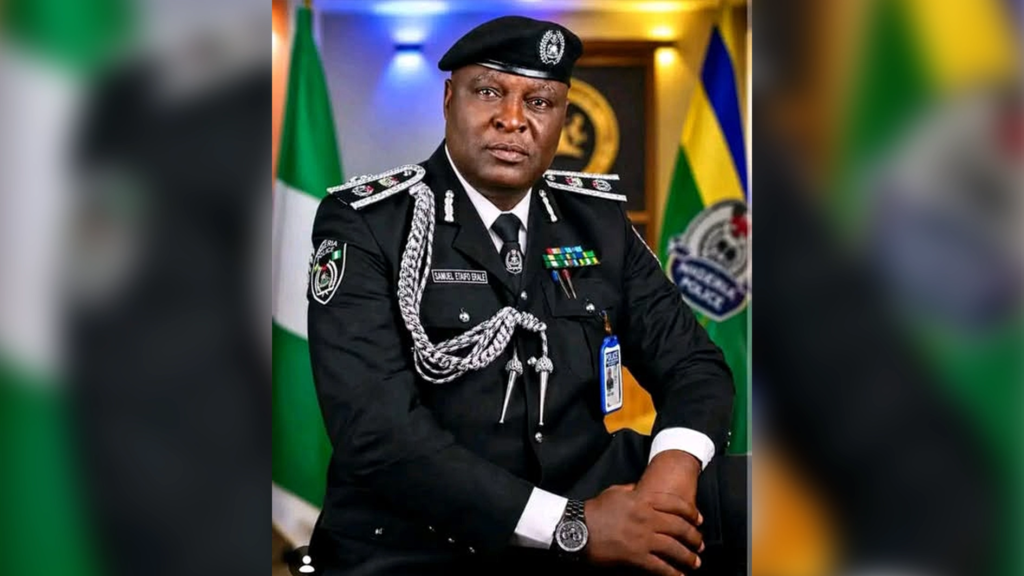
The scale of the Osun election police deployment became clearer earlier in August when Commissioner of Police Samuel Etaifo announced that about 15,000 personnel would be deployed for the poll.
Etaifo said the security plan was intended to create a peaceful and tension-free environment for voting.
A Deputy Inspector-General of Police and an Assistant Inspector-General were also assigned senior responsibilities for the election operation.
The sheer number of officers reflects the political importance of the Osun contest and the concern among authorities that election-related tension must not be allowed to develop into violence.
However, large numbers alone cannot guarantee a credible election.
The conduct of the officers will matter just as much as their presence.
Helicopters and drones begin aerial surveillance
The Osun election police deployment includes an aerial component.
Iniedu said police helicopters and drone units had arrived in the state and commenced surveillance patrols.
Aerial surveillance can help security commanders monitor movement, identify unusual gatherings and respond more quickly to incidents developing in different parts of the state.
Drones may also provide situational awareness in locations where officers on the ground have limited visibility.
But such technology should support conventional policing rather than replace it.
Election security still depends primarily on officers at polling units, patrol teams and local intelligence.
https://ogelenews.ng/osun-election-police-deployment
MOPOL units sent to all 30 LGAs
Police said one unit of the Police Mobile Force had been deployed across each of Osun State’s 30 local government areas.
Two additional units of combat-ready armed Mobile Police personnel were assigned to secure INEC facilities.
The Osun election police deployment also includes extra armed MOPOL personnel stationed at the police command headquarters for rapid-response operations.
The Mobile Police Force is normally used in situations requiring stronger tactical capability than conventional police patrols.
Its involvement therefore gives security authorities an additional response option if major disturbances occur.
The challenge will be ensuring that such units remain disciplined and proportionate.
An election environment should be secure, but it should not become unnecessarily militarised.
Four unarmed officers for each polling unit
One of the most significant details of the security arrangement is the instruction that four unarmed security personnel should be stationed at each polling unit.
Police said Osun has more than 3,700 polling units.
The Osun election police deployment therefore requires a substantial number of personnel simply to cover voting locations.
The decision to keep officers stationed directly at polling units unarmed is important.
Voters should be able to cast their ballots without feeling threatened by armed personnel standing close to voting cubicles.
Heavily armed tactical units can remain available nearby where necessary without dominating the immediate voting environment.
Special Protection Units to secure INEC materials
The police security plan also extends to electoral materials.
Seven units of Special Protection Unit personnel have been assigned to assist with the movement of sensitive and non-sensitive INEC materials and the protection of election officials.
This component of the Osun election police deployment is crucial because the integrity of an election depends partly on whether ballots, result sheets and other materials reach the correct locations securely.
Security around collation centres is equally important.
Election violence does not occur only at polling units.
Disputes can become particularly intense when results are being collated.
Police must therefore protect the process without interfering with the lawful duties of INEC officials.
Covert operatives deployed
Not every officer involved in the operation will be wearing a uniform.
Police said covert operatives would operate in civilian clothing across communities to gather intelligence and identify emerging security threats.
The Osun election police deployment therefore combines visible deterrence with less visible intelligence operations.
This could help authorities detect activities such as voter intimidation, organised violence or illegal movement before they become major incidents.
But covert officers must also operate within the law.
Intelligence gathering must not become a justification for harassment of ordinary voters, journalists or accredited election observers.
Police warn against vote-buying
The Force has specifically warned that vote-buying will not be tolerated.
Iniedu described vote-buying as an electoral offence and said the Deputy Inspector-General supervising the election had been directed to ensure that anyone caught participating in the practice was arrested and prosecuted.
The warning adds an electoral-integrity dimension to the Osun election police deployment.
Vote-buying remains one of the recurrent concerns during Nigerian elections.
Security officers therefore have a responsibility not only to prevent physical violence but also to act against offences taking place openly around polling areas.
However, enforcement must be evidence-based and impartial.
Police should not arrest party agents or voters merely on the basis of partisan accusations.
Statewide movement restriction begins Friday night
Police also announced that Osun would be placed under a restriction on vehicular movement from midnight on Friday into Saturday.
The measure forms part of the Osun election police deployment and is intended to reduce unnecessary movement while voting is taking place.
Election-day movement restrictions are often used to prevent armed groups, political thugs or other disruptive actors from moving rapidly between polling locations.
But security agencies must communicate exemptions clearly.
INEC officials, accredited journalists, observers, emergency workers and other authorised personnel may need to move during the restriction period.
Unclear enforcement can create unnecessary confrontation at checkpoints.
Threat assessments conducted across Osun
Police said security assessments had been conducted across all 30 local government areas and personnel were being deployed according to identified risks.
That intelligence-led approach is preferable to simply distributing officers evenly without considering local circumstances.
The Osun election police deployment should recognise that some areas may carry greater political tension or history of electoral violence than others.
Police should nevertheless avoid publicly labelling entire communities as violent without evidence.
Risk assessment should guide operational planning, not stigmatise residents.
Election follows period of political tension
Security authorities have acknowledged that the state has witnessed previous cult clashes and incidents described as politically motivated killings.
Iniedu said some cases remained under investigation while others had already resulted in court charges.
That background partly explains the scale of the Osun election police deployment.
Authorities want to prevent isolated violence from spilling into election day.
Political parties also carry responsibility.
Candidates and supporters should avoid inflammatory language capable of encouraging confrontation.
The police cannot maintain peace if political actors deliberately mobilise supporters for violence.
Neutrality will determine public confidence
The Police Force has repeatedly assured voters that its personnel will remain neutral.
That promise is central to the credibility of the entire operation.
A large Osun election police deployment can reassure citizens when officers behave professionally.
The same deployment can create fear if officers appear partisan.
Security personnel must therefore enforce electoral rules equally against supporters of the ruling party, opposition parties and independent political actors.
Public confidence depends on consistency.
A political supporter committing an offence should face the same treatment regardless of which candidate he or she supports.
INEC confirms August 15 election
The Independent National Electoral Commission lists the Osun governorship election for Saturday, August 15, 2026.
The Commission has also been making final arrangements for accreditation, deployment of materials and election personnel.
The Osun election police deployment therefore provides the security layer around INEC’s administrative operation.
Neither institution can deliver a successful election alone.
INEC needs security agencies to protect officials and materials.
Police need INEC to organise polling in a manner that reduces confusion and disputes.
Coordination between both institutions is therefore critical.
Heavy security must not suppress turnout
One risk associated with extremely visible election security is voter intimidation.
Some residents may interpret large numbers of Mobile Police officers, checkpoints and tactical teams as evidence that violence is expected.
That perception can discourage turnout.
The Osun election police deployment should therefore be conducted in a way that reassures citizens rather than frightens them.
Officers stationed near polling units should remain courteous and professional.
Voters carrying valid identification and complying with electoral rules should not be subjected to unnecessary questioning.
The purpose of the operation is to protect democratic participation, not obstruct it.
Ogele News perspective
The decision to deploy 15,000 police officers, helicopters, drones, Mobile Police units and covert operatives demonstrates how seriously authorities are treating the Osun governorship election.
The logistical preparation is substantial.
But the real test of the Osun election police deployment will come on Saturday.
Can security personnel prevent violence without intimidating voters?
Can they confront vote-buying regardless of the political party involved?
Can officers protect polling and collation centres without interfering in INEC’s work?
Can allegations of misconduct be investigated quickly?
These questions matter more than the number of personnel on the ground.
Security should create confidence.
It should not become part of the political contest.
The Police Service Commission has already deployed monitors to observe officer conduct, adding another layer of accountability.
Ultimately, the most successful Osun election police deployment will be one voters barely need to think about.
If citizens can arrive peacefully, cast their ballots, leave safely and see their votes counted without interference, then the elaborate security operation will have served its purpose.
If helicopters circle overhead and thousands of officers are deployed but voters still experience intimidation, violence or partisan policing, the numbers will mean little.
Osun goes to the polls on August 15.
The police say they are ready.
Saturday will show whether the preparation translates into a secure, neutral and credible election.
https://www.inecnigeria.org/media-accreditation-for-osun-state-governorship-election