














PDP Parallel Candidates
The crisis within the Peoples Democratic Party has taken a fresh and dangerous turn as rival camps linked to the Federal Capital Territory Minister, Nyesom Wike, and former minister, Tanimu Turaki, rolled out PDP Parallel Candidates for the 2027 general elections.
The development has pushed the opposition party into one of its most delicate moments since losing federal power in 2015. What began as an internal leadership disagreement has now become a direct struggle over nomination, legitimacy and control of the party’s electoral machinery ahead of 2027.
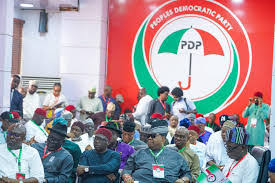
Both factions held separate events in Abuja, where they presented certificates of return and nomination documents to their preferred candidates. Each camp insisted that it had the lawful authority to act on behalf of the PDP, while also expressing confidence that the Independent National Electoral Commission would recognise its list of candidates.
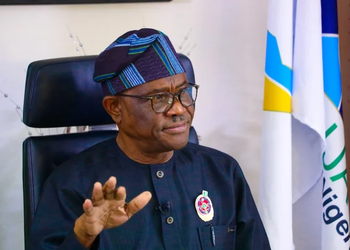
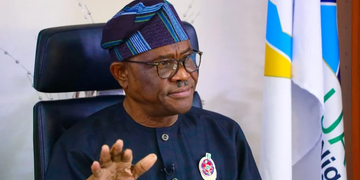
The Wike-backed camp gathered at Wadata Plaza during the party’s 109th National Executive Committee meeting. There, Wike charged PDP candidates and members to stop lamenting over the loss of power and begin serious mobilisation ahead of the next general elections. His message was direct: power is not donated, it is fought for through organisation, structure and political discipline.
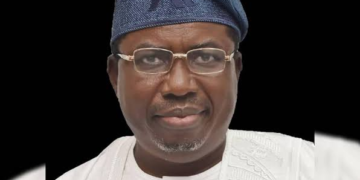
On the other side, the Tanimu Turaki-led Interim National Working Committee held a separate stakeholders’ meeting in Abuja, where it announced that it had produced candidates for all elective offices. The faction claimed it had confirmed 28 governorship candidates, 109 senatorial candidates, 360 House of Representatives candidates and 993 State House of Assembly candidates.
The Turaki camp also claimed that former President Goodluck Jonathan had emerged as its presidential candidate after purchasing forms, signing them and being duly nominated. This claim adds another sensitive layer to the crisis, especially as Jonathan has not openly declared a 2027 presidential ambition.
The emergence of PDP Parallel Candidates is more than an internal party quarrel. It is a major political test for the PDP, INEC and Nigeria’s electoral process. If the crisis is not resolved quickly, the party may enter the 2027 race divided, distracted and legally vulnerable.
The timing of the development is also significant. The parallel presentation of candidates came shortly before INEC was expected to release access codes to political parties for uploading the names of candidates for elective offices. In Nigerian elections, control of the recognised party platform is crucial. A faction may hold rallies and issue certificates, but the real test is which list INEC accepts.
https://ogelenews.ng/pdp-parallel-candidates-wike-turaki-camps-deepen-20…
This is why the PDP Parallel Candidates dispute may soon shift from party meetings to legal and regulatory battlegrounds. Both sides are likely to rely on party constitutional provisions, court orders, NEC decisions and INEC recognition to defend their positions.
For the Wike camp, the argument appears to rest on recognised party structure and control of the official party machinery. The camp has continued to project confidence that INEC will validate its position when the candidate-upload process begins.
For the Turaki faction, the argument is built around its claim of legitimacy, internal democratic process and nationwide primaries. The faction insists it has conducted ward-based primaries and produced candidates across the country.
But beyond the legal arguments, the political damage may already be unfolding. The PDP cannot afford to approach 2027 with two rival candidate lists, two command centres and two competing claims to national leadership. A party hoping to return to power must present itself as stable, disciplined and ready to govern.
The PDP Parallel Candidates controversy also raises questions about the opposition’s preparedness. At a time when Nigerians are looking for credible alternatives on the economy, security, governance and cost of living, the PDP is again battling itself in public.
This pattern has hurt the party before. Since 2015, internal divisions have repeatedly weakened the PDP’s national strategy. The party has often gone into major elections with unresolved disputes, competing power blocs and damaged trust among key stakeholders.
The 2027 election is expected to be highly competitive. President Bola Tinubu’s All Progressives Congress will seek to retain power, while opposition figures across the country will try to build alliances. In such an environment, a divided PDP may struggle to convince voters that it can manage Nigeria when it cannot manage its own internal affairs.
The Wike-Turaki split also reflects a deeper struggle over the soul of the PDP. It is not merely about candidates. It is about who controls the party, who speaks for it, who signs nomination documents, who relates with INEC and who defines the party’s future direction.
There is also the Goodluck Jonathan question. The Turaki faction’s claim that Jonathan is its presidential candidate will attract public attention, but it may also create confusion if the former president does not personally confirm his interest. In Nigerian politics, adopting a prominent figure without clear public consent can produce more controversy than momentum.
For Wike, the message to his supporters was that politics rewards work, not sentiment. His challenge to candidates to go out and win seats reflects a practical understanding of party survival. A political party is ultimately judged by results, not press conferences.
For Turaki, the message was that his faction had built a complete electoral structure and was prepared to contest every constituency. That claim, if sustained, means the crisis could move beyond leadership rhetoric into a full-scale battle over ballot access.
The central issue now is whether the PDP can still find a political settlement before the dispute damages its 2027 chances beyond repair. Reconciliation may require concessions, legal clarity and intervention by respected party elders. Without that, the PDP Parallel Candidates battle may become one of the defining stories of the 2027 election season.
INEC’s handling of the matter will also be watched closely. The commission must act strictly within the law and avoid any decision that could be interpreted as partisan. Its recognition of one list over another may determine which faction survives politically.
For now, the PDP is standing at a crossroads. One road leads to reconciliation, order and a stronger opposition challenge in 2027. The other leads to litigation, confusion and possible electoral collapse in key constituencies.
The rollout of PDP Parallel Candidates by the Wike and Turaki camps is therefore not just another party drama. It is a warning sign. Unless the opposition party resolves its leadership crisis quickly, it may enter the 2027 race carrying the weight of its own contradictions.
https://punchng.com/2027-race-wike-turaki-camps-roll-out-parallel-pdp-candidates