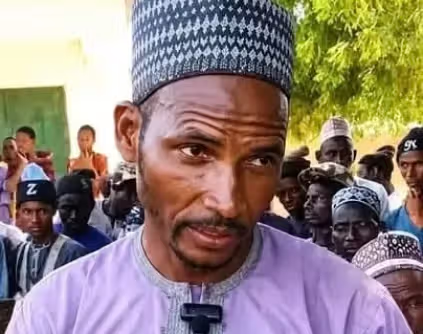

















Sani Yellow killed in Zamfara
The Zamfara State Police Command has confirmed the death of notorious bandit commander Kachalla Sani Yellow in Anka Local Government Area, although conflicting accounts have emerged over who carried out the killing and how the operation unfolded.
Police spokesperson Yazid Abubakar confirmed the development on Sunday, saying the command had established that Yellow was dead but was not involved in the operation that led to his death.
“We have confirmed the killing, but it’s not our operation that conducted the operation,” the spokesperson told Premium Times.
The police said Sani Yellow killed in Zamfara reports were accurate as far as his death was concerned, but the command could not authenticate claims about the forces involved, weapons recovered or the exact location of the confrontation.
Abubakar said Yellow was killed in Anka Local Government Area on Saturday. He declined to provide further operational details because the police did not participate in the incident.
Conflicting reports surround Sani Yellow’s death
While the death has been officially confirmed, accounts of how Yellow was killed remain sharply divided.
Some reports claimed hunters and members of the Civilian Joint Task Force killed him after confronting armed bandits in Anka. Other reports attributed the operation to hybrid forces comprising local volunteers and specialised vigilante groups supporting security agencies in the North-West.
PRNigeria reported that the forces tracked Yellow through intelligence supplied by residents and intercepted him while he was allegedly visiting a local market. The publication said he had reportedly gone there to collect money linked to stolen livestock and negotiate ransom payments.
According to that account, Sani Yellow killed in Zamfara followed a planned intelligence operation in which the security volunteers positively identified him before opening fire.
However, PRNigeria relied largely on unnamed security and community sources. Neither the Nigerian military nor the Zamfara State Government had released a detailed operational statement confirming that version at the time of reporting.
A separate report by SaharaReporters said Yellow might have been attacked at Dan Jibga Market on Friday, July 10, by armed men believed to be loyal to rival bandit commander Dogo Gide.
That version suggested the killing resulted from an internal struggle among competing bandit factions rather than a government-backed security operation.
The publication also carried another account attributing Yellow’s death to a coordinated offensive involving security personnel and members of the Maiduguri Special Vigilantes deployed to support counter-banditry operations in Zamfara.
The conflicting narratives mean the circumstances surrounding the report that Sani Yellow killed in Zamfara must still be treated cautiously until security authorities complete their investigations and issue a comprehensive account.
Purported parade footage circulates online
Videos and photographs circulated widely on social media following confirmation of Yellow’s death.
The footage purportedly showed armed volunteers celebrating and transporting his body after the operation. One report said the body was tied behind a motorcycle and taken along a roadway during what participants presented as a victory procession.
The authenticity of the material and the identities of those shown in it have not been independently verified.
Premium Times declined to publish the footage because of its disturbing nature and stated that it could not establish the circumstances in which it was recorded.
For that reason, the assertion that hybrid forces paraded Yellow’s body should not be written as an undisputed fact. It remains a claim based on unverified social media material and reports attributed to unidentified sources.
The confirmed element in the Sani Yellow killed in Zamfara story is his death. The alleged parade and the identity of the group responsible require further verification.
Even during operations against individuals accused of serious crimes, security personnel and government-backed groups are expected to observe Nigerian law and accepted standards governing the treatment of the dead.
Public celebrations involving human remains could also complicate investigations, inflame tensions and encourage retaliatory violence by surviving gang members.
https://ogelenews.ng/police-confirm-sani-yellow-killed-in-zamfara-as-con…
Who was Kachalla Sani Yellow?
Security and community sources described Yellow as one of the most influential armed commanders operating across Anka, Bukkuyum and Maru local government areas of Zamfara State.
He was accused of coordinating violent attacks on rural settlements, kidnappings for ransom, cattle rustling, extortion and the imposition of illegal levies on vulnerable communities.
Reports also linked his network to raids that displaced residents from several parts of Zamfara and neighbouring areas of the North-West.
These accusations were repeatedly made by security and community sources. However, Yellow was not known to have faced a completed judicial trial in which all the allegations were formally tested.
The significance of Sani Yellow killed in Zamfara lies partly in the influence attributed to his network and the territory in which it reportedly operated.
For years, forests linking Anka, Bukkuyum and Maru have provided hideouts and movement routes for armed groups involved in kidnapping, village attacks and livestock theft.
The difficult terrain, limited government presence and fear among local residents have allowed criminal gangs to operate across local government boundaries and retreat into forest enclaves after attacks.
Yellow was also reported to be related to Kachalla Yellow Danbokolo, another armed commander reportedly killed during an earlier security operation. That reported relationship has not been independently confirmed.
Security forces brace for possible retaliation
The killing of a prominent commander can weaken a criminal network, but it can also trigger reprisals and battles over succession.
Security analysts warned that members of Yellow’s gang or rival groups could attempt to seize his territory, fighters, weapons, livestock routes and kidnapping networks.
PRNigeria quoted an unnamed defence intelligence source as saying surveillance had been increased around vulnerable communities following the killing. The source said deployments were being strengthened to prevent retaliatory attacks.
The report that Sani Yellow killed in Zamfara has therefore created both relief and anxiety among residents who have lived under the threat of armed groups.
Some communities may see his death as a major breakthrough. Others may fear that surviving gang members will respond by attacking villages, abducting residents or imposing new levies.
SaharaReporters reported fresh violence in parts of Tsafe Local Government Area, where armed men allegedly killed two residents and abducted more than 60 others.
Local sources linked the attacks to possible retaliation following the deaths of bandit commanders, although the connection had not been officially established.
The report said troops of Operation Fansan Yamma and police personnel intensified patrols and pursuit operations aimed at rescuing the abducted residents and preventing further attacks.
Hybrid forces play growing security role
Local vigilantes, hunters and other community-based forces have become increasingly involved in counter-banditry operations across the North-West.
Their knowledge of forests, rural routes, local languages and community networks can assist conventional forces in tracking armed groups.
Some reports described those involved in the Yellow operation as “hybrid forces”, a broad expression that may include local volunteers, vigilantes and other auxiliary groups working with formal security agencies.
PRNigeria claimed the group included local volunteers and former insurgents brought from the North-East to support operations. That sensitive claim has not been formally confirmed by the military or the federal authorities.
The lack of a clear official account raises questions about command, accountability and the legal status of groups participating in security operations.
If auxiliary forces were involved in the Sani Yellow killed in Zamfara operation, authorities should clarify who authorised the mission, which agency supervised it and whether the participants operated within established rules.
Community forces may provide valuable intelligence and manpower, but their operations require proper training, identification, oversight and accountability.
Without those safeguards, armed volunteer groups could commit abuses, settle personal disputes or undermine evidence required for criminal investigations.
Killing will not end Zamfara banditry
Yellow’s death may disrupt operations associated with his group, but it will not by itself end banditry in Zamfara.
Armed violence in the state is sustained by a combination of weak rural policing, illegal weapons, kidnapping economies, cattle rustling, extortion and competition for access to land and mineral resources.
When a commander is killed, another figure can emerge to take control of the remaining fighters and criminal networks.
A durable response therefore requires more than eliminating individual commanders. Security agencies must dismantle supply chains, arrest financiers, recover weapons, protect informants and restore effective government presence in abandoned communities.
The Sani Yellow killed in Zamfara development should also be followed by efforts to rescue captives, identify the gang’s financial networks and prosecute surviving members.
Authorities must ensure that communities liberated from armed groups receive sustained protection. Residents who provide intelligence may face severe danger if security forces withdraw immediately after an operation.
Schools, health centres, markets and farms must also be made safe enough for displaced residents to return and rebuild their livelihoods.
Authorities must provide a definitive account
The police confirmation has removed doubts over whether Yellow is dead, but major questions remain unanswered.
The public has yet to receive a definitive account of who conducted the operation, when it occurred, where Yellow was intercepted and whether other people were killed or arrested.
There is also no confirmed information about weapons or other materials recovered.
The competing accounts could allow misinformation to spread and make it difficult to assess the conduct and effectiveness of the operation.
Security authorities should therefore issue a coordinated statement explaining the circumstances without disclosing information that could endanger ongoing operations.
The confirmed report that Sani Yellow killed in Zamfara represents a potentially important development in the campaign against armed groups in the North-West.
However, responsible journalism requires restraint. His death can be reported confidently because the police have confirmed it. Claims about an intelligence ambush, rival bandit involvement and the public treatment of his body must remain clearly attributed until verified.
The real measure of success will not be the circulation of disturbing images or the celebration surrounding one commander’s death.
It will be whether authorities can prevent retaliation, protect exposed communities, rescue abducted residents and dismantle the wider criminal system that allowed Yellow and other commanders to terrorise Zamfara for years.