












Senate Safe Schools probe
The Nigerian Senate has widened its investigation into the Safe Schools Initiative, bringing major education and social intervention agencies, including the Tertiary Education Trust Fund and the Nigerian Education Loan Fund, under legislative scrutiny.
The expanded Senate Safe Schools probe will also examine the activities of the Universal Basic Education Commission, the Federal Ministry of Humanitarian Affairs and Poverty Alleviation, and the National Social Investment Programme Agency.
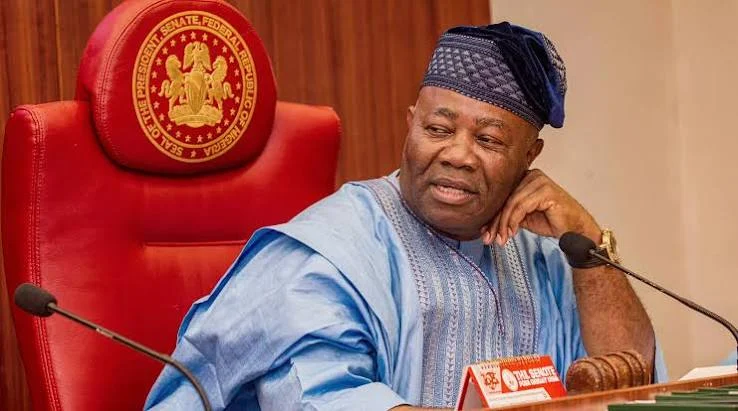
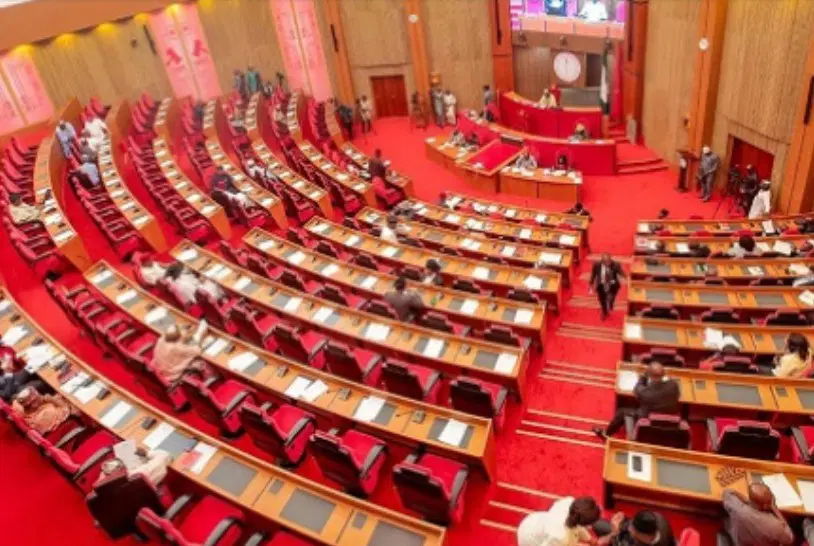
The decision followed a motion presented during Tuesday’s plenary by the Chairman of the Senate Ad Hoc Committee investigating the Safe Schools Initiative, Senator Orji Uzor Kalu, who represents Abia North Senatorial District.
The upper chamber also granted the committee three additional weeks to complete its investigation and submit its findings to the Senate. The extension became necessary after the committee said it had not completed visits to some important locations and needed to examine the relationship between school security programmes and other government interventions affecting Nigerian students.
Senate says investigation cannot be conducted in isolation
Presenting the motion, Kalu argued that the Senate Safe Schools probe would be incomplete if it focused only on agencies directly responsible for protecting schools.
According to him, preliminary findings showed that school security, educational infrastructure, student welfare, humanitarian assistance and social investment programmes were closely connected.
He maintained that investigating the Safe Schools Initiative without examining agencies responsible for funding school infrastructure, supporting vulnerable learners and administering student loans would produce a fragmented assessment.
The senator said widening the investigation would allow the National Assembly to properly examine financial flows, operational difficulties and accountability systems across the various programmes.
Under the expanded mandate, the committee is expected to audit infrastructure and security-related projects financed by TETFund in federal and state tertiary institutions.
It will also investigate NELFUND’s loan disbursement process, administrative efficiency, operational readiness and the ability of eligible students to gain access to education loans. UBEC’s basic education interventions will equally be examined as part of the Senate Safe Schools probe.
The committee will further review social intervention funds connected to school feeding, emergency assistance for displaced students and educational rehabilitation programmes managed by the humanitarian affairs ministry and NSIPA, Senate Safe Schools probe.
Questions over Safe Schools funding
The expansion comes amid continuing questions about money released for the protection of schools and students across the country.
During an earlier investigative hearing, the Senate committee examined the utilisation of ₦15 billion released for the Safe Schools programme in 2023.
Information presented before the committee showed that the Nigeria Police Force received ₦6.225 billion, the Nigeria Security and Civil Defence Corps received ₦3.362 billion, while Defence Headquarters received ₦2.25 billion. The Federal Ministry of Education was allocated ₦519 million.
The amount allocated to the Department of State Services was not publicly disclosed during that session.
Members of the committee raised concerns about financial documentation, consultancy expenses, operational costs and the absence of a clear reconciliation of money received and projects executed.
The committee subsequently demanded a comprehensive breakdown of releases, expenditure, contractors, project locations and supporting financial documents.
Those unresolved questions have made accountability a central issue in the Senate Safe Schools probe.
Lawmakers are now expected to determine whether billions of naira released for school security produced measurable improvements, particularly in communities that remain vulnerable to kidnappings and armed attacks.
Initiative followed Chibok abduction
The Safe Schools Initiative was launched in 2014 following the abduction of 276 schoolgirls from Government Girls Secondary School, Chibok, Borno State.
It was conceived as a partnership involving the Federal Government, international development organisations and private-sector stakeholders. Its purpose was to improve security around schools, particularly in areas affected by insurgency and other forms of violent conflict.
The initiative received contributions from the Federal Government, Nigerian business leaders and international partners.
Evidence presented at an earlier Senate hearing listed contributions including $10 million from the Federal Government, $10 million from Nigerian private-sector leaders, $1 million from the African Development Bank and €2 million from the German government.
Other funding and programme support reportedly came from Norway, UNICEF, the United Nations Development Programme, the United Nations Office for Project Services, USAID and the Qatar Foundation.
Despite these interventions, attacks on schools, kidnappings of students and the displacement of vulnerable learners have continued in parts of Nigeria.
The Senate constituted the ad hoc committee in late 2025 following renewed concern about attacks on schools and questions over the effectiveness of funds committed to the initiative, Senate Safe Schools probe.
https://ogelenews.ng/senate-widens-safe-schools-probe-to-tetfund-nelfund…
TETFund projects to face scrutiny
One major component of the expanded Senate Safe Schools probe will be the examination of TETFund-funded infrastructure and security projects.
TETFund provides intervention funding to public tertiary institutions for infrastructure, academic development, research, staff training and other educational needs.
The committee will be expected to establish whether security-related projects funded through TETFund were properly selected, executed and maintained.
It may also examine whether institutions in areas with serious security threats received adequate intervention and whether the projects corresponded with the amounts released.
For the investigation to produce meaningful results, lawmakers will need to move beyond general presentations from government agencies. Project locations, contract values, completion records and physical evidence should form part of the committee’s final assessment.
NELFUND disbursements under review
The inclusion of NELFUND significantly broadens the investigation beyond physical school security.
NELFUND administers Nigeria’s student loan programme, which is intended to assist eligible students with institutional charges and upkeep support.
The Senate committee will assess its disbursement procedures, administrative capacity, operational efficiency and the level of access available to students.
Although student loans do not directly provide security personnel or surveillance equipment, the Senate’s position is that student welfare, access to education and support for vulnerable learners form part of a wider educational safety framework.
The Senate Safe Schools probe will therefore examine whether delays, administrative obstacles or gaps in loan disbursement have affected students who depend on the programme.
However, the committee must avoid turning one investigation into an unlimited examination of every education programme in the country. Each agency should be assessed against clearly defined terms of reference to prevent the inquiry from becoming too broad to complete effectively.
Senate must produce more than another report
The expansion of the investigation is a welcome exercise in legislative oversight, but its value will ultimately depend on the outcome.
Nigeria has witnessed several parliamentary investigations that attracted public attention at the hearing stage but produced little visible accountability afterwards.
The Senate must publish a clear account of how much was released, who received the funds, what projects were approved, where they were executed and whether the interventions improved student safety.
Where the committee discovers financial misconduct or serious administrative failure, its findings should be forwarded to the appropriate investigative and anti-corruption agencies.
The final report should also recommend a reliable monitoring framework for Safe Schools funding. Such a framework should include project verification, public expenditure records, community participation and regular assessments of threats facing schools.
Most importantly, the Senate Safe Schools probe must remain focused on the children, students, teachers and families whose safety the initiative was established to protect.
For parents in communities affected by insecurity, the central question is not how many agencies appeared before the Senate. It is whether their children can attend school without fear of abduction or attack.
The credibility of the Senate Safe Schools probe will therefore be measured by its ability to connect public spending with real protection on the ground.
With TETFund, NELFUND, UBEC, the humanitarian affairs ministry and NSIPA now included, the committee has been given a wider opportunity to uncover gaps in Nigeria’s education and student protection system.
It must use that opportunity carefully, complete its work within the extended period and present findings that can be verified by the Nigerian public.