












Senate Widens Safe Schools Probe
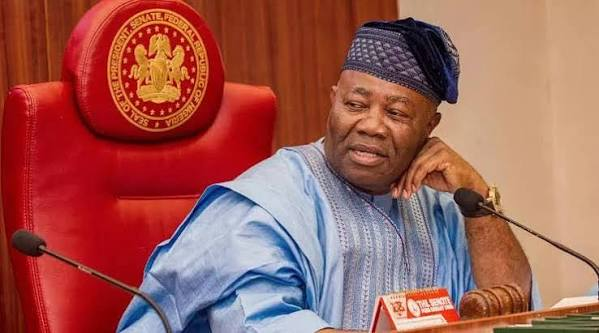
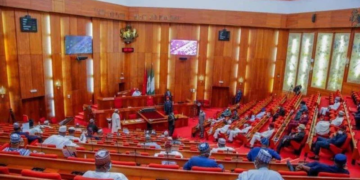
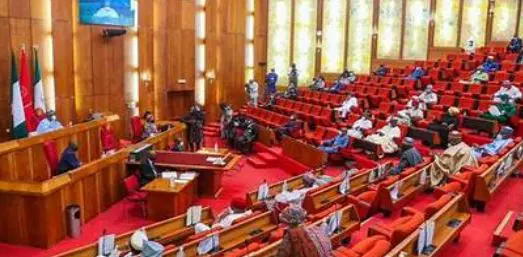
The Senate has expanded its investigation into the implementation and financing of Nigeria’s Safe Schools Initiative, directing the committee handling the inquiry to scrutinise the activities of major education and social-intervention agencies.
The upper chamber also granted its ad hoc committee an additional three weeks to complete the investigation and submit its report.
The institutions brought within the expanded inquiry include the Tertiary Education Trust Fund, Nigerian Education Loan Fund, Universal Basic Education Commission, Federal Ministry of Humanitarian Affairs and Poverty Alleviation, and the National Social Investment Programme Agency.
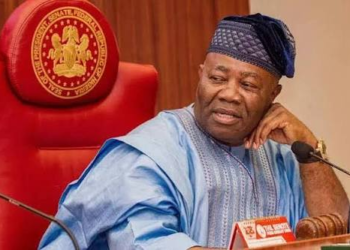
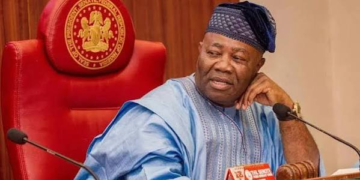
The decision followed a motion presented on Tuesday by the Chairman of the Senate Ad Hoc Committee on the Safe Schools Initiative, Senator Orji Uzor Kalu, pursuant to Orders 41 and 51 of the Senate Standing Orders.
The expanded Senate Safe Schools probe is expected to examine whether education and social-investment funds were properly deployed, whether projects linked to school security were implemented, and whether public institutions can account for resources released in the name of protecting Nigerian students.
Senate extends investigation by three weeks
Kalu requested additional time for the committee after explaining that the inquiry had uncovered issues requiring further examination.
The Senate consequently extended the committee’s lifespan by three weeks and broadened its terms of reference to cover institutions whose funding or intervention programmes may have connections with education infrastructure, student welfare and school security.
The extension indicates that the investigation has moved beyond a narrow review of the Safe Schools Financing Office and security agencies.
The Senate Safe Schools probe will now examine a wider network of institutions responsible for funding educational development, providing loans to students, supporting basic education and implementing social-investment programmes.
This wider approach is necessary because school safety is not limited to the deployment of police officers or the construction of perimeter fences. It also includes emergency communication, safe infrastructure, community engagement, transportation, student welfare and the ability of schools to respond when threats emerge.
However, the committee must avoid turning the inquiry into an unfocused investigation of every education agency. Each institution should be questioned on specific transactions, programmes or responsibilities relevant to the Safe Schools Initiative.
TETFund, NELFUND and UBEC brought into inquiry
TETFund is responsible for administering education-tax proceeds for the rehabilitation, restoration and improvement of public tertiary institutions.
NELFUND manages the Federal Government’s student-loan programme, while UBEC supports the development of basic education through interventions involving federal, state and local authorities.
The Senate has not publicly accused these institutions of stealing Safe Schools funds. Their inclusion in the Senate Safe Schools probe should therefore be understood as part of a fact-finding exercise rather than a declaration of wrongdoing.
Lawmakers will need to establish whether any of the agencies received money specifically designated for school safety, financed projects connected to secure learning environments or implemented programmes that overlapped with the initiative.
For TETFund, the committee may seek details of security-related infrastructure constructed in tertiary institutions, including perimeter fencing, lighting, surveillance facilities, access-control systems and emergency-support projects.
UBEC may be required to explain interventions in vulnerable basic schools and how federal grants were coordinated with state governments.
NELFUND’s inclusion requires particularly careful explanation. Its statutory responsibility is to provide educational loans rather than supervise security operations. The committee should therefore clarify the exact connection between the student-loan agency and the Safe Schools investigation.
Without such clarity, the public may mistakenly assume that student-loan money was directly appropriated for school-security projects.
Investigation began after continuing school attacks
The Senate inaugurated the investigation in late 2025 following persistent attacks, kidnappings and other security incidents affecting schools despite years of government funding and international support.
The original inquiry was designed to track money committed to the initiative, evaluate security deployment, inspect early-warning systems and determine whether vulnerable schools received the promised infrastructure.
Kalu previously said the committee would examine every naira and dollar associated with the programme and determine why Nigerian schools remained vulnerable after substantial financial commitments.
The Safe Schools Initiative was introduced in 2014 after the abduction of schoolgirls from Chibok, Borno State, drew global attention to the dangers confronting learners in conflict-affected areas.
It was initially conceived as a partnership among the Federal Government, international organisations, development partners and the private sector to protect schools, strengthen learning environments and support affected students.
The Senate Safe Schools probe is now seeking to determine whether the initiative moved beyond policy documents and donor announcements to deliver visible protection in schools.
Questions surround billions committed to programme
The committee has referred to more than $30 million mobilised for the initiative between 2014 and 2021, as well as approximately ₦144 billion reportedly committed under the National Plan on Financing Safe Schools between 2023 and 2026.
These figures must be carefully distinguished.
A government commitment is not necessarily the same as money fully released, and an allocation is not always equivalent to actual expenditure.
The Senate Safe Schools probe should therefore publish a reconciled financial record showing:
- the amount budgeted;
- the amount released;
- the agencies that received the money;
- the contractors engaged;
- the projects completed;
- the unspent balances; and
- the measurable security outcomes.
Without that distinction, public discussion may wrongly treat every amount announced since 2014 as money already disbursed and spent.
The committee previously examined the use of ₦15 billion reportedly released in 2023, including approximately ₦6.225 billion allocated to the Nigeria Police Force.
It also demanded a reconciliation of expenditure records, contractors’ details and documents linked to the programme’s Central Bank trust-fund account.
Humanitarian ministry and social-investment agency included
The Federal Ministry of Humanitarian Affairs and Poverty Alleviation and the National Social Investment Programme Agency have also been added to the investigation.
Their inclusion may relate to programmes supporting displaced children, school feeding, vulnerable households and communities affected by conflict.
When schools are attacked, the consequences extend beyond damaged classrooms. Children may be displaced, families may withdraw pupils from school, and host communities may require emergency assistance.
The expanded Senate Safe Schools probe should examine whether humanitarian and social-investment programmes supported affected students effectively and whether funds reached their intended beneficiaries.
The committee should also investigate possible duplication.
Nigeria has several ministries and agencies implementing education, poverty-alleviation, humanitarian and security programmes. Where responsibilities overlap, different institutions may budget for similar activities without a clear mechanism for coordination.
This can produce waste, conflicting records and situations where multiple agencies claim responsibility for the same project.
A credible investigation should identify who was responsible for each intervention and whether that institution delivered.
https://ogelenews.ng/senate-safe-schools-probe
School security must be measured physically
The committee must not restrict its work to reviewing documents in Abuja.
A school described as protected under the Safe Schools Initiative should have visible evidence of that protection.
Depending on the risk level, this may include controlled entry points, perimeter security, emergency communication systems, trained safety personnel, evacuation plans, adequate lighting and effective links with nearby security formations.
The National Plan on Financing Safe Schools for 2023–2026 recognised major weaknesses in physical security, rapid-response infrastructure and community participation.
It proposed integrated interventions coordinated by the Federal Government in collaboration with states, security agencies, development partners and host communities.
The Senate Safe Schools probe should therefore inspect a representative sample of schools listed as beneficiaries.
Investigators should compare contract descriptions with what exists on the ground. Where a contractor was paid to construct a fence, install surveillance equipment or supply communication devices, the committee should verify the work physically.
Paper completion certificates are not enough.
Agencies deserve fair hearing
The expansion of the investigation should not become a public trial of TETFund, NELFUND, UBEC or other institutions.
Each agency must be allowed to explain its legal mandate, financial records and involvement in programmes being investigated.
The Senate Safe Schools probe should distinguish administrative failure from criminal conduct.
Poor coordination, incomplete projects, inaccurate recordkeeping and diversion of funds are not identical offences. They require different evidence and different consequences.
Where the committee uncovers evidence of fraud or misappropriation, it should refer specific findings to the Economic and Financial Crimes Commission, Independent Corrupt Practices and Other Related Offences Commission or other competent authorities.
Where the problem is weak policy design or poor inter-agency coordination, the Senate should recommend legal, budgetary or administrative reforms.
Broad accusations unsupported by documentary evidence would weaken the investigation and expose innocent officials to unfair reputational damage.
NELFUND’s inclusion must be clearly justified
NELFUND is one of the newest agencies added to the inquiry, and its inclusion is likely to generate questions among students.
The fund was established to remove financial barriers to tertiary education by paying institutional charges and providing upkeep support to eligible beneficiaries.
It has recently investigated tertiary institutions accused of failing to refund students whose fees had already been paid before NELFUND remitted the same charges.
That controversy is separate from the Safe Schools Initiative unless the Senate committee identifies a specific connection.
The Senate Safe Schools probe must therefore state whether NELFUND is being invited because of financial transfers, student-welfare issues, institutional data or a broader review of education funding.
Public accountability requires precision. Merely listing an agency among those summoned can create an impression of wrongdoing even before any evidence has been presented.
The Senate should make the questions to each institution publicly available after formal invitations are issued.
Investigation must address federal and state responsibility
Although the Safe Schools Initiative is coordinated at the federal level, most schools are operated by state governments, local authorities, private organisations and religious bodies.
The committee cannot produce a complete account without examining how funds and responsibilities moved between the Federal Government and states.
State governments may receive interventions, provide counterpart funding, nominate beneficiary schools or supervise projects.
The Senate Safe Schools probe should establish whether states maintained the facilities delivered to them and whether security plans were updated after implementation.
A federal agency may construct infrastructure, but a state government may be responsible for maintaining it. Where that maintenance fails, responsibility should not automatically be placed on the original funding agency.
Governors, education commissioners and relevant state officials should therefore provide evidence on projects implemented within their jurisdictions.
Parents need results, not another prolonged inquiry
Nigeria has launched several committees, strategies and policy documents in response to school attacks.
The Senate investigation will only be meaningful if it produces clear findings and enforceable recommendations.
The additional three weeks should be used to reconcile records, inspect projects and obtain evidence from the newly included agencies.
It should not become another opportunity to delay a report indefinitely.
The final report of the Senate Safe Schools probe should identify:
- funds released and spent;
- completed and abandoned projects;
- institutions that failed to account for money;
- contractors that did not perform;
- gaps in emergency response;
- schools still facing the highest risks; and
- reforms required to prevent future attacks.
The report should also be made public, except for limited operational details whose disclosure could create security risks.
Parents whose children attend vulnerable schools deserve more than assurances that a committee is working.
From financial audit to national security reform
The Senate’s decision to include TETFund, NELFUND, UBEC and social-intervention institutions has the potential to reveal whether Nigeria’s education-security programmes are coordinated or fragmented.
However, adding more agencies will not automatically improve the quality of the inquiry.
The Senate Safe Schools probe must remain focused on evidence, measurable outcomes and institutional responsibility.
It must determine whether public funds produced safer schools and, where they did not, explain why.
Nigeria cannot continue announcing billions for school protection while students, teachers and parents remain uncertain about their safety.
A successful inquiry should produce more than accusations and dramatic public hearings. It should lead to a transparent funding system, clearly assigned responsibilities, verified projects and rapid-response arrangements that work when danger emerges.
The Senate has given its committee more time and a wider mandate. It must now ensure that the investigation delivers the accountability Nigerian families have waited for since the Safe Schools Initiative began.