















Senate Passes Bill to Replace NAICOM
The Senate has passed a bill seeking to repeal the law establishing the National Insurance Commission and replace the agency with a new Insurance Regulatory Commission equipped with broader supervisory and enforcement powers.
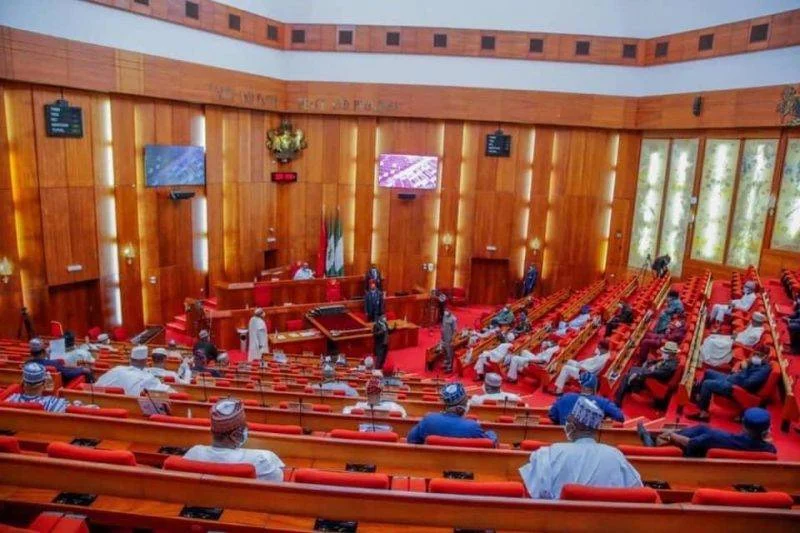
The proposed legislation, titled the National Insurance Regulatory Commission (Repeal and Enactment) Bill, 2026, was passed on Tuesday after the upper chamber considered and adopted the report of its Committee on Banking, Insurance and Other Financial Institutions.
The bill, identified as Senate Bill 394, was sponsored by the Chairman of the committee, Senator Mukhail Adetokunbo Abiru, alongside other members of the committee.
The passage of the NAICOM repeal bill represents the Senate’s latest effort to modernise the legal framework governing Nigeria’s insurance industry and strengthen the authority responsible for supervising insurers, brokers, loss adjusters and other market operators.
Bill proposes Insurance Regulatory Commission
Under the proposed legislation, the National Insurance Commission, commonly known as NAICOM, would be replaced by an institution to be known as the Insurance Regulatory Commission.
The change is not intended to be merely cosmetic. According to the Senate committee, the proposed commission would operate under a modern legal framework designed to give the insurance regulator greater independence, stronger intervention powers and clearer authority over an industry transformed by technology, new financial products and increasingly complex risks.
The NAICOM repeal bill seeks to remove the limitations of the National Insurance Commission Act of 1997, which lawmakers consider outdated and inadequate for the realities of modern insurance regulation.
Abiru told the Senate that the existing law had failed to keep pace with changes in the insurance industry and no longer provided the regulator with sufficient powers to address emerging risks, distressed companies, digital insurance operations and international supervisory requirements.
Existing law described as obsolete
NAICOM was established under the National Insurance Commission Decree of 1997 and given responsibility for regulating insurance companies, insurance brokers and loss adjusters.
Its mandate includes supervising industry operators, monitoring financial solvency, enforcing compliance and protecting the interests of policyholders.
The commission has remained the apex regulator of Nigeria’s insurance industry, responsible for licensing operators, approving certain industry practices and promoting stability within the market. NAICOM’s official description of its mandate also emphasises policyholder protection, market integrity and sustainable industry growth.
However, the Senate committee argued that a regulatory law enacted nearly three decades ago could no longer adequately address the rapid evolution of the financial-services sector.
The NAICOM repeal bill is therefore designed to establish a regulator capable of responding to digital policies, fintech-driven insurance platforms, cross-border transactions, complex corporate structures and risks that were not as developed when the original law came into force.
Nigeria’s insurance market has undergone considerable change since 1997, but the industry continues to struggle with low public confidence, poor awareness, weak penetration and disputes over unpaid or delayed claims.
New commission to enjoy greater independence
One of the central objectives of the bill is to strengthen the institutional independence of the proposed Insurance Regulatory Commission.
According to Abiru, the new regulator would be empowered to make supervisory decisions without undue influence. This provision is expected to protect regulatory actions from political pressure, industry interference and other interests capable of weakening enforcement.
A regulator that depends excessively on external approval may struggle to act quickly when an insurance company becomes financially unstable or violates market rules.
The NAICOM repeal bill consequently seeks to create clearer authority for the commission to investigate operators, issue binding directives and intervene where policyholders or the wider financial system are exposed to risk.
Regulatory independence must, however, be accompanied by transparency and accountability. An independent commission should not become an institution whose decisions cannot be questioned.
The proposed law should therefore ensure that regulatory decisions are based on published standards, subject to appropriate administrative or judicial review and communicated clearly to affected operators and members of the public.
Stronger powers over distressed insurers
The proposed commission would also receive enhanced resolution and intervention powers to address financially distressed insurance companies.
This aspect of the NAICOM repeal bill is particularly important because the collapse of an insurer can leave thousands of policyholders unable to recover valid claims.
Insurance companies collect premiums on the promise that they will provide compensation when covered losses occur. Where an insurer becomes insolvent, that promise may fail unless the regulator identifies the problem early and intervenes effectively.
The bill would empower the proposed commission to take steps to preserve financial stability, protect policyholders and facilitate the orderly resolution of failing insurance institutions.
Such powers could include directing corrective action, restricting certain transactions, requiring capital restoration or taking other measures before an insurer’s financial condition deteriorates beyond recovery.
The Senate committee said the strengthened intervention framework would help the regulator respond promptly to threats within the insurance market.
Greater cooperation with local and foreign regulators
The bill would authorise the Insurance Regulatory Commission to exchange information and cooperate with domestic and international regulatory and supervisory authorities.
Insurance operations increasingly extend beyond national boundaries. Nigerian insurers may obtain reinsurance from foreign companies, operate through international partnerships or participate in transactions involving assets and policyholders in several jurisdictions.
The regulator therefore needs a legal basis for sharing relevant supervisory information with institutions such as the Central Bank of Nigeria, the Securities and Exchange Commission, pension regulators and foreign insurance authorities.
The NAICOM repeal bill would give the commission stronger powers to issue regulations, standards, guidelines and directives to government institutions and insurance stakeholders.
This could support more coordinated oversight, particularly where an insurance company belongs to a wider financial group with interests in banking, pensions, investment management or other sectors.
However, information sharing must respect data-protection laws and legitimate commercial confidentiality. Regulatory cooperation should not become an excuse for releasing policyholders’ personal information or sensitive corporate records without proper safeguards.
https://ogelenews.ng/naicom-repeal-bill
Board members expected to possess relevant expertise
The Senate committee also emphasised the importance of appointing qualified professionals to the governing board of the proposed commission.
Abiru argued that the regulator’s board should include people with expertise in insurance, risk management, finance, law and corporate governance.
That requirement is essential because the quality of regulation often depends on the knowledge and independence of those directing the institution.
The NAICOM repeal bill should establish transparent qualification standards and reduce the risk of the board becoming a destination for purely political appointments.
Nigeria’s insurance industry deals with complex actuarial calculations, investment risks, solvency requirements, claims management and consumer protection. Board members who lack an understanding of these issues may be unable to provide effective oversight.
The eventual law should also provide safeguards against conflicts of interest. A person with significant financial interests in an insurance company should not participate in regulatory decisions affecting that company.
Reform follows wider insurance legislation
The latest Senate action comes after Nigeria adopted the Nigerian Insurance Industry Reform Act in 2025.
President Bola Tinubu signed the reform legislation into law in August 2025, creating a consolidated framework for several aspects of insurance business and repealing a number of outdated industry laws.
The 2025 legislation introduced reforms relating to capital adequacy, policyholder protection, compulsory insurance, digitisation and the broader development of the market.
The current NAICOM repeal bill appears to focus more directly on the legal identity, structure, independence and supervisory authority of the regulator itself.
This distinction is important. The Nigerian Insurance Industry Reform Act governs insurance business and market conduct, while the new proposal seeks to modernise the institution responsible for enforcing the regulatory framework.
If the two laws are not properly harmonised, overlapping provisions could create confusion. The National Assembly should therefore ensure that the proposed commission’s powers are consistent with the 2025 reform legislation.
Passage does not immediately abolish NAICOM
Despite reports suggesting that NAICOM has already been officially renamed, Senate passage alone does not complete the lawmaking process.
Nigeria operates a bicameral National Assembly consisting of the Senate and the House of Representatives. A bill generally requires approval by both chambers in identical form before it is transmitted to the President for assent.
The NAICOM repeal bill must therefore complete the remaining legislative stages before the Insurance Regulatory Commission can legally replace the existing agency.
Until that happens, the National Insurance Commission remains Nigeria’s legally recognised insurance regulator and continues to perform its statutory responsibilities.
This distinction is necessary to prevent confusion among policyholders, insurance companies and members of the public.
Companies should not begin changing official documents, licences or regulatory filings merely because the Senate has passed the bill.
The transition would only take effect in accordance with the commencement and transitional provisions of the final law after presidential assent.
Policyholders must remain central to reform
The most important test of the proposed legislation will not be the regulator’s new name but whether the reform improves the experience of policyholders.
Many Nigerians remain reluctant to purchase insurance because of concerns about trust, unclear policy conditions and difficulties encountered when filing claims.
The NAICOM repeal bill should make it easier for the regulator to investigate complaints, punish unfair practices and compel insurers to honour legitimate obligations.
A stronger regulator should require policies to be written in language ordinary customers can understand. Insurers should clearly disclose exclusions, waiting periods, premium obligations and the documents required when a claim arises.
The commission should also maintain accessible complaint channels and publish information showing how quickly disputes are resolved.
Without visible improvements in consumer protection, the creation of another regulatory institution may amount to little more than an administrative name change.
Insurance penetration remains a national challenge
During earlier debate on wider insurance reforms, Abiru described Nigeria’s insurance penetration as extremely low despite the long history of the industry.
He argued that obsolete legislation had contributed to regulatory inefficiencies and reduced the sector’s ability to compete internationally.
Insurance should help families and businesses recover from unexpected losses, reduce pressure on public resources and support investment by transferring risks to specialised institutions.
Yet many Nigerians either have no insurance or purchase only policies required by law, such as third-party motor insurance.
The NAICOM repeal bill cannot solve this problem on its own. Strong regulation must be accompanied by affordable products, public education, improved claim settlement and decisive action against fake insurance certificates.
The Nigerian Insurance Industry Database already provides a platform for checking compulsory insurance policies, demonstrating how digital verification can help combat fraudulent certificates.
Regulatory powers must be used responsibly
Granting the commission stronger enforcement and resolution powers could protect the market, but those powers must be exercised fairly.
Insurers should be entitled to know the allegations against them and respond before severe sanctions are imposed, except where urgent intervention is required to protect policyholders or prevent the disappearance of assets.
The NAICOM repeal bill should clearly define the circumstances under which the regulator may suspend management, restrict business operations or begin the resolution of a distressed insurer.
Vague powers can create uncertainty and discourage investment. On the other hand, weak powers can allow failing companies to continue collecting premiums when they are no longer capable of paying claims.
The legislation must therefore balance regulatory effectiveness with procedural fairness.
Senate passage opens next phase
The Senate’s decision is a significant step towards replacing the 1997 framework with a modern regulatory structure.
The proposed commission could strengthen policyholder protection, improve supervision and give Nigeria a regulator better equipped to respond to digital and cross-border insurance operations.
However, the NAICOM repeal bill remains proposed legislation rather than an existing Act.
The House of Representatives must consider the measure, and any differences between the two chambers must be resolved before the bill can be sent to the President.
Stakeholders should use the remaining legislative process to examine the regulator’s funding, board appointments, enforcement powers, accountability mechanisms and relationship with other financial authorities.
Reform must produce more than a new name
Renaming NAICOM as the Insurance Regulatory Commission may help clarify the institution’s role, but the true value of the reform will lie in its implementation.
Nigeria needs an insurance regulator capable of identifying financial distress early, enforcing prompt claim payments, protecting consumers and encouraging responsible innovation.
The NAICOM repeal bill offers an opportunity to modernise the country’s insurance-regulation system. It must not become another law that looks strong on paper but remains weak in practice.
The National Assembly should ensure that the final legislation gives the commission sufficient independence without removing accountability.
It should also provide a clear transition from NAICOM to the proposed commission so that licences, regulations, staff appointments and existing enforcement actions remain legally valid.
Ultimately, policyholders will judge the reform by simple outcomes: whether insurers are financially sound, whether valid claims are paid and whether complaints receive fair treatment.
A stronger name will mean little unless it produces a stronger and more trustworthy insurance industry.