












single opposition candidate for 2027

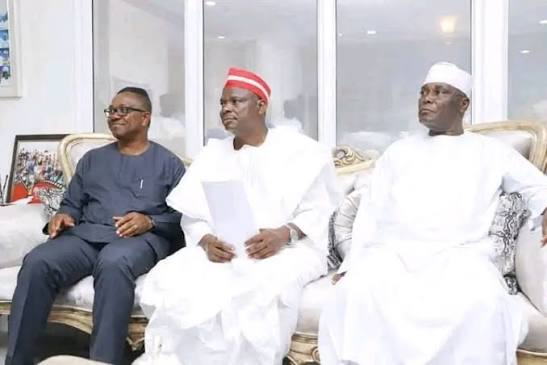
Nigeria’s opposition politics is entering another decisive phase as former Vice President Atiku Abubakar and former Anambra State Governor Peter Obi consider their positions ahead of an Abuja summit seeking agreement on a single opposition candidate for 2027.
The proposed meeting, scheduled for August 18, is being promoted by the Group of 100 Nigerians, or G-100, led by former All Progressives Congress chieftain Salihu Moh. Lukman. The group believes opposition forces risk weakening themselves against the ruling APC if they enter the presidential election divided.
The central argument is straightforward: opposition parties may have substantial support collectively, but splitting that support among several presidential candidates could work to the advantage of the incumbent.
That calculation has brought the debate over a single opposition candidate for 2027 back to the centre of Nigeria’s political conversation.
Atiku Consults Opposition Stakeholders
Atiku has not formally committed himself to the August 18 summit, although his camp has welcomed efforts aimed at strengthening opposition cooperation.
His Senior Special Assistant on Public Communication, Phrank Shaibu, said Atiku supports genuine initiatives capable of giving Nigerians a credible political alternative.
However, whether the former vice president will personally attend the Abuja summit is expected to be announced after his schedule and participation have been finalised.
More significantly, Atiku is consulting political leaders and stakeholders over the proposal for a single opposition candidate for 2027.
His position suggests that the former vice president has neither rejected the proposal nor surrendered his presidential ambition.
For Atiku and other opposition figures, the difficult question is likely to be how a consensus candidate would emerge.
Would there be a primary election? Would aspirants negotiate among themselves? Would electoral strength, regional considerations or previous election performance determine the choice?
Those questions could prove considerably harder to resolve than the general principle of opposition unity.
https://ogelenews.ng/2027-atiku-obi-weigh-single-opposition-candidate-ah…
Obi Invited to Abuja Summit
Peter Obi has also been invited to the meeting, according to the Obidient Movement.
National Coordinator of the movement, Yunusa Tanko, confirmed the invitation but made clear that the decision on whether Obi would attend rests with the former Anambra governor.
The movement nevertheless accepts the broader argument that opposition forces need greater cooperation.
That leaves Obi facing a similar political calculation to Atiku.
Supporting a single opposition candidate for 2027 could strengthen the opposition nationally, but it could also require one or more major contenders to abandon their presidential ambitions.
That is where the real negotiations begin.
The question is therefore no longer simply whether opposition politicians believe in unity. The more difficult issue is whether they are prepared to accept a selection process that could produce somebody else as presidential candidate.
G-100 Pushes Opposition Leaders to Close Ranks
The G-100 has urged Atiku, Obi, Rabiu Kwankwaso, Rotimi Amaechi and other opposition figures to place collective political objectives above individual ambitions.
Its position is based largely on electoral mathematics.
When several opposition candidates contest against one incumbent, votes that might otherwise accumulate behind a single challenger can be distributed among different parties.
The group believes a single opposition candidate for 2027 would prevent such fragmentation and provide the ruling APC with a more formidable national challenge.
But political arithmetic alone may not be enough.
Nigeria’s opposition leaders control different political networks, regional constituencies and party structures. They also have different supporters, ideological positions and political histories.
Bringing those interests under one presidential ticket would therefore require compromises extending far beyond choosing a candidate.
Labour Party Wants Coalition Built Around Its Platform
The Labour Party has welcomed opposition cooperation but has presented its own conditions.
The party argues that opposition politicians looking for a viable national platform should rally around the Labour Party rather than create another political vehicle.
Its National Publicity Secretary, Ken Asogwa, has argued that the party possesses organisational structures and connections capable of supporting a nationwide presidential campaign.
That position illustrates one of the biggest obstacles facing advocates of a single opposition candidate for 2027.
Almost every major political bloc agrees that cooperation could be useful. Agreement becomes more difficult when discussions turn to which party should provide the platform and which politician should carry the presidential ticket.
Other opposition groups are also approaching the proposal cautiously.
The Democratic Leadership Alliance has welcomed greater opposition cooperation but says it is not presently negotiating with the G-100 or another party for the adoption of a common presidential candidate.
The Coalition of United Political Parties, however, has expressed stronger support for the initiative and says it is prepared to support a consensus candidate if major opposition contenders reach a mutually acceptable arrangement.single opposition candidate for 2027
Why August 18 Summit Matters
The Abuja summit could therefore become an important early test of the opposition’s ability to translate calls for unity into practical political agreements.
The gathering does not necessarily mean a single opposition candidate for 2027 will immediately emerge.
Instead, it could establish whether the major players are prepared to negotiate the principles and mechanism required to produce one.
Several questions will have to be addressed.
How will the candidate be selected? What happens to presidential aspirants who step aside? Which political party provides the platform? How will regional interests be accommodated? And what policy programme would unite politicians coming from different political traditions?
Without answers to these questions, a declaration of unity could remain little more than political rhetoric.
Opposition Has Faced Unity Problems Before
The latest initiative also comes against the background of previous difficulties in building a durable opposition coalition.
Earlier efforts to consolidate opposition forces have faced internal disagreements, legal disputes and competition among presidential hopefuls.
That history matters because defeating an incumbent requires more than prominent politicians appearing together at meetings.
A credible single opposition candidate for 2027 would require nationwide organisation, polling-unit representation, campaign financing, party discipline, grassroots mobilisation and an agreed policy programme capable of persuading undecided voters.
It would also require supporters of unsuccessful aspirants to remain inside the arrangement after a candidate emerges.
That may ultimately be the toughest test.
Political alliances are relatively easy to announce. Maintaining them after competing ambitions collide is considerably more difficult.single opposition candidate for 2027
2027 Election Calendar Raises Stakes
The political timetable also means opposition leaders cannot negotiate indefinitely.
The Independent National Electoral Commission has formally fixed the Presidential and National Assembly elections for February 20, 2027, while governorship and State House of Assembly elections are scheduled for March 6, 2027.
Parties therefore have limited time to resolve internal disputes, nominate candidates, establish campaign structures and mobilise voters.
The debate surrounding a single opposition candidate for 2027 is consequently moving from political speculation towards practical electoral decision-making.
Tinubu Remains the Candidate to Beat
President Bola Tinubu and the ruling APC will be watching these developments closely.
A fragmented opposition potentially gives an incumbent an important advantage. A united opposition, particularly one capable of combining strong regional voting blocs, could alter the electoral equation.
But opposition unity by itself does not guarantee victory.
The eventual challenger would still have to convince Nigerians on the economy, security, employment, infrastructure, corruption and the cost of living while building enough geographical support to satisfy Nigeria’s constitutional requirements for winning a presidential election.
That means the debate must eventually move beyond personalities.
If the August 18 meeting is to produce lasting political consequences, opposition leaders will need to discuss not only who becomes candidate but also what programme they intend to offer Nigerians.
Abuja Summit Could Define Opposition’s 2027 Strategy
The August 18 summit may therefore become an important moment in the build-up to the presidential election.
Atiku is consulting. Obi has received an invitation. Other opposition parties and political movements are weighing their positions.
Yet the central dilemma remains unresolved.single opposition candidate for 2027
Most opposition leaders may agree that confronting the APC separately could weaken their chances. What remains uncertain is whether they can agree on the sacrifices necessary to produce a single opposition candidate for 2027.
The coming summit will not necessarily settle the presidential contest.
But it could reveal whether Nigeria’s opposition is genuinely prepared to subordinate individual ambitions to a collective electoral strategy, or whether familiar rivalries will once again produce a crowded presidential field.
For voters, that distinction could become one of the defining questions of the 2027 election.