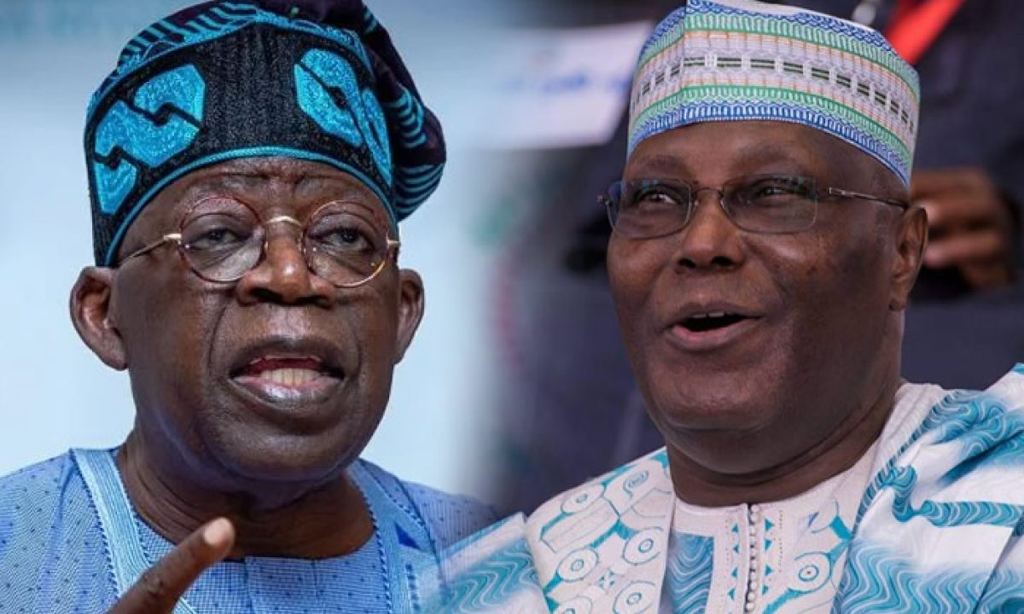















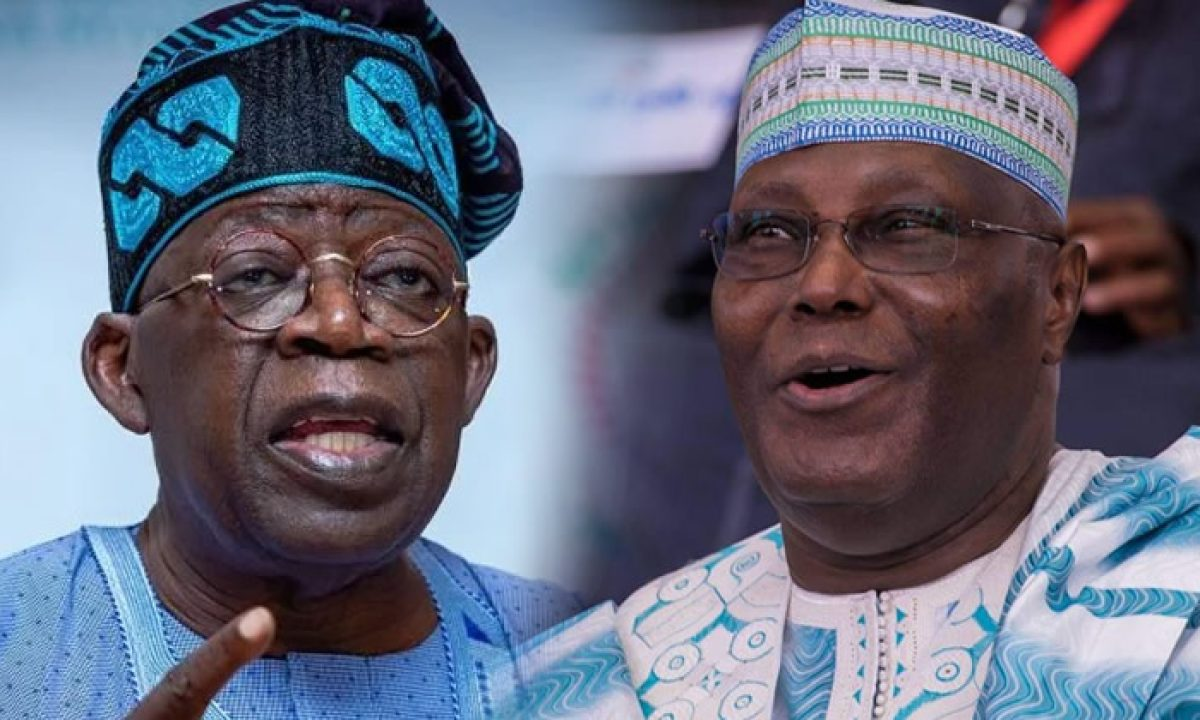
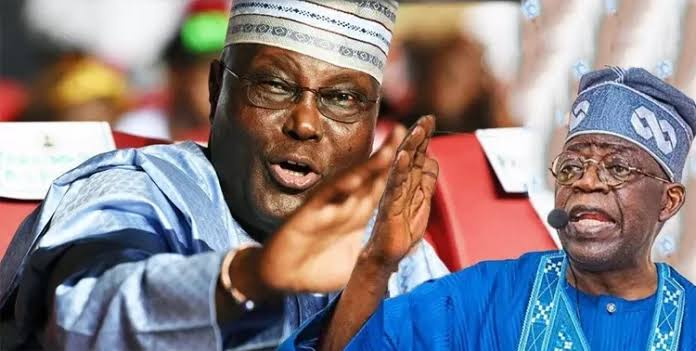
Former Vice-President and African Democratic Congress presidential candidate, Atiku Abubakar, has challenged President Bola Tinubu’s declaration that Nigeria is entering an era of prosperity, arguing that economic improvements cited by the government have yet to translate into sufficient relief for millions of households struggling with food, transport, healthcare and other basic costs.
Atiku made the remarks in Abuja on October 1, 2026, during his Independence Day address, hours after Tinubu used his own national broadcast to declare that the difficult phase of economic reforms was giving way to what he described as shared and widespread prosperity.
The disagreement over the Tinubu prosperity claim has reopened a central question in Nigeria’s economic debate: when should improving macroeconomic indicators be considered evidence that living conditions are improving for ordinary citizens?
Tinubu pointed to stronger economic growth, falling inflation, rising foreign reserves and record non-oil exports as evidence that reforms undertaken since 2023 were beginning to yield results.
Atiku acknowledged that indicators such as inflation and economic growth matter, but argued that Nigerians ultimately judge economic performance by what their incomes can buy and whether they can afford essential goods and services.
Atiku Questions Tinubu Prosperity Claim
Atiku directly challenged the Tinubu prosperity claim, arguing that many Nigerians continue to experience serious pressure from the cost of food, transportation, medicine, education and electricity.
He said slower inflation should not be confused with falling prices.
That distinction is supported by basic inflation economics and current official figures.
Nigeria’s headline inflation rate stood at 15.39 per cent in August 2026, down from 23.14 per cent in August 2025. Food inflation stood at 19.57 per cent.
The decline means prices were increasing at a slower rate than a year earlier. It does not mean the general price level returned to where it was before the earlier period of high inflation.
This distinction formed one of the central arguments in Atiku’s response.
He maintained that households that had already experienced significant increases in food, fuel and transportation costs could still feel worse off even when the rate of inflation begins to moderate.
Tinubu Says Economy Has Reached Turning Point
Tinubu presented a different assessment in his 66th Independence Day address.
The President said Nigeria had reached what he described as an economic turning point after more than three years of reforms.
According to Tinubu, the government’s initial priority was to address structural weaknesses in the economy, while the next stage would focus on ensuring economic improvements produced broader benefits for Nigerians.
He said the economy had grown by more than four per cent in 2026 and that both oil and non-oil sectors were contributing to that expansion.
Independent examination of the President’s figures provides support for several of those claims.
National Bureau of Statistics data show that real Gross Domestic Product grew by 4.43 per cent year-on-year in the second quarter of 2026, compared with 3.89 per cent in the first quarter.
Official data also confirm that inflation has declined substantially from its earlier levels and that Nigeria recorded $6.1 billion in non-oil export earnings in 2025, the highest formally documented figure reported by the Nigerian Export Promotion Council.
The debate over the Tinubu prosperity claim, therefore, is not simply about whether some economic indicators have improved.
The sharper disagreement is over whether those improvements have reached households sufficiently to justify describing the country as entering an era of prosperity.
Atiku Faults Impact of Economic Reforms
Atiku also criticised the impact of some of the government’s major economic reforms, particularly the removal of petrol subsidy and other fiscal measures introduced since Tinubu assumed office in May 2023.
He argued that higher transport and production costs had placed additional pressure on households and businesses.
The former Vice-President said Nigerians were entitled to ask how savings and additional government revenues arising from reform measures were being translated into lower costs and improved public services.
The Tinubu administration has consistently defended subsidy removal as necessary to correct what it considered an unsustainable fiscal arrangement.
In his Independence Day address, the President again rejected a return to broad fuel subsidies, saying Nigeria needed to move away from economic policies that distorted public finances.
Atiku offered a different approach.
He proposed what he described as a capped and budgeted production subsidy for petrol refined inside Nigeria.
Under his proposal, only locally refined petrol, including products from modular refineries, would qualify. Imported fuel would be excluded, while payments would be audited and publicly disclosed.
https://ogelenews.ng/tinubu-prosperity-claim
That proposal is a political policy position rather than an existing programme, and its cost, financing and possible market effects would require detailed assessment before implementation.
Growth Figures Versus Household Experience
The disagreement over the Tinubu prosperity claim also reflects the difference between national economic growth and household welfare.
GDP measures the value of goods and services produced in an economy.
An expanding GDP can indicate stronger economic activity, but growth does not automatically mean that every household experiences higher disposable income.
How growth is distributed, employment levels, wages, food prices, transportation costs and access to public services also affect living standards.
Tinubu acknowledged this challenge in his address, saying the government’s next objective was to make economic gains more broadly felt.
The President said his administration would focus on reducing the costs of producing and transporting goods, expanding agriculture, improving infrastructure and supporting businesses.
His administration therefore presents the current period as a transition from economic stabilisation toward household relief.
Atiku disputes whether the country has reached the point where such a transition can reasonably be called prosperity.
Atiku Raises Insecurity Concerns
The ADC presidential candidate also moved beyond economics and criticised continuing insecurity in parts of the country.
He referred to killings, kidnappings and displacement affecting communities and farmers, arguing that affordability and physical security remain two basic tests of government performance.
The remarks linked the Tinubu prosperity claim to the wider issue of whether economic progress can be separated from security conditions.
Agricultural insecurity can affect food production, transportation and prices.
Kidnapping and violent attacks can also disrupt businesses and reduce investment in affected communities.
The government has repeatedly said security operations are being intensified across the country, but opposition figures continue to cite attacks and kidnappings as evidence that more needs to be done.
Atiku Questions Government Loan Programmes
Atiku also questioned the administration’s reliance on credit and loan schemes targeted at students, households and businesses.
He argued that Nigerians ultimately need stronger incomes and jobs that enable them to meet their needs rather than depending excessively on borrowing.
Tinubu has defended government credit initiatives as part of efforts to expand economic opportunities and improve access to education, housing and consumer finance.
The disagreement reflects another fundamental policy question.
Credit can help households finance education, businesses and major purchases, but repayment becomes more difficult when incomes fail to rise at a similar pace.
Atiku therefore called for clearer information about beneficiaries, repayment terms and the results being produced by government-backed programmes.
Budget Management Also Comes Under Scrutiny
Atiku further criticised the government’s budget implementation process, questioning the overlapping operation of fiscal plans.
He referred to the extension of aspects of the 2025 budget while the 2026 budget was also being implemented and argued that Nigerians deserve clearer information about which projects have been funded and completed.
Budget extensions are not by themselves evidence that public funds have been misused, but overlapping implementation periods can make public expenditure harder for citizens to follow.
For that reason, transparency over capital projects, releases and completion rates remains important regardless of which political party is in office.
Economic Data Offer a Mixed Picture
Current economic statistics give both sides material for their arguments.
The Tinubu prosperity claim is supported in part by several indicators showing improvement.
GDP growth reached 4.43 per cent in the second quarter of 2026.
Headline inflation fell to 15.39 per cent in August.
Nigeria also recorded historically high documented non-oil exports in 2025.
However, falling inflation does not mean prices have fallen back to earlier levels.
Food inflation remained at 19.57 per cent in August, meaning food prices were still rising year-on-year.
That helps explain why improvements visible in national statistics can coexist with households reporting continued pressure in markets and transport costs.
The most accurate picture is therefore more complicated than either declaring that economic hardship has ended or suggesting that none of the macroeconomic indicators have improved.
Some important indicators have strengthened, while affordability remains a major political and economic concern.
2027 Election Gives Debate Added Significance
The exchange between Atiku and Tinubu also carries clear electoral significance.
Atiku is the ADC presidential candidate for the 2027 general election, while Tinubu’s economic record is expected to remain a central subject of political debate as Nigeria approaches the polls.
Atiku used his Independence Day address not only to criticise the administration but also to outline alternatives, including his proposed locally targeted fuel-production subsidy.
The government, meanwhile, is presenting the next stage of its economic programme as one focused on translating stabilisation into lower living costs, employment and increased production.
The argument surrounding the Tinubu prosperity claim is therefore likely to continue well beyond the Independence Day speeches.
Nigerians Will Judge Prosperity by Everyday Conditions
Ultimately, the political dispute will be tested against both official data and household experience.
Economic growth, inflation, reserves and export earnings are important indicators of national performance.
But Nigerians will also assess progress through food prices, wages, transportation costs, electricity bills, employment opportunities and security.
That is the central point behind Atiku’s challenge to the Tinubu prosperity claim.
Tinubu says painful reforms have stabilised the economy and created the foundation for the next phase of growth.
Atiku says the benefits are not yet sufficiently visible in the lives of millions of Nigerians to justify declaring an age of prosperity.
The latest official figures show that inflation has slowed and economic growth has strengthened, but they also show that prices, including food prices, are still increasing.
For Nigerians, the decisive question will therefore not be whose political description is more persuasive.
It will be whether improving national indicators eventually produce measurable and sustained improvements in everyday living conditions.