
















BOA support for women farmers
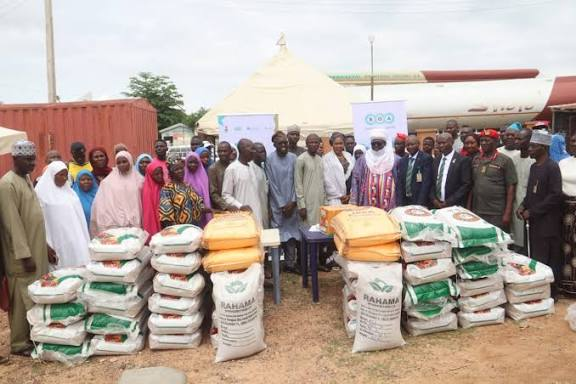
The Bank of Agriculture has intensified efforts to close longstanding financing and agricultural input gaps confronting Nigerian women farmers, unveiling a broad intervention that combines affordable credit, improved seeds, mechanisation, processing facilities and guaranteed markets.
The latest BOA support for women farmers forms part of a partnership with the Federal Ministry of Women Affairs and Social Development under the Renewed Hope Women Agro-Value Expansion Programme, known as RH-WAVE.
The initiative targets at least three million women over the next three to five years and is designed to move beneficiaries beyond subsistence farming into structured and commercially sustainable agricultural businesses.
Under the programme, the first 10,000 women farmers are expected to access agricultural input loans at concessional interest rates of below 10 per cent annually.
A dedicated financing window for greenhouse agriculture will also be created to support climate-smart and year-round production.
The intervention goes considerably further than simply handing fertiliser and seeds to farmers.
It seeks to address several interconnected problems that have historically limited women’s agricultural productivity, including inadequate access to finance, modern machinery, processing infrastructure and profitable markets.
BOA Support for Women Farmers Targets Three Million Beneficiaries
The Federal Ministry of Women Affairs and BOA formalised the initiative through a Memorandum of Understanding signed in Abuja.
Women Affairs Minister Imaan Sulaiman-Ibrahim said the partnership was intended to address what the government considers one of the most persistent barriers facing women in Nigerian agriculture: exclusion from formal agricultural finance.
Under the arrangement, the BOA support for women farmers will eventually reach at least three million beneficiaries across Nigeria’s six geopolitical zones.
Implementation will begin in Plateau, Kaduna, Katsina, Kano, Sokoto, Bauchi and Nasarawa states before being expanded nationwide.
The initial states were selected partly on the basis of existing beneficiary data and preparedness to implement the programme.
The programme will be administered through a governance structure comprising a Joint Steering Committee, Programme Management Unit and State Coordination Nodes.
That structure is expected to coordinate implementation and provide oversight as the programme expands.
First 10,000 Women to Access Below-10% Loans
Perhaps the most significant feature of the BOA support for women farmers is the proposed financing structure.
The first 10,000 beneficiaries will receive agricultural input financing at preferential interest rates below 10 per cent per annum.
The loans are expected to help farmers purchase improved seeds and other production inputs that many smallholder farmers struggle to finance at the beginning of each planting season.
BOA Managing Director and Chief Executive Officer Ayodeji Sotinrin said the bank would begin by supporting about 200,000 women before progressively scaling the intervention.
The bank says beneficiaries will have access to single-digit financing, improved seeds and modern agricultural tools intended to increase productivity and incomes.
The programme also seeks to reduce one of agriculture’s most familiar problems: farmers needing money most urgently before harvest, when they have the least cash available.
Providing input credit at the beginning of the production cycle can allow farmers to buy better seeds, fertiliser and crop-protection products when they are actually needed.
Women-Led Agricultural Hubs Planned
Finance is only one pillar of the intervention.
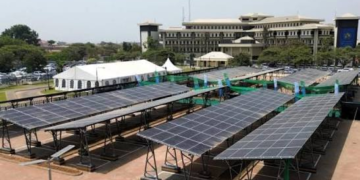
The government and BOA also plan to establish women-led agricultural hubs equipped with tractors, solar-powered dryers and processing facilities.
These AgriHubs are expected to be predominantly operated and staffed by women.
They will also benefit from the Federal Government’s 40 per cent subsidy on agricultural equipment.
That aspect of the BOA support for women farmers could prove particularly important because mechanisation remains beyond the financial reach of many small-scale producers.
A farmer may be able to secure land and seeds but still struggle to cultivate large areas without tractors and other machinery.
Mechanisation can shorten planting and harvesting periods, reduce dependence on manual labour and potentially allow farmers to cultivate larger areas.
BOA also says women will be able to access subsidised tractors through repayment arrangements lasting between three and five years.
Agricultural Input Access Is Only Part of the Problem
The original description of the programme as targeting an agricultural input access gap is accurate, but incomplete.
Women farmers face barriers at almost every point in the agricultural value chain.
They may struggle to obtain affordable credit before planting.
Even where money is available, access to quality seeds, fertiliser, irrigation systems and machinery can remain limited.
After harvesting, lack of dryers, storage and processing facilities can cause significant losses.
And once a crop is ready for sale, farmers may be forced to accept poor prices because they lack reliable buyers.
The new BOA support for women farmers attempts to connect those different stages.
The government says RH-WAVE will cover agricultural inputs, mechanisation, greenhouse production, processing, packaging and structured market linkages.
That broader approach could be more important than any single loan product.
Guaranteed Markets Could Reduce Distress Sales
Another major part of the programme is the planned creation of structured produce aggregation channels.
Under the model, agricultural produce from participating women will be aggregated and purchased at guaranteed minimum prices.
The government says those prices are intended to give beneficiaries more predictable returns and direct connections to off-takers.
This is significant because access to finance alone does not guarantee profitability.
A farmer can borrow money, produce a successful crop and still suffer losses if market prices collapse immediately after harvest.
Smallholders are particularly vulnerable during peak harvest periods when large quantities of the same commodity arrive in markets simultaneously.
Without storage or strong bargaining power, many are forced to sell quickly at whatever price traders offer.
The market-access component of the BOA support for women farmers seeks to reduce that risk.
If properly implemented, aggregation can improve bargaining power because produce is sold in larger volumes rather than by individual farmers negotiating independently.
Farmers to Move From Subsistence to Agribusiness
The government’s stated objective is not simply to increase the number of women cultivating crops.
It wants beneficiaries to operate agriculture as businesses.
The Ministry of Women Affairs describes RH-WAVE as a programme intended to move women from subsistence farming into productive and bankable agribusiness enterprises.
That distinction matters.
Subsistence farmers often produce primarily for household consumption and sell only a limited surplus.
Commercial farmers must think differently about costs, yields, financing, storage, processing, pricing and markets.
For the BOA support for women farmers to produce lasting results, beneficiaries will therefore need more than money.
Training in record-keeping, farm economics, loan management, production planning and market requirements will also be essential.
Early Pilots Attracted 33,000 Expressions of Interest
The government says early implementation in Nasarawa and Kaduna demonstrated significant demand among women farmers.
According to the Ministry of Women Affairs, one implementing partner recorded about 33,000 expressions of interest during pilot activities in the two states.
That demand illustrates the scale of unmet financing and production needs.
https://ogelenews.ng/boa-expands-support-for-women-farmers-targets-finan…
But high demand creates its own challenge.
If millions of women are eventually expected to participate, beneficiary selection will have to be transparent.
Authorities will need reliable farmer databases capable of distinguishing active producers from politically assembled beneficiary lists.
The credibility of the BOA support for women farmers will depend partly on whether assistance reaches women actually engaged in agriculture.
BOA Increasing Wider Support for Smallholder Farmers
The women-focused intervention is occurring alongside a broader expansion of BOA’s agricultural programmes.
The bank says its mandate covers credit facilities for farmers, women, young people, SMEs and agricultural cooperatives. BOA currently reports more than ₦250 billion in loans disbursed and more than two million farmers supported across its programmes.
In June 2026, the bank also began distributing maize seeds, fertilisers and crop-protection products to hundreds of thousands of smallholder farmers under another national support programme.
BOA subsequently launched a wet-season input initiative targeting 10,000 hectares in Katsina.
These interventions suggest that the bank is increasingly moving towards financing models that combine loans with actual agricultural inputs and market arrangements.
The BOA support for women farmers fits within that wider strategy.
Farmer Aggregation Companies to Help Manage Credit
One feature that could influence repayment performance is BOA’s plan to work through Farmer Aggregation Companies.
The bank says these companies will help facilitate credit delivery, monitor beneficiaries and strengthen repayment.
Agricultural lending is notoriously difficult because farming incomes are seasonal and vulnerable to weather, pests, disease and price fluctuations.
Traditional commercial banks often view smallholder agriculture as a high-risk sector.
Farmers may also lack conventional collateral such as registered urban property.
BOA’s aggregation model appears designed to reduce those risks by organising farmers around identifiable production and marketing structures.
Sotinrin has stressed that loan repayment is essential because repaid funds can then be extended to additional beneficiaries.
That is an important point.
If the programme operates mainly as grants disguised as loans, its long-term financing pool could quickly weaken.
A successful BOA support for women farmers model must therefore balance affordability with repayment discipline.
Women’s Repayment Record Encourages BOA
BOA’s leadership has also highlighted the repayment performance of women.
Sotinrin said the bank’s experience showed that women constitute a significant proportion of farmers who repay agricultural loans.
That repayment record is one reason the bank considers women an attractive category for expanded agricultural financing.
For lenders, repayment history matters because agricultural finance cannot scale sustainably if default levels become excessive.
For women farmers, strong repayment performance can also help challenge assumptions that small rural producers are inherently too risky for formal credit.
The real opportunity is to build reliable financial histories that allow successful farmers to qualify for increasingly larger loans over time.
Mechanisation Could Become Crucial
Among all the components of the BOA support for women farmers, mechanisation could have some of the largest productivity effects.
Many Nigerian farmers still depend heavily on manual labour.
This limits how much land can be prepared during short planting windows.
Labour shortages can also delay planting and harvesting, reducing yields.
Access to tractors, planters, harvesters and processing equipment allows farmers to scale production without increasing labour requirements at the same rate.
The planned women-led AgriHubs may therefore provide shared machinery that individual farmers could never afford to purchase outright.
Solar-powered dryers could also help reduce post-harvest losses, particularly for crops that deteriorate quickly when exposed to moisture.
Climate-Smart Agriculture Gets Dedicated Financing
The greenhouse component adds another dimension to the programme.
BOA and the ministry intend to create a dedicated financing window for greenhouse farming.
Greenhouses can allow farmers to produce some crops beyond conventional seasonal cycles while improving control over water and other production variables.
This is particularly relevant as farmers increasingly confront irregular rainfall, extreme weather and other climate-related risks.
However, greenhouse farming also involves higher capital costs and requires technical knowledge.
Financing must therefore be accompanied by appropriate extension services and training if beneficiaries are to avoid expensive production failures.
Implementation Will Determine Success
The ambition behind the BOA support for women farmers is substantial.
Three million beneficiaries would make RH-WAVE one of Nigeria’s largest gender-focused agricultural programmes.
But ambition alone is not enough.
Nigeria has launched many agricultural interventions over the years.
The real test is whether farmers receive inputs before planting rather than after the season has begun.
Loans must be released when production decisions are being made.
Tractors must be available when farmers need land preparation.
Improved seeds must actually be suitable for local conditions.
And promised markets must exist when crops are harvested.
Timing is everything in agriculture.
A fertiliser delivery that arrives months late may have little value to the farmer who needed it during crop establishment.
Transparency Will Matter
The programme’s scale will also require strong accountability.
Authorities should be able to show how beneficiaries are selected, how much financing is disbursed, what commodities are supported and how repayment is performing.
Outcomes should also be measured.
Counting how many women receive loans is useful, but it is not sufficient.
The more meaningful questions are whether beneficiaries cultivate more land, produce higher yields, increase their incomes and successfully repay financing.
That is how the BOA support for women farmers should ultimately be judged.
Better Access Could Strengthen Food Security
Nigeria’s food-security challenge means the stakes extend beyond women’s economic empowerment.
Smallholder farmers remain important to domestic food production.
Improving their ability to obtain credit, seeds, fertiliser, machinery and markets could increase output and strengthen rural livelihoods.
Women are already deeply involved in production, processing and agricultural trade.
The problem is that their economic role has often not been matched by equal access to productive resources.
The new intervention attempts to close some of that gap.
From Assistance to Sustainable Businesses
The most promising element of the programme may be its attempt to connect finance with production and markets.
Too many agricultural interventions stop at distributing inputs.
Others provide loans without ensuring farmers have buyers.
Some give machinery without creating sustainable maintenance systems.
RH-WAVE is attempting to integrate these components.
If properly executed, the BOA support for women farmers could help beneficiaries move from small-scale survival agriculture towards businesses capable of generating reliable incomes.
But the programme will only succeed if implementation matches its design.
The first 10,000 women receiving concessional input loans will therefore provide an important early test.
Their repayment rates, productivity, access to equipment and ability to sell produce profitably will reveal whether the model is capable of being expanded to millions more.
For Nigeria, the objective should be larger than simply announcing that three million women have been “empowered.”
The real goal should be three million women who can farm productively, obtain affordable finance, access modern equipment, sell into profitable markets and build agricultural businesses that no longer depend permanently on government intervention.
That will be the true measure of whether the BOA support for women farmers has closed the gap it was created to address.
https://fmino.gov.ng/fg-boa-partner-on-new-opportunities-for-women-farmers/