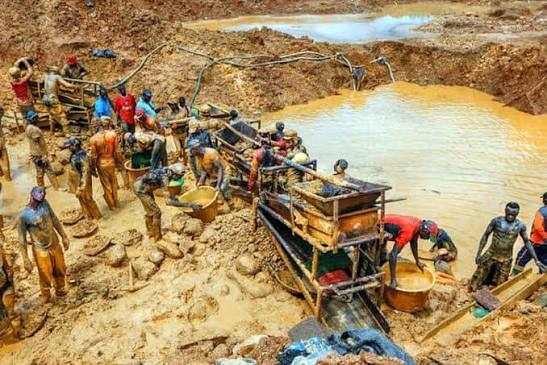
















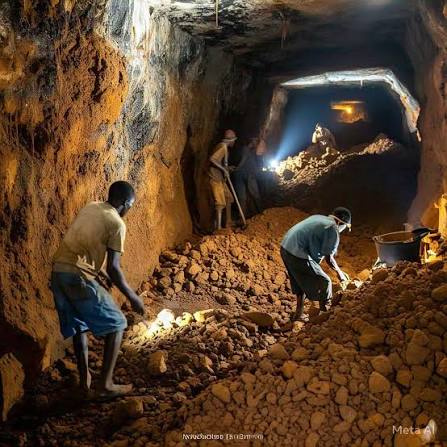
illegal mining in Nigeria
The Nigeria Security and Civil Defence Corps has warned miners and other operators in the solid minerals sector that ignorance of existing laws and regulations will not protect anyone found engaging in unlawful mining activities.
The warning comes as the Federal Government intensifies efforts to tackle illegal mining in Nigeria, an industry problem authorities increasingly describe not only as an economic offence but also as a threat to the environment, public safety and national security.
The NSCDC has placed illegal mining among the activities being confronted by its specialised Mining Marshals, who are responsible for enforcing compliance, dismantling unlawful mining operations and protecting legitimate investment in the sector.
The message to miners is straightforward: anyone entering Nigeria’s mining industry is expected to understand the laws governing mineral titles, exploration, extraction, environmental obligations and the movement or disposal of minerals.
Claiming not to know the law after an offence has been committed will not automatically shield an operator from enforcement.
NSCDC steps up campaign against illegal mining in Nigeria
The NSCDC has become increasingly prominent in the Federal Government’s campaign against illegal mining in Nigeria, deploying Mining Marshals to areas where unlawful mineral extraction has become a persistent problem.
According to the Corps, illegal mining threatens Nigeria’s environment and economy and can also create serious security problems in affected communities.
The agency says its Mining Marshals are mandated to enforce compliance, dismantle illegal operations and safeguard legitimate businesses operating within the mining sector.
That enforcement drive is significant in a country endowed with deposits of gold, lithium, tin, lead, zinc, limestone and several other commercially valuable minerals.
For years, however, Nigeria’s solid minerals sector has struggled with informal operations, poor regulation, revenue leakages and unlicensed extraction.
The challenge facing government is therefore not merely to increase mineral production, but to ensure that the minerals are extracted legally, safely and in a manner that produces measurable benefits for communities and the wider economy.
What Nigerian mining law requires
The legal foundation governing the sector is principally the Nigerian Minerals and Mining Act 2007, alongside relevant regulations and administrative requirements.
The Act provides a framework for mineral exploration, mining leases, quarrying and related activities.
It also establishes offences for activities carried out outside the law.
Under Section 131 of the Act, a person who explores for or mines minerals, or carries out quarrying operations otherwise than in accordance with the legislation, commits an offence.
The law also addresses false or misleading information in mineral-title applications and the unlawful removal, possession or disposal of minerals.
These provisions are particularly important to understanding the government’s campaign against illegal mining in Nigeria.
Mining is therefore not simply a matter of discovering minerals on a piece of land and beginning extraction.
An operator must have the appropriate legal authority to carry out the activity.
Depending on the nature of the operation, this can involve reconnaissance permits, exploration licences, small-scale mining leases, mining leases, quarry leases or other approvals provided under the regulatory framework.
Mining licence matters
The Federal Ministry responsible for solid minerals maintains formal guidelines for mineral title applications and related mining activities.
Its official portal provides procedures covering artisanal and small-scale mining formalisation, small-scale mining operator registration, mineral buying centre registration and various environmental compliance requirements.
Environmental obligations listed by the ministry include impact assessments, environmental audits, reclamation plans and arrangements for the closure or decommissioning of mining operations.
This means tackling illegal mining in Nigeria involves much more than checking whether somebody has a document described as a mining licence.
Authorities must also determine whether operators are working within the area covered by their title, following environmental conditions and complying with the terms under which the approval was granted.
A licence does not give an operator unlimited freedom to mine wherever and however he chooses.
https://ogelenews.ng/illegal-mining-in-nigeria-ignorance-of-the-law-no-e…
Illegal mining carries consequences
The mining law provides penalties for violations.
The Nigerian Minerals and Mining Act provides that a mineral title holder found guilty of certain offences under Section 131 may face revocation of the licence, alongside criminal penalties prescribed by the legislation.
That is why the NSCDC’s warning that ignorance cannot excuse unlawful conduct should be taken seriously by operators.
The principle becomes particularly important in artisanal and small-scale mining communities, where some operators may have worked informally for years without fully understanding the regulatory requirements governing their activities.
But lack of awareness does not solve the underlying problem.
Government also has a responsibility to ensure that legitimate artisanal miners have access to clear information about registration, licensing, environmental compliance and formalisation.
Enforcement works best when it is accompanied by education.
The long-term answer to illegal mining in Nigeria cannot therefore be arrests alone. It must also include formalisation of miners who are willing to comply with the law.
Why illegal mining is a national concern
Illegal mining has consequences far beyond government revenue.
Unregulated excavation can damage farmland, pollute rivers and leave dangerous pits behind in communities.
Poorly managed mining operations can also expose workers to unsafe conditions.
Where extraction takes place without proper documentation, government may have difficulty determining how much mineral has been removed, who purchased it and whether the country received the royalties and taxes due from the activity.
That makes illegal mining in Nigeria both an environmental and an economic problem.
The issue becomes even more serious where criminal groups take advantage of poorly regulated mining areas.
Nigeria’s security agencies have increasingly treated unlawful exploitation of natural resources as part of the wider fight against economic sabotage.
The NSCDC itself lists combating illegal mining among its operational priorities.
Mining Marshals take enforcement to the field
The creation and deployment of Mining Marshals reflects the government’s attempt to give the enforcement campaign a dedicated operational structure.
Rather than treating unlawful mining as an occasional local offence, authorities are increasingly approaching it as a national problem requiring specialised enforcement.
The Mining Marshals are expected to identify illegal sites, enforce compliance and protect legitimate mining investments.
The NSCDC disclosed earlier in 2026 that it had arrested more than 2,677 suspects for various offences over a five-year period, including vandalism, kidnapping, illegal mining and other forms of economic sabotage.
The figure was not limited to mining offences, but it shows the broader enforcement role being played by the Corps.
For legitimate investors, effective enforcement against illegal mining in Nigeria can be beneficial.
A company that spends money obtaining licences, carrying out environmental assessments and meeting regulatory obligations should not be forced to compete with an operator who ignores those requirements and extracts minerals outside the law.
Artisanal miners need formalisation, not confusion
One of the difficult aspects of Nigeria’s mining reform is the position of artisanal miners.
Many small operators depend on mining for their livelihoods but may function outside the formal regulatory structure.
Simply criminalising every informal miner without creating realistic pathways into the legal economy could deepen the problem.
The Ministry’s own guidelines recognise formalisation of artisanal miners as an important component of the regulatory system.
This is where the warning over illegal mining in Nigeria should be matched with practical assistance.
Mining authorities should make registration procedures understandable, improve access to licensing information and support cooperatives and small-scale miners who want to operate legally.
Operators, in turn, cannot insist on remaining outside the system indefinitely while claiming that they were unaware of the law.
The responsibility runs both ways.
Government must make compliance practical and transparent. Miners must also take responsibility for understanding the conditions under which Nigeria’s mineral resources can lawfully be exploited.
Communities also have a stake
Host communities are among those most affected when mining is poorly regulated.
Illegal operations can leave communities with damaged land while the economic value of extracted minerals moves elsewhere.
That can produce resentment and disputes between miners, residents and government authorities.
A properly regulated mining industry should therefore consider the interests of communities alongside those of investors and government.
Nigeria’s mining framework contains provisions dealing with issues such as environmental protection and community relations.
These obligations are not administrative inconveniences.
They are part of the bargain that allows private operators to benefit from mineral resources while limiting the damage mining can cause.
The fight against illegal mining in Nigeria will remain incomplete if communities continue to see minerals leave their land without corresponding development or environmental restoration.
Nigeria needs mining, but it must be lawful
Nigeria has repeatedly identified solid minerals as an important part of efforts to diversify an economy historically dependent on crude oil.
That ambition makes enforcement even more important.
Investors are more likely to commit long-term capital to a sector where mineral titles are respected, regulations are predictable and illegal competitors are controlled.
The NSCDC warning should therefore not be interpreted simply as a threat to miners.
It is also a reminder that Nigeria cannot build a credible mining industry on widespread informality and disregard for regulation.
The country needs artisanal miners, small-scale operators and large investors. But all must operate within a system that protects mineral resources, host communities, the environment and legitimate businesses.
Ignorance will not stop enforcement
The central message from the NSCDC is one operators can hardly afford to ignore.
Those who participate in mining have a responsibility to find out what the law requires before beginning operations.
That means understanding the type of mineral title required, the geographical limits of a licence, environmental obligations and rules governing the sale, possession and transportation of minerals.
As enforcement against illegal mining in Nigeria intensifies, the era in which operators could simply enter mineral-bearing areas and begin extraction without scrutiny is increasingly coming under pressure.
But government must ensure that enforcement remains lawful, consistent and free from abuse.
A credible mining reform should punish deliberate illegal operators while helping legitimate artisanal and small-scale miners move into the formal economy.
Nigeria possesses enormous mineral resources. The central challenge is no longer proving that those resources exist.
It is ensuring that their exploitation creates legitimate businesses, government revenue, jobs and development rather than environmental damage, criminal activity and unrecorded wealth.
On that point, the NSCDC warning is difficult to misunderstand: miners are expected to know the rules before they dig, and ignorance of those rules will not erase the consequences of breaking them.