













Customs revenue plan
The Senate has approved the Nigeria Customs Service budget for the 2026 fiscal year, backing a Customs revenue plan that sets an ambitious ₦11.074tn collection target and a ₦1.295tn expenditure estimate.
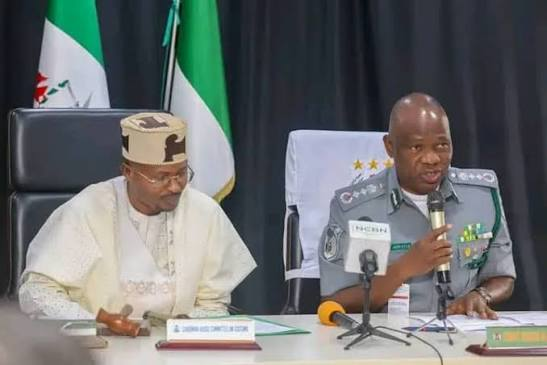
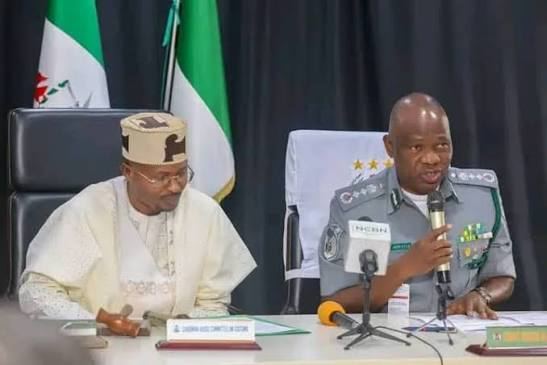
The approval followed the consideration of the report of the Senate Committee on Customs, Excise and Tariffs, chaired by Senator Isah Jibrin. The committee said the proposed figures reflect the growing role of Customs in Nigeria’s non-oil revenue drive at a time when the Federal Government is under pressure to reduce borrowing and expand domestic earnings.
Under the Customs revenue plan, the service is expected to raise ₦11.074tn in 2026, a target that will demand stronger enforcement, improved technology, better trade monitoring and tighter revenue recovery mechanisms across ports, borders and bonded terminals.
The expenditure side of the budget stands at ₦1.295tn. This covers personnel, overhead and capital spending required to run the service, strengthen operations, improve infrastructure and support reforms in customs administration.
Senator Jibrin said the target was challenging but achievable, especially if the service deepens automation, blocks leakages and improves real-time audits. He also noted that Customs revenue could have been higher but for policy and global trade factors, including the suspension of excise duty on telecommunications services, fiscal incentives for local production of healthcare products and disruptions linked to global trade instability.
The Customs revenue plan comes after a period of improved collection by the service. Officials said Customs had already generated about ₦4.043tn between January and June 2026, giving lawmakers confidence that the agency could meet a higher full-year target if reforms are sustained.
But the approval also raises important questions. Can Customs raise ₦11tn without turning ports into revenue traps? Can importers survive more aggressive enforcement without fresh delays and higher costs? Can government balance revenue collection with trade facilitation?
These questions matter because Customs sits at the centre of Nigeria’s import-dependent economy. Almost every major business sector feels the impact of customs duties, port charges, clearance delays, exchange rate pressures and documentation bottlenecks.
For manufacturers, traders and consumers, the Customs revenue plan is not just a budget figure. It can affect the cost of raw materials, imported machinery, food items, spare parts, vehicles, medicines and household goods.
If Customs pursues revenue without efficiency, businesses may face higher costs. Those costs are often passed to consumers. In a country already battling inflation and weak purchasing power, aggressive revenue collection must be handled carefully.
The service says it will rely on technology, post-clearance audits, improved risk management, anti-smuggling operations and trade facilitation to meet the target. That is the right language. But Nigerians will judge the plan by results, not promises.
Technology must reduce human interference. Automation must shorten clearance time. Real-time audits must catch fraud without punishing honest traders. Anti-smuggling operations must target criminal networks, not become another source of harassment for legitimate businesses.
The Senate’s approval also places responsibility on the Customs leadership. Comptroller-General Adewale Adeniyi has pushed reforms around digitalisation, revenue recovery and border control. The 2026 budget now gives the service a bigger financial and performance burden.
https://ogelenews.ng/customs-revenue-plan-senate-clears-₦1-3tn-spending-…
One major issue is capital utilisation. The committee noted that although Customs had an approved budget of about ₦1.132tn in 2025, actual spending stood at about ₦591bn. The low utilisation was linked to delays in approvals by the Bureau of Public Procurement and the Federal Executive Council, causing some projects to roll over into 2026.
That explanation may be valid, but it also shows why budget approval alone is not enough. If procurement delays continue, Customs may struggle to execute critical projects even with a large expenditure plan.
The Customs revenue plan must therefore be matched with disciplined implementation. Nigerians need to know what projects will be funded, what technology will be deployed, what border facilities will be upgraded and how the spending will improve service delivery.
There is also the question of accountability. A ₦1.295tn spending plan deserves close legislative oversight. The Senate must not stop at approval. It must monitor performance, demand quarterly updates and ensure that public funds are tied to measurable outcomes.
Customs is too important to be treated as a mere cash machine. Yes, the service must collect revenue. But it must also facilitate trade, protect borders, fight smuggling and support economic growth.
If the agency becomes too focused on revenue alone, it may damage legitimate commerce. If it becomes too relaxed, government loses money and smugglers gain ground. The balance is delicate.
The 2026 Customs revenue plan will therefore test the maturity of Nigeria’s fiscal policy. Government needs money, but the economy also needs breathing space. Businesses need predictable rules. Importers need faster clearance. Consumers need lower pressure on prices.
The Senate has now given Customs the green light. The harder task begins with execution.
For the Federal Government, ₦11.074tn is a tempting target. For Customs, it is a performance contract. For Nigerians, it is another reminder that public revenue must translate into better services, not just bigger figures in Abuja.
If Customs delivers the target through efficiency, technology and fair enforcement, the 2026 budget could strengthen Nigeria’s non-oil revenue base. If it delivers through bottlenecks, arbitrary charges and pressure on businesses, the cost will eventually reach ordinary Nigerians.
That is why the Customs revenue plan must be watched closely from the first quarter of 2026 to the last. The Senate has approved the figures. Now Customs must prove that it can raise revenue without choking trade.