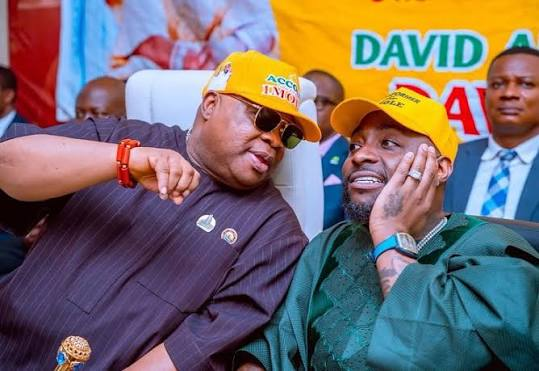

















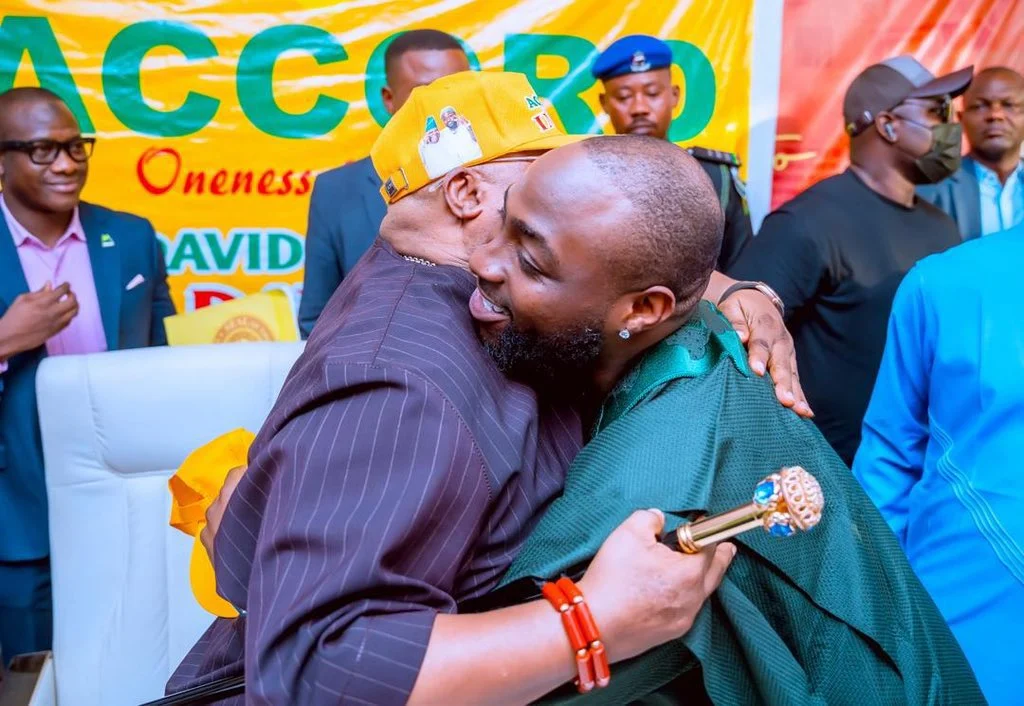
Adeleke references Davido’s Oriadé tracks
Osun State Governor Ademola Adeleke has brought music, family identity and political messaging together in his re-election campaign, drawing inspiration from song titles on Davido’s new album, Oriadé.
Speaking during a campaign appearance ahead of the August 15, 2026 Osun governorship election, Adeleke declared, “I know who I be,” adopting the title of one of the most prominent songs on the album released by his nephew, David Adeleke, popularly known as Davido.
The governor reportedly moved through several titles on the 13-track album, using them as expressions of confidence, gratitude and determination as he sought another term in office.
The moment in which Adeleke references Davido’s Oriadé tracks immediately attracted attention because it connected two members of the well-known Adeleke family operating in different public spheres: one in politics and the other in global entertainment.
Davido released Oriadé on July 31, 2026 as his sixth studio album. The project contains 13 tracks and includes collaborations with Black Sherif, Mayorkun, Fola, Leon Thomas, Aya Nakamura, Llona, JAZZWRLD, GL_Ceejay and NO11.
Adeleke Turns Album Titles into Campaign Language
Rather than simply mentioning Davido’s new project, Adeleke reportedly incorporated several of its song titles into his political message.
The governor referenced titles including “I Know Who I Be,” “Amazing Grace,” “Julie,” “Tell Everybody,” “B4 B4,” “Already Falling,” “Zanzibar,” “Gimme Dat Ting,” “Guide” and “My Light.”
His opening phrase, “I know who I be,” appeared designed to communicate political confidence and an assurance that he understood both his identity and his position in the approaching contest.Adeleke references Davido’s Oriadé tracks
The way Adeleke references Davido’s Oriadé tracks also gave the campaign address a conversational and culturally familiar quality. Instead of delivering a conventional political speech filled with formal promises, he used popular music to connect with younger voters and supporters familiar with Davido’s work.
However, the effectiveness of the performance will ultimately depend on whether voters interpret it as clever communication or as a distraction from serious questions about governance.
Campaign excitement may draw attention, but voters will still expect clear answers on public services, infrastructure, employment, education, healthcare, security and the management of state resources.
‘I Know Who I Be’ Carries a Message of Confidence
“I Know Who I Be” was released before the complete album and features South African artists and producers JAZZWRLD and GL_Ceejay.
Davido has explained that the song centres on identity, self-belief and accepting one’s individual journey rather than attempting to live another person’s life.
Adeleke’s use of the title therefore appeared deliberate.
As the incumbent governor seeking another term, the phrase enabled him to project certainty in the face of opposition criticism and an increasingly competitive political atmosphere.
The political meaning became even more apparent as Adeleke references Davido’s Oriadé tracks to present himself as a candidate who believes he has established a recognisable record in office.Adeleke references Davido’s Oriadé tracks
Yet confidence alone cannot decide an election. The governor must persuade voters that his administration’s performance justifies another mandate.
His opponents will also attempt to reinterpret the same phrase, asking whether Adeleke’s confidence reflects genuine public support or only the enthusiasm of his campaign organisation.
Music and Politics Meet on the Osun Campaign Trail
Music has always occupied an important place in Nigerian political campaigns.
Political parties regularly employ musicians, disc jockeys, dancers and traditional performers to attract crowds and maintain energy at rallies. Popular songs are also converted into campaign chants, while familiar lyrics are adapted to promote candidates.
What makes Adeleke’s approach notable is his direct family relationship with Davido and the timing of the album’s release.
Davido, whose full name is David Adedeji Adeleke, is a member of the same prominent Osun family as the governor. His international fame gives any public reference to his music considerable media value.Adeleke references Davido’s Oriadé tracks
The decision by Adeleke to reference Davido’s Oriadé tracks can therefore be understood as both cultural expression and political strategy.
It allows the governor to associate his campaign with a successful entertainment brand familiar to millions of young Nigerians. It also creates a memorable media moment at a time when candidates are competing intensely for public attention.
But political campaigns must be careful when using celebrity connections. Fame can bring visibility, yet it cannot replace policy, accountability or direct engagement with citizens.
https://ogelenews.ng/osun-2026-adeleke-borrows-davidos-oriade-song-title…
What ‘Oriadé’ Represents
Davido has described Oriadé as a return to his roots and a reflection on his journey through the music industry.
According to the singer, the title is connected to destiny and the crown. He said the album pays tribute to his journey while also looking towards the future.
The album opens with “On the Road” and proceeds through “Amazing Grace,” “Julie,” “Constantly,” “I Know Who I Be,” “Gimme Dat Ting,” “B4 B4,” “Already Falling,” “Tell Everybody,” “Yaya,” “Zanzibar,” “Guide” and “My Light.”
It marks Davido’s 15th year in the music industry and follows his 2025 album, 5ive.
By using these titles, Adeleke gave them a new political setting.
“Tell Everybody” could serve as a call to spread his campaign message. “Amazing Grace” could represent gratitude, while “Guide” and “My Light” carry expressions associated with direction and hope.Adeleke references Davido’s Oriadé tracks
The moment in which Adeleke references Davido’s Oriadé tracks was therefore more than a casual endorsement of his nephew’s album. It was an attempt to transform an entertainment project into campaign language.
Osun Election Requires More Than Performance
The Independent National Electoral Commission has fixed the Osun State governorship election for August 15, 2026 and published a timetable for the exercise.
The contest will test Adeleke’s popularity after almost four years in office.
His campaign is expected to emphasise projects completed by his administration, reforms introduced across the public service and investments in roads, education, healthcare and community development.
Opposition candidates, on the other hand, are likely to scrutinise the government’s spending, project delivery, security record and management of local government affairs.Adeleke references Davido’s Oriadé tracks
Against this background, the manner in which Adeleke references Davido’s Oriadé tracks may help the governor communicate confidence, but it should not become the centre of the re-election debate.
Osun residents deserve detailed discussions about the state’s finances, debt obligations, internally generated revenue and budget priorities.
They also deserve clarity about youth employment, agricultural development, mining regulation, teachers’ welfare, healthcare facilities and the maintenance of public infrastructure.
Those issues will remain after the campaign music stops.
Celebrity Influence and Young Voters
Davido has a large following among young Nigerians, many of whom may be participating in an Osun governorship election for the first time.
Referencing his music could help Adeleke’s campaign attract their attention. But attention and electoral support are not always the same thing.
Young voters are dealing with unemployment, rising living costs, limited access to capital and concerns about the quality of education.
A campaign that speaks their cultural language must also address their economic reality.
As Adeleke references Davido’s Oriadé tracks, his campaign should connect the music-inspired message to measurable plans for young people.
The governor should explain how many jobs his administration has created, how many young residents have benefited from skills programmes and what opportunities will be available during a second term.Adeleke references Davido’s Oriadé tracks
Without that substance, a popular music reference may generate social media reactions but make little difference to undecided voters.
Adeleke Calls for Peaceful Campaign
The governor’s campaign message also included an appeal for peace as political activity intensifies across the state.
That appeal is important because competitive elections can produce inflammatory language, intimidation and violence when parties fail to restrain their supporters.
Candidates must therefore direct their campaign organisations to avoid physical confrontations, destruction of opponents’ materials and attacks on political gatherings.Adeleke references Davido’s Oriadé tracks
Security agencies must also maintain neutrality and apply the law equally to members of every political party.
When Adeleke references Davido’s Oriadé tracks, the most valuable message he can draw from music is not merely confidence but harmony.
The Osun election should be a contest of records, ideas and programmes rather than an opportunity for violence.
Ogele News Perspective
Governor Ademola Adeleke has always presented himself as a politician comfortable with music, dance and popular culture.
His use of Davido’s album titles was therefore consistent with a public image he has cultivated over the years.
The approach was creative, memorable and likely to appeal to supporters already enthusiastic about both the governor and the singer.
But a veteran political observer must look beyond the performance.
When Adeleke references Davido’s Oriadé tracks, the governor is doing what experienced campaigners often do: using a popular cultural moment to reinforce a political message.
There is nothing inherently wrong with that strategy.
The real test is whether the government can match the confidence of “I Know Who I Be” with a record that Osun voters recognise in their daily lives.
Can residents point to better roads, improved schools, accessible hospitals and stronger economic opportunities?
Can the administration demonstrate transparency in public spending?
Can workers, pensioners, farmers, traders and young people say that government decisions have improved their circumstances?
Those questions cannot be answered by song titles.
A campaign may borrow the language of music, but democratic accountability requires evidence.
Adeleke has created an effective campaign moment by identifying with Oriadé. His opponents will now attempt to shift attention from entertainment to performance.
Osun voters must listen to both sides, examine the evidence and make their decision peacefully on election day.
The governor may know who he is. The election will determine whether the majority of voters believe he should remain who he is: the governor of Osun State.
https://punchng.com/i-know-who-i-be-adeleke-references-davidos-oriade-tracks-in-campaign/