















Dangote petrol price hike
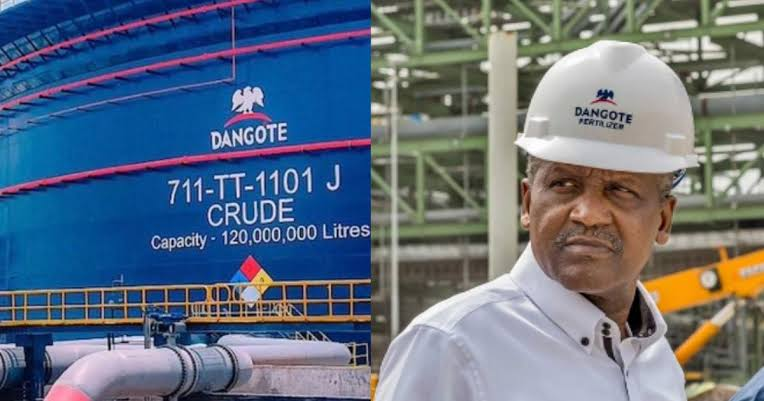
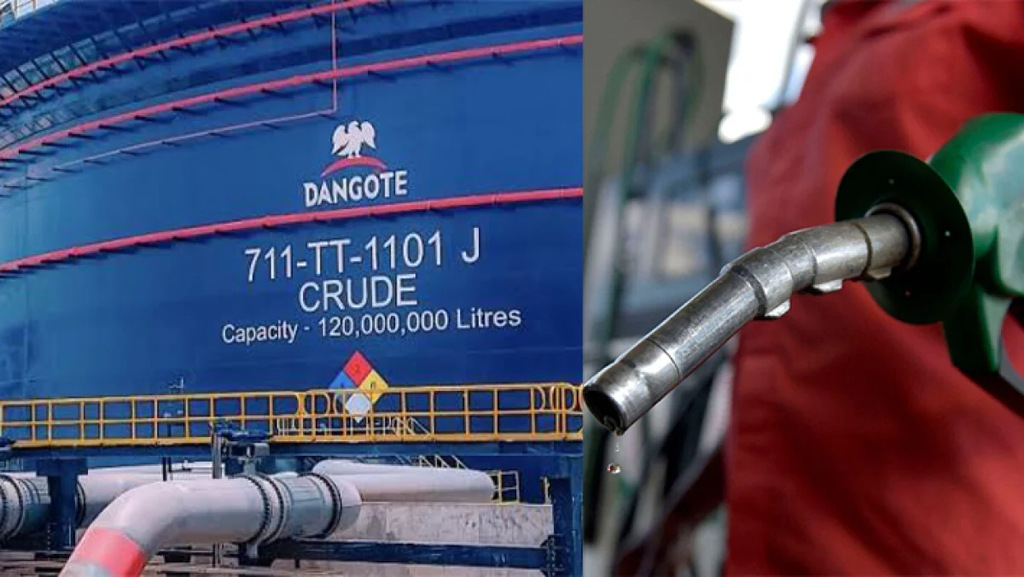
Nigerian motorists are facing another difficult round of fuel costs as petrol prices move towards ₦1,400 per litre in parts of the country following another increase in the loading price of Premium Motor Spirit by the Dangote Petroleum Refinery.
The latest Dangote petrol price hike has taken the refinery’s gantry price from ₦1,200 to ₦1,265 per litre, an increase of ₦65, effective Saturday, August 29, 2026.
It is the third price increase by the refinery within eight days, bringing the cumulative increase over the period to ₦100 per litre.
For households and businesses already struggling with high transportation, electricity and food costs, the immediate concern is no longer what petrol costs at the refinery gate.
It is what motorists will eventually pay at filling stations.
In some parts of the country, pump prices are already approaching ₦1,400 per litre, with transportation and other distribution expenses widening the difference between refinery and retail prices.
Dangote Refinery, however, has defended the increases, arguing that petroleum pricing cannot be separated from the cost of acquiring crude oil and the time between buying crude, refining it and selling the finished product.
Dangote Petrol Price Hike Comes Three Times in Eight Days
The speed of the recent adjustments has attracted considerable attention.
The refinery’s gantry price rose from ₦1,165 to ₦1,185 per litre on August 21.
It was subsequently increased to ₦1,200 before the latest adjustment took the price to ₦1,265 per litre.
That means three increases within eight days.
The latest Dangote petrol price hike therefore matters not simply because petrol has become more expensive, but because of how quickly the benchmark has changed.
For marketers, rapid changes create uncertainty over replacement costs.
For motorists, the consequences usually appear at filling stations.
And for businesses that depend on petrol-powered transportation or generators, every additional naira per litre eventually enters the cost of doing business.
Why Dangote Says Petrol Prices Are Rising
Dangote Refinery has pushed back against suggestions that changes in today’s crude market should immediately produce lower petrol prices.
The refinery’s argument is that crude oil is purchased before it is processed and sold as petrol.
There is therefore a time lag.
If a refinery buys crude at a higher price, processes it and sells the resulting petrol weeks later, the cost of that earlier crude remains relevant even if international crude prices have subsequently fallen.
This is central to Dangote’s defence of the Dangote petrol price hike.
In simple terms, today’s pump price does not necessarily reflect today’s crude price.
It can reflect the cost of crude purchased earlier, alongside exchange rates, financing, refining, logistics and distribution expenses.
That explanation may make commercial sense.
But for the Nigerian consumer, the question is much simpler: why does petrol remain so expensive in a country that produces crude oil and now operates one of the world’s largest single-train refineries?
Why Local Refining Has Not Guaranteed Cheap Petrol
This is perhaps the biggest misconception surrounding the Dangote Refinery.
Many Nigerians understandably expected domestic refining to mean cheap petrol.
Local refining certainly removes some problems associated with importing finished petroleum products. Nigeria can refine crude domestically, reduce dependence on imported petrol and potentially save some logistics and foreign exchange costs.
But local refining does not automatically mean cheap crude.
Crude oil is an internationally traded commodity.
A Nigerian refinery buying Nigerian crude does not necessarily obtain it at a heavily discounted domestic price.
Dangote Refinery has also had to import some of its crude requirements.
The consequence is that the Dangote petrol price hike remains influenced by international energy markets even though the petrol itself is refined in Lagos.
That reality has become one of the difficult lessons of Nigeria’s post-subsidy petroleum market.
From Refinery Gate to Filling Station
There is another reason ₦1,265 petrol at the refinery can become close to ₦1,400 at a filling station.
Petrol does not transport itself.
Once marketers obtain the product, it must move from the refinery or depot to filling stations across Nigeria.
Tankers require fuel.
Drivers must be paid.
There are financing costs, insurance, depot charges, operational expenses and retail margins.
Distance also matters.
Moving petrol to a filling station relatively close to the coastal supply infrastructure is different from transporting the same product hundreds of kilometres inland.
This helps explain why the impact of the Dangote petrol price hike can vary from one state to another.
A motorist in Lagos may not necessarily pay exactly what a motorist in Kano, Sokoto, Maiduguri or another distant market pays.
The further the product travels, the greater the potential logistics burden.
Dangote Plans Wider Distribution
Dangote Refinery has been working on expanding its distribution arrangements as part of efforts to reduce some of these costs.
The logic is straightforward.
If unnecessary layers between the refinery and retail outlets can be removed, some transportation and intermediary costs may be reduced.
But even an efficient distribution system cannot eliminate the underlying cost of crude oil.
This is why the debate around the Dangote petrol price hike should not focus exclusively on filling stations or marketers.
Nigeria’s petrol price is increasingly the final result of an entire chain: crude acquisition, exchange rate, refining, financing, storage, transportation and retail distribution.
Each stage has a cost.
The consumer eventually pays the total.
Businesses Face Another Cost Increase
For Nigerian businesses, petrol is not simply something motorists put inside their cars.
It is an operating cost.
Small businesses use petrol generators when electricity fails.
Delivery businesses use motorcycles and vehicles.
Traders pay transporters to move goods.
Farmers transport produce from rural communities to urban markets.
Schools operate buses.
Artisans travel with equipment.
Families commute to work and school.
That means the Dangote petrol price hike can travel through the economy far beyond filling stations.
When transporters pay more for petrol, fares can rise.
When businesses spend more on generators and logistics, some transfer those costs to consumers.
When food becomes more expensive to transport, market prices can respond.
Petrol therefore has an inflationary reach far greater than the number displayed on a filling-station pump.
https://ogelenews.ng/dangote-petrol-price-hike
Nigerians Have Seen ₦1,400 Before
The prospect of petrol reaching ₦1,400 per litre is not entirely new.
In July, motorists in parts of Nigeria were already paying as much as ₦1,400 following increases associated with global crude-market pressures.
The return towards those levels shows how exposed Nigeria’s deregulated downstream market has become to changes in crude prices and supply costs.
For years, government subsidy insulated consumers from much of that movement.
That system also imposed enormous fiscal costs and created serious problems of transparency and sustainability.
With subsidy largely removed, price movements now reach consumers more directly.
The political and economic question is whether Nigerian incomes can adjust quickly enough to survive that reality.
The Bigger Question Is Competition
There is also a structural issue Nigeria must confront.
One refinery, no matter how large, should not be expected to carry the entire burden of creating a competitive downstream petroleum market.
Dangote Refinery has transformed Nigeria’s refining landscape and significantly reduced the country’s previous dependence on imported finished products.
But genuine competition requires multiple efficient suppliers.
Nigeria needs its other refineries to operate reliably.
It needs transparent access to crude.
It needs efficient depots and pipelines.
It needs lower transportation costs.
And it needs regulators capable of ensuring that consumers benefit from genuine competition rather than simply moving from dependence on imported petrol to excessive dependence on a single domestic producer.
That is why every Dangote petrol price hike inevitably reopens the debate over the structure of Nigeria’s petroleum market.
Nigerians Need Transparency Along the Pricing Chain
Deregulation does not mean Nigerians should simply accept any price without explanation.
A market works best when participants understand how prices are formed.
Consumers should know the refinery price.
They should understand depot prices.
They should know the broad impact of logistics and distribution.
Government regulators should publish reliable market information that makes unusual price movements easier to identify.
That transparency becomes even more important when the Dangote petrol price hike immediately influences prices across large sections of the downstream market.
If crude acquisition costs are driving increases, Nigerians should be able to see the relationship.
If distribution is responsible for large regional differences, that too should be clear.
Transparency will not necessarily make petrol cheaper.
But it can make the market more accountable.
Refining at Home Is Only Half the Journey
The Dangote Refinery has already changed Nigeria’s petroleum story.
Nigeria, which spent decades exporting crude and importing large quantities of refined petroleum products, now possesses substantial domestic refining capacity.
That is a major industrial achievement.
But the latest Dangote petrol price hike demonstrates that refining at home is only half the journey.
The larger objective must be an energy market that is reliable, competitive and affordable enough for an economy in which millions of citizens still depend on petrol for transportation and backup electricity.
For the ordinary Nigerian, arguments about gantry prices, crude replacement costs and international benchmarks eventually come down to one number.
The figure on the filling-station pump.
And as that figure moves once again towards ₦1,400 per litre, motorists are being reminded that Nigeria may now refine much more of its own petrol, but the country has not yet escaped the forces that make that petrol expensive.
https://www.tvcnews.tv/tinubu-celebrates-hausa-community-on-hausa-day/?utm_source=chatgpt.com