












Nigeria road network
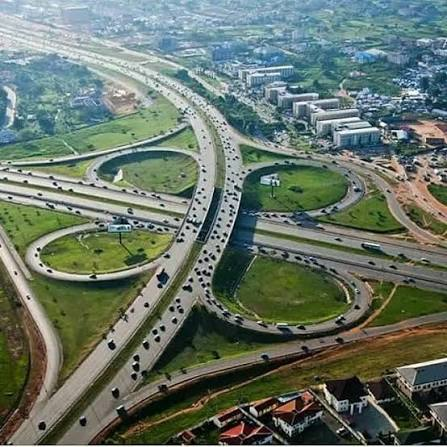
Nigeria has emerged as the African country with the second-largest road network, with an estimated 195,000 kilometres of roadways stretching across the federation, according to 2026 infrastructure data.
The latest ranking places the Nigeria road network behind only South Africa, which leads the continent with approximately 750,000 kilometres of roads.
On the global table, Nigeria’s estimated 195,000 kilometres places the country among nations with extensive road systems, reflecting the enormous scale of transport infrastructure required to connect its 36 states and the Federal Capital Territory.
But the ranking comes with an important qualification.
Having one of Africa’s longest road networks does not necessarily mean having one of its best.
The figures measure the total extent of roadways. They do not, by themselves, tell motorists whether those roads are paved, properly maintained, safe or capable of carrying people and goods efficiently.
For Nigeria, that distinction is where the real infrastructure story begins.
Nigeria Road Network Trails Only South Africa in Africa
South Africa remains comfortably ahead of every other African country in total roadway coverage, with approximately 750,000 kilometres.
Nigeria follows with 195,000 kilometres.
The size of the Nigeria road network is understandable considering the country’s population, land area and economic structure.
Nigeria has 36 states, the Federal Capital Territory and 774 local government areas. Millions of people depend on roads every day to travel between cities and rural communities.
Roads carry agricultural produce from farms to markets.
They move manufactured goods between industrial centres.
They connect businesses with ports and border communities.
They take children to schools, workers to offices and patients to hospitals.
For large sections of the country without extensive railway connectivity, the road remains the most important means of movement.
That makes the Nigeria road network not merely an infrastructure statistic but one of the country’s most important economic assets.
FULL LIST: African Countries With Longest Road Networks
Based on current 2026 roadway-coverage figures, the leading African countries include:
1. South Africa – 750,000km
South Africa possesses by far the largest road system on the continent. Its network links major cities, industrial areas, ports, farming communities and neighbouring countries.
2. Nigeria – 195,000km
The Nigeria road network stretches approximately 195,000 kilometres, making it the second-largest in Africa.
3. Ethiopia – 180,000km
Ethiopia follows Nigeria with approximately 180,000 kilometres of roadway coverage, reflecting decades of expansion aimed at connecting urban and rural communities.
4. Kenya – 161,452km
Kenya’s road system covers about 161,452 kilometres and remains critical to East African commerce and movement through the regional transport corridor.
5. Democratic Republic of Congo – 152,373km
Despite difficult terrain and the enormous geographical size of the country, the Democratic Republic of Congo has approximately 152,373 kilometres of roadways.
6. Tanzania – 145,203km
Tanzania’s extensive road system supports domestic commerce while connecting the country with neighbouring landlocked states that depend on access to East African ports.
7. Mali – 139,107km
Mali has approximately 139,107 kilometres of roads, giving the West African country one of the continent’s largest networks.
8. Algeria – 112,696km
Algeria’s road infrastructure provides important connections across the vast North African country.
9. Zimbabwe – 97,267km
Zimbabwe has approximately 97,267 kilometres of roadway coverage connecting major cities, agricultural areas and regional trade routes.
10. South Sudan – 90,200km
South Sudan completes the leading group with about 90,200 kilometres, although significant sections of its transport infrastructure remain challenging.
195,000km Sounds Impressive, But What Is the Condition?
This is the question Nigerians are more likely to ask.
What does second place mean to the driver who spends hours navigating damaged portions of a highway?
What does it mean to the farmer whose produce cannot reach the market quickly because the rural access road becomes difficult during the rainy season?
What does it mean to the transport company spending heavily on tyres, suspension systems, fuel and vehicle maintenance?
The Nigeria road network can be enormous on paper while sections remain inadequate in practice.
That is why road length and road quality must never be treated as the same measurement.
Nigeria’s infrastructure challenge is no longer simply about constructing more kilometres of roads.
It is also about maintaining what has already been built.
A kilometre of road that becomes badly damaged after a few rainy seasons still counts as a kilometre in total road-network statistics.
Economically, however, its value may have deteriorated considerably.
Federal, State and Local Roads Form One Huge System
Another issue often missed in discussions about the Nigeria road network is responsibility.
Not every bad road in Nigeria belongs to the Federal Government.
The country’s road system consists of federal highways, state roads and local or rural roads under different levels of responsibility.
This matters because Nigerians often describe every major road problem as a federal road problem, even where responsibility lies elsewhere.
At the same time, arguments over ownership offer little comfort to citizens who simply need to get from one community to another.
The motorist does not care much about the colour of the government responsible for a pothole.
He wants the road repaired.
That is why better coordination between federal, state and local authorities remains essential.
https://ogelenews.ng/full-list-nigeria-road-network-ranks-second-largest…
Roads Determine the Price of Almost Everything
For an ordinary Nigerian, roads may appear to be an engineering issue.
In reality, they are an economic issue.
Consider a basket of tomatoes travelling hundreds of kilometres from northern Nigeria to markets in the South.
Poor roads increase journey time.
Longer journeys consume more fuel.
Damaged roads increase vehicle maintenance costs.
Delays can cause perishable produce to spoil.
Transporters eventually transfer those additional costs to traders.
Traders transfer them to consumers.
The result appears in the market as a higher price.
This is why improving the Nigeria road network should be viewed as part of any serious strategy to reduce logistics costs and strengthen food security.
The same principle applies to manufactured goods, building materials and virtually every product transported by road.
Nigeria’s Road Advantage Could Strengthen African Trade
Nigeria’s position could also become strategically important as African countries deepen economic integration.
A functioning road network can connect producers with ports, border posts and markets beyond Nigeria.
For the African Continental Free Trade Area to achieve its potential, goods must move efficiently between participating economies.
Nigeria’s location gives it access to important West African trade corridors.
But kilometre figures alone will not create competitive advantage.
Roads must be usable.
Border procedures must be efficient.
Transporters must be able to move goods without excessive delays.
Security along major routes must also be guaranteed.
A strong Nigeria road network should therefore be judged by what it enables businesses to do, not merely by its position on a continental ranking.
Maintenance Is the Bigger Test
Nigeria has repeatedly demonstrated an ability to announce major infrastructure projects.
The harder task has often been maintenance.
Roads are expensive assets.
Once constructed, they require drainage maintenance, resurfacing, bridge inspections, repairs and protection against damage.
Failure to maintain them turns yesterday’s infrastructure investment into tomorrow’s reconstruction project.
That cycle is costly.
Instead of continuously rebuilding failed roads, authorities need systems that identify deterioration early and intervene before minor damage becomes structural failure.
For a Nigeria road network covering roughly 195,000 kilometres, maintenance cannot be an occasional political exercise.
It must be permanent.
Ranking Should Not Become a Victory Lap
There is certainly something significant about Nigeria possessing Africa’s second-largest road system.
It reflects the scale of the country and the enormous infrastructure already spread across its territory.
But this is not a statistic government officials should use simply for celebration.
The real question is performance.
How many kilometres are in good condition?
How many major economic corridors allow efficient movement?
How much time do businesses lose because of poor roads?
How many rural communities remain disconnected during parts of the year?
How safe are the highways?
How much does poor road condition add to the cost of food and other goods?
Those questions matter more to citizens than second place on a continental table.
From Road Length to Road Value
Nigeria does not suffer from an absence of roads alone.
The deeper challenge is extracting maximum economic and social value from the roads already available.
The latest ranking shows that the Nigeria road network is one of the largest on the continent.
South Africa remains far ahead at 750,000 kilometres, while Nigeria’s estimated 195,000 kilometres gives it second place.
That is significant.
But there is a difference between possessing roads and possessing roads that work.
A successful road system is one where farmers reach markets, businesses move goods efficiently, ambulances reach hospitals, children reach schools and motorists complete journeys without roads destroying their vehicles.
Nigeria can rightly point to the scale of its road infrastructure.
The next ambition should be more demanding.
Africa’s second-largest Nigeria road network should eventually become one of Africa’s most reliable.
Until length is matched by quality, maintenance and safety, 195,000 kilometres will remain an impressive statistic carrying an unfinished story.
https://www.globalfirepower.com/roadway-coverage.php?utm_source=chatgpt.com