















Bus preaching bill controversy
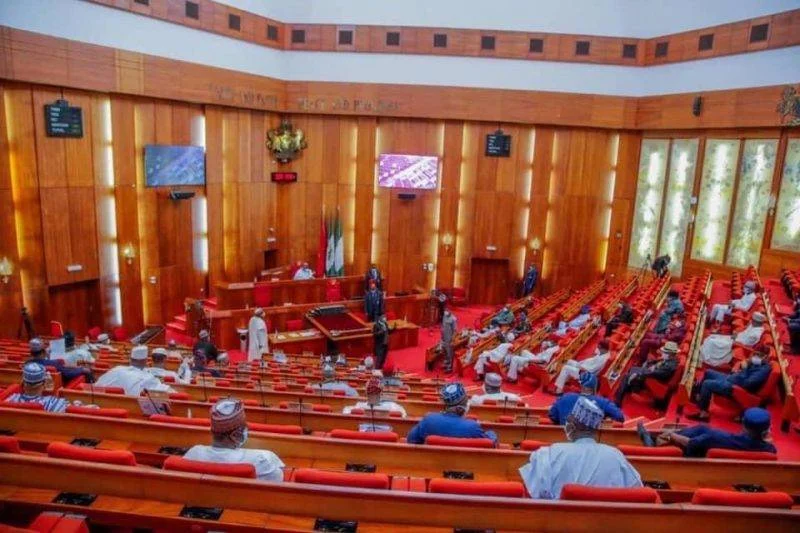
The Nigerian Senate has defended a controversial provision proposing a ₦50,000 fine for preaching, hawking or trading inside commercial vehicles, insisting that the restriction is not a newly created attempt to suppress religious activities.
The explanation followed days of criticism from Christian organisations, opposition figures, civil-society advocates and members of the public after the Senate passed the Federal Road Safety Corps Amendment Bill, 2026.
The bus preaching bill controversy has developed into a wider national argument over road safety, religious freedom and the rights of passengers travelling in shared commercial vehicles.
Senate Leader Opeyemi Bamidele said the provision had been misrepresented as a fresh ban on public preaching. According to him, preaching and hawking in commercial vehicles were already listed as offences under the Federal Road Safety Commission Establishment Act of 2007 and the National Road Traffic Regulations of 2012.
He maintained that the amendment neither prohibits street evangelism nor prevents Nigerians from practising or propagating their faith in lawful public spaces.
The Senate’s defence has not ended the dispute.
Christian organisations argue that the National Assembly should remove preaching from the list of prohibited activities, while supporters of the restriction say no passenger should be compelled to listen to a sermon after paying for transportation.
Senate says provision dates back to 2007
In its response to the public outcry, the Senate said the controversial provision was contained in Section 10(4) and the Second Schedule of the Federal Road Safety Commission Act.
Bamidele said it previously appeared as Item 36 and had now been reproduced as Item 49 in the amended schedule.
The Senate’s position is that the bus preaching bill controversy arose partly from reports suggesting that lawmakers had suddenly decided to criminalise religious expression.
According to the upper chamber, the offence had formed part of Nigeria’s road-traffic framework for nearly two decades.
The Senate also clarified that the amendment originated from the House of Representatives and came before senators as a concurrence bill. This means the House had already considered the legislation before it was transmitted to the Senate for agreement.
Lawmakers said the amendment process was still ongoing and that concerned stakeholders could formally submit their objections before the legislative process was completed.
This clarification is important, but it raises another question.
If the provision has existed since 2007, Nigerians may reasonably ask how often it has been enforced, how many people have been prosecuted and whether its wording has previously survived constitutional challenge.
An old provision is not necessarily a good provision. Its age does not automatically establish its fairness, effectiveness or constitutionality.
Bill proposes ₦50,000 fine
Under the amendment passed by the Senate, anyone convicted of preaching, hawking or trading inside a commercial vehicle would be liable to a ₦50,000 fine.
The legislation forms part of a wider revision of penalties for 52 road-traffic offences.
It proposes tougher sanctions for drunk driving, reckless driving, speeding, disobeying traffic signs and refusing to cooperate with Federal Road Safety Corps officials conducting breath tests on reasonable suspicion.
The penalty for driving under the influence of alcohol or intoxicating drugs would rise from ₦5,000 to ₦100,000. Convicted offenders could also face imprisonment of up to two years or both the fine and imprisonment.
Speed-limit violations, reckless driving and disobedience of traffic-control devices would similarly attract fines of up to ₦100,000 under the proposed framework.
The Senate says these changes are meant to improve compliance and reduce crashes on Nigerian roads.
However, the inclusion of preaching has overshadowed almost every other provision in the bill.
That is partly because religious expression carries constitutional and emotional significance in Nigeria, where Christianity and Islam play major roles in public life.
The bus preaching bill controversy therefore requires more careful consideration than a routine adjustment of traffic fines.
https://ogelenews.ng/bus-preaching-bill-controversy
Senate presents restriction as safety measure
The Senate argues that preaching, hawking and trading inside moving vehicles can distract drivers and create unsafe conditions for commuters.
Commercial buses are often crowded. Passengers enter and leave at frequent stops, conductors collect fares and drivers navigate congested roads.
A preacher standing in an aisle, moving through the vehicle or demanding responses from passengers could potentially interfere with movement inside the bus.
Hawkers may also obstruct exits, handle products while the vehicle is moving or distract the driver and conductor.
These are legitimate safety concerns.
Yet the bill does not appear, from the public explanations available, to distinguish between disruptive conduct and a brief, quiet religious message delivered with the consent of passengers and the driver.
That lack of distinction is one reason the bus preaching bill controversy has grown.
A law affecting constitutional freedoms must be clear enough for citizens to know what conduct is prohibited.
Would a passenger be fined for saying a short prayer?
Would a driver who begins a journey with a religious blessing be committing an offence?
Would a passenger reading scripture aloud to a willing companion be treated as a preacher?
Would the offence apply only when someone stands, moves through the vehicle, obstructs the aisle or speaks without the consent of the operator and passengers?
These practical questions should be answered before the legislation reaches the President.
Christian groups reject provision
The Christian Council of Nigeria and the Organisation of African Instituted Churches are among the religious bodies that have opposed the proposed restriction.
They support efforts to improve road safety but argue that categorising preaching alongside hawking and trading raises constitutional concerns.
Their position is that evangelism is not a commercial activity and should not automatically be treated in the same manner as the sale of goods.
They cite constitutional protections covering freedom of thought, conscience, religion and expression.
The groups have urged President Bola Tinubu to withhold assent unless the provision is reviewed.
The Northern States Christian Elders Forum has made a similar appeal, warning that criminalising peaceful religious preaching could create avoidable tension in a religiously diverse country.
These objections form one side of the bus preaching bill controversy.
The religious organisations argue that Christians have historically used public transportation to share messages of hope, prayer and moral encouragement.
However, constitutional freedoms are not always absolute. Their exercise may be regulated where necessary to protect public safety, order or the rights of other people.
The decisive question is whether the restriction is reasonably designed and proportionate to the danger it seeks to prevent.
Passengers also have rights
Supporters of the provision argue that the debate has focused almost entirely on the preacher while overlooking the rights of passengers.
A commercial vehicle is not a church, mosque or religious gathering.
Passengers may be Christians, Muslims, adherents of traditional religions, members of other faiths or people who practise no religion.
Some may wish to rest, study, conduct private conversations or travel without being required to participate in prayers.
The Muslim Rights Concern has supported the proposed restriction, arguing that one passenger’s religious freedom should not remove the rights of every other person inside the vehicle.
The organisation maintained that religious messages should not be imposed on a mixed group of commuters who have not consented to participate.
Although some of the language used in the religious exchange has been unnecessarily confrontational, the underlying concern deserves attention.
Freedom of religion includes the right to hold and communicate beliefs. It also includes protection from coercion and unwanted religious pressure.
The bus preaching bill controversy should therefore not be framed as a simple contest between faith and hostility to faith.
It is a question of how competing rights can coexist in a confined public space.
Consent may provide a middle ground
A more balanced approach could distinguish between consensual and disruptive preaching.
Commercial vehicle owners and drivers should be allowed to establish reasonable passenger rules, provided those rules do not discriminate unlawfully.
A preacher could request permission from the driver and passengers before beginning.
Where there is a clear objection, the sermon should not proceed.
Preaching should also not obstruct the aisle, distract the driver, demand money, involve threats or prevent passengers from entering or leaving the vehicle.
Such a framework would focus on conduct rather than religion.
The law could prohibit any activity, religious or commercial, that materially distracts the driver, obstructs movement, creates a disturbance or continues after passengers object.
This would be clearer than singling out “preaching” without explaining the level of conduct required to constitute an offence.
The bus preaching bill controversy offers lawmakers an opportunity to produce a more carefully drafted provision.
Legislation should address the specific harm—dangerous distraction or obstruction—rather than create a broad offence that could be applied inconsistently.
Risk of selective enforcement
Nigeria’s experience with vaguely worded laws raises concern about selective enforcement.
A law prohibiting preaching in commercial vehicles could be enforced strictly against an individual without influence while politically connected or socially powerful people escape scrutiny.
FRSC officials may also face practical difficulties.
The corps is primarily responsible for road safety, traffic management and crash prevention on federal highways. It is unclear how officials would routinely identify and prosecute preaching inside thousands of privately operated buses travelling through cities and rural communities.
Would passengers report offenders?
Would drivers be required to stop at an FRSC post?
Could an official rely on a video recorded by another passenger?
Would a police officer have similar authority?
The bus preaching bill controversy cannot be resolved without explaining the enforcement procedure.
Lawmakers must also ensure that enforcement does not become an opportunity for extortion.
A ₦50,000 penalty is substantial for many Nigerians. Any power to impose or process such a fine must be accompanied by clear evidence requirements, a transparent payment system and access to judicial review.
The Senate has stated that the fine applies upon conviction. That means an alleged offender should not simply be forced to pay cash to an officer at the roadside.
Economic concerns deepen criticism
Critics have also questioned the timing of the legislation.
Nigeria continues to face unemployment, high living costs and widespread informal economic activity.
Many hawkers enter commercial buses because they lack access to stable employment or formal retail spaces.
That does not mean unsafe behaviour should be ignored. Hawking in moving vehicles can expose sellers and passengers to danger.
However, imposing a ₦50,000 fine on a low-income hawker without addressing the underlying economic conditions may deepen hardship.
The law should be accompanied by public education, reasonable enforcement and alternatives for people whose livelihoods depend on informal trading.
This economic argument has become intertwined with the bus preaching bill controversy, although preaching and hawking raise different legal and social questions.
The Senate should avoid treating every listed activity as if it creates exactly the same risk.
A hawker moving between seats with goods, a preacher standing in an aisle and a passenger offering a brief prayer may not pose identical dangers.
Good legislation should recognise those differences.
Bill has not yet become law
One of the most important facts is that the Senate’s passage does not automatically make the amendment enforceable as a new law.
The Senate says the measure is a concurrence bill that originated in the House of Representatives.
Following completion of the legislative process, it must be presented to President Tinubu for assent.
The President may sign it, withhold assent or return it for reconsideration.
The Senate has also said stakeholders can still channel their concerns through the appropriate institutions while the process remains open.
Religious organisations, transport unions, passenger groups, constitutional lawyers, road-safety experts and civil-society organisations should use that opportunity.
The bus preaching bill controversy should be addressed through public consultation rather than insults between religious groups.
Lawmakers should publish the full text of the amendment in an easily accessible format.
Many Nigerians are reacting to news reports rather than reading the precise wording of the bill.
Transparency would allow legal experts to determine whether the bill truly creates a new offence, merely changes the penalty or reproduces an existing provision with altered language.
Constitutional questions may reach court
Should the legislation receive presidential assent without amendment, affected individuals or organisations may challenge it in court.
The Constitution protects freedom of thought, conscience and religion, including the freedom to manifest and propagate religious beliefs.
It also protects freedom of expression.
However, the Constitution permits laws reasonably justifiable in a democratic society for purposes including public safety, public order and protection of the rights of others.
A court examining the provision would likely consider whether restricting preaching inside commercial vehicles serves a legitimate purpose and whether the restriction goes further than necessary.
It may also consider whether “preaching” is defined clearly and whether less restrictive alternatives could achieve the same safety objective.
The outcome would depend on the exact text, evidence presented and manner of enforcement.
The Senate should not wait for prolonged litigation before improving the provision.
Senate must communicate more clearly
The public reaction demonstrates a communication failure.
Initial reports emphasised that the Senate had approved a ₦50,000 fine for bus preaching, creating the impression of a sudden religious prohibition.
The later explanation that the provision dated back to 2007 came only after widespread criticism.
Lawmakers should have explained the legislative history, policy objective and enforcement implications when the bill was passed.
The Senate’s clarification is useful, but it does not answer every concern.
It has not shown whether the existing provision has reduced crashes, how frequently it has been enforced or whether preaching inside buses is a documented contributor to serious road accidents.
Evidence-based lawmaking requires more than stating that an activity may cause distraction.
The bus preaching bill controversy should prompt the National Assembly to disclose the studies, consultations and road-safety data supporting the amendment.
A test of balanced lawmaking
Nigeria needs stronger road-safety laws.
Drunk driving, reckless driving, excessive speed and disobedience of traffic signals endanger thousands of road users.
The National Assembly is justified in reviewing outdated penalties that no longer deter dangerous conduct.
But the restriction on preaching requires a more precise approach.
The Senate is correct that the freedom of one person should not override passenger safety or the rights of other commuters.
Religious organisations are equally justified in demanding that peaceful expression should not be criminalised through vague wording.
The best solution is neither an unrestricted right to conduct sermons in every bus nor a sweeping offence that treats every religious utterance as a traffic violation.
Lawmakers should define prohibited conduct around obstruction, coercion, excessive disturbance and driver distraction.
They should clarify the role of consent and provide safeguards against arbitrary enforcement.
Until these issues are addressed, the bus preaching bill controversy will remain a dispute about more than road safety.
It will remain a test of whether Nigeria can regulate shared public spaces while respecting religious diversity, individual freedom and the equal rights of every passenger.
https://punchng.com/senate-defends-bus-preaching-bill-amid-public-outcry/