












fuel subsidy
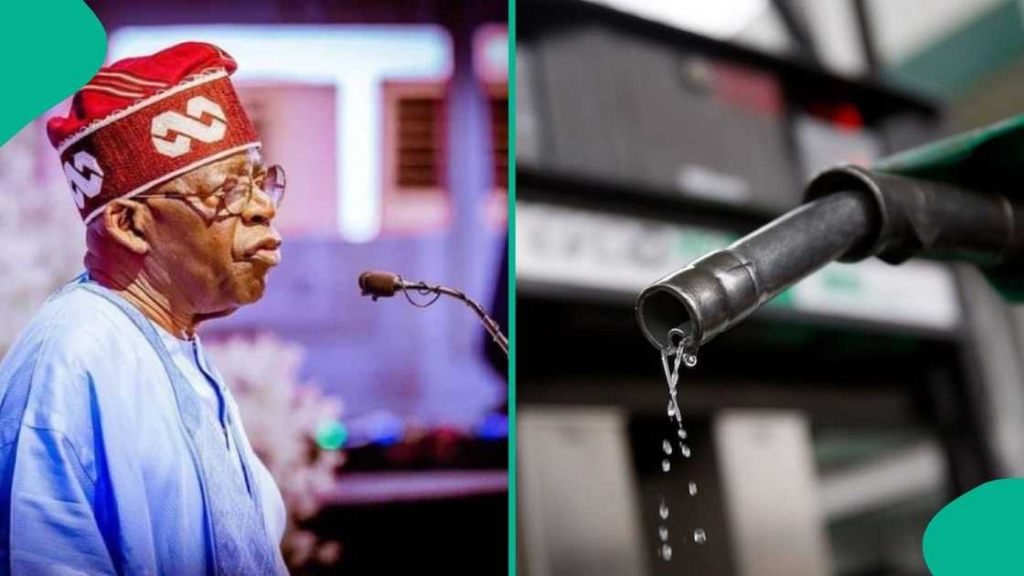
The Chairman of the Nigeria Revenue Service, Zacch Adedeji, has defended President Bola Tinubu’s economic reforms, arguing that Nigeria’s fuel subsidy bill could have climbed to about ₦53 trillion if the government had continued the old petrol subsidy regime.
Adedeji made the assertion during an appearance on Channels Television’s Politics Today on Sunday, where he reviewed the administration’s economic policies, including fuel subsidy removal, foreign exchange reforms, revenue mobilisation and efforts to expand domestic refining capacity.
The NRS chairman presented the ₦53 trillion figure as a counterfactual estimate of what maintaining the fuel subsidy could have cost under current economic conditions. It should therefore be understood as Adedeji’s projection, rather than money independently verified as having been saved by the government.
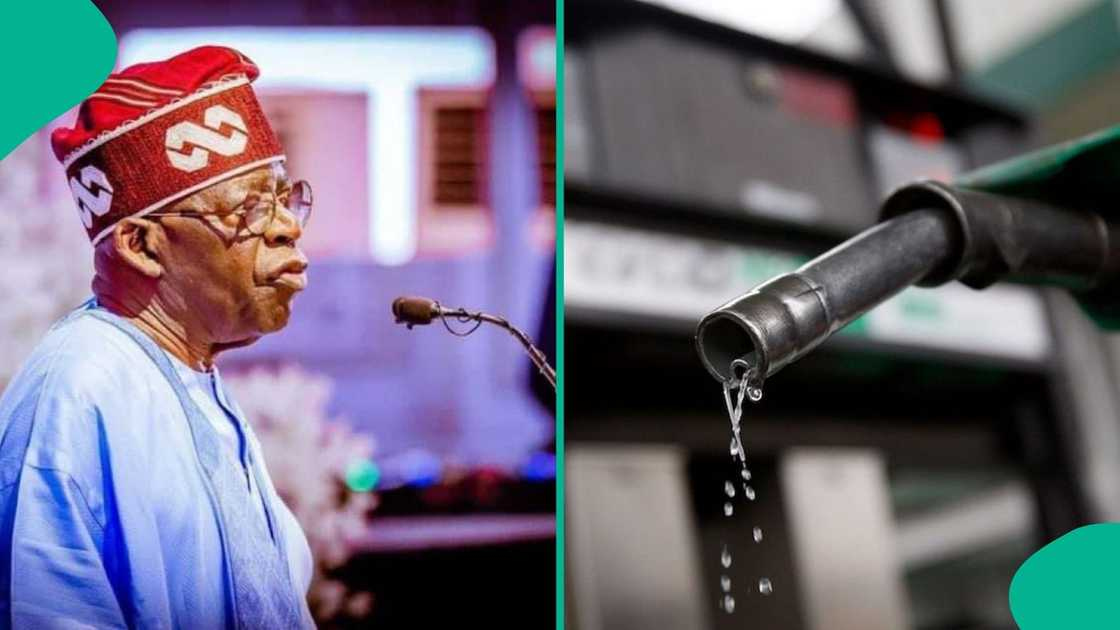
His intervention comes more than three years after Tinubu announced the end of the petrol subsidy during his May 29, 2023 inauguration. In that address, the President argued that the escalating cost of the programme could no longer be justified and promised that resources would instead be channelled into infrastructure, education, healthcare and employment.
Adedeji: Fuel subsidy was becoming unsustainable
Explaining his position, Adedeji argued that the fuel subsidy should not be treated as revenue that government could simply retain. Instead, he described it as an expenditure incurred to keep the domestic price of petrol below its underlying cost.
He said sustaining that system alongside exchange-rate pressures and other economic challenges would have imposed an increasingly heavy burden on public finances.
According to Adedeji, the annual cost under today’s circumstances could have reached approximately ₦53 trillion.
The scale of the claim is striking and deserves context.
In May 2026, the Presidency said Nigeria had been spending as much as ₦18.4 billion daily on petrol subsidies at the height of the previous regime and that expenditure exceeded ₦4 trillion in 2022.
Adedeji’s new ₦53 trillion estimate is substantially higher and rests on a hypothetical scenario in which the subsidy remained in place despite changes in exchange rates, petroleum costs and other economic variables.
That distinction matters. The ₦53 trillion should not be reported as an audited historical subsidy bill. It is the NRS chairman’s estimate of what Nigeria might have faced had the policy continued.
https://ogelenews.ng/fuel-subsidy-nigeria-n53tn-adedeji
Tinubu’s 2023 decision changed petrol market
Tinubu’s declaration that the fuel subsidy was ending became one of the defining decisions of his administration.
The President said in his inaugural address that the subsidy had become increasingly expensive at a time of constrained government resources. He also argued that it disproportionately benefited wealthier consumers and promised to redirect resources toward productive sectors.
The consequences were immediate.
Petrol prices increased sharply, transport costs rose and households faced additional pressure as businesses adjusted to higher operating expenses.
Tinubu subsequently acknowledged that the policy had imposed an additional burden on Nigerians but maintained that it was necessary to protect the country’s finances.
In July 2023, he said the fuel subsidy had cost Nigeria trillions of naira annually and claimed that more than ₦1 trillion had been saved in slightly over two months following its removal.
The administration has continued to defend that decision.
In May 2026, Tinubu said fuel subsidy removal had helped prevent Nigeria from sliding towards bankruptcy and created the foundation for greater fiscal stability.
NRS chair links reform to domestic refining
Adedeji also linked the subsidy decision to increased investment in Nigeria’s refining industry.
He argued that maintaining artificially low petrol prices discouraged investment because private refiners would struggle to compete with imported petroleum products supported by government subsidies.
According to him, Nigeria had only about 10,000 barrels per day of effective refining capacity before 2023 but now has capacity of about 700,000 barrels per day. He attributed much of that change to increased private-sector participation and the policy environment created after the fuel subsidy was removed.
He further argued that stronger domestic refining could reduce Nigeria’s dependence on imported petroleum products and ease demand for foreign exchange.
The wider economic argument is straightforward: producing more petroleum products domestically could reduce the amount of foreign currency required for imports while creating industrial activity and employment within Nigeria.
Whether those benefits ultimately translate into consistently cheaper energy for consumers remains an important test of the reforms.
Government revenue has increased, Adedeji says
The NRS chairman also pointed to higher government revenue as evidence that the administration’s broader fiscal reforms were producing results.
Adedeji said monthly allocations had risen from about ₦700 billion when the administration came into office in 2023 to roughly ₦4.5 trillion.
He argued that the additional resources had strengthened the finances of states and local governments, giving them greater capacity to pay salaries, meet other obligations and undertake development projects.
The Tinubu administration has similarly argued that subsidy removal has freed resources for other levels of government.
Governors who met Tinubu in May 2026 said increased revenues following the fuel subsidy removal and other fiscal reforms had improved states’ ability to meet salary, pension, infrastructure and social investment obligations.
But increased government revenue is only one part of the debate.
For millions of Nigerians, the more immediate measurement of reform remains what happens to food prices, transportation costs, household income, employment and purchasing power.
The other side of the fuel subsidy debate
Any balanced assessment of the fuel subsidy reforms must recognise the tension between fiscal sustainability and household welfare.
Supporters argue that maintaining a huge subsidy was increasingly difficult because government was effectively spending scarce resources to suppress petrol prices rather than investing those funds in infrastructure and social services.
Critics and labour groups, however, have focused on the economic hardship that followed removal, particularly the sharp increase in transportation and living costs.
The government itself recognised those pressures.
Among the measures subsequently announced were conditional cash transfers, investment in compressed natural gas buses, agricultural interventions and financial support for small businesses.
The Federal Government also approved a provisional ₦35,000 wage award for federal workers in 2023 following negotiations with organised labour over measures to cushion the impact of fuel subsidy removal.
The central policy question is therefore no longer simply whether the old subsidy arrangement was sustainable.
It is whether the resources and economic opportunities created by ending it are being converted quickly and transparently enough into improvements Nigerians can feel.
Adedeji defends wider Tinubu economic reforms
Adedeji’s defence extended beyond the fuel subsidy.
He said the Tinubu administration inherited several structural problems, including multiple exchange rates, weak oil-sector performance, a narrow tax base, foreign-exchange obligations and substantial Ways and Means financing.
He argued that failure to address those weaknesses could have produced a significantly worse economic outcome.
The NRS chairman even projected that the naira might have depreciated to around ₦3,500 to the dollar without the government’s reforms. Like the ₦53 trillion subsidy figure, that is a counterfactual estimate and cannot be independently observed because the alternative policy scenario never occurred.
Tinubu also moved to change Nigeria’s foreign-exchange framework shortly after assuming office, arguing that multiple exchange rates encouraged arbitrage and distorted investment decisions.
The real test is what Nigerians experience
Adedeji’s ₦53 trillion fuel subsidy projection adds a dramatic figure to the administration’s defence of one of Nigeria’s most consequential economic policy changes in decades.
Yet numbers of that magnitude require careful interpretation.
The claim does not mean Nigeria physically paid or saved ₦53 trillion. It represents the NRS chairman’s estimate of what the annual subsidy burden could have become if the previous system had remained under present economic conditions.
That distinction is crucial for accurate reporting.
More than three years after the removal of the fuel subsidy, the administration can point to increased government revenues, changes in the foreign-exchange system and expanding domestic refining capacity as evidence supporting its approach.
For households, however, the ultimate verdict will depend on something more tangible: whether macroeconomic improvements lead to stable prices, stronger purchasing power, employment opportunities and better public services.
That is the standard against which the long-term success of Tinubu’s reforms will eventually be judged.
Ogele News Editorial Critique
The supplied headline is strong because it contains the central figure and immediately identifies Tinubu’s reform. However, “could have hit ₦53tn” must remain clearly attributed to Adedeji. The figure is a projection, not an independently established amount that Nigeria actually spent or definitively saved.
I would also avoid presenting “Tinubu’s reform” as an established causal conclusion in Ogele News’ own voice. It is Adedeji’s argument.
Recommended headline
Fuel Subsidy Could Have Cost Nigeria ₦53tn, NRS Chair Says
This is tighter, factual and protects the distinction between an official’s claim and an independently verified economic fact.