
















Nigeria Bangladesh relations
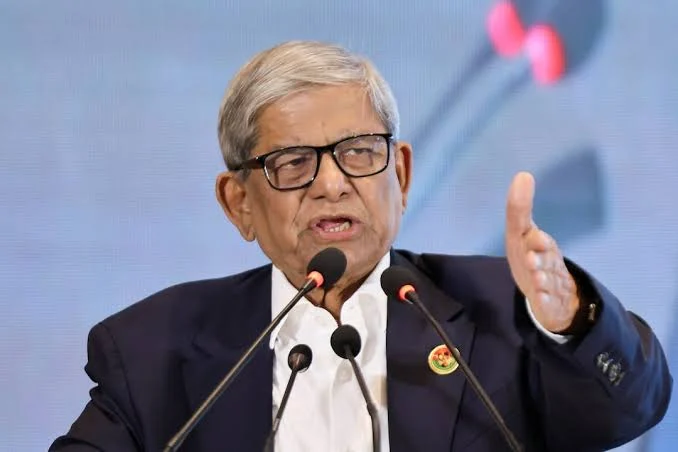
ABUJA, Nigeria — The Federal Government has congratulated veteran politician Mirza Fakhrul Islam Alamgir on his election as the 23rd President of Bangladesh, describing his emergence as an important milestone in the South Asian nation’s democratic transition.
Nigeria’s congratulatory message was conveyed by the Minister of Foreign Affairs, Ambassador Bianca Odumegwu-Ojukwu, on behalf of the government and people of Nigeria.
The Nigeria Bangladesh relations message went beyond routine diplomatic congratulations, with Abuja expressing readiness to strengthen bilateral ties and expand cooperation between both countries.
Alamgir, a veteran leader of the Bangladesh Nationalist Party, BNP, was elected by parliament on Thursday after defeating retired army officer Oli Ahmed in a presidential contest that marked another important stage in Bangladesh’s political transition.
He secured 255 votes against Ahmed’s 88, according to results from the parliamentary ballot.
The Nigerian government said it looked forward to working with the new president and his administration to deepen cooperation in areas of mutual interest.
Nigeria Bangladesh Relations Enter New Political Chapter
Nigeria’s message comes at a significant moment for Bangladesh.
The election of Alamgir followed a turbulent period in the country’s political history and represents another step in the reorganisation of its political institutions following the dramatic collapse of Sheikh Hasina’s government in 2024.
For Nigeria Bangladesh relations, the transition offers Abuja an opportunity to renew engagement with Dhaka as both countries seek stronger cooperation across diplomatic and economic fronts.
Odumegwu-Ojukwu described Alamgir’s election as a reflection of the confidence placed in him and his leadership by Bangladesh’s political institutions.
Nigeria also expressed hope that his presidency would contribute to peace, stability and development in Bangladesh.
The message reflects Nigeria’s longstanding diplomatic practice of engaging governments emerging through constitutional political processes.
Alamgir Wins Historic Presidential Contest
Alamgir’s election is significant because Bangladesh had not held a contested presidential election for approximately 35 years.
The country’s president is elected by members of parliament rather than directly by the general population.
Alamgir contested as the candidate of the ruling BNP against Oli Ahmed, a former army officer nominated by the Jamaat-e-Islami-led opposition alliance.
The election therefore represented more than a routine change in the presidency.
It was Bangladesh’s first contested presidential vote since 1991.
That context strengthens the significance of Nigeria’s congratulatory message.
The Nigeria Bangladesh relations statement recognises not only Alamgir’s personal victory but also the wider democratic transition taking place in Bangladesh.
Who Is Mirza Fakhrul Islam Alamgir?
Alamgir, 78, is one of Bangladesh’s most experienced politicians.
He has been associated with the Bangladesh Nationalist Party since the 1990s and became its secretary-general in 2016.
Before reaching the highest ceremonial office in the country, he built a political career that included service as a minister and years as one of the principal opposition figures during Sheikh Hasina’s long period in power.
His political career also included periods of intense confrontation between the BNP and Hasina’s Awami League.
Reuters reports that Alamgir emerged as a prominent opposition figure during Hasina’s rule and now assumes the presidency after the BNP returned to power in the February 2026 general election.
That election brought Tarique Rahman to power as prime minister.
The BNP and its allies secured a commanding parliamentary majority, dramatically changing Bangladesh’s political landscape.
Bangladesh Presidency Largely Ceremonial
Although Alamgir is now Bangladesh’s head of state, executive authority primarily rests with the prime minister and cabinet.
The presidency is largely ceremonial under the country’s political system.
Nevertheless, the office carries considerable constitutional and symbolic significance.
The president serves as head of state and commander-in-chief of the armed forces and can become particularly important during periods of political instability or constitutional uncertainty.
This means Alamgir assumes office at a particularly sensitive moment.
Bangladesh is attempting to stabilise its political system after several years of upheaval.
The new president will therefore be expected to provide institutional continuity even though day-to-day executive authority remains with Prime Minister Rahman.
Shahabuddin’s Resignation Created Vacancy
Alamgir succeeds Mohammed Shahabuddin, whose presidency ended earlier than expected.
Shahabuddin resigned in July, citing deteriorating health.
His departure created the vacancy that triggered the presidential election.
Shahabuddin had assumed office in April 2023 and had originally been expected to serve a five-year term.
His presidency subsequently became entangled in the political upheaval surrounding the collapse of Hasina’s government.
His resignation therefore accelerated another stage in Bangladesh’s political transition.
The election of Alamgir provides the country with a new head of state drawn from the political movement that spent years opposing Hasina.
Bangladesh Has Experienced Dramatic Political Change
The wider political background is essential.
Bangladesh underwent one of the most significant political upheavals in its recent history in 2024 when Sheikh Hasina’s long-running government collapsed amid widespread protests.
Hasina eventually fled to India.
An interim administration led by Nobel Peace Prize laureate Muhammad Yunus subsequently took responsibility for guiding the country towards elections.
The February 2026 general election brought the BNP back to power and made Tarique Rahman prime minister.
Alamgir’s presidential victory now further consolidates the BNP’s return to the centre of Bangladeshi politics.
The Nigeria Bangladesh relations statement should therefore be understood within this larger democratic transition rather than simply as a ceremonial diplomatic message.
Nigeria Seeks Stronger Bilateral Cooperation
Abuja used its congratulatory message to signal interest in deeper relations with Dhaka.
The Federal Government said Nigeria remained committed to strengthening bilateral ties and exploring greater cooperation in areas of mutual benefit.
This is where the story becomes particularly relevant to Nigerian readers.
Nigeria and Bangladesh are major developing economies with large populations and considerable opportunities for South-South cooperation.
Both countries have interests spanning agriculture, trade, pharmaceuticals, textiles, education, manufacturing, technology and multilateral diplomacy.
Strengthening Nigeria Bangladesh relations could therefore move beyond diplomatic exchanges into practical economic engagement.
Trade Offers Room for Expansion
Economic relations remain one area with considerable potential.
Bangladesh has built a major export-oriented manufacturing sector, particularly around textiles and garments.
Nigeria, meanwhile, represents one of Africa’s largest consumer markets and is seeking to expand domestic manufacturing while diversifying an economy still heavily dependent on petroleum revenues.
There are consequently areas where both countries could deepen commercial exchanges.
Pharmaceutical manufacturing is another possible field.
Bangladesh has developed a significant generic pharmaceutical industry serving both domestic and international markets.
Nigeria is simultaneously attempting to expand local pharmaceutical production and reduce dependence on imported medicines.
A stronger Nigeria Bangladesh relations framework could create opportunities for investment, technology exchange and industrial partnerships if governments and businesses deliberately pursue them.
Agriculture Could Provide Another Partnership Area
Agriculture also offers potential.
Nigeria is attempting to improve food security, agricultural processing and rural productivity.
Bangladesh has considerable experience in intensive agriculture, aquaculture and managing food production within a densely populated developing economy.
Both countries also confront climate-related agricultural pressures.
Flooding, changing rainfall patterns and extreme weather increasingly affect food systems across Africa and South Asia.
That creates opportunities for cooperation in climate-resilient agriculture, fisheries, irrigation and agricultural research.
Diplomatic relationships become most valuable when political goodwill is converted into practical programmes.
Multilateral Cooperation Also Matters
Nigeria and Bangladesh also interact through major international institutions.
Both are members of the United Nations and participate actively in multilateral diplomacy.
Bangladesh has historically been one of the world’s major contributors of personnel to United Nations peacekeeping missions, while Nigeria has a long history of peacekeeping involvement, particularly in Africa.
The two countries also share many concerns common to developing economies, including climate finance, international development, trade reform and greater representation for developing countries within global institutions.
Deepening Nigeria Bangladesh relations can therefore strengthen cooperation beyond strictly bilateral matters.
https://ogelenews.ng/nigeria-bangladesh-relations
Other Countries Congratulate Alamgir
Nigeria was not alone in welcoming the result.
China, the United Kingdom, France and Switzerland were among countries that congratulated Alamgir following his election.
Germany also congratulated the president-elect, while Pakistan’s President Asif Ali Zardari sent a message following the result.
The international response reflects the diplomatic attention surrounding Bangladesh’s transition.
For foreign governments, political stability in Bangladesh matters because of the country’s economic importance, large population, manufacturing sector and strategic position in South Asia.
Nigeria’s Message Should Lead to Concrete Engagement
Diplomatic congratulations are common when new presidents are elected.
The real question is what happens afterwards.
If Abuja genuinely intends to strengthen Nigeria Bangladesh relations, both countries should identify areas where cooperation can produce measurable benefits.
Trade missions could connect Nigerian and Bangladeshi businesses.
Universities could develop academic partnerships.
Pharmaceutical companies could explore joint ventures.
Agricultural institutions could exchange expertise.
Governments could examine opportunities in textiles, manufacturing and technology.
Diplomatic relationships become more valuable when ordinary citizens and businesses can see economic or educational opportunities emerging from them.
Bangladesh’s Democratic Transition Remains Important
Nigeria’s description of Alamgir’s emergence as an important democratic milestone also deserves attention.
Bangladesh’s political transition has not occurred under ordinary circumstances.
The country experienced mass protests, the fall of a long-serving government, an interim administration and subsequent elections.
The February general election and the latest presidential contest represent attempts to rebuild political legitimacy through electoral institutions.
The presidential election itself was historic because lawmakers had not faced a genuinely contested choice for the office since 1991.
For Bangladesh, therefore, Alamgir’s election carries symbolic significance beyond the powers attached to the presidency.
Ogele News Analysis: Stronger Bilateral Ties Are the Bigger Story
The original headline, “FG congratulates Bangladesh’s new president,” is accurate but incomplete.
It tells readers what Nigeria did but not why the development matters.
First, Alamgir was elected Bangladesh’s 23rd president in the country’s first contested presidential election in 35 years.
Second, he assumes office during a historic political transition following the collapse of Sheikh Hasina’s government and the return of the BNP to power.
Third, Nigeria did more than offer congratulations.
Abuja used the occasion to signal its intention to strengthen Nigeria Bangladesh relations.
That should be the stronger angle.
Nigeria maintains diplomatic relationships with countries across Asia, but diplomacy should ultimately produce economic and strategic value.
Bangladesh is particularly interesting because its development experience contains lessons relevant to Nigeria.
It has built a globally significant garment industry.
It has developed substantial pharmaceutical manufacturing capacity.
It has accumulated experience in agriculture and managing development challenges within a large and densely populated society.
Nigeria possesses its own strengths, including a huge domestic market, energy resources, agricultural potential and its strategic position within West Africa.
The opportunity therefore lies in identifying where those strengths complement one another.
The congratulatory message from Abuja is appropriate.
But the measure of successful Nigeria Bangladesh relations will not be the warmth of diplomatic statements.
It will be whether both governments convert political goodwill into stronger trade, investment, technology cooperation, educational partnerships and people-to-people relations.
Alamgir’s election opens a new political chapter for Bangladesh.
Nigeria should use it to open a more productive chapter in the relationship between both countries.