















By Ogele News
The United Nations Office on Drugs and Crime and the Nigeria Security and Civil Defence Corps have intensified cooperation aimed at dismantling criminal networks exploiting Nigeria’s solid minerals sector and cutting off financial flows linked to terrorism and organised crime.
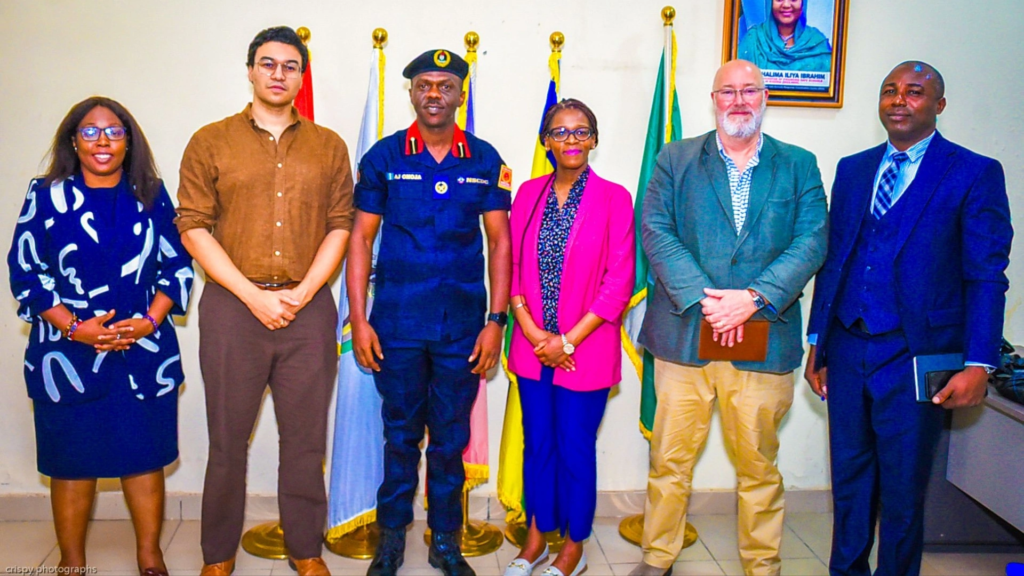
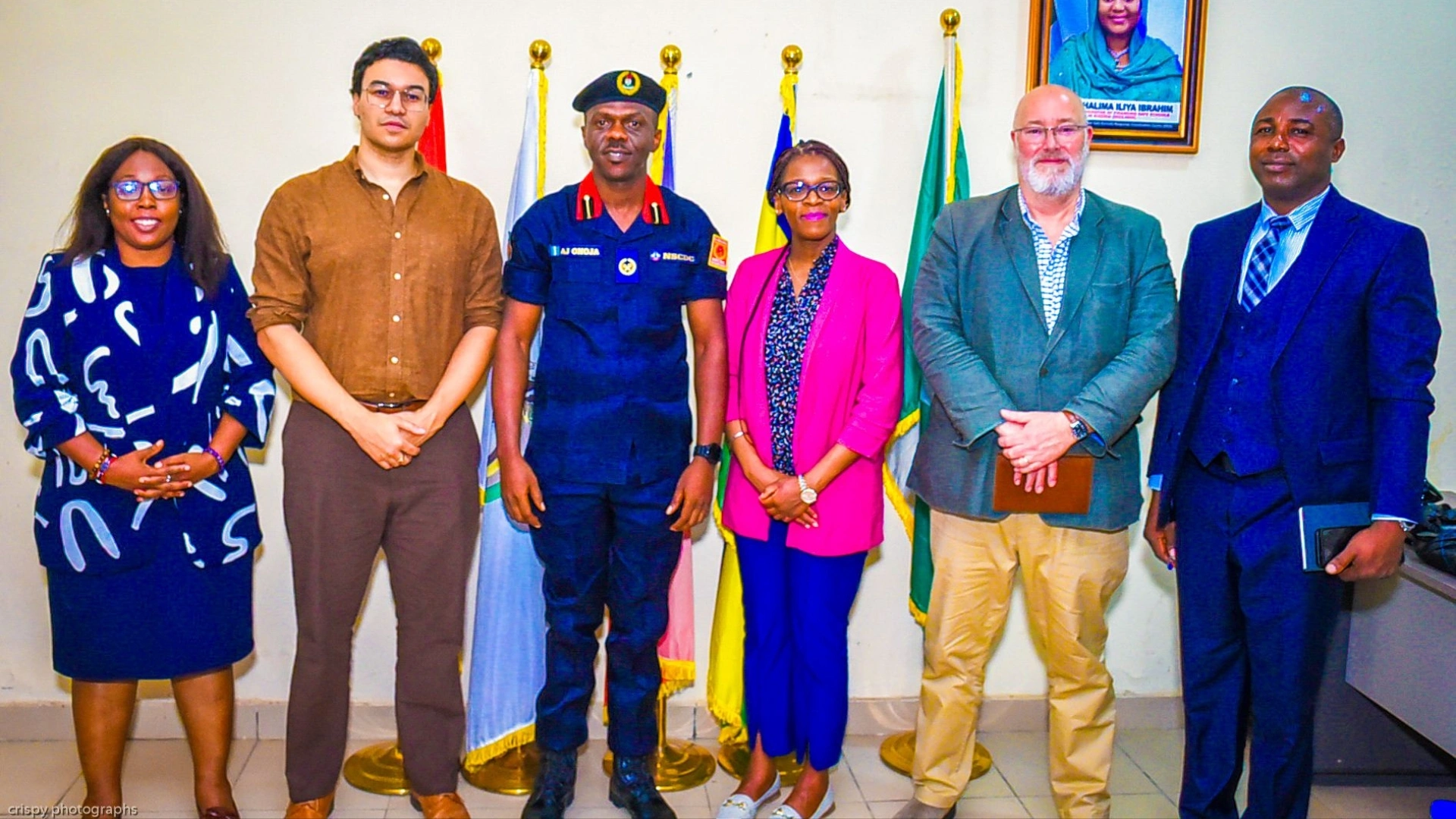
The renewed push against illegal mining terror financing Nigeria follows a strategic engagement in Abuja involving officials of the UNODC, the NSCDC Mining Marshals Corps and donor representatives from the Canadian government.
At the heart of the partnership is a project titled “Strengthening Nigeria’s Response to Criminal and Terrorist Finance related to Minerals,” which seeks to improve Nigeria’s capacity to identify, investigate and prosecute financial crimes linked to illegal mineral extraction.
Commander of the Mining Marshals Corps, Attah John Onoja, said illegal mining had evolved beyond a simple economic offence and now represented a broader national security challenge.
Speaking on behalf of NSCDC Commandant-General Ahmed Abubakar Audi, Onoja said criminal exploitation of minerals increasingly intersects with illicit financial flows, organised crime and terrorist financing.
That assessment places illegal mining terror financing Nigeria at the intersection of two national challenges: the loss of mineral revenue and the financing of armed violence.
Illegal Mining Now Seen as National Security Threat
For years, illegal mining was often discussed primarily in terms of lost government revenue, environmental damage and unregulated extraction.
Security agencies are now looking at the problem through a wider lens.
According to the NSCDC, criminal networks operating in the mining sector can generate money outside regulated financial channels, creating opportunities for proceeds to be moved, concealed or redirected to armed groups and other organised criminal enterprises.
That is why illegal mining terror financing Nigeria is increasingly being treated as a financial intelligence and national security problem rather than an ordinary licensing violation.
UNODC has also warned more broadly that terrorist organisations and organised criminal groups across parts of Africa exploit illicit economic activities, including illegal mining, arms trafficking and cross-border smuggling.
Nigeria’s concern therefore fits into a wider regional security pattern.
Mining Marshals Created to Secure Solid Minerals Sector
The Federal Government established the Mining Marshals as a specialised unit within the NSCDC to protect mining sites, enforce relevant regulations and support the prosecution of illegal operators.
The unit operates through specialised structures covering field operations, intelligence and surveillance, enforcement and compliance, legal services and community engagement.
Its mandate includes protecting mineral resources, preventing illegal extraction and assisting efforts to prosecute offenders.
Those functions make the Mining Marshals central to the fight against illegal mining terror financing Nigeria because field enforcement alone may not be enough.
Closing an illegal mining site can stop extraction temporarily.
Following the money behind the operation can potentially identify sponsors, buyers, transporters, financiers and other members of the wider criminal network.
Partnership Began in 2025
The current cooperation between the NSCDC and UNODC did not begin with the latest meeting.
According to the Mining Marshals, engagement with UNODC began in 2025 through training-needs assessments and consultations supported by Global Affairs Canada.
That process identified areas where officers needed stronger capacity, particularly in financial investigations.
Twenty-one Mining Marshals subsequently participated in a foundational terrorism-financing investigations programme in November 2025.
The training was designed to strengthen officers’ ability to investigate organised crime, terrorism financing and vulnerabilities within mineral supply chains.
That is particularly important because money derived from illegal mineral extraction may move through several intermediaries before reaching its final destination.
Investigators therefore need more than knowledge of mining regulations.
They need financial intelligence, evidence preservation skills and an understanding of how illicit money moves across formal and informal systems.
Canada Providing Support
Canada is an important partner in the initiative.
Global Affairs Canada has supported the programme financially and through cooperation with UNODC.
During the engagement in Abuja, Canadian official Wilma Endamne praised the Mining Marshals for disrupting illegal mining operations and criminal financial flows.
Canada’s involvement is significant because the illegal mining terror financing Nigeria challenge has an international dimension.
Minerals can cross borders.
Payments can move between jurisdictions.
Illegal gold and other commodities can enter legitimate supply chains after passing through several traders.
That makes international intelligence cooperation particularly valuable.
UNODC Support Extends Beyond Field Enforcement
UNODC’s role focuses heavily on strengthening institutions.
Project officials have worked with Nigerian authorities to improve the capacity of investigators and criminal justice institutions dealing with money laundering and terrorist financing connected with minerals.
In June 2025, the Federal Government and UNODC announced a broader partnership specifically targeting money laundering, illicit financial flows and terrorism financing in the solid minerals sector.
Solid Minerals Development Minister Dele Alake said at the time that the collaboration would help dismantle criminal networks profiting from mineral wealth and using the proceeds to support conflict and insecurity.
That agreement provides important background to the latest NSCDC engagement.
It shows that the current effort is part of a wider national strategy rather than a stand-alone security operation.
North-West and North-Central Remain Key Hotspots
The Mining Marshals have deployed specialised units to illegal mining hotspots, particularly in the North-West and North-Central regions.
Joint operations involving security and regulatory agencies have resulted in the dismantling of illegal mining camps and arrests of suspected operators.
Those regions are especially important to the illegal mining terror financing Nigeria discussion because parts of the North-West and North-Central are simultaneously affected by banditry, terrorism and other armed criminal activity.
The coexistence of mineral deposits and armed groups creates the risk that extraction and trade can become integrated into local conflict economies.
This does not mean every illegal miner finances terrorism.
That distinction is essential.
The security concern is that some criminal networks can exploit unregulated mineral production and trading channels to generate or launder money associated with violent groups.
Follow the Money, Not Just the Miners
One of the biggest shifts in the current strategy is the emphasis on financial investigation.
Traditional enforcement may focus on arresting miners at illegal sites.
But the people physically extracting minerals may represent only the lowest level of a more sophisticated network.
Financiers can supply equipment.
Middlemen can purchase minerals.
Transporters can move commodities.
Traders can export them.
Money can then be circulated through formal and informal channels.
A successful response to illegal mining terror financing Nigeria therefore requires investigators to trace the commercial chain beyond the mining pit.
The project with UNODC is intended to strengthen precisely that capacity.
Mining Marshals Seek Better Intelligence Tools
Despite progress, the NSCDC says it needs additional assistance.
Onoja appealed for stronger international support in technical training, intelligence analysis, equipment and the integration of operational information into wider financial-crime investigations.
The Corps also wants greater exposure to international best practices for tackling cross-border smuggling networks.
That request reflects the reality that illegal minerals do not necessarily remain within Nigeria.
Gold and other valuable commodities are relatively easy to transport compared with their monetary value.
Smuggling therefore presents a major enforcement challenge.
Once illegally mined minerals move outside Nigeria, tracing the proceeds can become substantially more difficult.
Illegal Mineral Trade Hurts Government Revenue
The security implications of illegal mining are serious, but the economic consequences are also considerable.
Every unlicensed mining operation can deny government revenue through unpaid royalties, taxes and fees.
It can also undermine legitimate mining companies that incur the costs of licensing, environmental compliance, employee protection and formal taxation.
The wider illegal mining terror financing Nigeria problem therefore harms the country in several ways at once.
Government loses revenue.
Communities can suffer environmental damage.
Legitimate companies face unfair competition.
Criminal networks gain access to valuable commodities.
And in the most serious cases, illicit profits can potentially sustain armed groups.
Environmental Damage Adds Another Layer
Illegal mining also creates significant environmental risks.
Unregulated operations may excavate land without proper reclamation, contaminate water bodies and expose workers and surrounding communities to dangerous substances.
Because illegal operators function outside normal regulatory systems, they may abandon mining locations without remediation.
The environmental costs can remain long after the minerals and profits have left the community.
That is another reason enforcement cannot focus solely on terrorism financing.
The same criminal economy can simultaneously create security, environmental and economic damage.
https://ogelenews.ng/illegal-mining-terror-financing-nigeria
Community Intelligence Will Remain Important
The Mining Marshals’ structure includes community liaison units because residents around mining sites are often among the first people to know when unlicensed activities begin.
Community intelligence can reveal unusual movement of heavy equipment, unfamiliar armed individuals, suspicious mineral purchases and changes in local trading patterns.
For illegal mining terror financing Nigeria investigations, such information can be critical.
However, community cooperation depends on trust.
Residents who fear retaliation from armed groups may be unwilling to provide intelligence.
Security agencies must therefore combine enforcement with protection for communities and confidential handling of information.
Nigeria Needs Cleaner Mineral Supply Chains
Nigeria wants to expand solid minerals as a source of investment and government revenue.
That ambition will be difficult to achieve if international investors associate the sector with uncontrolled criminality, smuggling or terrorism financing.
Clean supply chains are therefore not only a security requirement.
They are also an investment requirement.
Mining companies, banks and international buyers increasingly pay attention to the origin of minerals and compliance with anti-money laundering and responsible-sourcing standards.
A credible system for tracing minerals from extraction to sale could help Nigeria attract more legitimate investment while making it harder for criminal networks to hide illicit production.
Success Will Depend on Prosecutions
Raids and arrests generate headlines.
But they are not the final measure of success.
A serious response to illegal mining terror financing Nigeria requires cases to survive investigation and prosecution.
Evidence must be properly collected.
Financial trails must be documented.
Suspects must be linked to offences through admissible evidence.
Courts must then determine responsibility.
Without successful prosecutions, criminal networks can adapt and return to the same locations under different arrangements.
That is why UNODC’s focus on investigative and criminal justice capacity is as important as field operations.
Regional Cooperation Will Become Increasingly Important
Nigeria’s borders also complicate enforcement.
Illegal minerals can move into neighbouring countries before entering global markets.
Terrorist and organised criminal groups also operate across borders.
UNODC has documented the wider role of illicit gold and mineral trafficking in organised crime across the Sahel, demonstrating how criminal networks can exploit weaknesses between jurisdictions.
Nigeria will therefore need more than domestic enforcement.
Information sharing with neighbouring governments, customs authorities and international financial intelligence networks will also matter.
Partnership Represents Important Shift
The UNODC-NSCDC partnership represents a significant shift in how Nigeria is approaching illegal mining.
The issue is increasingly being treated as an organised-crime ecosystem rather than simply unauthorised extraction.
That means combining mining enforcement with intelligence, financial investigation, counter-terrorism and international cooperation.
For illegal mining terror financing Nigeria, that more comprehensive approach offers a better chance of reaching the individuals who profit most from the trade.
Arresting miners at the bottom of the chain while financiers and buyers remain untouched will not dismantle the system.
Following mineral movements and money flows together may produce better results.
The Real Test Comes Next
The latest engagement between UNODC, Canada and the NSCDC demonstrates that international partners recognise the seriousness of the challenge.
Training has begun.
Specialised officers have been deployed.
Illegal mining camps have been disrupted.
Investigative capacity is being strengthened.
But the bigger test is whether those efforts produce durable reductions in illegal extraction and criminal financing.
Nigeria possesses enormous mineral wealth.
If properly regulated, that wealth can support jobs, investment and government revenue.
If captured by criminal networks, the same resources can fuel corruption, insecurity and conflict.
That is what makes the fight against illegal mining terror financing Nigeria much more than a mining-sector dispute.
It is a contest over who controls the country’s natural resources, where the profits go and whether mineral wealth strengthens the Nigerian state or the criminal networks working against it.
https://www.unodc.org/documents/data-and-analysis/tocta_sahel/TOCTA_Sahel_Gold_v5.pdf