











Mahamat Said ICC conviction
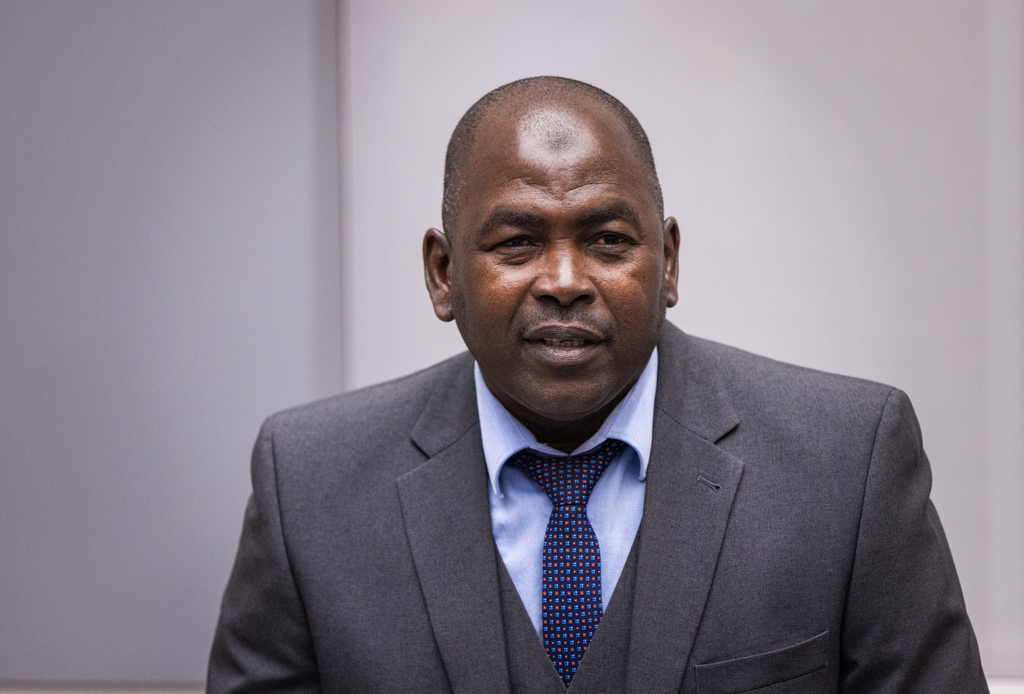
The International Criminal Court has convicted former Central African Republic rebel commander Mahamat Said Abdel Kani on four counts of crimes against humanity over torture, unlawful imprisonment and other abuses committed against detainees in Bangui during the country’s 2013 conflict.
Judges in The Hague delivered the verdict on Wednesday, September 23, finding the 56-year-old former Séléka figure criminally responsible for abuses committed at the Central Office for the Repression of Banditry, known by its French acronym OCRB.
The Mahamat Said ICC conviction marks another significant judgment arising from the Central African Republic’s prolonged conflicts, which have produced investigations into alleged atrocities committed by both Séléka and anti-Balaka forces.
Presiding Judge Miatta Maria Samba said Said oversaw severe mistreatment of detainees at the OCRB facility as violence engulfed the Central African Republic in 2013.
The court, however, did not convict him on every charge.
Said was acquitted on three counts of war crimes, an important distinction as the ICC prepares to determine his sentence at a later hearing.
Mahamat Said ICC conviction centres on detention abuses
The case against Said focused heavily on what happened inside the OCRB detention centre in the Central African Republic’s capital, Bangui.
The court found that detainees were subjected to beatings, degrading treatment and severe deprivation.
Said held a senior position within the facility during a period when Séléka forces exercised significant power in the capital.
According to evidence examined by the judges, some prisoners were held in a cramped cell beneath Said’s office without adequate sanitary facilities.
Detainees described physical and psychological suffering that continued long after their release.
One of the methods examined during the proceedings was known as “arbatachar,” in which a detainee’s limbs were tightly bound behind the body.
Other detainees were beaten with ropes and whips and subjected to additional forms of mistreatment.
The judges concluded that the evidence was sufficient to establish Said’s criminal responsibility for four crimes-against-humanity counts.
Court acquits Said of three war-crime charges
The Mahamat Said ICC conviction requires careful reporting because the judgment was not a conviction on all charges.
While the ICC convicted Said of crimes against humanity, it acquitted him on three counts of war crimes.
That distinction matters.
Crimes against humanity and war crimes are separate categories under international criminal law, even though the same conduct can sometimes form the basis of charges under both categories.
Crimes against humanity generally concern specified acts committed as part of a widespread or systematic attack directed against a civilian population.
War crimes concern serious violations of the laws applicable during armed conflict.
The court’s decision means prosecutors succeeded in proving Said’s criminal responsibility for four crimes-against-humanity charges to the required standard, but the judges were not satisfied that the prosecution had proved the three war-crime counts beyond reasonable doubt.
Ogele News therefore considers it inaccurate to describe Said simply as having been “convicted of war crimes.”
He was not.
https://ogelenews.ng/icc-convicts-ex-car-rebel-commander-mahamat-said-of…
Who is Mahamat Said Abdel Kani?
Mahamat Said Abdel Kani is a former member of the Séléka movement, the predominantly Muslim rebel coalition that played a central role in the Central African Republic’s descent into renewed conflict in 2013.
Séléka fighters seized the capital, Bangui, in March 2013 and overthrew President François Bozizé.
Michel Djotodia subsequently became president.
The political upheaval was followed by widespread violence.
Séléka fighters were accused of serious abuses against civilians, while anti-Balaka militias emerged and committed atrocities of their own, particularly against Muslim communities.
The cycle of retaliatory violence contributed to one of the country’s worst humanitarian crises.
It is within this broader context that the Mahamat Said ICC conviction must be understood.
The case did not attempt to put the entire Séléka movement or the whole Central African conflict on trial.
It focused on Said’s individual criminal responsibility for specific conduct.
Said linked to feared Bangui detention centre
Said’s role at the OCRB became central to the prosecution’s case.
The institution was nominally responsible for combating banditry.
But evidence presented at the ICC described a detention environment where prisoners were subjected to severe abuse.
The court found that Said exercised authority within the facility and was connected to the mistreatment of detainees.
Witnesses described beatings and other forms of torture.
Some spoke about the lasting physical and psychological consequences.
The judges acknowledged that the suffering did not necessarily end when detainees left the facility.
For victims, the consequences extended into their family lives, physical health and psychological wellbeing.
That testimony gave the proceedings a dimension beyond the military and political history of the Central African Republic.
At its centre were individuals who said they had endured abuse inside a detention system.
Central African Republic referred situation to ICC
The Central African Republic has had a lengthy relationship with the International Criminal Court.
The country’s authorities referred the renewed violence occurring on its territory to the ICC in May 2014.
The investigation concerns crimes allegedly committed from 2012 onwards.
ICC investigations have examined conduct attributed to different sides of the conflict rather than concentrating exclusively on one faction.
The court’s work has included allegations involving Séléka-linked groups and anti-Balaka forces.
The Mahamat Said ICC conviction emerges from the Séléka side of that investigation.
That broader context is important because international criminal proceedings in the Central African Republic have involved alleged crimes committed by rival armed groups.
https://ogelenews.ng/icc-convicts-ex-car-rebel-commander-mahamat-said-of…
Arrest warrant issued in 2019
The path to Wednesday’s judgment began years earlier.
An ICC warrant for Said’s arrest was issued under seal in January 2019.
The allegations concerned war crimes and crimes against humanity allegedly committed in Bangui in 2013.
He was eventually surrendered to the International Criminal Court and transferred to its detention centre in The Hague.
The case then moved through the ICC’s pre-trial and trial processes.
As with other international criminal proceedings, prosecutors were required to establish Said’s individual criminal responsibility rather than merely show that atrocities occurred during the conflict.
That requirement is fundamental.
Membership of an armed movement by itself is not enough to establish guilt for international crimes.
The prosecution must prove the accused person’s legal responsibility for the crimes charged.
Wednesday’s judgment represents the trial chamber’s conclusions after examining that evidence.
Victims’ testimony central to proceedings
Victims played an important role in the case.
The ICC heard accounts of detention, physical abuse and the long-term consequences of mistreatment.
The court acknowledged the trauma described by survivors and the impact the alleged abuses had on their families.
International criminal trials can sometimes become dominated by discussions of rebel groups, military structures and legal doctrines.
But the evidence in the Said case repeatedly returned attention to people detained inside the OCRB facility.
Their testimony helped establish what conditions were like and how detainees were treated.
For victims, therefore, the Mahamat Said ICC conviction is not merely another judgment issued thousands of kilometres away in The Hague.
It represents a judicial finding concerning abuses they said shaped the rest of their lives.
CAR conflict produced years of instability
The Central African Republic’s crisis has roots extending beyond the events of 2013.
The country has experienced repeated coups, rebellions, armed-group activity and political instability.
The Séléka takeover in 2013 intensified existing divisions.
Anti-Balaka militias emerged in response, and civilians frequently found themselves trapped between competing armed groups.
Religious identity became increasingly entangled with the conflict, although the causes of the crisis extended beyond religion to include political power, security, local grievances and competition over resources.
Large numbers of people were displaced.
International forces were deployed, and the United Nations established the MINUSCA peacekeeping mission.
The country has since attempted to rebuild state institutions while confronting the legacy of serious abuses.
International justice remains part of accountability effort
The ICC is not the only institution dealing with alleged atrocities in the Central African Republic.
The country also established the Special Criminal Court, a hybrid tribunal involving national and international judges and prosecutors.
The two institutions form part of a broader effort to address crimes committed during years of conflict.
Their work reflects the scale of the accountability challenge.
Numerous armed groups have operated across the country, while limited state authority in some regions has complicated investigations and arrests.
International criminal justice is also inherently slow.
The Mahamat Said ICC conviction comes more than 13 years after the crimes at the centre of the case.
For victims, that delay can be difficult.
But the judgment also demonstrates that serious international crimes can remain subject to prosecution long after the immediate violence has passed.
Said’s sentence still to be decided
Wednesday’s verdict does not conclude the proceedings.
The ICC must now determine the appropriate sentence for the four crimes-against-humanity convictions.
That will take place during a separate stage of the case.
The court will consider the legal factors relevant to sentencing before announcing the punishment.
Until that process is completed, reports should avoid suggesting that Said has already received a specific prison term.
There is currently a conviction.
The sentence will follow.
The case may also generate further legal proceedings, including possible appeals in accordance with ICC procedures.
Verdict adds to accountability record in CAR
The Central African Republic has become one of the ICC’s most significant African situations.
Cases connected to the country’s conflicts have involved allegations against individuals associated with different armed factions.
That is important because justice efforts can lose credibility if victims believe accountability applies only to one side of a conflict.
The ICC’s investigations have therefore sought to examine alleged crimes attributed to both Séléka-linked and anti-Balaka forces.
The Mahamat Said ICC conviction adds another chapter to that process.
It does not resolve the Central African Republic’s wider political and security problems.
Nor does it provide accountability for every victim of the conflict.
International courts can prosecute only a limited number of individuals.
Domestic institutions and the Special Criminal Court consequently remain essential to the broader accountability effort.
Mahamat Said ICC conviction closes one chapter
For Mahamat Said Abdel Kani, Wednesday’s judgment represents the most consequential stage yet in a legal process that began years ago.
The former Séléka figure has now been convicted by the International Criminal Court of four counts of crimes against humanity.
The judges found him responsible for abuses connected to detainees held at the OCRB facility in Bangui during the violence of 2013.
At the same time, the court acquitted him of three war-crime counts.
Both parts of the judgment matter.
A veteran account of the verdict should neither minimise the crimes for which Said was convicted nor erase the charges on which the prosecution failed to secure a conviction.
The Mahamat Said ICC conviction is therefore best understood as a specific judicial finding within the much larger history of the Central African Republic’s conflict.
For survivors who testified about torture and detention, the verdict provides a formal finding of criminal responsibility.
For the ICC, the next step is sentencing.
And for the Central African Republic, the wider challenge remains much larger: ensuring that accountability for atrocities committed during years of conflict reaches beyond a handful of cases in The Hague.