












Benin-Agbor-Asaba road failure
The Federal Government has blamed the concessionaire handling the troubled Benin-Agbor-Asaba highway for the worsening condition of the strategic road, as President Bola Tinubu ordered urgent intervention and a redesign aimed at delivering a lasting reconstruction of the corridor.
Minister of Works, David Umahi, levelled the accusation against the Benin-Asaba Expressway Concession Company Limited, BAECC, during an on-the-spot assessment following days of severe gridlock and public outrage over the condition of the highway.
The Benin-Agbor-Asaba road failure has left motorists and passengers stranded for hours and, in some cases, days, disrupting movement between Edo and Delta states and affecting one of the major transport corridors connecting different parts of southern Nigeria.
Umahi accused BAECC of removing existing asphalt from sections of the highway without first providing adequate drainage infrastructure.
He said the concessionaire had been warned against stripping the existing asphalt and accused the company of lacking the technical competence required to execute the project properly.
But BAECC has offered a different explanation, saying prolonged heavy rainfall, intense traffic, premature reopening of rehabilitated sections and inadequate drainage contributed to deterioration along parts of the corridor.
The conflicting accounts mean responsibility for the Benin-Agbor-Asaba road failure deserves more scrutiny than a simple blame headline suggests.
Umahi Blames Contractor for Benin-Agbor-Asaba Road Failure
Umahi did not hide his frustration during the inspection.
The Works Minister said the road was not in its present condition when it was handed over to the concessionaire.
According to him, the ministry had specifically warned against removing existing asphalt before appropriate measures were taken to protect the roadway.
Umahi said BAECC ignored that warning.
He was particularly critical of what he described as the company’s failure to construct side drains before commencing aspects of the road reconstruction.
The minister argued that removing existing asphalt under such circumstances exposed the highway to further deterioration.
He also directed ministry controllers to act against contractors or concessionaires that remove asphalt from existing federal roads without approval.
That is a serious accusation.
If the concessionaire violated explicit engineering instructions from the supervising ministry, the issue moves beyond ordinary construction delays into questions about contract supervision, technical compliance and protection of public infrastructure.
Umahi Accepts Government Responsibility
There is, however, an important part of Umahi’s statement that Ogele News should not omit.
While condemning BAECC, the minister also accepted responsibility on behalf of the government.
He apologised to commuters for the hardship they had suffered and said he took responsibility for the concessionaire’s actions and the resulting damage to public assets.
That admission matters.
The Federal Government cannot entirely separate itself from the Benin-Agbor-Asaba road failure simply because a private concessionaire is executing the project.
The road remains federal infrastructure.
The concession was approved through government processes.
Government institutions have regulatory and supervisory responsibilities.
If the concessionaire lacked the technical capacity alleged by the minister, an obvious question follows:
How did the company obtain responsibility for such a strategic highway?
That question should form part of any serious review of the project.
Highway Concessioned Under Public-Private Partnership
The Benin-Asaba highway was concessioned to BAECC under the Federal Government’s Highway Development and Management Initiative.
The approximately 125-kilometre corridor stretches from the AIF Roundabout in Benin City, Edo State, to Summit Junction in Asaba, Delta State.
The project involves rehabilitation, reconstruction, operation and management of the highway under a long-term public-private partnership arrangement.
The highway was concessioned to BAECC in 2025, with plans to transform the corridor into a significantly expanded highway.
The project has been described as one of the major tests of Nigeria’s attempt to use private capital to rehabilitate and manage federal highways.
That makes the Benin-Agbor-Asaba road failure more than a local road-maintenance problem.
It is also a test of the country’s road-concession model.
Motorists Spend Days on Highway
For commuters, however, contractual arrangements offer little comfort.
The road crisis has caused severe gridlock.
Vanguard reported cases of motorists spending several days attempting to move along the corridor.
One logistics driver said a journey carrying raw materials from Lagos to Asaba took him three days, including two days and nights around Agbor.
Passengers reportedly left stranded vehicles to search for food and water as traffic remained trapped.
Other reports indicated that some travellers abandoned vehicles temporarily and trekked in search of alternative transportation.
These are not merely inconveniences.
When an important highway becomes nearly impassable, the economic consequences spread rapidly.
Road Crisis Hits Commerce
The Benin-Agbor-Asaba corridor is economically significant.
It carries passenger vehicles, petroleum tankers, agricultural produce, manufactured goods and commercial freight.
Delays therefore translate directly into costs.
A truck spending three days on a journey that should take considerably less time means additional fuel consumption, driver expenses and delayed deliveries.
Perishable goods face deterioration.
Businesses waiting for raw materials lose production time.
Transporters increase fares to compensate for vehicle damage and longer journey times.
Passengers lose working hours.
The Benin-Agbor-Asaba road failure consequently affects people who may never personally travel on the highway.
Eventually, transportation inefficiency enters the price of goods.
Tinubu Orders Urgent Intervention
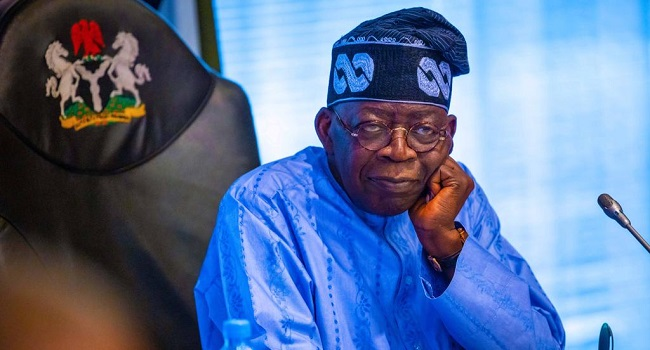
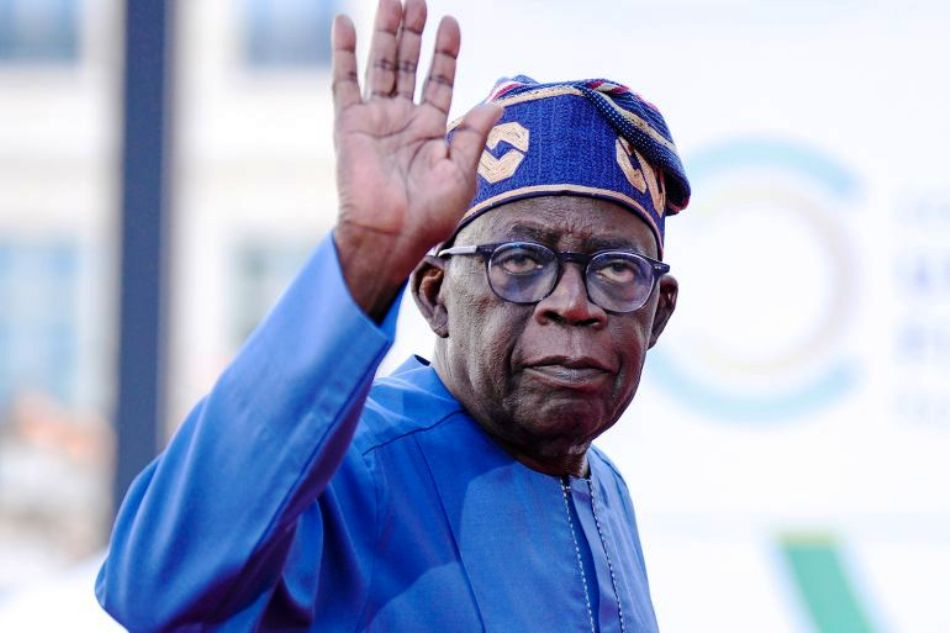
Following growing public anger, President Tinubu directed the Federal Ministry of Works to intervene urgently.
The Presidency said corrective action should be taken as quickly as possible to restore movement on the affected corridor.
Umahi subsequently travelled to Benin alongside members of the National Assembly Works Committees to inspect the situation and coordinate the response.
The intervention involves federal and state authorities as well as other relevant institutions.
But Umahi made clear that temporary patching alone would not provide the long-term solution.
The government is now discussing comprehensive reconstruction.
https://ogelenews.ng/benin-agbor-asaba-road-crisis-fg-blames-concessiona…
Tinubu Directs Redesign and Reconstruction
The response has moved beyond emergency repairs.
Umahi said President Tinubu directed him to redesign major roads stretching from Kogi through areas around Edo and towards Warri.
The proposed solution would involve concrete pavement and comprehensive reconstruction rather than repeated palliative works.
For the Benin-Agbor-Asaba road failure, this represents a significant shift.
If implemented as announced, the government would be moving from trying to preserve failing sections towards rebuilding them more fundamentally.
But Nigerians have heard ambitious road promises before.
The critical issue will be implementation.
When will reconstruction begin?
How will it be financed?
What happens to the existing concession?
Who bears the additional cost?
What happens to money already invested?
And who will ultimately be responsible for maintaining the highway?
FG May Review Concession Agreement
The Federal Government is also considering reviewing the concession arrangement.
Umahi convened a stakeholders’ meeting to examine the situation and determine the appropriate response.
Federal lawmakers accompanying him also supported reviewing concession agreements where companies fail to meet their obligations.
House Committee on Works Chairman Akin Alabi argued that government could not afford concessionaires whose performance creates hardship for citizens.
This could have implications beyond the Benin-Asaba highway.
If the government discovers weaknesses in concession design, contractor selection, supervision or enforcement, similar agreements elsewhere may require review.
BAECC Rejects Simplistic Explanation
There is another side to the story.
BAECC issued a detailed statement before Umahi’s inspection explaining the difficulties encountered on the project.
The company said unusually prolonged rainfall had disrupted earthworks, drainage construction, pavement stabilisation and asphalt laying.
It also pointed to extremely heavy traffic on the corridor.
According to BAECC, some rehabilitated sections had to be reopened to traffic earlier than engineering practice would normally permit because keeping them closed would have produced even more severe congestion.
The company said premature traffic loading, persistent rainfall and heavy vehicle movement subsequently damaged some sections.
Those claims should not simply be dismissed because the minister strongly criticised the company.
They should be independently examined.
Drainage Emerges as Central Dispute
Both sides indirectly agree on one important point:
Drainage matters.
Umahi criticised the concessionaire for allegedly removing asphalt without first constructing adequate side drains.
BAECC itself acknowledged that inadequate drainage along parts of the corridor had affected pavement performance.
The company said it had therefore adjusted its programme to prioritise drainage construction before large-scale permanent pavement works.
This may be the most technically important aspect of the Benin-Agbor-Asaba road failure.
A road is not simply asphalt placed on soil.
Water is one of the greatest threats to pavement durability.
When drainage fails, water can penetrate and weaken underlying layers.
Heavy trucks then accelerate deterioration.
Any permanent reconstruction must therefore treat drainage as fundamental infrastructure rather than an afterthought.
Contractor Says Project Remains on Course
Despite the controversy, BAECC insists that it remains committed to delivering the project.
The concessionaire said it has invested billions of naira in equipment, materials and construction infrastructure through private financing.
It said the first 65-kilometre phase is scheduled for completion by April 2027, with the remaining 60 kilometres expected approximately 18 months later.
BAECC also announced plans for an accelerated programme beginning around October 2026, when weather conditions are expected to improve.
That programme would focus on drainage, pavement reconstruction, asphalt work and culverts.
Whether those targets remain realistic following the government’s threat to review the concession is now uncertain.
Who Supervised the Concessionaire?
This is where the accountability question becomes broader.
If Umahi’s accusations are correct, the contractor made serious technical errors.
But infrastructure governance does not end with contractors.
Government employs engineers.
Projects have supervising consultants.
Contracts contain specifications.
Milestones should be monitored.
Certificates are issued.
Warnings should trigger enforcement.
The Benin-Agbor-Asaba road failure therefore requires answers from both contractor and government.
If the concessionaire removed asphalt despite instructions not to do so, when did government discover the violation?
What sanctions followed?
Why was work allowed to continue?
If technical capacity was inadequate, why was that not identified before the situation became a public crisis?
Concession Model Must Protect the Public
Public-private partnerships can be useful.
Nigeria has enormous infrastructure needs and limited public resources.
Private capital can help finance roads that government alone may struggle to build quickly.
But concession arrangements only work when risks and responsibilities are clearly allocated.
A private company cannot receive a strategic public asset and then leave citizens trapped for days.
Government cannot sign a concession and assume that responsibility has disappeared.
The public does not care which institution’s letterhead carries the blame.
People want a road they can use.
Reconstruction Must Not Become Another Endless Project
The promise of total reconstruction sounds encouraging.
But reconstruction itself creates another risk.
Major road projects can last years.
During construction, motorists still need access.
The Federal Government therefore needs two plans simultaneously.
The first is an emergency mobility plan to keep traffic flowing now.
The second is a permanent engineering solution.
The Benin-Agbor-Asaba road failure cannot wait for a multi-year reconstruction programme before becoming passable.
Temporary interventions may not solve the structural problem, but emergency measures remain necessary while permanent works proceed.
Economic Cost Should Be Calculated
One weakness in Nigeria’s infrastructure debate is that government often calculates construction cost without adequately measuring the economic cost of road failure.
How much commercial time has been lost?
How many trucks have been delayed?
How much additional fuel has been consumed?
How many vehicles have suffered damage?
How much produce has spoiled?
How much additional transport cost has been passed to consumers?
Those numbers matter.
A failed highway imposes an invisible tax on the economy.
The longer the Benin-Agbor-Asaba road failure continues, the larger that tax becomes.
Ogele News Analysis: Contractor Blame Does Not End Government Responsibility
The original headline, “Benin-Agbor-Asaba road failure contractor’s fault, say Presidency,” contains the central news development but needs refinement.
First, “say Presidency” is grammatically incorrect. It should be “says Presidency.”
More importantly, however, attributing the claim broadly to “the Presidency” obscures who actually made the strongest accusations.
The principal accusations came from Works Minister David Umahi during his inspection.
He accused BAECC of poor handling, criticised its technical competence and said the company removed existing asphalt despite government warnings.
But Umahi also did something important.
He apologised.
And he accepted government responsibility for what happened.
That makes the story stronger.
The government is effectively saying:
The concessionaire failed, but we are responsible for fixing the consequences.
That is the correct starting point for accountability.
BAECC must answer the technical allegations against it.
The company has already offered its defence, citing rainfall, traffic, drainage challenges and the difficulty of reconstructing a busy highway while keeping vehicles moving.
Those explanations should be tested against engineering evidence and the concession agreement.
But government must answer another question:
If the contractor was as technically deficient as the Works Minister now alleges, how was it entrusted with one of Nigeria’s strategic highways?
That is the question a veteran journalist should not lose.
Contractors do not award contracts to themselves.
They do not approve concession agreements themselves.
They do not supervise themselves on behalf of the Nigerian public.
The concessionaire may ultimately bear substantial responsibility for the Benin-Agbor-Asaba road failure, but accountability must follow the entire chain.
Who selected?
Who approved?
Who supervised?
Who warned?
Who failed to enforce?
And who pays to correct the damage?
President Tinubu’s intervention is welcome because people need the road restored urgently.
But the eventual measure of success will not be the inspection tour, apology or announcement of another reconstruction.
It will be simple:
Can Nigerians travel from Benin through Agbor to Asaba safely, predictably and without spending days trapped on the highway?
Until that happens, the road itself remains the verdict.