

















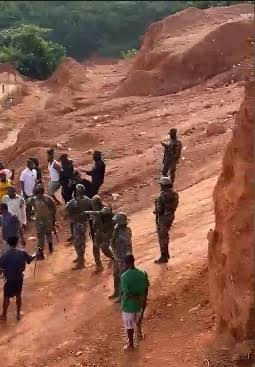
Kaduna illegal miners clash
The Birnin Gwari Emirate Progressives Union has called for an immediate and transparent investigation into a deadly clash involving suspected illegal miners in Randagi community, Birnin Gwari Local Government Area of Kaduna State.
The community organisation said the circumstances surrounding the violence must be established and anyone found responsible should face justice under the law.
Reports indicated that several people may have been killed during the Kaduna illegal miners clash, while others reportedly sustained injuries. However, security agencies had not released an official casualty figure at the time of reporting.
The absence of a confirmed death toll has made an independent investigation necessary, especially as conflicting accounts continue to circulate over what triggered the violence and the identities of those involved.
In a statement signed by its chairman, Dr Isah Muhammad, the Birnin Gwari Emirate Progressives Union, popularly known as BEPU, expressed sympathy with the residents of Randagi and the families affected by the incident.
The union also prayed for the recovery of those injured during the violence and appealed to residents to remain calm while the authorities investigate the matter.
BEPU seeks transparent investigation
BEPU said the Kaduna illegal miners clash should not be treated as an isolated confrontation without a proper examination of the circumstances that led to it.
The organisation urged the police, security agencies, mining regulators and relevant government institutions to visit the community, gather evidence and speak with witnesses.
According to the union, a prompt investigation would help prevent speculation, identify those responsible and reassure residents that the law applies equally to everyone operating in the area.
“The circumstances surrounding this tragedy must be fully established, and anyone found responsible should be dealt with in accordance with the law,” the group said.
The appeal is particularly important because the reported incident occurred in an area where informal mining, insecurity and competition over mineral resources have repeatedly raised concerns.
BEPU maintained that the authorities must determine whether the violence arose from a disagreement among miners, a dispute involving criminal groups or another conflict connected to mining operations.
Until investigators release their findings, reports about the cause of the Kaduna illegal miners clash should be treated with caution.
Casualty figure remains uncertain
Reports of the Randagi incident suggested that many people were feared dead, but the precise number remained unclear.
No detailed statement confirming the casualties had been issued by the Kaduna State Police Command or another competent security authority when the initial report emerged.
This uncertainty means that news organisations and members of the public must avoid publishing unverified figures as confirmed deaths.
In previous incidents involving remote communities, differences between early reports and official figures have sometimes emerged because of poor communication, difficult terrain and delays in reaching affected locations.
A credible investigation into the Kaduna illegal miners clash should establish the number of people killed, the identities of the victims, the number of injured residents and whether anyone is missing.
It should also determine whether weapons were used, whether the confrontation was planned and whether security personnel had received earlier warnings of tension in the community.
These questions are essential because every uninvestigated act of violence increases fear and weakens public confidence in the ability of government institutions to protect rural communities.
Group raises environmental concerns
Beyond the immediate violence, BEPU raised concerns about the broader effect of mining activities on communities in Birnin Gwari.
The union said residents had complained about the destruction of farmland and public infrastructure linked to some mining operations.
It also drew attention to allegations that hazardous chemicals may be used close to water sources during mineral processing.
If verified, such practices could threaten human health, livestock, agriculture and the environment.
The concerns surrounding the Kaduna illegal miners clash therefore extend beyond security. They include questions about who is mining in the area, whether the operators possess valid licences and whether environmental regulations are being enforced.
Mining activities can create jobs and generate public revenue when they are properly regulated. Uncontrolled operations, however, can leave host communities with damaged land, polluted water, dangerous pits and increased criminal activity.
BEPU called on the Federal Government, the Kaduna State Government and mining regulatory agencies to strengthen oversight in the area.
The group said mineral extraction must comply with legal, safety and environmental standards rather than operate outside public scrutiny.
https://ogelenews.ng/bepu-demands-probe-as-deadly-clash-rocks-kaduna-min…
Host communities demand greater benefits
The union also complained that communities located around mineral deposits were not receiving sufficient social and economic benefits from the resources extracted from their land.
It urged the government and legitimate mining companies to ensure that host communities benefit from improved roads, healthcare services, schools, clean water and employment opportunities.
This demand has become common in mineral-producing communities where residents often see valuable resources removed while basic public infrastructure remains inadequate.
The Kaduna illegal miners clash has once again brought attention to the relationship between mineral wealth, local development and insecurity.
Where mining operations are properly licensed, companies should comply with community development obligations and maintain open communication with traditional institutions and residents.
Authorities should also ensure that local workers are treated fairly and that landowners receive lawful compensation when their property is affected.
Community engagement cannot eliminate every disagreement, but it can reduce suspicion and provide a recognised process for resolving grievances before they turn violent.
Illegal mining poses security challenge
Illegal mining has remained a major security and economic concern in different parts of Nigeria.
Unauthorised operators may work without environmental assessments, safety procedures, tax obligations or proper records of the minerals removed.
In areas already affected by armed groups, poorly regulated mining sites can become sources of financing, extortion and territorial conflict.
A similar confrontation in Birnin Gwari in October 2025 reportedly resulted in 17 deaths after violence involving bandits and illegal miners spread to a nearby village.
That previous incident demonstrated how disputes connected to mining could quickly threaten surrounding communities and undermine fragile security arrangements.
The latest Kaduna illegal miners clash should therefore prompt the authorities to examine whether criminal groups are influencing mining activities in Randagi and neighbouring communities.
Security operations must be intelligence-led and conducted within the law. Residents should not be subjected to collective punishment because illegal operators are active in their communities.
The objective should be to identify unlicensed sites, arrest individuals linked to violence and protect lawful economic activity.
Mining regulators face renewed scrutiny
The Federal Government established the Mining Marshals to secure mining locations, combat illegal mining and protect revenue from the solid minerals sector.
The specialised unit, drawn from the Nigeria Security and Civil Defence Corps, was inaugurated in March 2024.
Its mandate includes tackling illegal operations and addressing insecurity around mineral-rich areas.
However, the House of Representatives recently ordered an investigation into the activities and performance of the Mining Marshals following allegations of misconduct and financial impropriety.
Those allegations remain subject to investigation and should not be treated as proven.
Still, the controversy highlights the need for transparency and accountability among agencies responsible for enforcing mining laws.
The probe into the Kaduna illegal miners clash should establish which regulatory and security agencies were responsible for monitoring mining activities in Randagi.
Investigators should determine whether the mining site was known to authorities, whether previous complaints had been received and whether any enforcement action had been taken.
Government must act beyond investigation
A formal investigation is necessary, but it will not be enough unless its findings lead to practical action.
The authorities should secure the affected area, provide medical support to injured residents and ensure that families receive accurate information about their relatives.
Mining regulators should conduct an audit of operations within Birnin Gwari to identify licensed companies, informal operators and abandoned sites.
Environmental experts should also test water and soil in locations where residents have alleged the use of hazardous substances.
Where farmland or public infrastructure has been damaged, the responsible individuals or companies should be required to carry out remediation and pay lawful compensation.
The outcome of the Kaduna illegal miners clash investigation should be made public, except for information that could lawfully compromise security operations or criminal proceedings.
Too many inquiries into violent incidents disappear from public attention without clear findings, prosecutions or corrective measures.
Transparency would reassure residents that the investigation is not merely an attempt to calm public anger.
Peace appeal to Randagi residents
BEPU appealed to residents of Randagi and the wider Birnin Gwari Emirate to remain peaceful and cooperate with investigators.
The union said it was prepared to work with government officials, security agencies, traditional institutions and other stakeholders to promote responsible resource management and lasting peace.
That cooperation will be important as authorities attempt to establish what happened.
Witnesses should be protected from intimidation, while community leaders should discourage retaliation or the spread of inflammatory rumours.
The Kaduna illegal miners clash is a warning that mineral resources can become a source of tragedy when regulation, security and community participation are weak.
Kaduna and federal authorities now have a responsibility to establish the truth, hold offenders accountable and prevent another outbreak of violence.
For the people of Randagi, the immediate demand is not complicated. They want the dead properly accounted for, the injured supported and the circumstances surrounding the tragedy explained.
The credibility of the government’s response will depend on whether the investigation produces clear findings and whether those findings are followed by justice.