














Kogi reprisal attack
At least five people have been killed following a Kogi reprisal attack that swept through three communities in Kupa Kingdom, Lokoja Local Government Area, raising fresh concerns over communal security and the danger of retaliatory violence in the state.
The affected communities, Abugi, Kuchinda and Mikugi, came under attack on Thursday after armed persons reportedly moved into the areas and targeted residents. The Kogi State Government subsequently confirmed the killings and ordered security agencies to restore order and identify those behind the violence.
The Kogi reprisal attack was reportedly linked to an earlier incident involving the killing of an unarmed herder.
According to the account provided by the state government, a member of a local vigilante group allegedly killed the herder after suspecting him of involvement in cattle rustling. That incident was later followed by an armed reprisal against residents of the three communities.
Authorities have not suggested that residents killed during the retaliatory assault were responsible for the original incident.
The violence left at least five people dead and heightened tension across the affected settlements.
Kogi government condemns killings
The state government has condemned both the killing of the herder and the subsequent Kogi reprisal attack, describing the incidents as criminal acts that must be investigated without regard to the ethnic or social identities of those involved.
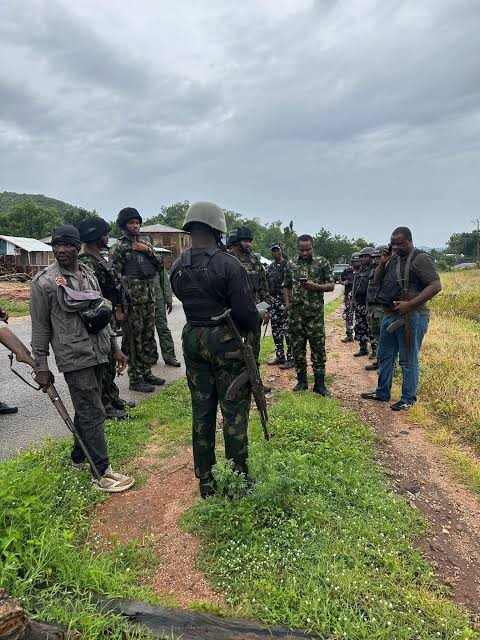
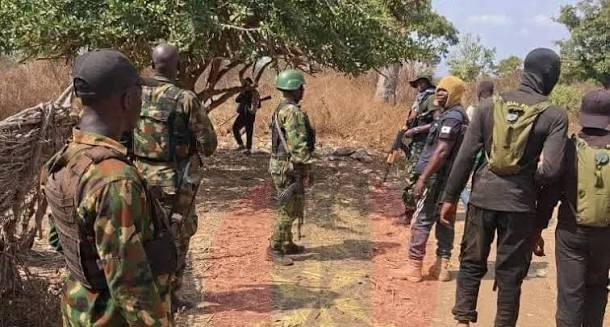
Kogi State Commissioner for Information and Communications, Kingsley Fanwo, said Governor Ahmed Usman Ododo had directed security agencies to immediately take control of the affected areas, restore peace and prevent the violence from spreading to neighbouring communities.
The governor also ordered the arrest of the vigilante member accused of killing the herder as well as individuals suspected of participating in the retaliatory assault.
According to the government, the leader of a Hybrid Vigilante Group suspected of involvement in coordinating the reprisal is also being sought by security agencies.
The government’s decision to investigate both sides of the violence is significant. In communal conflicts, failure to address the incident that triggers retaliation can deepen distrust, while allowing retaliatory killings to go unanswered can create a cycle in which communities resort to self-help rather than the justice system.
The Kogi reprisal attack therefore presents authorities with two immediate responsibilities: identifying those responsible for the initial killing and bringing the perpetrators of the subsequent attacks to justice.
https://ogelenews.ng/kogi-reprisal-attack-five-killed
Government urges residents against further reprisals
The state government has appealed to residents of the affected communities to remain calm and avoid further acts of retaliation.
Officials also urged members of the public to provide credible information that could help security agencies identify and arrest those involved in the violence.
The appeal comes amid concern that revenge attacks could expand the confrontation if community leaders and security agencies fail to contain tensions quickly.
A prolonged cycle of retaliation would pose a serious threat not only to Abugi, Kuchinda and Mikugi but also to neighbouring communities where residents may have ethnic, occupational or family connections with those affected.
The Kogi reprisal attack once again demonstrates how a single unresolved killing can escalate into broader communal violence when suspicions, grievances and armed retaliation replace established law-enforcement procedures.
Rather than allowing accusations to become a licence for revenge, security authorities will be expected to establish what happened, identify individual suspects and ensure that innocent residents are not collectively punished for the alleged actions of others.
Traditional rulers, community leaders involved in peace efforts
The Kogi State Government said it was working with security agencies, traditional rulers, community leaders and other stakeholders to restore peace and rebuild confidence among residents.
Such engagement could prove important in preventing further violence.
Traditional institutions and community leaders often possess local knowledge that can help authorities understand relationships between groups, identify emerging tensions and discourage young people from taking part in retaliatory attacks.
But dialogue alone will not resolve the aftermath of the Kogi reprisal attack.
Residents will also expect visible security deployments, credible investigations and prosecution where sufficient evidence exists.
The government’s pledge to punish anyone found responsible, regardless of ethnic affiliation or status, will consequently be judged by the outcome of the investigation rather than public statements alone.
Fresh security concerns in Kogi
The killings come against a broader backdrop of security challenges affecting parts of Kogi State.
Kogi’s geographical position, bordering several states and serving as an important link between northern and southern Nigeria, has made security across its rural communities and major transport corridors a persistent concern.
A National Peace Committee threat assessment covering September 2025 identified Kogi among North-Central and North-West states affected by recurring kidnappings and highlighted security incidents along corridors including Lokoja-Okene.
More recently, the Nigerian military said troops operating across the North-West and North-Central killed 224 terrorists, arrested more than 423 suspects and rescued 279 kidnapped victims during the second quarter of 2026, illustrating the continuing scale of security operations across the two regions.
The latest Kogi reprisal attack, however, raises a somewhat different challenge because the immediate trigger described by the government involves a local dispute that allegedly escalated into organised retaliatory violence.
That distinction matters.
Banditry and kidnapping usually require intelligence-led security operations against organised criminal groups. Communal reprisals require not only enforcement but also mediation, accountability and efforts to prevent entire communities from being blamed for offences allegedly committed by individuals.Kogi reprisal attack
Security agencies face crucial test
The immediate priority will be preventing another round of violence.
Security personnel will need to maintain a presence in the affected communities while investigators establish the identities of those responsible for the initial killing and subsequent retaliatory assault.
Authorities must also avoid collective punishment.
If a vigilante operative committed an unlawful killing, responsibility rests with the individual and any accomplices established through investigation. In the same way, the death of the herder cannot justify attacks on uninvolved residents.
That principle will be essential if confidence is to be restored after the Kogi reprisal attack.
The state government’s insistence that suspects on both sides must face the law is therefore an important starting point.
The greater test is whether arrests and investigations will be carried out transparently and whether those against whom credible evidence is established will eventually face prosecution.
For families mourning those killed, assurances alone cannot substitute for justice.
For residents of Abugi, Kuchinda and Mikugi, meanwhile, the immediate hope is that Thursday’s Kogi reprisal attack will end with the five confirmed deaths rather than become the beginning of another cycle of retaliation.
Restoring security, restraining armed groups and ensuring individual accountability will now determine whether peace returns to Kupa Kingdom or tensions deepen further.
https://www.police.gov.ng/?utm_source=chatgpt.com