


















Nigerian Navy Cross River maritime security
CALABAR, Nigeria — The Nigerian Navy has vowed to intensify operations against piracy, sea robbery, crude oil theft, illegal bunkering and other maritime crimes in Cross River State, as it strengthens its presence along strategic waterways linking Calabar with the wider Gulf of Guinea.
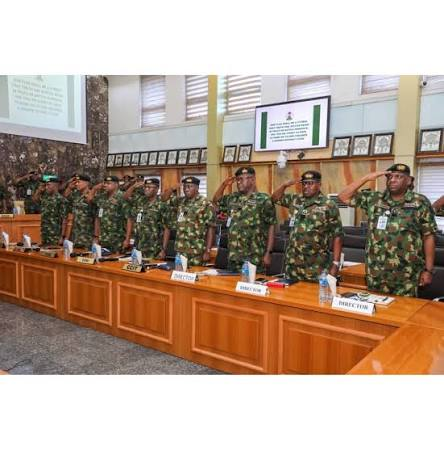
The renewed Nigerian Navy Cross River maritime security campaign was highlighted at the conclusion of a three-day tactical exercise designed to test the combat readiness of naval personnel and improve coordinated responses to threats within Nigeria’s littoral environment.
Flag Officer Commanding, Eastern Naval Command, Rear Admiral Chiedozie Okehie, gave the assurance during the closing ceremony of the maiden Intra-Command Maritime Tactical Live Firing Exercise, codenamed Exercise Littoral Fury, held in Cross River State.
Okehie said the exercise exposed participating personnel to realistic operational conditions and strengthened their ability to respond rapidly to maritime security threats.
The exercise involved gunboats, air assets, operational units and personnel using different weapons systems while testing communication and joint manoeuvre procedures.
The Navy said the training forms part of a wider strategy combining technology, intelligence, realistic combat exercises and inter-agency cooperation to protect Nigeria’s waterways and critical economic assets.
Nigerian Navy Cross River Maritime Security Gets New Push
Okehie said the littoral environment presents distinctive challenges requiring specialised skills, effective communication, appropriate tactics and close coordination between security agencies.
The Eastern Naval Command has responsibility for a strategically important section of Nigeria’s maritime environment.
Official Navy information shows that NNS Victory, based in Calabar, is responsible for policing the inland waterways of Calabar and adjoining creeks while supporting operations at sea.
Its responsibilities include anti-piracy and anti-sea robbery operations as well as support to civil authorities.
That makes Nigerian Navy Cross River maritime security important not only to Cross River residents but also to national economic security.
Waterways in the region support fishing, passenger transportation and commercial activities while connecting communities that are difficult to access by road.
They also form part of a maritime environment extending towards neighbouring Cameroon.
Exercise Littoral Fury Tests Combat Readiness
Exercise Littoral Fury was designed as more than a ceremonial military display.
Representing Chief of the Naval Staff Vice Admiral Idi Abbas, Flag Officer Commanding, Central Naval Command, Rear Admiral Suleiman Ibrahim, said the exercise demonstrated the Navy’s operational readiness, discipline and tactical agility.
Participating units tested weapon systems and practised communication between services.
The exercise also provided opportunities to validate joint littoral manoeuvre procedures.
Personnel trained with weapons ranging from 9mm pistols to automatic grenade launchers while simulating situations they could encounter during maritime patrols.
The underlying principle is straightforward.
Personnel confronting armed pirates, oil thieves or militants cannot wait until an actual attack to learn how to coordinate.
Realistic exercises allow mistakes to be identified during training rather than during operations where lives and national assets may be at risk.
Dayspring Island Carries Strategic Importance
Perhaps the most significant part of the exercise was its location.
According to Ibrahim, Dayspring Island was previously one of the biggest militant camps in the area but has now been occupied by the Nigerian Navy.
That transformation carries both operational and symbolic importance.
A location previously associated with militant activity is now being used as a platform for security operations.
The Navy expects its presence to improve safety around the Calabar and Dayspring channels and waterways extending towards Cameroon.
For Nigerian Navy Cross River maritime security, holding strategic territory can be as important as conducting patrols.
Security forces may raid criminal camps and destroy infrastructure, but lasting success requires preventing those locations from being reoccupied.
A permanent or sustained security presence can deny criminal groups the space required to reorganise.
Piracy and Sea Robbery Remain Key Concerns
Piracy and sea robbery have historically threatened commercial and passenger activity in the Gulf of Guinea.
Although Nigeria has recorded significant improvements in maritime security, naval authorities continue to maintain patrols and surveillance.
The distinction between piracy and sea robbery can be technical, depending partly on where an attack occurs, but the consequences for victims are similar.
Crew members can be kidnapped.
Cargo can be stolen.
Fishing communities can be attacked.
Commercial traffic can become more expensive as operators increase security expenditure.
The Nigerian Navy Cross River maritime security strategy therefore requires sustained pressure rather than assuming previous improvements mean the threat has disappeared permanently.
Navy Targets Crude Oil Theft and Illegal Bunkering
Oil theft represents another major dimension of the Navy’s operations.
Criminal networks can steal crude through illegal pipeline connections, move petroleum products through waterways and operate makeshift refining facilities.
The financial consequences extend beyond the immediate value of stolen petroleum.
Pipeline damage can interrupt production.
Illegal refining can contaminate land and waterways.
Government loses revenue.
Legitimate oil companies face additional security expenses.
Nigeria’s ability to meet crude production targets can also be affected.
This explains why anti-oil-theft operations have become central to naval activities across the Niger Delta.
Navy Says 48 Illegal Refineries Dismantled
The scale of the wider operation provides important context for the Cross River announcement.
The Navy said in July that it had conducted more than 580 intelligence-driven operations across Rivers, Bayelsa, Delta, Cross River and Lagos states between April and June 2026 under Operation Delta Sentinel.
According to the Navy, those operations led to the dismantling of 48 illegal refining sites, the arrest of more than 91 suspects and the recovery of approximately 4.698 million litres of stolen crude oil and illegally refined petroleum products.
Several vessels allegedly connected with crude oil theft were also intercepted.
These are Navy-reported operational figures, but they provide a useful measure of the scale of the challenge confronting maritime security agencies.
Recent Operations Show Threat Has Not Disappeared
Anti-oil-theft operations have continued beyond the second quarter.
Earlier this month, the Navy reported dismantling three reactivated illegal refining sites in Rivers State and recovering approximately 61,000 litres of petroleum products under Operation Delta Sentinel.
The word “reactivated” is particularly important.
It demonstrates one of the fundamental difficulties in combating illegal refining.
Destroying a site once does not guarantee that criminal activity ends permanently.
Operators can return.
Infrastructure can be reconstructed.
New networks can emerge.
That means Nigerian Navy Cross River maritime security and wider Niger Delta operations require continuous intelligence gathering and follow-up patrols.
Technology and Intelligence Becoming More Important
The Navy says it is increasingly relying on technology and intelligence-driven operations rather than depending exclusively on conventional patrols.
This shift matters because Nigeria’s maritime domain is enormous.
Security personnel cannot physically occupy every creek, river, coastline and offshore location simultaneously.
Technology can help identify suspicious vessel movements and direct naval resources towards areas where intervention is most needed.
Earlier this year, the Navy said it was expanding surveillance and deploying drones and advanced maritime platforms as part of efforts to disrupt oil-theft networks.
Intelligence can also help security forces identify the networks behind maritime crime rather than repeatedly arresting only low-level participants.
Maritime Crime Is Usually Organised Crime
Large-scale crude oil theft requires more than someone carrying containers away from a pipeline.
Significant operations can involve financing, vessels, storage facilities, transport networks, illegal connections and buyers.
That means authorities need to follow the entire criminal chain.
Who finances the operation?
Who provides logistics?
Who compromises infrastructure?
Where is stolen crude stored?
Who purchases it?
How is it transported?
Are officials or legitimate businesses facilitating the crime?
https://ogelenews.ng/nigerian-navy-intensifies-crackdown-on-piracy-oil-t…
A serious Nigerian Navy Cross River maritime security strategy should therefore aim not merely to destroy equipment but to dismantle the economic networks that make maritime crime profitable.
Arrests Must Lead to Prosecution
This is where security operations encounter another challenge.
Arresting suspects is only one part of law enforcement.
Cases must be investigated properly.
Evidence must be preserved.
Prosecutors must establish criminal responsibility.
Courts must determine guilt.
The Navy has recently called for judicial reforms to accelerate crude oil theft cases.
The Eastern Naval Command made that appeal in July while discussing the interception of the Sao Tome and Principe-flagged tanker MT FILIA, which authorities suspected of involvement in the theft of approximately 650 metric tonnes of crude oil valued at more than ₦660 million.
The vessel and its crew remain subject to the legal process, so allegations should not be treated as established guilt.
But the case demonstrates why successful interdiction must eventually translate into credible prosecution.
Secure Waterways Can Boost Commerce
The economic implications of Nigerian Navy Cross River maritime security go beyond oil production.
Ibrahim said improved security around Dayspring Island and surrounding waterways should encourage commercial activity and increase confidence among residents and businesses.
That argument has merit.
Businesses respond to risk.
When transport operators fear kidnapping, piracy or robbery, they may avoid certain routes or charge higher prices.
Fishermen may reduce activity.
Traders may find it harder to move goods.
Investors may reconsider projects.
Communities can become isolated.
Improved security therefore produces an economic dividend if legitimate commercial users can move through waterways more safely.
Cross-Border Dimension Cannot Be Ignored
Cross River’s location adds another strategic layer.
Its maritime environment connects towards Cameroon, making effective border and maritime surveillance important.
Criminal networks do not necessarily respect national boundaries.
Smuggling routes can cross jurisdictions.
Stolen petroleum products can move between countries.
Armed groups may exploit difficult terrain and weakly monitored waterways.
The Navy’s emphasis on securing the Calabar and Dayspring channels should therefore be considered within the broader context of Gulf of Guinea security.
Regional cooperation becomes essential when criminal networks operate across borders.
Environmental Cost of Illegal Refining
Oil theft is usually discussed as an economic or security crime, but its environmental consequences can be severe.
Illegal refining frequently involves rudimentary equipment and poor waste-management practices.
Petroleum can enter rivers and creeks.
Mangrove ecosystems can be damaged.
Fish stocks can be affected.
Farmland can become contaminated.
Communities relying on local water sources may face additional risks.
The fight against illegal bunkering is therefore simultaneously a security, economic and environmental issue.
Successful Nigerian Navy Cross River maritime security operations can protect government revenue while also reducing the likelihood of environmental damage associated with illicit petroleum activities.
Communities Remain Critical to Maritime Intelligence
Technology cannot replace local intelligence entirely.
People living in riverine communities often know their environment better than outside security personnel.
They know normal vessel movements.
They notice unfamiliar activities.
They may observe criminal camps, suspicious storage facilities or unusual nighttime movements.
Building trust with those communities can therefore strengthen maritime security.
But cooperation depends on confidence.
Residents must believe they can provide information without being exposed to retaliation.
Security personnel must also distinguish legitimate fishermen, boat operators and traders from criminal actors.
Community engagement should therefore complement the harder military elements of the Nigerian Navy Cross River maritime security campaign.
Success Must Be Measured Beyond Arrest Numbers
Naval exercises and arrests generate attention, but the ultimate measurement should be outcomes.
Are attacks on waterways declining?
Are illegal refining sites staying closed after they are destroyed?
Is crude oil theft decreasing?
Are legitimate businesses using previously dangerous waterways?
Are fishermen safer?
Are shipping and insurance risks falling?
Is Nigeria losing less petroleum to criminal networks?
Those indicators provide a better assessment of security than the number of exercises conducted.
The Navy itself has linked recent anti-oil-theft operations with improvements in Nigeria’s crude production.
In July, it noted that crude production had reached 1.735 million barrels per day in June, while attributing progress partly to improved protection of oil and gas infrastructure alongside the wider efforts of security agencies and industry stakeholders.
That relationship should continue to be independently scrutinised as new production figures emerge.
Ogele News Analysis: Exercise Must Translate Into Safer Waterways
The original headline, “Navy promises tougher crackdown on piracy, oil theft in C’River,” captures the announcement but does not fully explain why the latest development matters.
The bigger story is Exercise Littoral Fury and the Navy’s expanding operational presence around Dayspring Island.
The fact that naval authorities describe Dayspring as a former major militant camp now occupied by the Navy gives the exercise a much stronger security significance.
It represents an attempt to move from reacting to criminal activity towards controlling strategic territory.
That is important.
But promises of a tougher crackdown should still be judged by results.
Nigeria has announced numerous anti-piracy, anti-bunkering and anti-oil-theft operations over the years.
The challenge has always been sustainability.
Criminal networks adapt.
Illegal refining sites are rebuilt.
New routes emerge.
Arrested suspects must be prosecuted.
Corrupt collaborators, where evidence establishes their involvement, must also face consequences.
The Navy’s July figures show substantial operational activity: more than 580 intelligence-driven operations, 48 illegal refining sites dismantled and millions of litres of suspected stolen or illegally refined petroleum products recovered.
Those numbers are significant.
But for residents of Cross River, the most meaningful result will be simpler: Can they use the waterways safely?
For Nigeria, the economic test is equally straightforward: Can legitimate oil production and maritime commerce operate without criminal networks draining revenue and increasing costs?
Exercise Littoral Fury demonstrates readiness.
The next task is converting that readiness into sustained security.
That is where the real battle begins.