
















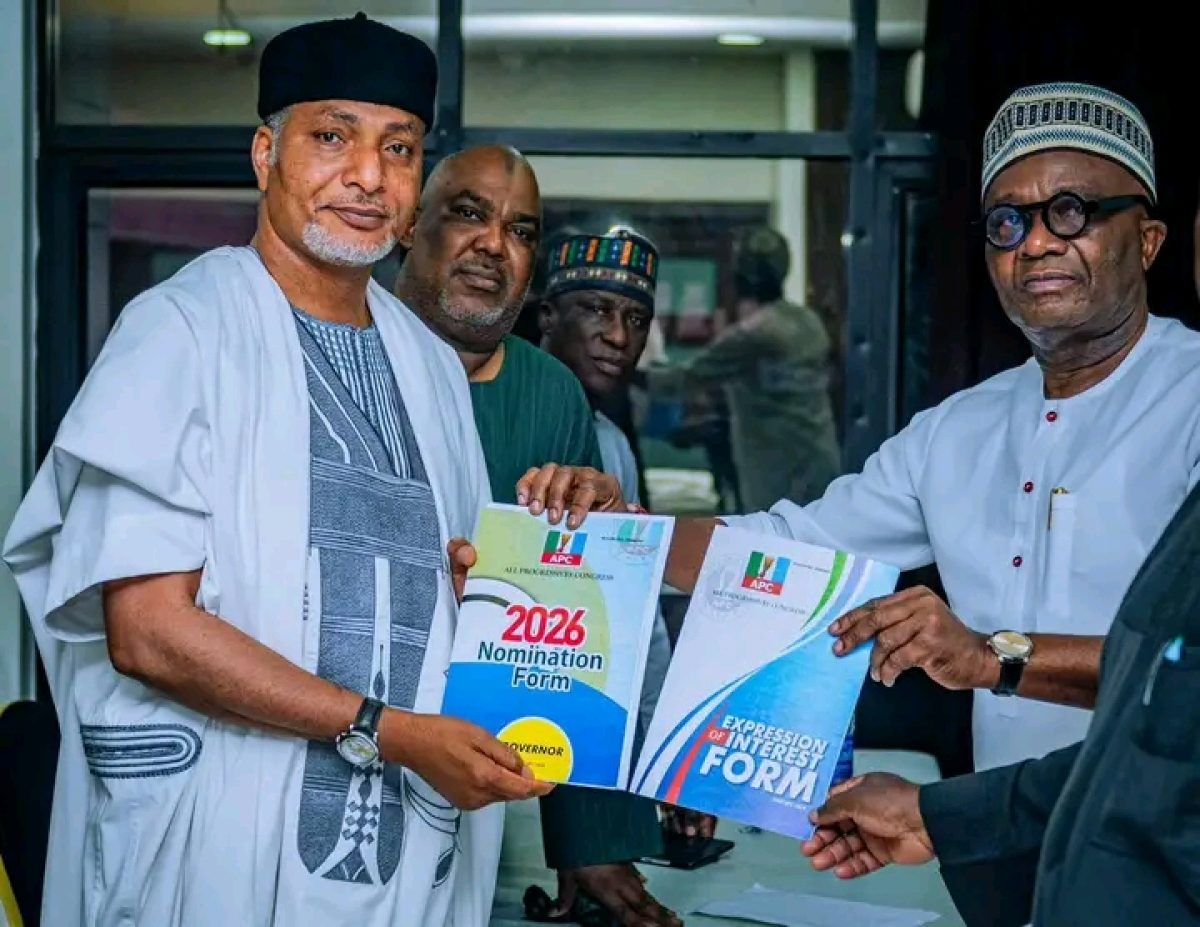

Saliu Mustapha APC exit
ILORIN, Nigeria — The Peoples Democratic Party in Kwara State has seized on Senator Saliu Mustapha’s resignation from the All Progressives Congress to attack Governor AbdulRahman AbdulRazaq, describing the high-profile departure as evidence of a deepening leadership crisis within the ruling party ahead of the 2027 general elections.
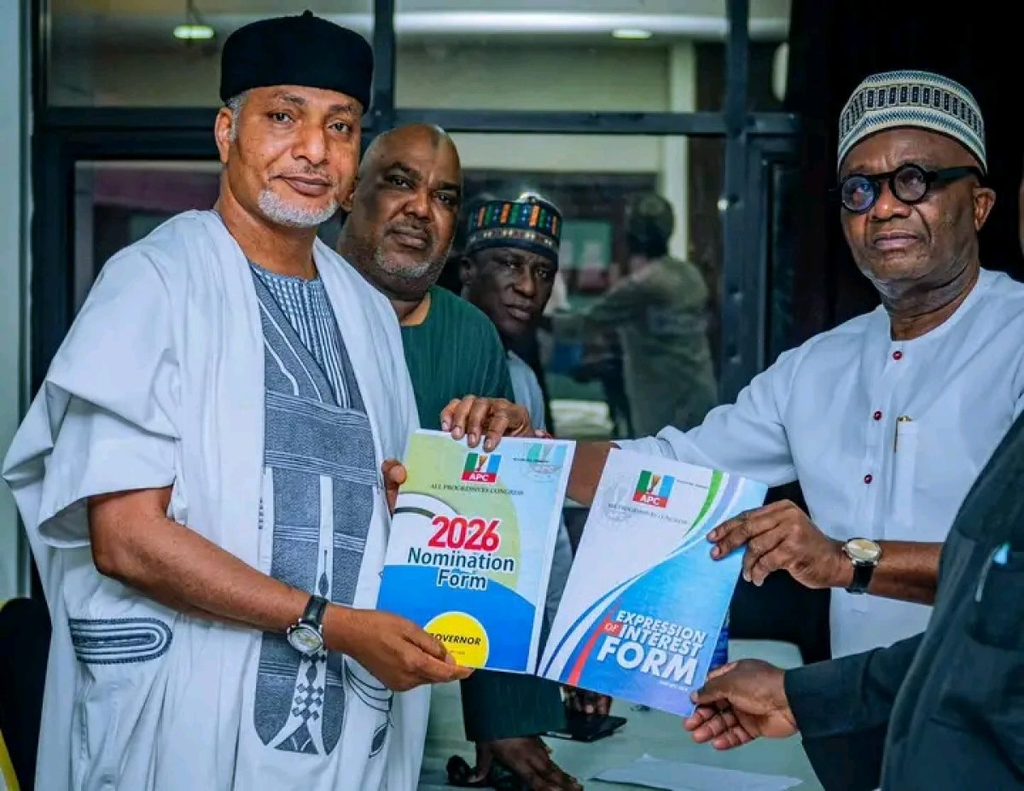
Mustapha, who represents Kwara Central Senatorial District in the National Assembly, announced his resignation after weeks of speculation about his political future following the APC governorship primary.
The Saliu Mustapha APC exit represents one of the most significant political developments in Kwara ahead of 2027 because the senator is not merely another party member. He is a prominent political figure, serving senator and one of the politicians connected to the coalition that produced the APC in 2013.
In a statement issued on Friday, Kwara PDP Publicity Secretary Olusegun Adewara said Mustapha’s resignation exposed what the opposition party described as deep divisions and leadership failure within the state APC.
The PDP accused AbdulRazaq of failing to keep influential political figures within the ruling party together and argued that the senator’s departure was evidence that the internal crisis had become increasingly serious.
The governor and APC are entitled to respond to those allegations, which remain partisan claims by their principal opposition in the state.
Saliu Mustapha APC Exit Follows Weeks of Political Uncertainty
Mustapha formally communicated his resignation in a letter dated August 14, 2026, addressed to the APC chairman in Gambari Ward I, Ilorin East Local Government Area.
He subsequently made the decision public.
The senator said he reached the decision after carefully considering recent developments within the Kwara State chapter of the APC and consulting stakeholders, supporters and constituents.
Mustapha did not launch a personal attack on President Bola Tinubu or the APC national leadership in announcing his departure.
Instead, he expressed appreciation for relationships built during his time in the party and said his commitment to his constituents would continue regardless of his political platform.
That distinction matters.
The Saliu Mustapha APC exit is clearly a political rupture, but Mustapha himself has so far framed it principally around developments within the Kwara chapter rather than a wholesale rejection of the APC at national level.
Governorship Primary Changed Political Calculation
The roots of the current crisis can be traced to the battle for the APC’s 2027 governorship ticket.
Mustapha mounted a serious campaign to succeed AbdulRazaq as governor.
Before the primary, he publicly dismissed suggestions that he had abandoned the governorship contest and insisted that he remained committed to competing for the ticket.
The primary eventually produced Kwara State House of Assembly Speaker Yakubu Danladi-Salihu as the APC governorship candidate.
For Mustapha, that defeat immediately raised another question: would he return to contest his Kwara Central Senate seat?
That possibility also became complicated.
AbdulRazaq subsequently emerged as the APC candidate for the Kwara Central senatorial district, effectively closing the route for Mustapha to seek re-election to the Senate on his existing party’s platform.
Seen against that background, the Saliu Mustapha APC exit becomes much easier to understand.
The senator had lost the governorship nomination and no longer had the APC ticket for the Senate seat he currently occupies.
PDP Says AbdulRazaq Has Failed to Hold APC Together
The Kwara PDP has wasted little time exploiting the development.
Adewara argued that AbdulRazaq had failed to provide the leadership necessary to keep major political actors inside the APC.
The opposition party described the ruling party as increasingly divided and claimed Mustapha’s resignation showed that its internal disagreements could no longer be concealed.
It also portrayed the senator’s departure as more than ordinary political migration.
According to the PDP, losing a serving senator of Mustapha’s standing demonstrates that the APC’s internal leadership problems have become serious.
That is the PDP’s political interpretation.
Whether voters accept it will depend partly on what happens next.
One resignation can damage a party without necessarily producing electoral collapse.
The more significant question is whether other influential APC figures follow Mustapha.
PDP Invites Other APC Figures to Follow
The PDP went further by encouraging dissatisfied members of the ruling party to leave.
Its message was essentially that Mustapha had opened the door and others should follow.
That is strategically unsurprising.
Opposition parties do not simply celebrate defections because of symbolism. They want structures, supporters, financiers, candidates and grassroots networks.
A high-profile defection can become far more consequential if it triggers a chain reaction.
That possibility makes the Saliu Mustapha APC exit particularly important ahead of 2027.
The APC will want to demonstrate that the senator’s departure is isolated.
The PDP will attempt to present it as the beginning of a broader realignment.
What Happens to Kwara’s Other APC Senators?
Attention will now turn towards other prominent politicians who contested the APC governorship ticket.
Reports indicate that Kwara South Senator Oyelola Ashiru and Kwara North Senator Sadiq Umar also sought the governorship nomination but failed to secure the ticket.
Their political futures have consequently attracted interest.
Whether they remain with the APC could become an important indicator of the ruling party’s ability to manage its post-primary disagreements.
Primary elections inevitably create losers.
Strong political parties usually survive them through reconciliation, negotiated accommodation and assurances about future political roles.
When defeated aspirants begin leaving, however, the problem moves beyond disappointment and becomes an organisational challenge.
https://ogelenews.ng/saliu-mustaphas-apc-exit-deepens-kwara-political-ba…
Mustapha’s Political Weight Makes Departure Significant
Mustapha’s political history also gives the resignation added importance.
Before the APC was created, he served as a senior figure in the Congress for Progressive Change.
The CPC was one of the political parties that merged with the Action Congress of Nigeria, All Nigeria Peoples Party and elements of the All Progressives Grand Alliance to establish the APC in 2013.
Mustapha therefore has roots in the ruling party that go considerably deeper than his current Senate tenure.
He was elected senator for Kwara Central in 2023.
The Saliu Mustapha APC exit consequently removes from the party someone with both contemporary electoral relevance and historical links to its formation.
That does not automatically mean his supporters will leave with him.
Political support cannot simply be transferred wholesale from one party to another.
But his next move will be closely watched.
Will Saliu Mustapha Join PDP?
This is now the biggest unanswered question.
Mustapha has not publicly announced his next political platform.
That fact should be stated clearly.
Reports of an impending PDP move remain speculation until the senator confirms his decision.
However, the speculation has substantial political context.
Earlier this month, reports indicated that discussions surrounding a possible Mustapha defection to the PDP had intensified.
There was also speculation that the PDP might accommodate him in the Kwara Central senatorial contest.
PDP figures cautioned at the time that no final agreement had been established, even while acknowledging the political value a Mustapha defection could bring.
So Ogele News should not report that Mustapha has joined the PDP.
He has left the APC. His destination remains unconfirmed.
Saraki Factor Returns to Kwara Politics
Any serious analysis of Kwara politics eventually encounters the Saraki factor.
Former Senate President Bukola Saraki remains one of the most influential opposition politicians associated with the state.
The APC’s 2019 victory dramatically weakened the Saraki political structure in Kwara through the famous O To Ge movement, which brought AbdulRazaq to power.
Seven years later, political alignments are changing again.
Recent reports have linked Mustapha with discussions involving Saraki and PDP political actors.
If Mustapha eventually joins the PDP, the move could create a fascinating political realignment.
A figure associated with the political coalition that helped defeat the old establishment could find himself cooperating with forces associated with that establishment against the current APC leadership.
That would illustrate one enduring feature of Nigerian politics: alliances frequently change when electoral interests change.
Kwara Central Could Become Major 2027 Battleground
The Saliu Mustapha APC exit could have its biggest electoral consequence in Kwara Central.
Mustapha currently represents the district.
AbdulRazaq is positioned for the APC’s senatorial ticket there.
If Mustapha eventually obtains another party’s nomination, particularly the PDP ticket, the contest could become one of Kwara’s most closely watched races in 2027.
It would potentially place a sitting governor completing his second term against a sitting senator seeking to retain his seat under a different political platform.
Both would have substantial political networks.
Both would understand the district.
Both would have access to campaign structures.
And the result could provide a wider indication of whether AbdulRazaq retains the political dominance that carried the APC through previous elections.
APC Still Has Significant Advantages
The PDP’s celebration should nevertheless be treated cautiously.
The Saliu Mustapha APC exit is a setback, but it does not establish that the APC is collapsing.
The party remains the governing platform in Kwara.
AbdulRazaq remains governor.
The APC possesses significant state-level political structures and will enter the election with the advantages associated with incumbency.
It also controls the Federal Government under President Tinubu.
The PDP therefore has work to do beyond issuing statements about APC divisions.
It must organise effectively, manage its own internal interests and present candidates capable of converting ruling-party disagreements into votes.
Political defections make headlines.
Elections are won at polling units.
PDP Must Manage Its Own Coalition Carefully
If Mustapha eventually moves to the PDP, the opposition party would also face its own challenge.
Accommodating powerful defectors can strengthen a party, but it can simultaneously create resentment among longstanding members who have already secured or expected tickets.
That is particularly relevant because reports have suggested discussions about making the Kwara Central senatorial ticket available to Mustapha if he joins.
Such arrangements require careful negotiation.
A party can weaken its opponent through defections only to create a new internal crisis for itself if existing members believe newcomers have displaced them unfairly.
The PDP therefore needs to balance expansion with internal stability.
2027 Will Test the Strength of O To Ge Coalition
Perhaps the biggest political question is what remains of the coalition that transformed Kwara politics in 2019.
The O To Ge movement was bigger than a single politician.
It brought together groups united by a desire to end Saraki’s long-standing political dominance in the state.
But coalitions built around removing an establishment often face a second challenge after victory: deciding how power should be distributed among those who participated.
Disagreements inside the Kwara APC over the years have shown the difficulty of maintaining such a coalition.
The Saliu Mustapha APC exit now provides another test.
If major figures continue leaving, the 2027 election could become a referendum not only on AbdulRazaq’s administration but also on the durability of the political alliance that brought the APC to power.
Ogele News Analysis: Mustapha’s Destination Matters More Than PDP’s Mockery
The original headline, “Kwara PDP mocks AbdulRazaq, APC over Mustapha’s exit,” is accurate but too focused on political taunting.
The PDP statement is newsworthy, but it is not the most important development.
The bigger story is the Saliu Mustapha APC exit itself and what it could mean for Kwara’s 2027 political map.
A serving senator has left the ruling party after losing its governorship nomination and finding his route back to the Senate on the APC platform closed.
His departure comes amid reports of opposition overtures.
The PDP is celebrating.
Other APC figures are being watched.
And the possibility exists that Kwara Central could eventually produce a direct electoral confrontation between Mustapha and AbdulRazaq.
But responsible journalism requires restraint.
Mustapha has not announced that he is joining the PDP.
The APC has not been proven to be in irreversible collapse merely because the opposition says so.
And internal disagreements before an election do not automatically translate into defeat.
What can safely be said is that AbdulRazaq now faces a significant party-management challenge.
If the APC retains its remaining major figures, reconciles disappointed aspirants and goes into 2027 united, Mustapha’s departure may prove manageable.
If additional heavyweights follow him, Friday’s resignation could eventually be remembered as the moment Kwara’s political realignment accelerated.
For the PDP, meanwhile, mockery is the easy part.
Turning APC’s internal problems into electoral victory will be much harder.
That contest is only beginning.