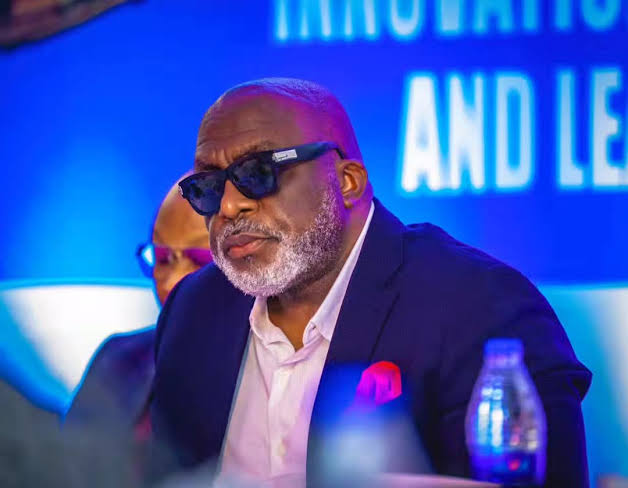













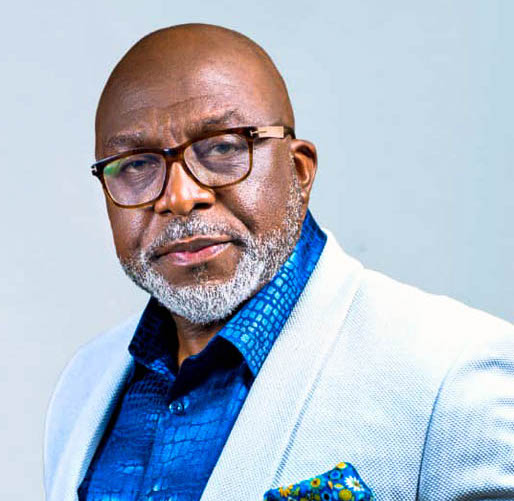
The Chairman and Chief Executive Officer of United Nigeria Airlines, Prof. Obiora Okonkwo, has challenged what he describes as an overly negative perception of Nigeria abroad, arguing that the country’s international reputation does not fully reflect the realities experienced by people who live, work and invest in Africa’s most populous nation.
Okonkwo made the remarks in Abuja on Sunday at a reception held in honour of Prof. Justin Green, President and Chief Executive Officer of the Global Alliance for Public Relations and Communication Management.
Against the backdrop of the continuing “Japa” phenomenon, under which many Nigerians have relocated overseas in search of education, employment and economic opportunities, Okonkwo said he had no intention of permanently leaving the country.
His argument about Nigeria’s international image was straightforward: Nigeria has serious problems, but he believes the country is frequently portrayed abroad in ways that fail to capture the complete picture.
The airline executive said his years of studying, living, travelling and conducting business internationally had exposed him to perceptions of Nigeria that he considered significantly different from his own experience of the country.
Nigeria’s international image needs context, Okonkwo says
Okonkwo did not argue that Nigeria was without problems.
Instead, he maintained that the country’s shortcomings should not become the only lens through which it is viewed internationally.
“We may not be the best country in the world, but we’re not the worst,” he said.
He argued that the portrayal of Nigeria in some international conversations bears little resemblance to what he believes the country represents.
Okonkwo’s comments reflect a longstanding debate about Nigeria’s international image and the extent to which stories about insecurity, corruption, fraud, poverty and political instability dominate perceptions of the country abroad.
Nigeria simultaneously presents another story.
It is one of Africa’s largest economies and consumer markets, home to a globally influential entertainment industry, major technology companies, entrepreneurs, academics, professionals and a large diaspora.
The challenge is that both pictures can exist at the same time.
‘I’m not ready to Japa’
Okonkwo also used his personal experience to address Nigeria’s migration debate.
He said that although he travels frequently, he finds it difficult to remain outside Nigeria for extended periods and has no plans to relocate permanently.
His remarks come as the word “Japa” continues to define conversations about Nigerian migration.
The expression has become shorthand for leaving Nigeria, particularly among young professionals seeking employment, education, improved living standards or greater economic security overseas.
Okonkwo argued that migration itself is not new.
Nigerians have travelled abroad for education, employment and business for generations.
What has changed is the prominence of the conversation and the extent to which relocation has become an aspiration among sections of the population.
But his personal decision to remain in Nigeria does not invalidate the reasons other Nigerians give for leaving.
Migration decisions are shaped by individual circumstances.
Employment, wages, education, healthcare, family considerations, security and career opportunities can all influence whether a person stays or relocates.
That distinction is important when discussing Nigeria’s international image and the Japa phenomenon.
https://ogelenews.ng/nigerias-international-image
World PR Forum offers Nigeria global platform
Okonkwo’s comments were made ahead of a major international communications gathering scheduled for Abuja later this year.
Nigeria will host the 2026 World Public Relations Forum alongside the 37th African Public Relations Association Conference from November 15 to 21 at the Transcorp Hilton Hotel in Abuja.
The World Public Relations Forum will be held under the theme, “Responsible Communication: The Voice of the World.”
Organisers expect communication professionals, policymakers, academics and other participants from different countries to attend.
Okonkwo sees the gathering as an opportunity to influence Nigeria’s international image by allowing foreign delegates to experience the country directly.
His argument is that visitors should be able to judge Nigeria through their own interactions with its people, businesses, institutions, culture and hospitality rather than exclusively through information received from outside the country.
NIPR sees opportunity for national reputation
The Nigerian Institute of Public Relations shares a similar view.
NIPR President Dr Ike Neliaku has described Nigeria’s successful bid to host the World Public Relations Forum as an opportunity to demonstrate the country’s professional capacity and provide international visitors with a broader picture of Nigeria.
The institute says it intends to use the gathering to showcase Nigerian culture, hospitality and professional expertise.
That ambition puts Nigeria’s international image at the centre of a much bigger question about national reputation.
Countries compete for tourists, investment, international events, skilled workers and diplomatic influence.
Reputation can affect all of them.
Negative perceptions can discourage visitors and investors before they independently evaluate available opportunities.
Positive reputation, on the other hand, can increase interest.
But reputation cannot be permanently separated from reality.
Image management cannot replace domestic reform
That is where Okonkwo’s argument requires context.
Public relations can correct misinformation and highlight achievements that receive insufficient international attention.
It cannot substitute for improvements in the conditions shaping people’s everyday experiences.
Nigeria continues to face significant economic, security and governance challenges.
Those problems contribute to the migration pressures behind the Japa phenomenon and influence some of the international reporting about the country.
A credible effort to improve Nigeria’s international image therefore cannot depend exclusively on communication.
The strongest national reputation is ultimately built when positive messaging is supported by visible improvements in institutions, infrastructure, security, public services, economic opportunity and accountability.
In that sense, national image and national development are connected.
Nigeria’s global story is more complicated
International perceptions of Nigeria are difficult to reduce to a single narrative.
Nigerian musicians perform before audiences around the world.
Nollywood has established a global following.
Nigerian writers, entrepreneurs, scientists, athletes and professionals have built international reputations.
The country’s diaspora occupies important positions across medicine, technology, finance, academia, law and business.
Nigeria also remains an important diplomatic and economic actor in West Africa.
At the same time, international audiences encounter stories involving insecurity, economic hardship, cybercrime, corruption and political disputes.
The result is a complicated Nigeria’s international image in which achievement and difficulty coexist.
A professional national communications strategy therefore needs to avoid two extremes.
The first is allowing negative stories to define an entire country of more than 200 million people.
The second is pretending genuine national problems are merely public relations problems.
Neither provides a complete picture.
Global visitors can form their own impressions
This is where the World Public Relations Forum could have practical significance.
Thousands of international interactions can sometimes accomplish what advertising campaigns cannot.
Delegates visiting Abuja will encounter Nigerian professionals, hotels, businesses, institutions, transportation systems, food, culture and everyday life.
Their experiences can either reinforce existing perceptions or challenge them.
Okonkwo believes Nigeria has an opportunity to exceed visitors’ expectations.
Neliaku similarly argues that the event can demonstrate the country’s ability to organise and deliver a major global professional gathering.
If successfully hosted, the forum could contribute positively to Nigeria’s international image.
But its long-term reputational value will depend on what visitors actually experience rather than what organisers tell them to expect.
Aviation also shapes first impressions
Okonkwo’s position as chairman of an airline adds another dimension to the conversation.
Aviation is often among the first and last services an international visitor encounters.
Airports, flight reliability, customer service, safety regulation and connectivity can therefore contribute to perceptions of a country.
United Nigeria Airlines began commercial operations in 2021 and has expanded its domestic network.
In June 2026, the African Airlines Association admitted the carrier as a full member.
But the airline itself has also recently faced regulatory scrutiny.
On September 10, the Nigeria Civil Aviation Authority directed United Nigeria Airlines to improve its operations, comply more strictly with passenger-rights regulations and avoid expanding beyond the capacity of its available fleet.
The airline apologised and pledged to resolve pending refund cases within the required timeframe.
That episode provides a useful illustration of the wider reputation debate.
Building Nigeria’s international image requires celebrating progress while also acknowledging shortcomings and fixing them.
Cultural identity also part of airline’s strategy
United Nigeria Airlines has increasingly presented itself as more than a transportation company.
Earlier this year, the airline named two Boeing 737-800 aircraft after novelist Chinua Achebe and the Obi of Onitsha, Nnaemeka Achebe.
Okonkwo described the initiative as an attempt to promote Nigerian heritage and values.
Chinua Achebe’s literary legacy provides an interesting connection to the current conversation.
His work helped introduce generations of international readers to African societies from perspectives different from colonial stereotypes.
In that sense, the question of who tells Nigeria’s story is not new.
The modern version involves international media, social platforms, tourism, diplomacy, entertainment, business and the Nigerian diaspora.
Reputation must be earned as well as communicated
For communications professionals gathering in Abuja in November, the debate surrounding Nigeria’s international image presents a practical case study.
A country cannot completely control how the world sees it.
Foreign governments, international organisations, investors, tourists, journalists and ordinary citizens form opinions from multiple sources.
But Nigeria can influence that process.
It can communicate achievements more effectively.
It can challenge inaccurate information.
It can promote culture and tourism.
It can support businesses capable of competing internationally.
It can improve the experience of foreign visitors.
Most importantly, it can address the domestic problems that generate negative headlines in the first place.
Public relations is most persuasive when the underlying reality supports the message.
Nigeria’s international image goes beyond one narrative
Okonkwo’s central argument is ultimately a call for a more complete account of Nigeria.
His position is not that the country’s problems should be hidden.
It is that those problems should not erase everything else.
That distinction matters.
Nigeria’s international reputation cannot credibly be improved by denying insecurity, economic hardship or governance failures.
Neither should a country of enormous cultural, commercial and human diversity be reduced entirely to those challenges.
The World Public Relations Forum will give Nigeria an unusual opportunity to place that complexity before an international audience.
For Okonkwo, it is an opportunity the country should seize.
Whether the gathering materially changes Nigeria’s international image will be difficult to measure immediately.
But it can provide visiting professionals with something more valuable than a slogan: an opportunity to experience the country directly and draw their own conclusions.
And that may be the strongest approach to national reputation.
Tell Nigeria’s story more effectively, certainly.
But equally important, build a country whose everyday reality makes the better story easier to tell.