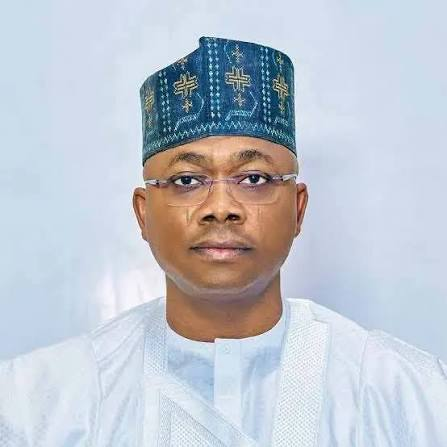













President Bola Tinubu has mourned former Kogi State Governor Alhaji Ibrahim Idris, describing his death at the age of 77 as a painful loss to his family, Kogi State and Nigeria.
Idris, popularly known as Ibro, died in London, United Kingdom, on Sunday, September 20, 2026, after a brief illness, according to a statement issued by his family.
The Ibrahim Idris death has triggered tributes across political lines, with Kogi State Governor Ahmed Usman Ododo declaring three days of mourning and ordering flags to be flown at half-mast in honour of the former governor.
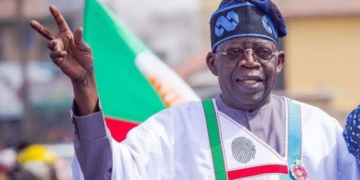
Tinubu, in a condolence message issued on Monday by his Special Adviser on Information and Strategy, Bayo Onanuga, described Idris as a committed public servant whose years in office represented an important period in Kogi State’s political and developmental history.
The President extended his condolences to the Idris family, the government and people of Kogi State, as well as the former governor’s friends, political associates and colleagues.
Tinubu reacts to Ibrahim Idris death
Tinubu said Idris devoted a significant part of his life to public service and the development of Kogi State.
The President noted that the former governor’s administration recorded interventions in infrastructure, education, healthcare and other sectors.
He also acknowledged Idris’s participation in Nigeria’s democratic development and his years of involvement in public affairs.
Tinubu described the Ibrahim Idris death as a loss extending beyond his immediate family and political associates.
The President prayed for Allah to forgive the former governor’s shortcomings, accept his good deeds and grant him Aljannah Firdaus.
He also prayed for strength for the family as it mourns.
The presidential tribute adds to condolences that have poured in since news of Idris’s death became public on Sunday.
Ibrahim Idris dies at 77 in London
The former governor’s family confirmed that he died in London on Sunday at the age of 77 after what it described as a brief illness.
Born in 1949 in Idah, in present-day Kogi State, Idris built a career in private business before entering partisan politics.
His business interests included furniture manufacturing, hospitality, construction and general commerce.
He later emerged as one of the dominant political figures in Kogi State during the early years of Nigeria’s Fourth Republic.
The Ibrahim Idris death closes the chapter on a political career that included one of the longest periods served by any governor in the state’s history.
Idris first became governor on May 29, 2003, after defeating incumbent Governor Abubakar Audu in that year’s governorship election.
He contested on the platform of the Peoples Democratic Party.
From businessman to Kogi governor
Before his emergence in politics, Idris had established himself in business.
He developed interests in furniture, construction and hospitality and became widely associated with the Ibro business name, from which his popular political nickname emerged.
His transition from businessman to governor came in the politically competitive 2003 election.
Idris defeated Audu, who was seeking another term, and began what would eventually become an unusually long tenure at the Government House in Lokoja.
His administration pursued projects in infrastructure, water supply, healthcare, education, housing and other areas.
Projects associated with his years in office include the Greater Lokoja Water Scheme, Lokoja International Market, Confluence Stadium and the state specialist hospital.
Those projects form part of the record now being revisited following the Ibrahim Idris death.
2007 election triggered major legal battle
Idris’s time in office also featured an important electoral dispute that would eventually contribute to Kogi’s emergence as one of Nigeria’s off-cycle governorship election states.
He won re-election in 2007, but the result was subsequently challenged.
The courts held that the Independent National Electoral Commission had wrongly excluded Abubakar Audu, then candidate of the All Nigeria Peoples Party, from the election.
A fresh election was consequently ordered.
Clarence Olafemi, who was Speaker of the Kogi State House of Assembly, briefly served as acting governor while the rerun was conducted.
Idris contested the March 29, 2008 rerun and won, returning to office as governor.
The legal consequences did not end there.
Another dispute eventually arose over when his constitutional tenure should terminate.
Supreme Court ruling ended tenure in 2012
Idris and some other governors whose elections had been annulled argued that their constitutionally guaranteed four-year tenures should begin again from the dates on which they took fresh oaths after winning rerun elections.
The dispute eventually reached the Supreme Court.
In January 2012, the Supreme Court rejected the tenure-extension argument, bringing Idris’s period as governor to an end.
The decision became significant in Nigeria’s constitutional and electoral history because it clarified how the tenure of a governor should be calculated following the annulment of an election and a subsequent rerun.
Idris Wada, who had won the December 2011 Kogi governorship election on the PDP platform, subsequently assumed office.
The legal history surrounding Idris’s governorship makes the Ibrahim Idris death more than the passing of another former officeholder.
His years in government intersected with developments that helped shape the state’s present electoral calendar.
https://ogelenews.ng/ibrahim-idris-death
Ododo declares three days of mourning
Kogi State Governor Ahmed Usman Ododo has declared a three-day mourning period following the former governor’s death.
Ododo directed that Nigeria’s national flag and the Kogi State flag be flown at half-mast across government offices and designated public institutions during the mourning period.
The governor also announced that Idris would receive a state burial.
According to the Kogi State Government, the state will take responsibility for the burial arrangements in recognition of Idris’s service as a former governor.
Ododo had earlier visited the former governor’s residence to commiserate with his family.
He described the Ibrahim Idris death as a profound loss and said the former governor had devoted a substantial part of his life to serving the people of Kogi State.
Tributes cross political divides
The reaction to Idris’s death has not been limited to one political party.
Idris remained associated with the PDP after leaving office, but condolences have come from political figures across party lines.
Senator Natasha Akpoti-Uduaghan, who represents Kogi Central, described him as a major figure in the political history of Kogi State.
She said his years in government formed part of the evolution of the state’s political landscape and expressed condolences to his family and associates.
Ododo, an All Progressives Congress governor, has likewise acknowledged Idris’s contribution to the state.
Tinubu’s presidential tribute further illustrates how the death of a former governor can temporarily move political differences into the background.
Nearly nine years at the centre of Kogi politics
Idris’s nearly nine years as governor made him one of the defining political figures in Kogi’s post-1999 history.
His emergence in 2003 altered the political balance in the state by ending Audu’s administration and establishing PDP control of the governorship.
His government subsequently operated during a period in which the PDP held considerable influence both nationally and across several states.
Even after leaving office, Idris remained connected to Kogi politics and the PDP.
That long political involvement helps explain the breadth of reactions to the Ibrahim Idris death.
But a historical assessment of any former governor should distinguish condolence tributes from independent evaluation of the administration.
Political leaders mourning Idris have highlighted projects and public service associated with his tenure.
A fuller assessment of those years would also examine the political, economic and governance debates that accompanied his administration.
Infrastructure forms part of Idris record
Several major projects are associated with Idris’s tenure.
Among those frequently cited are the Greater Lokoja Water Scheme, Confluence Stadium, Lokoja International Market and investments in healthcare and education.
His administration was also associated with road, housing and other infrastructure projects.
Governor Ododo, in his tribute, specifically highlighted interventions in infrastructure, education and healthcare.
President Tinubu similarly referred to Idris’s contribution to the development of Kogi State.
These assessments form part of the official tributes following the Ibrahim Idris death.
They also explain why the Kogi State Government has chosen to honour him with a state burial and official mourning period.
Family awaits funeral arrangements
The family said Idris is survived by children, grandchildren and other relatives.
It indicated that the public would be informed about funeral rites in accordance with Islamic injunctions once his remains arrive in Nigeria.
The Kogi State Government has also said it will take responsibility for the state burial arrangements.
Further details on the burial programme are therefore expected from the family and state government.
For now, political leaders and associates continue to send condolences.
Ibrahim Idris death closes significant chapter
The Ibrahim Idris death brings to an end the life of a businessman who moved into politics and eventually occupied Kogi State’s highest political office for nearly nine years.
His governorship covered infrastructure projects, political contests and constitutional disputes that remain part of the state’s modern history.
His disputed 2007 election and subsequent 2008 rerun became part of a chain of legal developments that contributed to Kogi’s off-cycle governorship election timetable.
His years in office also produced projects that supporters and government officials continue to identify as part of his legacy.
As condolences continue, President Tinubu has placed emphasis on public service and Idris’s role in Kogi’s development.
Ododo has gone further by declaring three days of mourning, ordering flags to half-mast and approving a state burial.
Those honours reflect the institutional significance attached to a former governor’s death.
But beyond the official statements, the Ibrahim Idris death also provides an opportunity to look back at an important period in Kogi’s political history.
From his victory over an incumbent governor in 2003 to the court battles that eventually ended his tenure in January 2012, Idris occupied a central place in the state’s politics for almost a decade.
His death at 77 closes that chapter.
For his family, it is first and foremost a personal loss.
For Kogi State, it marks the passing of one of the major political figures of its Fourth Republic history.